In April 2026, TIME magazine named Cenderawasih Bay one of the World's Greatest Places — citing the rare prospect of being surrounded by multiple whale sharks at once.⁶ It's a fitting description. This remote bay in West Papua holds a resident population of around 160 documented whale sharks that gather year-round at traditional Papuan fishing platforms, creating encounters found nowhere else on Earth.
This guide covers everything you need to plan a Cenderawasih Bay liveaboard trip: when to go, what to expect, how to get there, and what makes the whale shark experience here unlike any other destination. It's part of our complete Indonesia liveaboard guide — the central hub for all Indonesian diving destinations. Want a quick overview first? See our Cenderawasih Bay destination page.
Quick Facts About Cenderawasih Bay Diving
- Best season: June to October (optimal conditions); whale sharks present year-round
- Coral species: 150+ species recorded⁴
- Fish species: 836+ species⁴
- Water temperature: 27–30°C year-round
- Visibility: 15–30m typical; varies with conditions
- Dives per day: 3–4 on most itineraries
- Experience level: Suitable for all levels; calm conditions at bagan sites
- Trip length: 10–14 days recommended to explore the bay fully
- Cost range: $400–$600+/day depending on vessel category
- Gateway airports: Manokwari (MKW), Nabire (NBX), Biak (BIK)
- Booking lead time: 6–12 months for peak season
Quick Answers
Can I see whale sharks year-round in Cenderawasih Bay?
Yes — this is what makes Cenderawasih Bay unique. The bay holds a resident population of around 160 documented individuals, mostly juvenile males, who remain in the bay rather than migrating.²³ They gather at traditional fishing platforms called bagans, where the food supply keeps them consistently present. Most other whale shark destinations are seasonal. This one isn't. Triton Bay runs a similar bagan-based encounter — the only other place in Indonesia where this happens.
What makes the whale shark encounters here different?
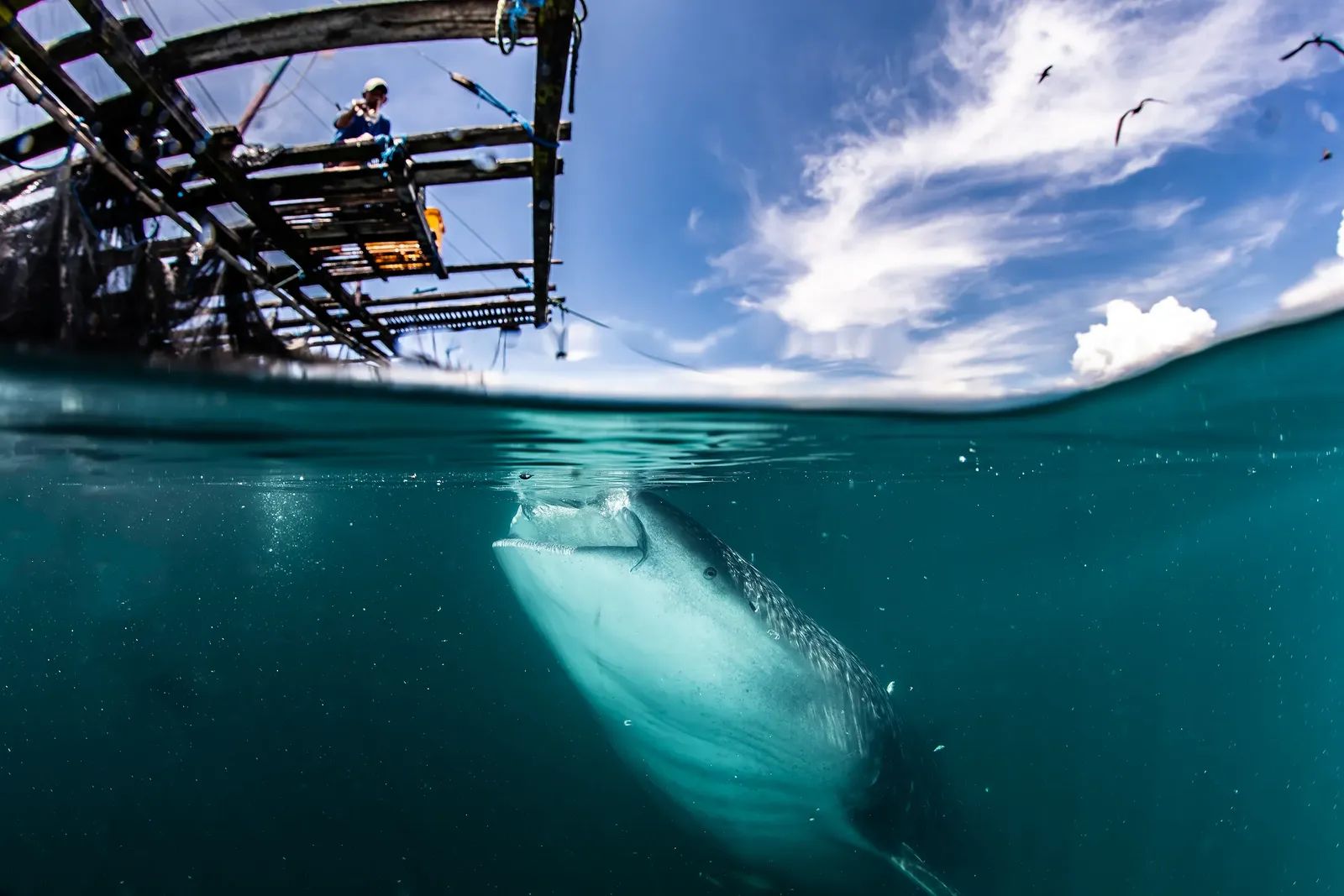
The bagans. Local Papuan fishermen use floating lift-net platforms to attract sardines, and the whale sharks have learned to feed from them — swimming vertically to reach surface baitfish, a behaviour documented almost exclusively in Cenderawasih Bay.² Groups of three to seven individuals feeding together at once is a regular occurrence. Operators consistently report very high encounter rates throughout the season.
How long should my trip be?
Se recomienda un mínimo de 10 a 12 días. La Bahía de Cenderawasih es vasta, abarca más de 300 km, y llegar a los mejores sitios de tiburones ballena desde cualquier puerto de salida lleva tiempo. Itinerarios más largos también abren los pecios de la Segunda Guerra Mundial, la exploración de islas y el buceo de especies endémicas que hacen que esto sea más que un simple viaje de tiburones ballena.
¿Cómo llego a la Bahía de Cenderawasih?
La mayoría de los viajes parten de Manokwari (MKW), que es el principal centro para los Liveaboards de la Bahía de Cenderawasih. Algunos operadores también utilizan Nabire (NBX) o Biak (BIK), volando vía Yakarta o Makassar. Todas las rutas requieren múltiples conexiones domésticas y tardan entre 6 y 9 horas desde cualquier puerta de entrada internacional. Pasa la noche en tu ciudad de partida antes de unirte al barco. Confirma tu puerto de embarque exacto con tu operador antes de reservar vuelos.
¿Qué más hay para ver además de los tiburones ballena?
Considerable. La bahía tiene más de 150 especies de coral, peces endémicos que no se encuentran en ningún otro lugar, incluido el lábrido hada de Cenderawasih (Cirrhilabrus cenderawasih), pecios y aviones de la Segunda Guerra Mundial en el fondo de la bahía, tortugas marinas, dugongos, delfines y vida macro en las laderas arenosas. Para los buceadores que desean tener una visión completa del buceo con grandes animales en Indonesia, consulta nuestra guía de buceo con grandes animales en Indonesia.
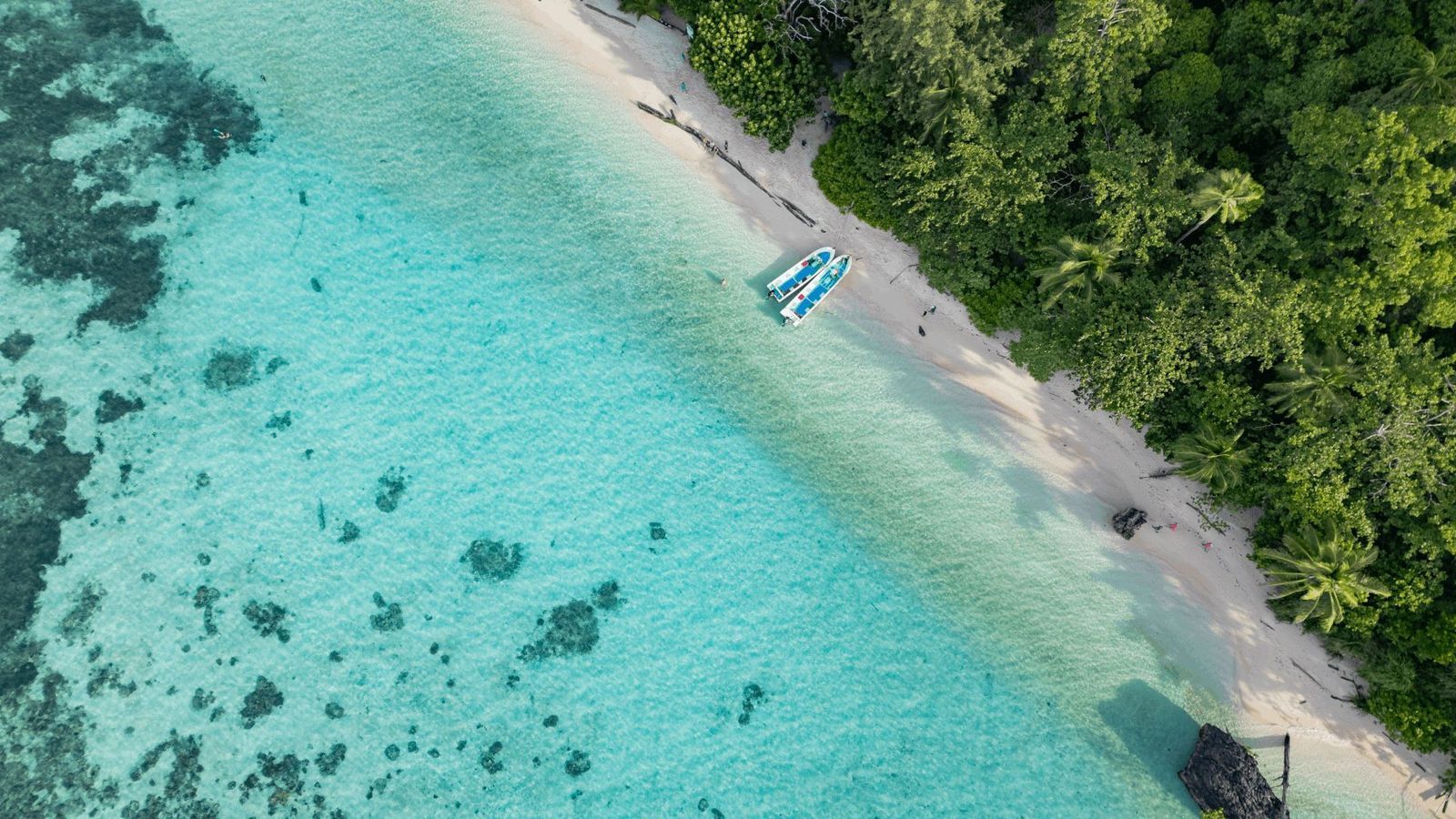
Liveaboard diving tenders on pristine Indonesian beach in Indonesia with coral bommies visible in crystal clear waters - Picture by Dancing Wind Liveaboard
Por qué la Bahía de Cenderawasih
El Parque Nacional Teluk Cenderawasih es el parque nacional marino más grande de Indonesia: 1.453.500 hectáreas de agua protegida, arrecifes y hábitat insular designadas en 2002.¹⁴ La bahía se extiende más de 300 km de ancho con más de 700 km de costa. Su posición en el punto de encuentro de las placas tectónicas australiana y del Pacífico, combinada con la geografía semicerrada de la bahía, crea condiciones para una biodiversidad extraordinaria y altos niveles de endemismo.⁴
Pero el titular son los tiburones ballena, una especie en peligro de extinción¹¹ con una de sus poblaciones residentes más significativas documentada aquí mismo. Alrededor de 160 individuos han sido identificados fotográficamente en la bahía, un esfuerzo de investigación que involucra a buceadores ciudadanos y científicos durante más de una década.²⁵ Lo que hace que esta población sea notable es su comportamiento. En lugar de la típica alimentación por filtración en mar abierto, los tiburones ballena de Cenderawasih se alimentan directamente de plataformas de pesca, a veces verticalmente, a veces en grupos. Esta relación entre los tiburones y las comunidades pesqueras locales de Papúa, que creen que los tiburones ballena traen buena fortuna, ha creado algo sin paralelo en el mundo del buceo.²
El parque se encuentra dentro del Triángulo de Coral, el epicentro mundial de la biodiversidad marina.⁷⁸ Su aislamiento ha producido especies que no se encuentran en ningún otro lugar: se han documentado más de 15 peces de arrecife endémicos, incluido el lábrido hada de Cenderawasih.⁴ Se han encontrado especies de aguas más profundas viviendo a profundidades de buceo recreativo, resultado de la historia geológica única de la bahía.
This is not a destination you combine with much else. The logistics make it a standalone expedition. Divers who want multiple Papua destinations typically plan Raja Ampat or Triton Bay as separate trips. But for divers who want to witness something unrepeatable, Cenderawasih Bay delivers it.
Underwater split-shot showing whale shark feeding at surface with diving boat visible above in crystal-clear Raja Ampat waters - Picture by Neptune Liveaboards
Best Season
June to October is the main diving window. Dry season conditions, calmer seas, and the clearest visibility. Most operators run their Cenderawasih itineraries during this period, and it's when flight connections to Manokwari, Nabire, and Biak are most reliable.
Whale sharks are present year-round — this is confirmed by long-term satellite tagging and photo-ID research across multiple seasons.²⁹ The bagans operate throughout the year, which is what sustains the population. You don't need to chase a seasonal window for the headline encounter. For whale shark diving across Indonesia, see our Indonesia whale shark guide.
November to May brings the wet season, rougher conditions, and most operators don't run trips. The remote location and long distances between sites make weather a significant operational factor.
Book 8–12 months ahead for peak season departures. Supply is limited — fewer operators run Cenderawasih Bay than any other major Indonesian destination. For Indonesia's broader seasonal patterns, see our Indonesia weather and diving seasons guide.
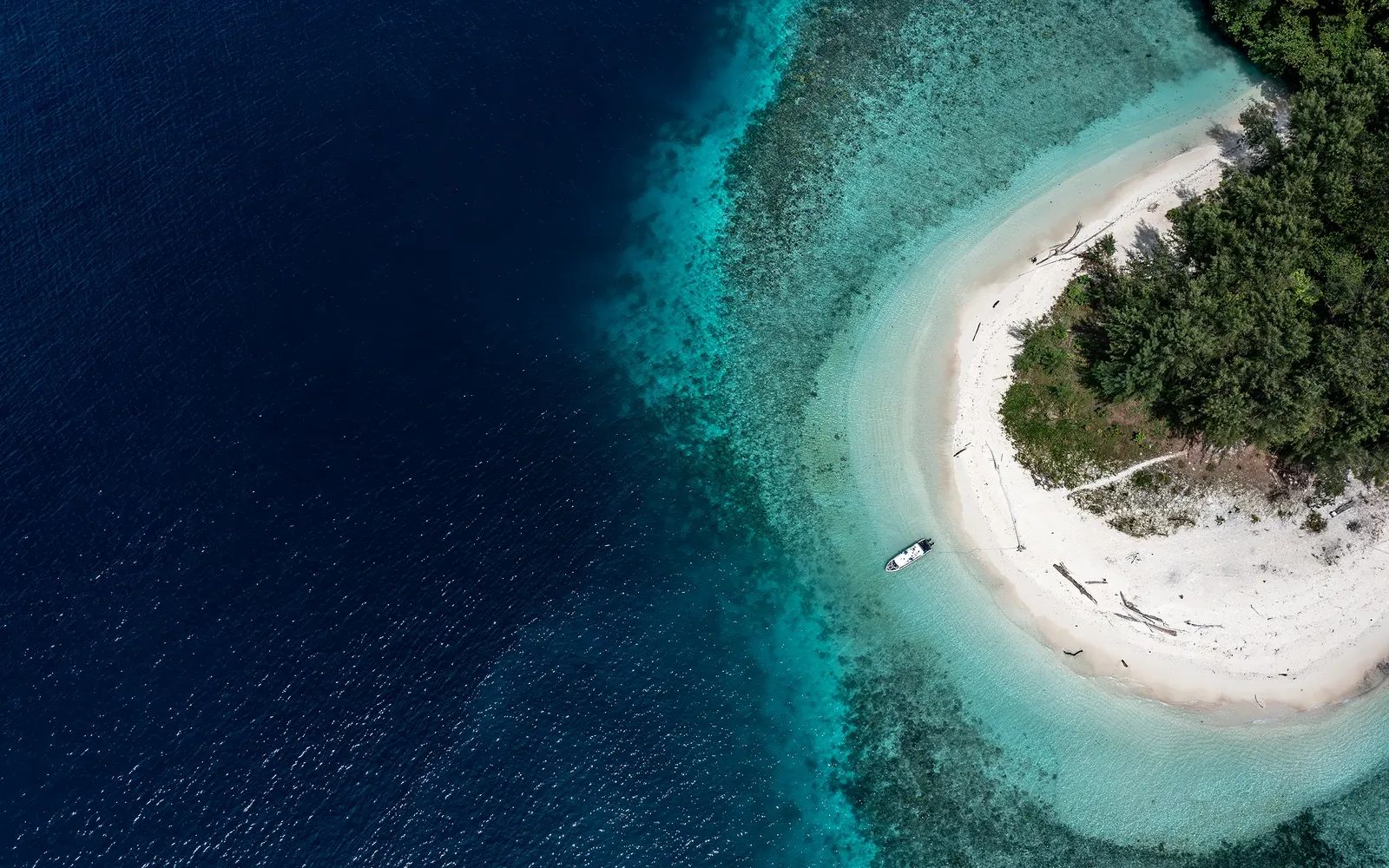
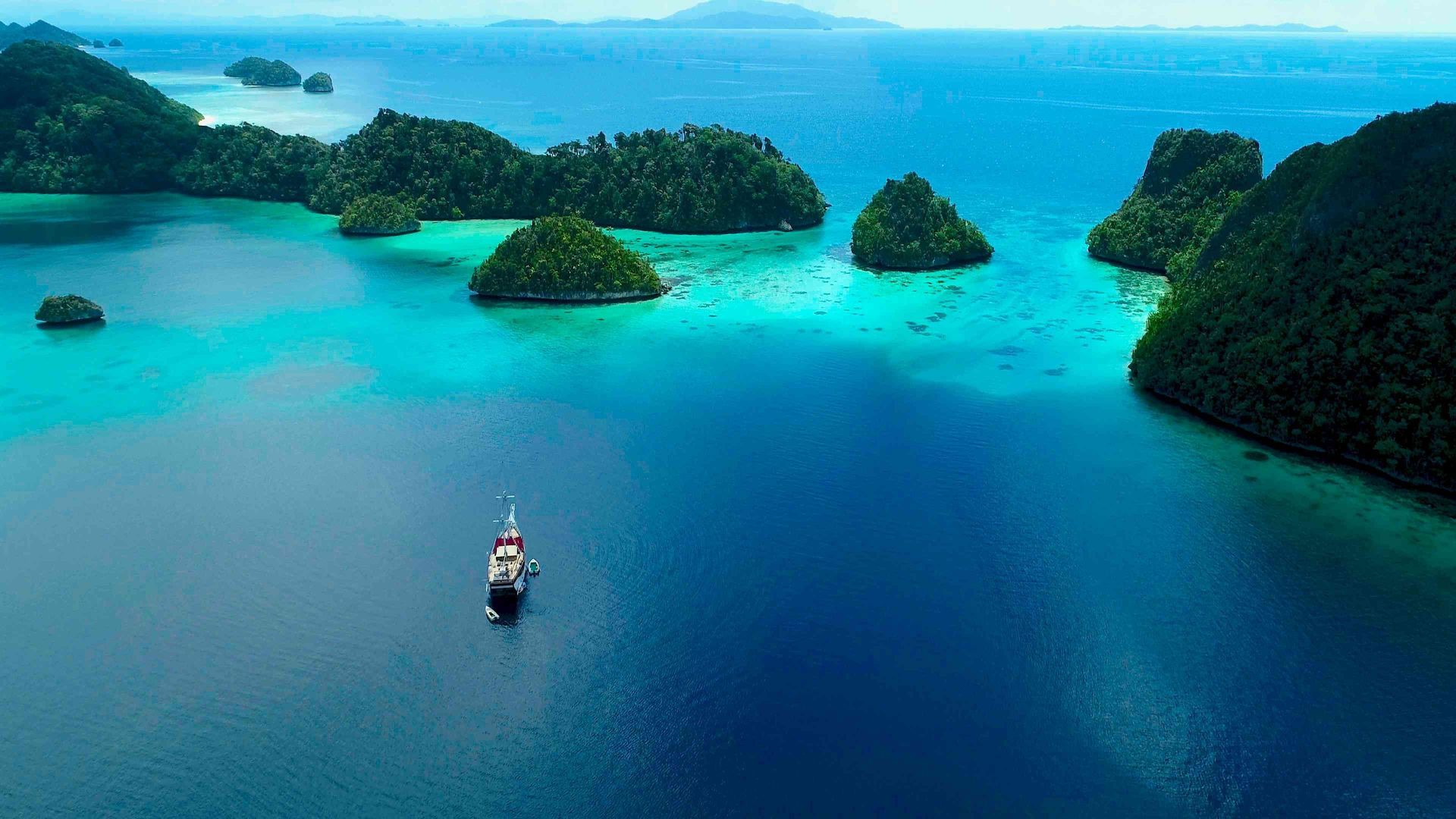
Aerial view of pristine white sand beach with crystal-clear turquoise lagoon and coral gardens surrounded by tropical jungle in Indonesia - Picture by Neptune Liveaboards
Getting There
All routes to Cenderawasih Bay require multiple domestic connections. Fly internationally to Jakarta (CGK) or Bali (DPS), then connect domestically:
- Manokwari (MKW): via Makassar, around 6–8 hours total from Jakarta
- Nabire (NBX): via Ambon or Makassar, around 7–9 hours total
- Biak (BIK): via Makassar, around 5–7 hours total
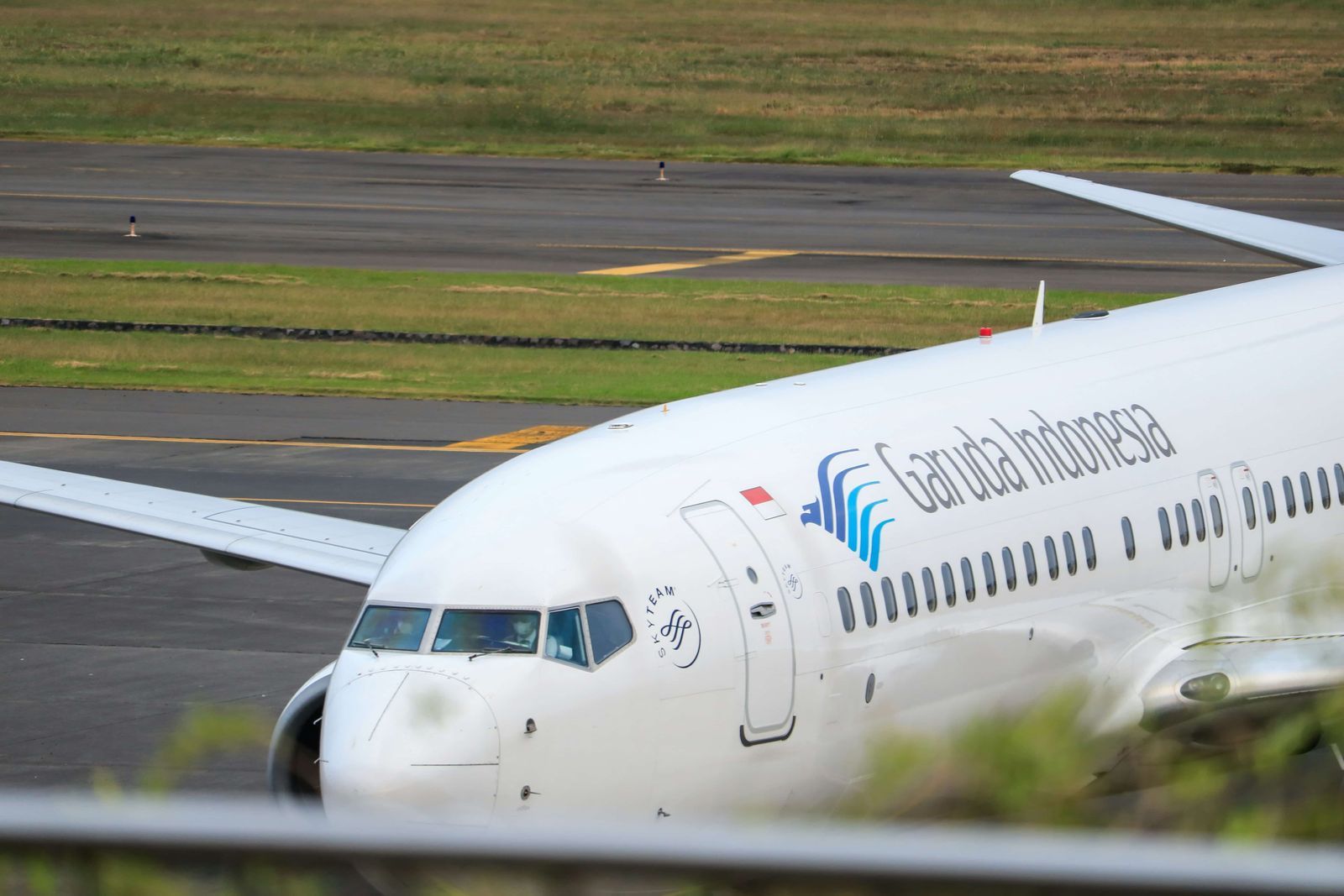
Garuda Indonesia and Lion Air serve all three airports. Plan to overnight in your departure city before boarding — domestic schedules in eastern Indonesia are unpredictable and the connections are too tight to risk on travel day.
Confirm your specific embarkation port with your operator. Some boats depart Manokwari, others Nabire — the sites they focus on differ by starting point. Getting this wrong on a remote expedition is expensive to fix.
Flight logistics to Cenderawasih Bay are among the most complex in Indonesia. Coralbound works with VIFA Holiday, the leading DMC for Indonesia's diving industry, who monitor your connections and rebook when schedules shift.
Garuda Indonesia aircraft runway Indonesian domestic flights liveaboard transfers
Marine Life
Whale Sharks
The around 160 documented resident whale sharks are mostly juvenile males ranging from 2–8 metres, with the majority in the 4–5 metre size class.² They gather at bagans — traditional floating lift-net fishing platforms — where sardines attracted to the lights become an easy food source. The sharks feed by swimming vertically to the surface, sometimes in groups of three to seven at once.
Encounters are consistently reported by operators throughout the operating season. The maximum group allowed per whale shark is six snorkellers or divers — respectful limits that keep the experience manageable and the sharks comfortable.
Endemic and Unusual Species
The park's 15+ documented endemic reef fish species include the Cenderawasih fairy wrasse (Cirrhilabrus cenderawasih), found only within these waters.⁴ The bay's geological isolation has also produced a striking phenomenon: Burgess' butterflyfish (Chaetodon burgessi), normally encountered at 60–80m elsewhere, is found here in just 10–12m of water.¹⁰ A result of the bay's ancient sea history — geologically isolated from Pacific tides for millions of years, allowing deep-water species to establish in shallow, low-competition reef zones.
For the full picture of Indonesia's macro and critter diving, see our Indonesia small animal diving guide.
WWII History
Japanese forces used Manokwari and Biak as strategic Pacific bases during World War II. Allied operations left shipwrecks and aircraft on the bay floor that are now heavily encrusted in coral. These sites add a historical dimension to the expedition that complements the natural diving. Some wrecks are accessible at recreational depths; others require more technical experience.
Other Marine Life
Sea turtles — including hawksbill and green — are regularly encountered. Dugongs graze seagrass beds in the bay. Multiple dolphin species frequent the open water. Macro life across the sandy slopes includes pygmy seahorses, frogfish, ghost pipefish, and nudibranch species. Night diving reveals endemic mantis shrimp species.
Shore Activities and Cultural Context
The relationship between the local Papuan fishing communities and the whale sharks is central to what makes Cenderawasih Bay work as a diving destination. The bagans — floating platforms used for sardine fishing — attract the sharks through the bait, and the fishermen have come to share their catch. Local communities believe whale sharks bring good fortune, and the symbiosis has been sustained for decades.⁴
Some liveaboard operators arrange visits to local villages on the bay's islands. The park's 14,000 residents across 72 villages maintain traditional fishing practices and customary systems (adat) for sustainable resource management.⁴ These communities are central to the park's conservation — not peripheral to it.
The islands of Mioswaar, Roon, Rumberpon, and Yoop are accessible within the park, each with distinct landscapes and communities. Some operators build island exploration and cultural visits into their itineraries.
For trip extensions around the departure cities, see our Indonesia liveaboard extensions guide.
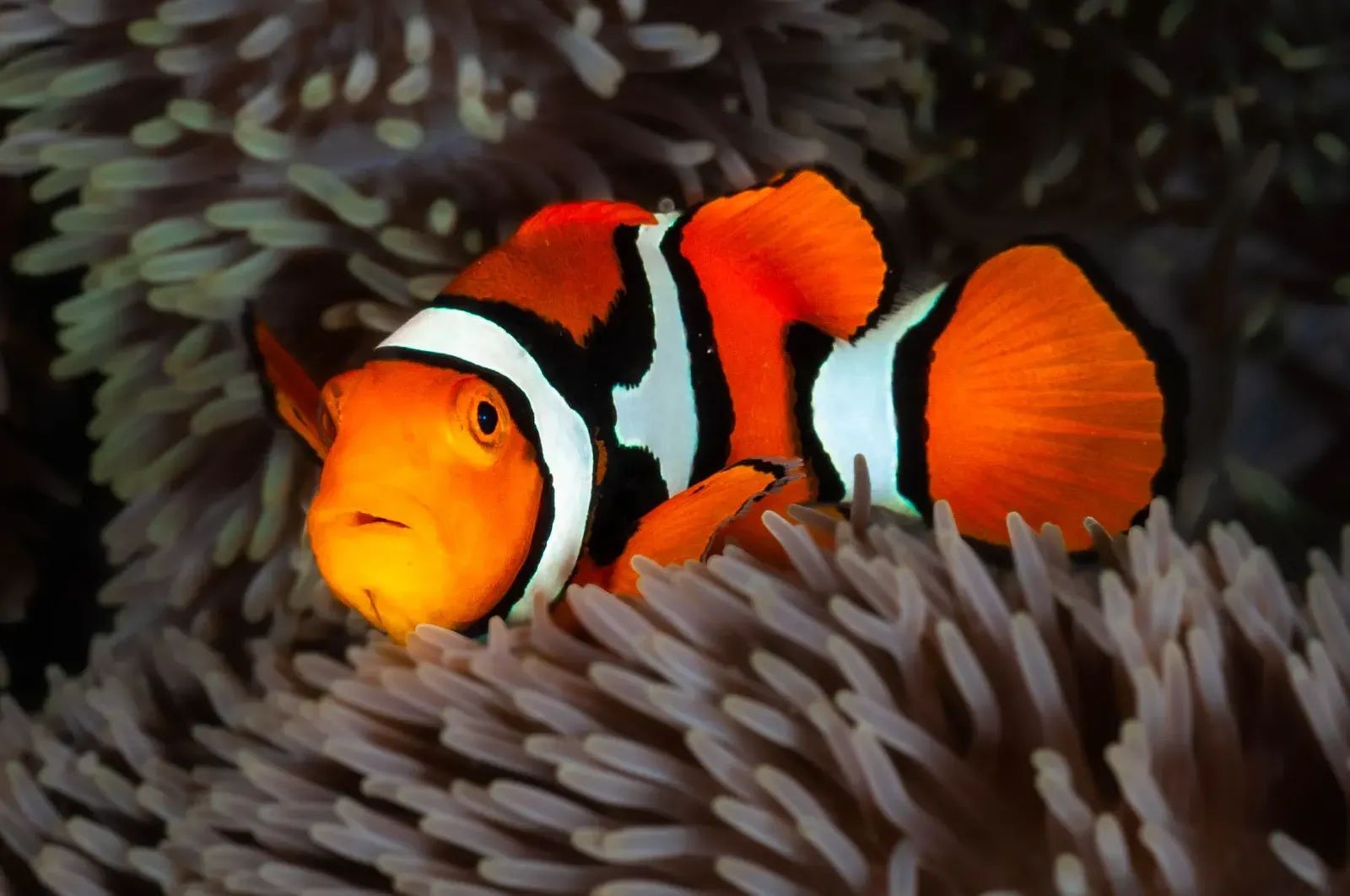
Endemic anemonefish clownfish Cenderawasih Bay Papua Indonesia marine national park liveaboard diving underwater photography - Picture by Dewi Nusantara
Managing Expectations
Whale shark encounters are consistently reported by operators throughout the season, but wildlife is never guaranteed on any single dive. The resident population and bagan feeding dynamic make this the most reliable whale shark destination in Indonesia — but "reliable" is not the same as "guaranteed on demand." Follow your guide's instructions at the bagan sites, maintain the required distances, and let the sharks dictate the interaction.
The bay is vast and remote. Crossings between sites take time, and the distances involved mean you're genuinely at sea. Motion sickness medication is worth having. Starlink is now available on many operators, but connectivity is still intermittent in the most remote areas.
Medical resources are limited. The nearest recompression chamber is in Bali. Dive insurance with emergency evacuation is not optional — confirm your policy covers diving to at least 40m. Travel insurance is strongly recommended: Cenderawasih Bay expeditions cost $5,000–$12,000+ and deposits are non-refundable.
This is remote expedition diving. Dives are generally calm by Indonesian standards — the protected bay has mild currents and stable temperatures — but the logistics and self-sufficiency required are real. Intermediate divers can manage the diving itself; the challenge is the journey and the remote context.
Three smiling local Indonesian children waving from traditional village setting surrounded by tropical vegetation in West Papua - Picture by Neptune Liveaboards
Frequently Asked Questions
What certification do I need for Cenderawasih Bay?
The bagan whale shark encounters are calm, shallow, and suitable for all levels including beginners — even snorkellers. The whale sharks come to the surface to feed, which means you don't need to be a strong diver to have a close encounter. Some outer reef sites and WWII wreck dives go deeper and may have mild current, where Advanced Open Water is useful. Most operators welcome Open Water divers; check specific requirements on individual listings.
How many whale sharks can I expect to see?
Groups of three to seven individuals at feeding platforms is a regular occurrence, with exceptional encounters involving more. Operators consistently report high success rates during the operating season. The resident population and bagan feeding dynamic make this more reliable than any other whale shark destination in Indonesia. Some individual encounters involve sharks in the 6–8 metre range.
Is this suitable for snorkellers?
Yes — the bagan encounters are surface events and snorkelling is often the best way to experience them. Whale sharks feed at the surface here, which means snorkellers can be as well-positioned as divers. Most operators accommodate non-divers for the whale shark interactions.
Can I combine Cenderawasih Bay with other Indonesian destinations?
Cenderawasih Bay is best treated as a dedicated expedition. The distances and logistics involved make it difficult to combine efficiently with other liveaboard destinations in a single trip. Most divers who want to see multiple Indonesian destinations plan separate trips across different seasons. Reach out via WhatsApp if you want help structuring a broader Indonesia diving itinerary.
What are the whale shark interaction guidelines?
Park regulations prohibit touching whale sharks, and responsible operators brief guests thoroughly before any bagan encounter. Standard guidelines include passive observation — keep a respectful distance, don't block feeding paths, move calmly, and let the sharks set the pace. Flash photography is not permitted. Local regulations limit the number of people in the water at any one time. Your operator will brief you on the specific protocols before your first encounter — follow them closely.
Is there good diving beyond whale sharks?
Excellent. The WWII wrecks add historical depth. The endemic species — particularly the Cenderawasih fairy wrasse — are compelling for fish ID enthusiasts. Sandy slopes produce strong macro encounters. Hard coral formations throughout the bay are among the healthiest in Indonesia.⁴ This is not a one-trick destination for experienced divers.
What should I budget for a Cenderawasih Bay trip?
Mid-range vessels run $400–$600/day; luxury $600+/day. For a 10–14 day trip, total vessel costs run $4,000–$12,000+ before additional costs. Add $400–$800 for domestic flights depending on routing, marine park fees per person, and crew tips. Travel and dive insurance is mandatory and should be budgeted separately.
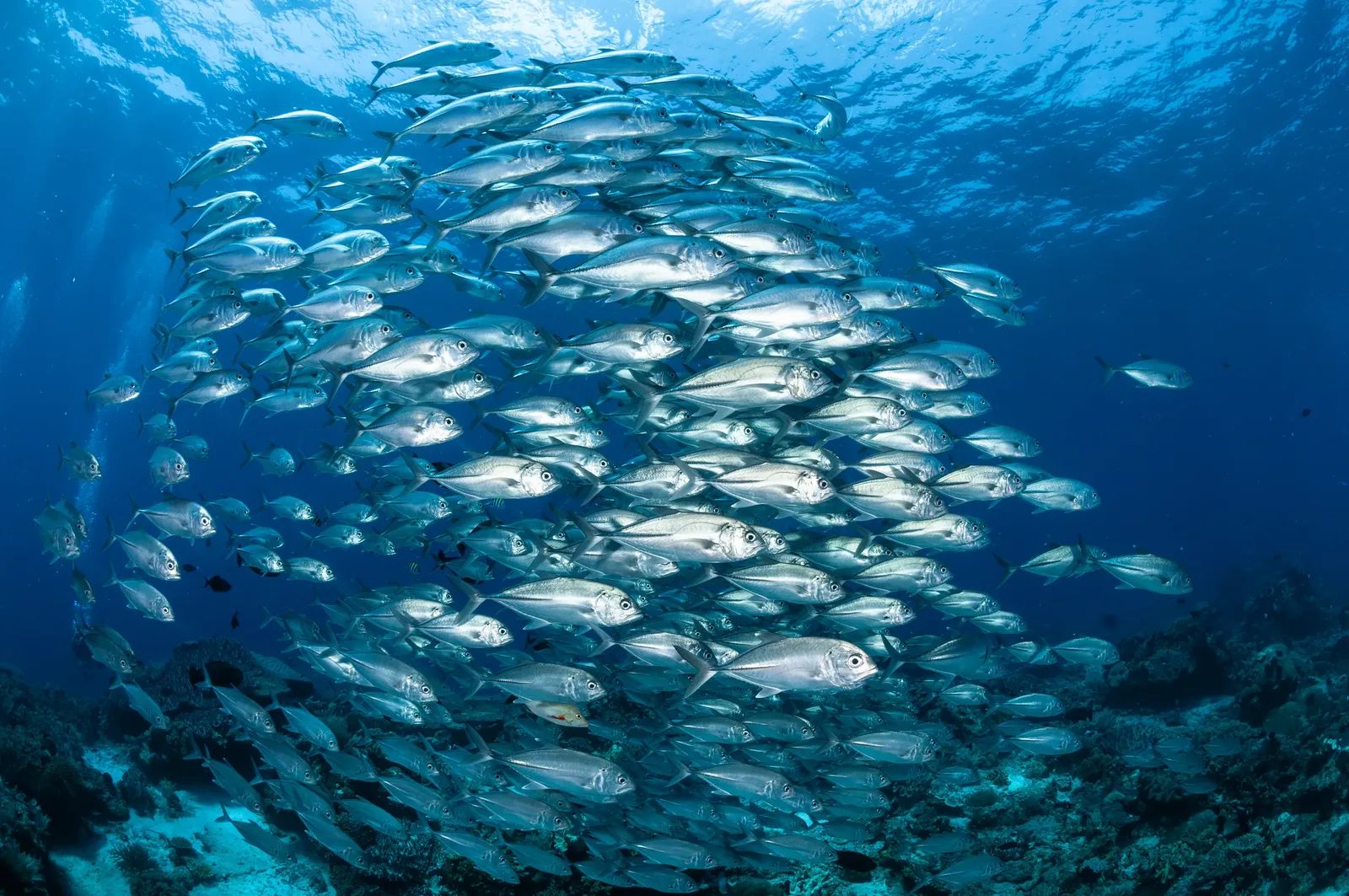
Massive school of silver trevally forming dense baitball in crystal-clear blue waters over coral reef in Indonesian archipelago - Picture by Dewi Nusantara
Book Your Cenderawasih Bay Trip
We're a Bali-based platform run by divers who know Cenderawasih Bay well. You'll pay the same price booking through us as booking direct — operators maintain price parity across all channels. Every booking through Coralbound includes a booking gift — including the option of a complimentary hotel night — and you get real support on top: domestic flight coordination through VIFA Holiday and a team that understands what remote Papua expeditions actually involve.
Questions before you book? Message us on WhatsApp or reach us via our contact form. Want to know more about how we work? Read our why book with Coralbound page.