Kepulauan Derawan di Kalimantan Timur (Borneo) memiliki populasi penyu hijau terbesar yang bersarang di Asia Tenggara.³ Berbagai pulau di distrik Berau mendukung bersarang sepanjang tahun, dengan sekitar 15.000 sarang yang diletakkan setiap tahun — populasi yang memiliki signifikansi konservasi internasional.⁴ Di bawah air, penyu hampir selalu ada: beristirahat di karang, merumput di padang lamun, dan berenang di dinding. Di sinilah Anda datang untuk menyelam bersama mereka.
Panduan ini mencakup semua yang Anda perlukan untuk merencanakan perjalanan ke Kepulauan Derawan: empat pulau utama, apa yang ditawarkan masing-masing di bawah air, musim terbaik, cara menuju ke sana, dan cara mengaksesnya dengan liveaboard atau resor. Ini adalah bagian dari panduan liveaboard Indonesia — pusat semua tujuan menyelam di Indonesia.
Fakta Singkat Tentang Menyelam di Kepulauan Derawan
- Musim terbaik: April–Oktober
- Spesies karang: 507 spesies¹
- Spesies ikan: 872 spesies¹
- Suhu air: 26–29°C sepanjang tahun
- Visibilitas: 10–15m di dekat Derawan dan Samama; 20m+ di terumbu luar Maratua
- Selam per hari: 3–4 pada sebagian besar rencana perjalanan
- Tingkat pengalaman: Cocok untuk semua tingkatan; beberapa lokasi Maratua cocok untuk penyelam tingkat lanjut
- Durasi perjalanan: 7–10 hari direkomendasikan
- Kisaran biaya: $300–$700+/hari tergantung kategori kapal
- Bandara tujuan: Tarakan (TRK) atau Berau/Kalimarau (BEJ), Kalimantan Timur (Borneo)
- Waktu pemesanan: 6–12 bulan; keberangkatan terbatas cepat terisi
Jawaban Singkat
Kapan waktu terbaik untuk menyelam di Kepulauan Derawan?
April hingga Oktober adalah jendela menyelam utama — musim kemarau, laut tenang, dan visibilitas terbaik. Mei hingga September adalah puncak musim penyu bersarang di pantai Sangalaki dan optimal untuk pertemuan pari manta. Januari adalah bulan terburuk dengan kondisi badai dan sebagian besar resor Maratua tutup untuk pemeliharaan. Untuk gambaran lengkap pola musiman Indonesia, lihat panduan cuaca dan musim menyelam Indonesia.
Apakah penyu terjamin di Derawan?
Derawan menjadi tuan rumah populasi penyu hijau terbesar yang bersarang di Asia Tenggara — sekitar 15.000 sarang yang diletakkan setiap tahun di seluruh pulau Berau.³ Penampakan penyu berkali-kali pada sebagian besar penyelaman adalah norma, bukan pengecualian. Operator secara konsisten melaporkan penyu di hampir setiap penyelaman di lokasi utama. Satwa liar tidak pernah dijamin pada penyelaman tertentu, tetapi ini adalah yang terdekat yang dimiliki Indonesia. Untuk penyelaman penyu di seluruh Indonesia, lihat panduan penyu Indonesia.
Apa yang membuat pertemuan pari manta di Derawan istimewa?
Sangalaki Island is one of Indonesia's most important manta aggregation sites. The Marine Megafauna Foundation has identified 155 individual reef manta rays in the area from years of photo-ID research.⁵ Mantas feed at plankton lines off the north of Sangalaki, particularly around new and full moon when tidal currents are strongest.⁵ The encounters are feeding and foraging behaviour rather than cleaning stations alone — a different dynamic from Komodo or Raja Ampat. For diving with manta rays across Indonesia, see our Indonesia big animal diving guide.
How do I get to Derawan Islands?
Fly to Berau/Kalimarau Airport (BEJ) from Jakarta via Balikpapan, or from Surabaya. From the airport, a land transfer takes you to Tanjung Batu harbour, the main embarkation point for the islands. Liveaboards typically board at Tanjung Batu or Tarakan (TRK) depending on the operator — confirm your exact port before booking. Boat transfers from Tanjung Batu reach Derawan Island in around 2 hours.
Can I visit the Kakaban jellyfish lake?
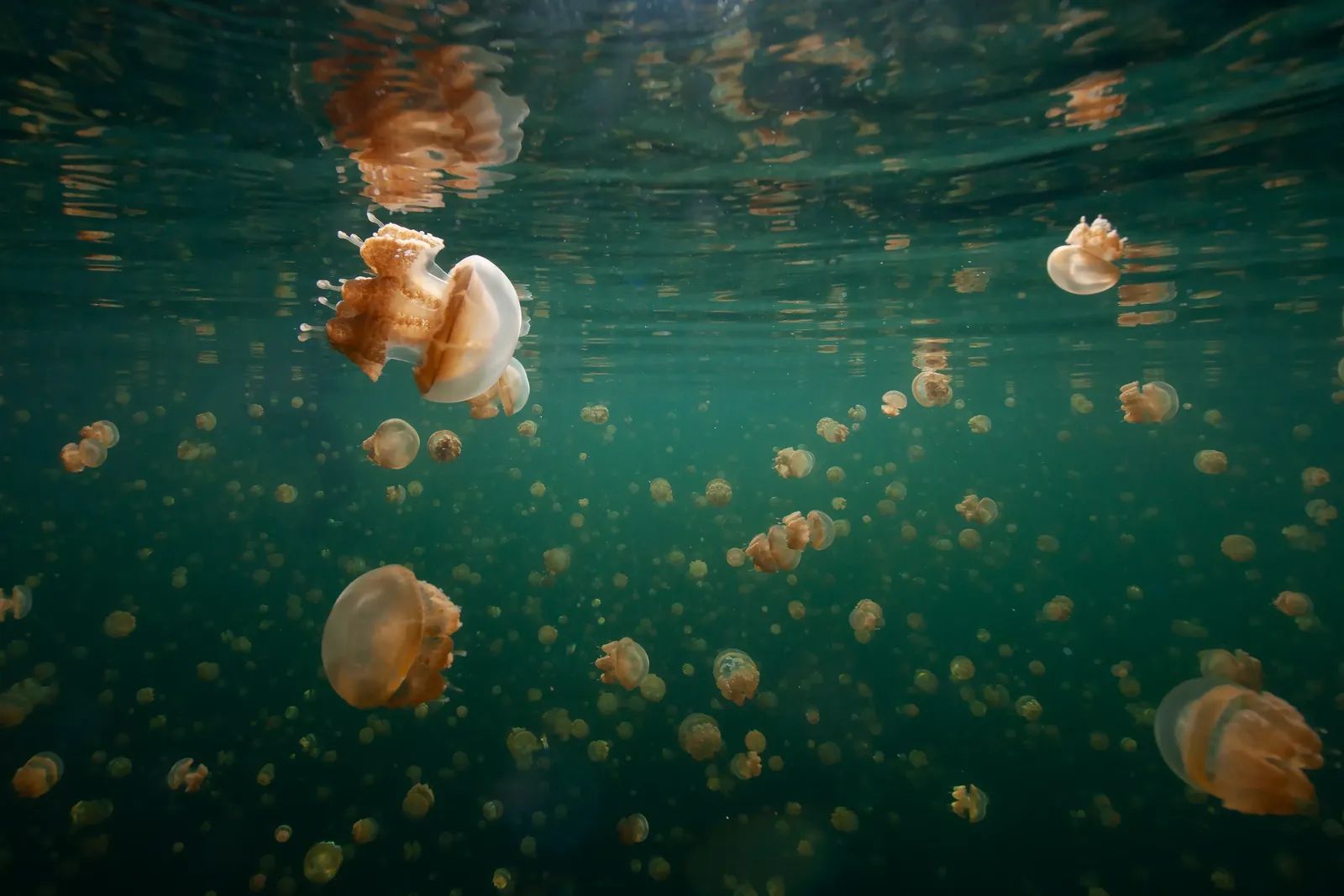
Yes — and it's one of the most unusual experiences in Indonesia. Kakaban's landlocked brackish lake holds four species of stingless jellyfish found nowhere else with this diversity on Earth.⁸ It's accessible by snorkel or dive. A 10-minute jungle walk from the dock leads to the lake. The jellyfish experience can vary with water temperature and conditions — confirm with your operator or guide.
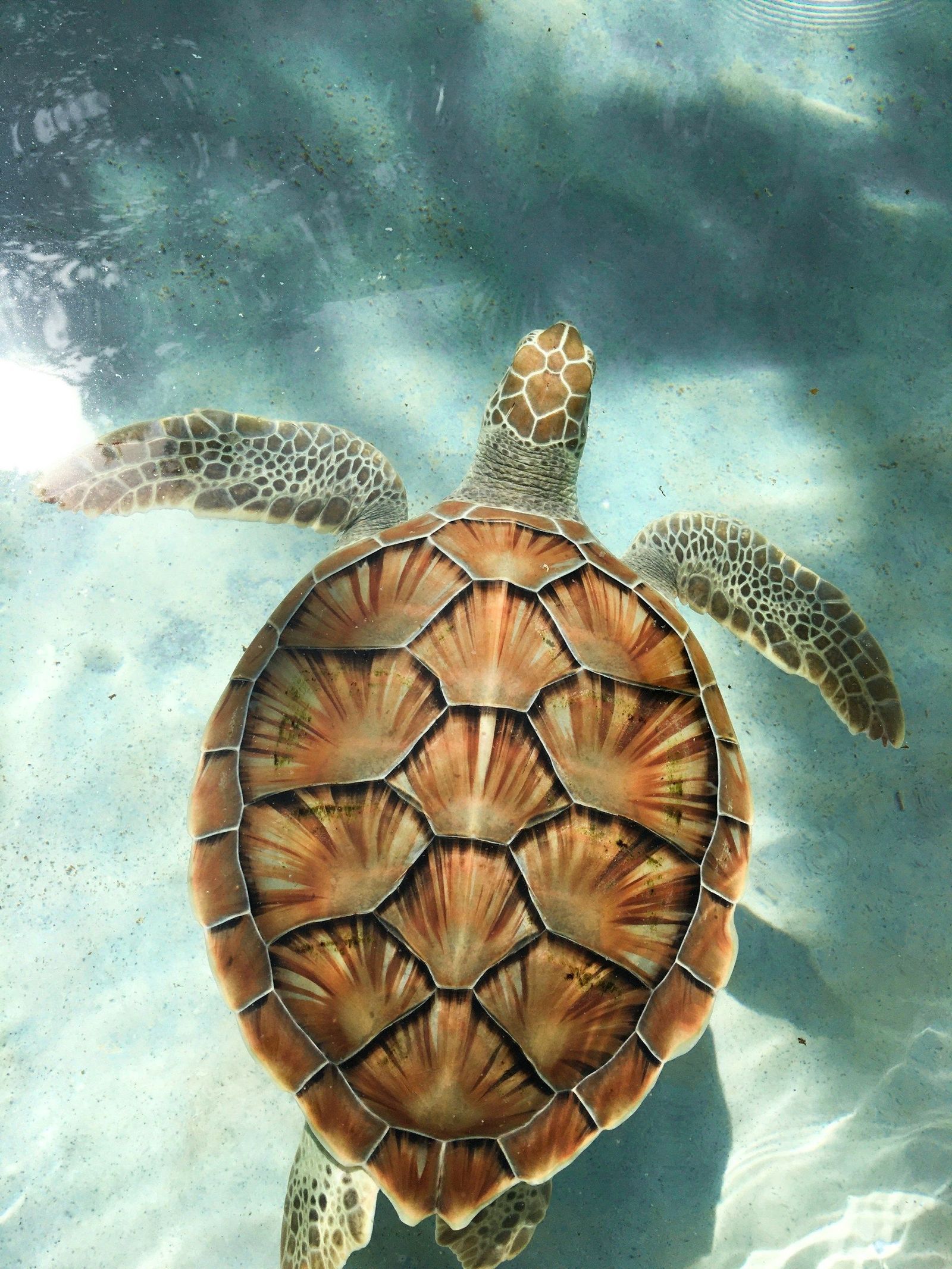
Green sea turtle swimming underwater Indonesia liveaboard marine wildlife diving
Why Derawan Islands
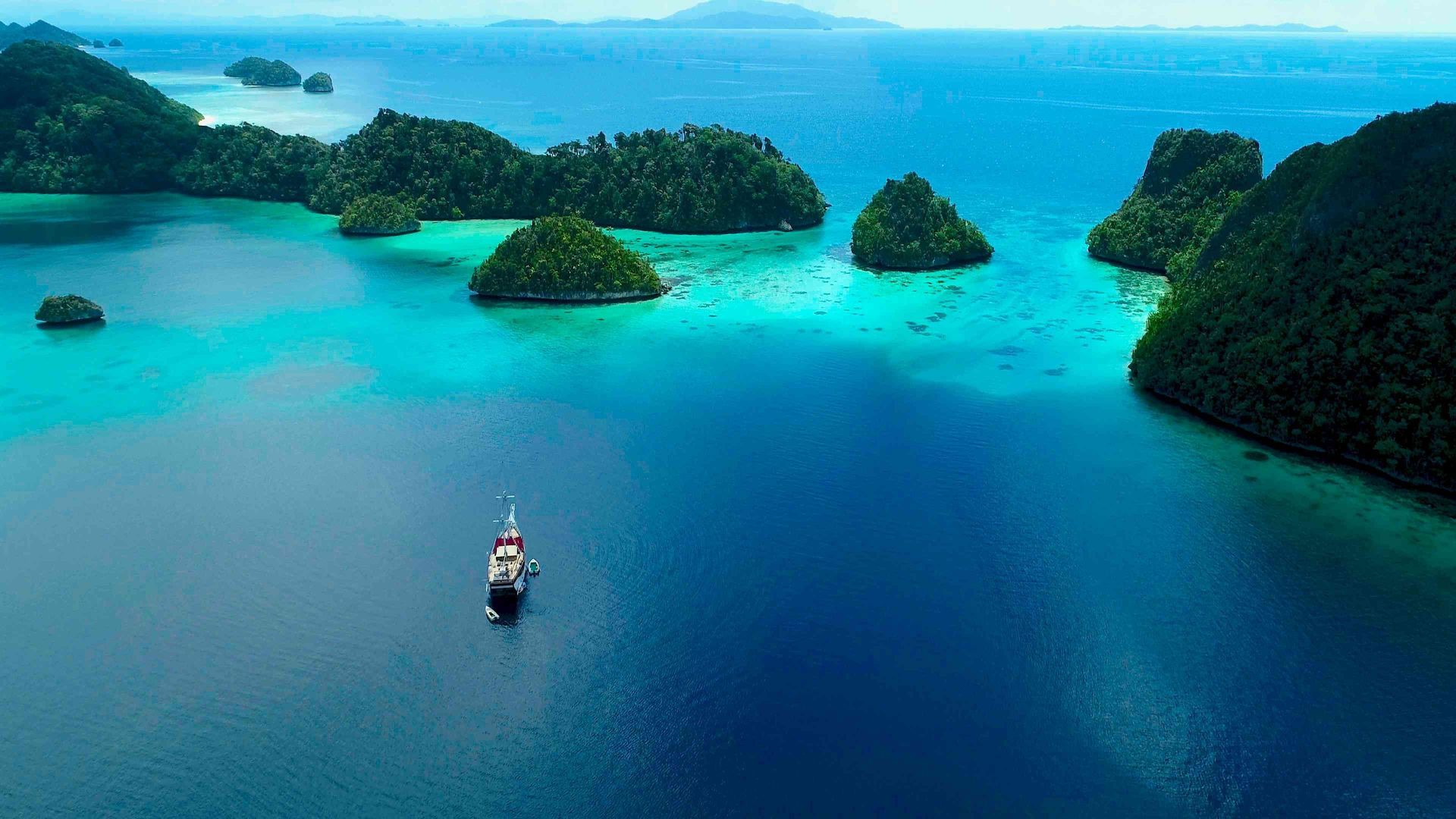
The Derawan Archipelago is a group of 31 islands off the East Kalimantan (Borneo) coast, sitting within the Coral Triangle.⁹¹⁰ With 507 coral species and 872 reef fish species, it ranks second only to Raja Ampat for hard coral diversity in Indonesia.² The four main diving islands — Derawan, Sangalaki, Kakaban, and Maratua — each have a distinct character underwater. The archipelago was declared a Marine Protected Area in 2005, and conservation work by the Turtle Foundation, WWF Indonesia, and Marine Megafauna Foundation has continued since.⁴
Derawan Island is the most accessible and the social hub. Turtles rest on the house reef year-round. The island has modest dive resorts and is the typical base for day trips to the other islands. Visibility is lower here — 10–15m is typical — but the turtle density is exceptional.
Sangalaki Island is the wildlife centre. Hawksbill and green turtles nest on its beaches year-round. The north of the island draws reef manta rays to feed at plankton-rich current lines.⁵⁶ Sangalaki is a critical site for both turtle conservation and manta research.
Kakaban Island has the jellyfish lake — a geological phenomenon unique on Earth at this scale.⁷ The island walls also offer dramatic diving: drop-offs to 180m, strong upwellings, and a different character from the calmer inner islands.
Maratua is the outer atoll. Clear water, drift dives, walls patrolled by barracuda schools, reef sharks, leopard sharks, and thresher sharks. The strongest diving conditions in the archipelago, and the highest visibility. Some advanced sites have significant current.
Together the four islands give divers a range that no single liveaboard destination in Indonesia quite replicates — macro and turtles, mantas, a geological curiosity, and pelagic drift diving, all within a protected marine area that sees very little traffic.
Best Season
April through October is the main diving window. Calm seas, dry conditions, and the best visibility across all four islands. May to September overlaps with peak turtle nesting season on Sangalaki's beaches and the highest manta activity at the plankton feeding lines.
The wet season runs November to March. Conditions are generally manageable except in January, when storms make Maratua inaccessible and most resorts there close for maintenance. Derawan Island itself is diveable most of the year given its protected location, but the outer islands and Maratua are weather-dependent.
Timing around new and full moon phases maximises manta encounters at Sangalaki — tidal currents are strongest and plankton accumulates most predictably.⁵
Book 6–12 months ahead for peak season. Derawan sees very limited operator frequency compared to Raja Ampat or Komodo — liveaboard departures are limited and fill quickly.
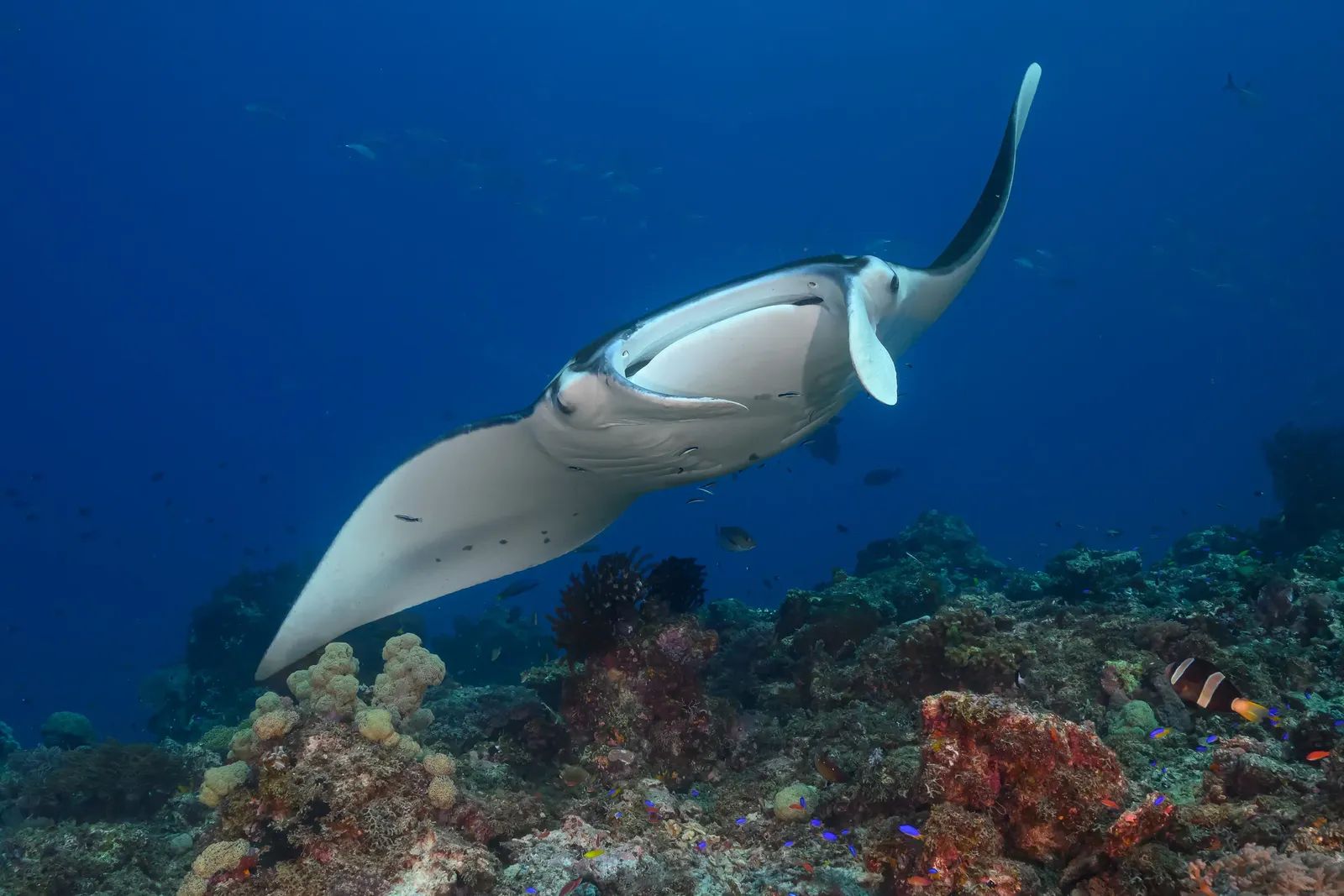
Reef manta ray on a cleaing station in Indonesia - Picture by Neptune Liveaboards
Getting There
Fly to Berau/Kalimarau Airport (BEJ) from Jakarta via Balikpapan, or from Surabaya. From the airport, a land transfer takes you to Tanjung Batu harbour — the main embarkation point for the Derawan Islands. Liveaboards typically board at Tanjung Batu. Some operators use Tarakan (TRK) as an embarkation point instead, which requires additional boat transfers and more travel time.
Always confirm your exact embarkation port before booking domestic flights. Maratua Airport has limited charter service for some operators doing Maratua-focused trips.
Flight logistics to East Kalimantan are less complex than Papua routes but schedules can shift. Coralbound works with VIFA Holiday, the leading DMC for Indonesia's diving industry, who handle domestic flight monitoring and rebooking.
Garuda Indonesia aircraft runway Indonesian domestic flights liveaboard transfers
Marine Life
Green and Hawksbill Turtles
The headline species. The Berau district holds Southeast Asia's largest green turtle nesting population, with roughly 15,000 clutches laid annually across five key nesting islands.³ Green sea turtles (Chelonia mydas) feed almost exclusively on seagrass, which means they're found grazing in shallow seagrass meadows in predictable locations — easy to find on snorkel as well as on scuba. This makes Derawan unusual among Indonesian diving destinations: the main encounter doesn't require going deep. Hawksbill turtles (Eretmochelys imbricata) are seen throughout Indonesia, but nowhere in quite the concentration found at Derawan. Both species are protected across the archipelago following MPA designation in 2005.⁴ Sangalaki and Derawan Island's house reef are the most reliable sites, but turtles appear across all four islands. For the full picture of sea turtle diving across Indonesia, see our Indonesia turtle guide.
Reef Manta Rays
Sangalaki Island is one of Indonesia's most important reef manta aggregation sites. MMF research identified 155 individual reef mantas from 846 encounters over three years of surveys.⁵ The mantas feed at plankton lines off Sangalaki's north coast — Manta Parade, Manta Run, and Manta Tease are the main sites — with peak activity during incoming tides around new and full moon.⁵ A third of the females surveyed showed signs of pregnancy or recent mating, confirming Sangalaki as a critical reproductive area.⁵ See our Indonesia big animal diving guide for the broader manta context across Indonesia.
Kakaban Jellyfish Lake
Kakaban's landlocked lake holds four species of stingless jellyfish: moon jellyfish (Aurelia aurita), spotted jellyfish (Mastigias papua), box jellyfish (Tripedalia cystophora), and upside-down jellyfish (Cassiopea ornata).⁸ The lake is the only place in the world with this diversity of stingless jellyfish species — the Palau jellyfish lake has two species; Kakaban has four.⁷ The experience is by snorkel or SCUBA — swimming through brackish water surrounded by jungle with jellyfish pulsing around you. Jellyfish activity can vary significantly with water temperature — recent visits have seen reduced numbers during warmer periods, though conditions appear to be recovering. It's still worth doing, and worth checking current conditions with your operator before visiting.
Maratua Pelagics and Whale Sharks
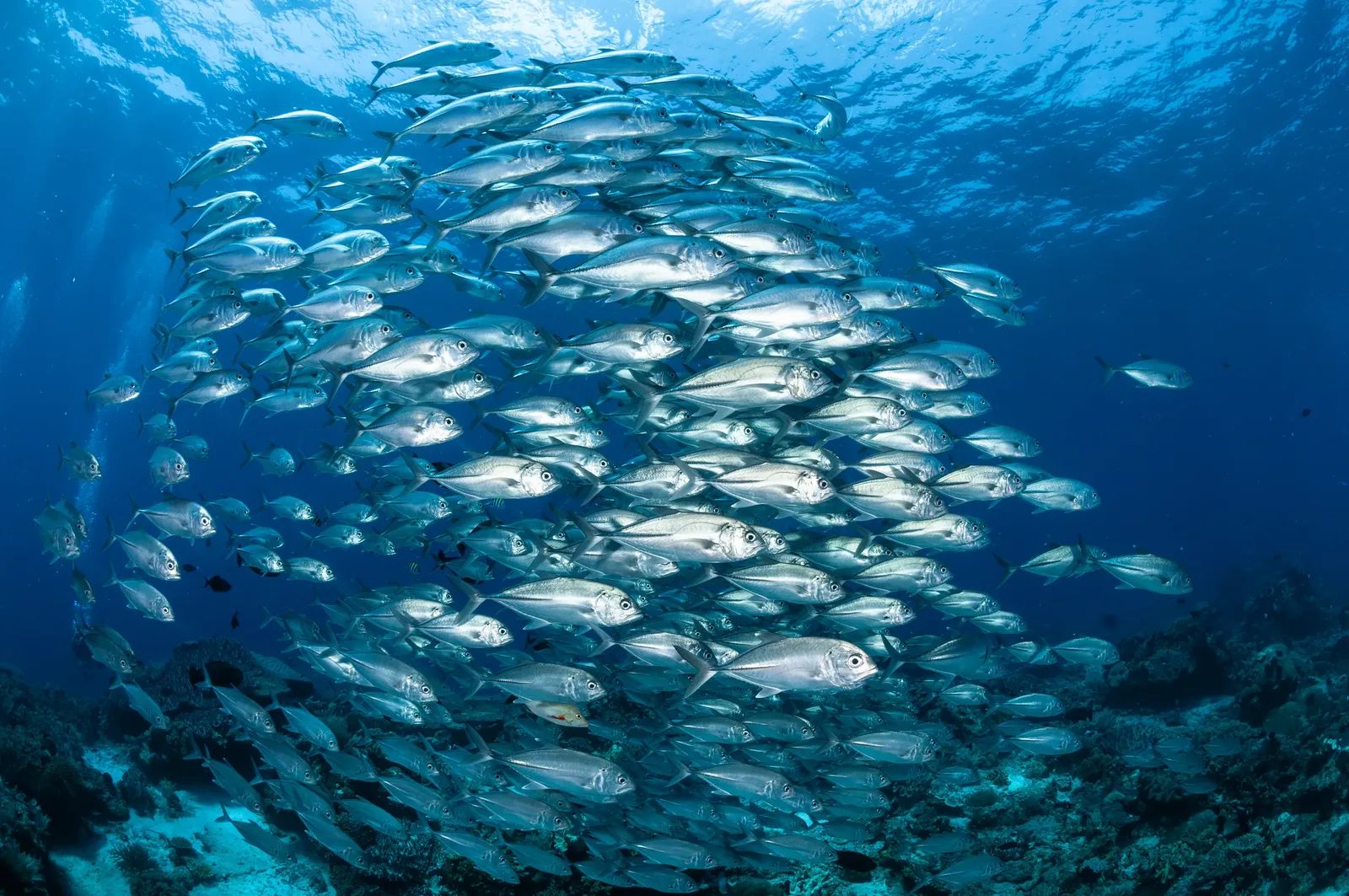
The Maratua atoll outer walls attract schooling chevron barracuda, giant trevally, snappers, and jacks in strong-current drift dives. Leopard sharks and pelagic thresher sharks are documented in the area.⁵ Whale sharks are encountered at bagans in Taliyasan Bay — liveaboards typically include this as part of the itinerary; resort guests need an additional day trip. Encounters are not year-round reliable in the Cenderawasih Bay sense, but liveaboards that time their visit well report good results. For dedicated whale shark diving across Indonesia, see our Indonesia whale shark guide. Night dives on Maratua and Derawan add nudibranch species, bobbit worms, and crustaceans. For the full macro picture across Indonesia, see our Indonesia small animal diving guide.
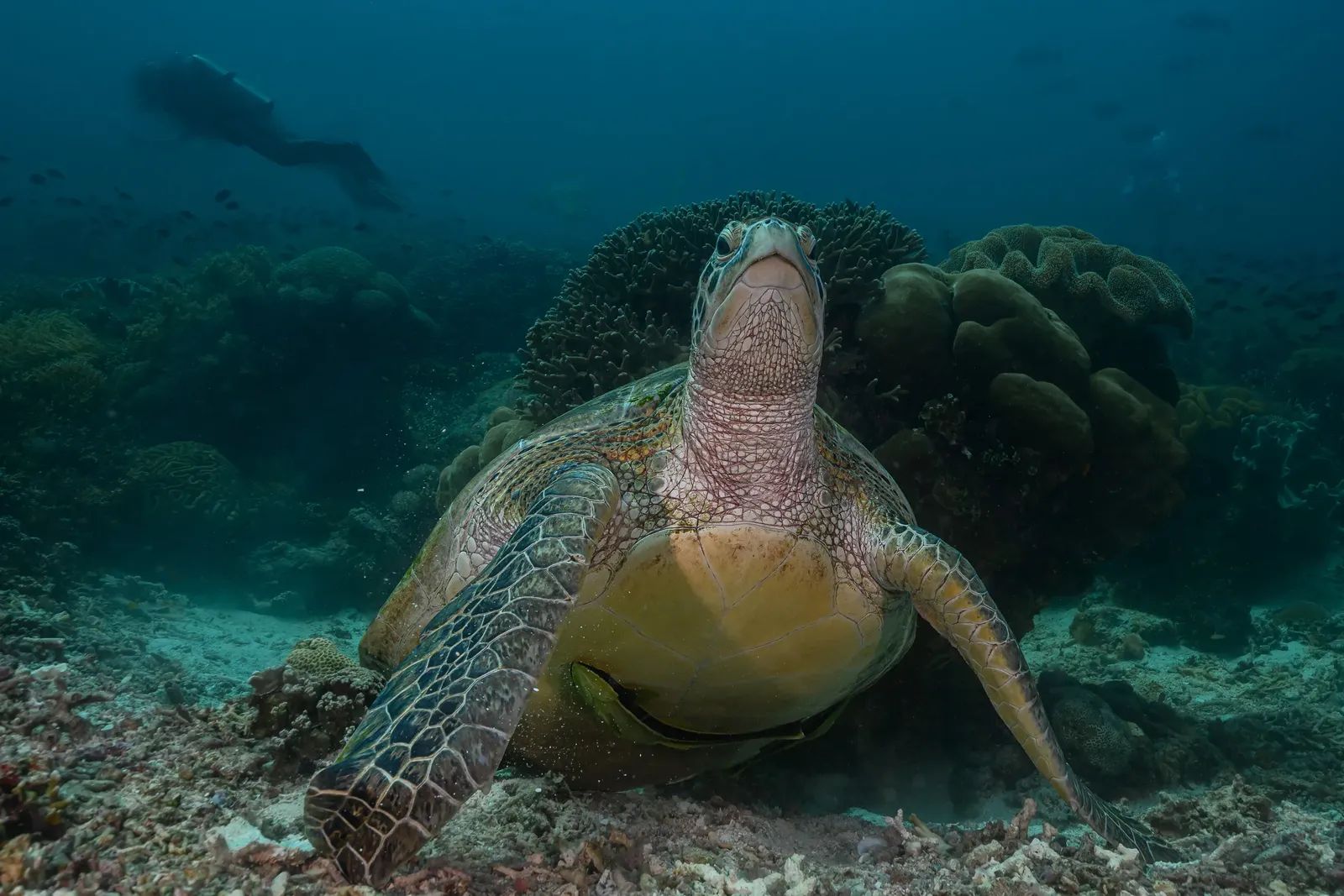
Green sea turtle facing camera with detailed shell and facial patterns on coral reef in Raja Ampat marine sanctuary - Picture by Neptune Liveaboards
Liveaboard vs Resort
Derawan can be experienced by liveaboard or from dive resorts on the islands. Each has advantages.
Liveaboards cover all four islands in a single trip, can chase conditions and time sites to tidal cycles, and include Taliyasan Bay for whale shark encounters at bagans. They are the most efficient way to see everything. Derawan is not on the main Indonesian liveaboard circuit — only a handful of operators run scheduled departures here, and spaces are limited. Book early.
Resorts on Derawan Island and Maratua offer closer access to specific sites, lower daily cost, and more flexibility to dive the same reef multiple times. Derawan Island resorts have the advantage of the house reef turtle encounters. Maratua resorts are ideal for drift diving and outer wall access.
Many serious divers combine a liveaboard with a night or two at a Derawan or Sangalaki resort. Reach out if you want help building that combination.
Stingless jellyfish lake Kakaban Island Derawan Indonesia underwater photography showing golden jellyfish swimming in emerald waters unique diving snorkeling experience liveaboard destination - Picture by Dancing Wind Liveaboard
Managing Expectations
Visibility varies significantly across the archipelago. Near Derawan Island, 10–15m is typical due to river outflow from the Berau River — the same nutrients that feed the reef life cloud the water. At Maratua and the outer reefs, 20–25m is achievable. Managing expectations around visibility is important — this is not the crystal water of the Banda Sea or Cenderawasih Bay.
Manta encounters at Sangalaki are among Indonesia's most reliable but depend on tidal and lunar timing. Guides and operators with local knowledge make a significant difference. Plan at least two or three days at Sangalaki to maximise encounter probability.
Jellyfish lake is a wildcard — jellyfish activity has been variable in recent years due to water temperature changes. When conditions are good the experience is extraordinary; when numbers are low it's still a genuinely unusual natural environment. Check current conditions with your operator before the trip.
Derawan is genuinely remote. The nearest recompression chamber is in Tarakan or Balikpapan. Dive insurance with emergency evacuation is mandatory. Travel insurance is strongly recommended as deposits are non-refundable.
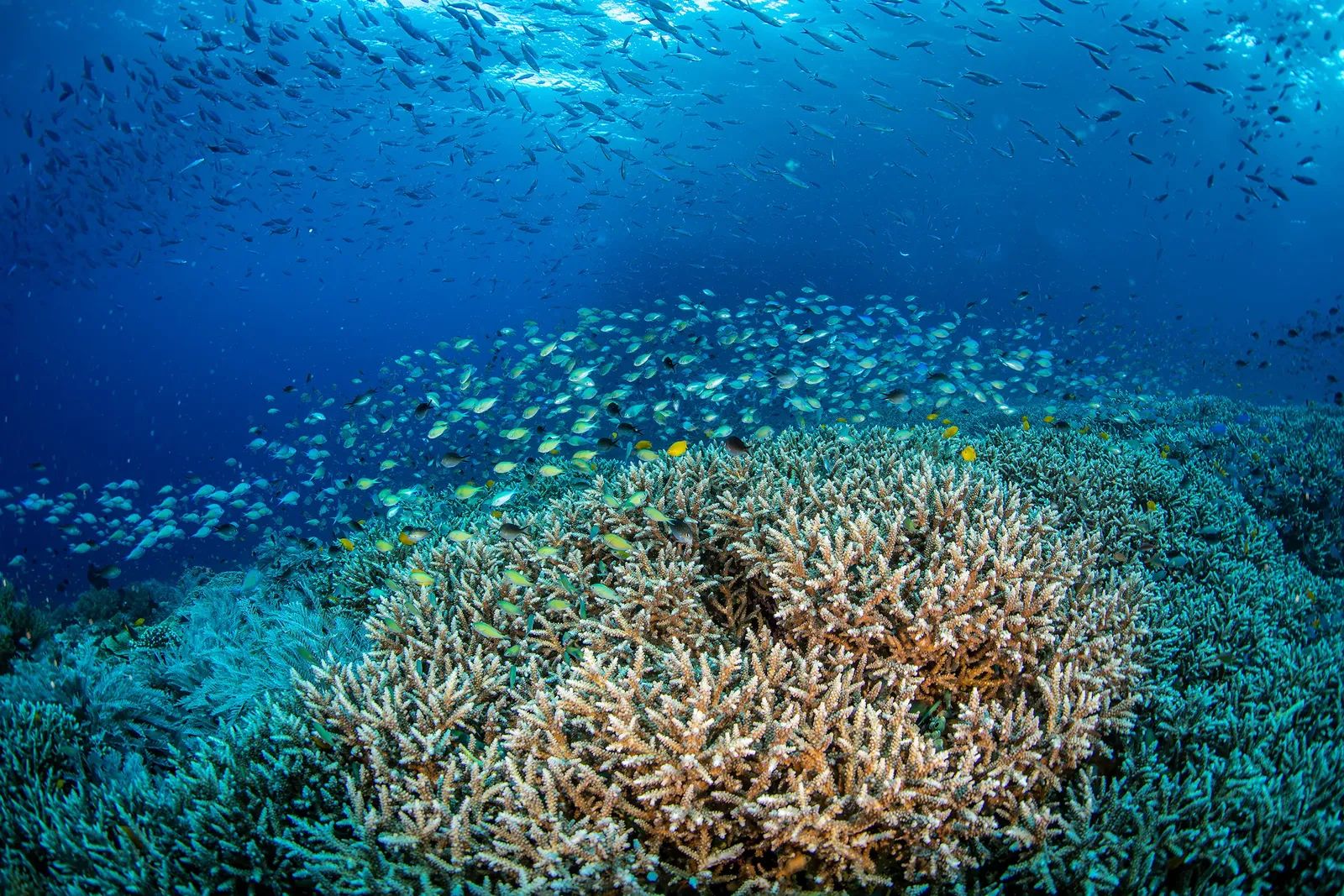
Pristine staghorn coral garden with massive schools of blue-green chromis and anthias in Indonesian waters - Picture by Neptune Liveaboards
FAQ
Is Derawan Islands suitable for beginner divers?
Yes — most sites around Derawan Island and Sangalaki are calm, shallow, and well-suited to Open Water divers. The turtle encounters are accessible to all levels. Maratua's stronger current sites and deeper walls are better suited to Advanced divers with drift experience. Check individual operator requirements.
How does Derawan compare to other Indonesian turtle destinations?
Nowhere else in Indonesia has the turtle density that Derawan offers. The Berau district is confirmed as Southeast Asia's largest green turtle nesting population — that status translates directly to the number of turtles encountered underwater.³ Other Indonesian destinations see turtles incidentally; Derawan is where turtles are the headline.
Can I combine Derawan with other Indonesian destinations?
Derawan is not on the main liveaboard circuit between Komodo and West Papua, so most divers treat it as a dedicated trip. A handful of operators run routes from North Sulawesi (Manado or Bitung) across to Borneo, which is the most natural combination — but these are single dedicated itineraries rather than standard routes. Most divers who want multiple Indonesian destinations plan them across separate trips in the same season. Reach out via WhatsApp to discuss what's currently operating.
What is the Berau Marine Protected Area?
The Berau district waters were declared a marine conservation area in 2005, covering the main nesting islands and surrounding marine habitats.⁴ It protects the green and hawksbill turtle nesting beaches, Sangalaki's manta aggregation sites, and the Kakaban jellyfish lake ecosystem. The MPA is managed in collaboration with the Turtle Foundation, WWF Indonesia, Marine Megafauna Foundation, and local communities.
What equipment do I need for Derawan diving?
A 3mm wetsuit is adequate given the warm water. Surface marker buoy is mandatory. Reef hook for Maratua drift sites. Underwater torch for night dives and cave sites on Kakaban walls. Macro photography gear is highly recommended — nudibranchs and critters are excellent. Wide angle for turtle and manta encounters. For a full gear list, see our Indonesia liveaboard packing guide.
When are manta rays most reliably seen?
Around new and full moon at Sangalaki, when incoming tidal currents are strongest and plankton accumulates most predictably at the Manta Parade and Manta Run sites.⁵ Morning dives show the highest encounter rates. Allow at least two or three days at Sangalaki and time dives to tidal cycles for the best results.
Massive school of silver trevally forming dense baitball in crystal-clear blue waters over coral reef in Indonesian archipelago - Picture by Dewi Nusantara
Book Your Derawan Trip
We're a Bali-based platform run by divers who know Derawan well. You'll pay the same price booking through us as booking direct — operators maintain price parity across all channels. Every booking through Coralbound includes a booking gift — including the option of a complimentary hotel night — and you get real support on top: domestic flight coordination through VIFA Holiday and a team that understands what remote Borneo expeditions actually involve.
Questions before you book? Message us on WhatsApp or reach us via our contact form. Want to know more about how we work? Read our why book with Coralbound page.