Bali is where most Indonesia diving trips begin and end — and it earns its place as a destination in its own right. The USAT Liberty at Tulamben is one of the most accessible WWII wrecks in the world. The Nusa Penida Marine Protected Area holds a year-round resident manta population and is globally significant for mola mola encounters each southern winter. A small number of operators use Bali as a departure point for Komodo and Sumbawa routes, meaning you can combine land-based diving with a liveaboard without a domestic flight.
This guide covers Bali's main dive sites, the liveaboard routes that depart from here, and what to expect above and below water. It's part of our complete Indonesia liveaboard guide — the central hub for Indonesian diving destinations.
Quick Facts About Bali Diving
- Best season: April–October (dry season, best visibility)
- Mola mola season: July–October at Nusa Penida (peak August–September)¹
- Manta rays: Year-round resident population at Nusa Penida MPA²
- Coral species: 296 species at Nusa Penida MPA⁵; 76% of all coral species in the Coral Triangle⁷
- Fish species: 576 species at Nusa Penida MPA⁵
- Water temperature: 26–29°C; drops to 13–17°C at Nusa Penida during upwelling¹
- Visibility: 15–30m; highly variable by site
- Experience level: All levels; site selection important
- Nearest airport: Denpasar (DPS) — Indonesia's main international gateway
- Key marine life: Reef mantas, mola mola, reef sharks, macro, USAT Liberty wreck
- Booking lead time: 2–4 weeks for day diving; 6–12 months for liveaboard peak season
Quick Answers
Is Bali a good diving destination?
Yes. The USAT Liberty is a world-class accessible wreck. Nusa Penida's resident manta population and seasonal mola mola make it one of the most significant big animal diving areas in Indonesia. Menjangan Island offers some of Bali's clearest and most photogenic reef diving. The conditions don't rival the wilderness character of Raja Ampat or Banda Sea, but the diving is genuinely strong — and Bali offers cultural depth no remote liveaboard destination can match.
When is the best time to dive Bali?
April through October gives the best overall conditions — dry season, calmer seas, and clearer water. Mola mola at Nusa Penida are tied to cold Indian Ocean upwelling: July through October, with August and September the most reliable months.¹ Manta rays are present year-round, with cleaning station activity peaking around May.² The Liberty and northeast coast sites dive year-round. For the full seasonal picture, see our Indonesia weather and diving seasons guide.
Do liveaboards depart from Bali?
Alguns sim. Um punhado de operadores usa os portos de Serangan ou Benoa como pontos de partida para rotas para o leste — cobrindo tipicamente os recifes de Sumbawa, o Parque Nacional de Komodo e, por vezes, as Ilhas Nusa no caminho de saída. Não é um grande centro de partida, mas se você já estiver em Bali, a logística se torna fácil. Veja a seção de liveaboard abaixo para detalhes da rota.
O que é o naufrágio USAT Liberty?
O USAT Liberty foi um navio de carga americano torpedeado pelo submarino japonês I-66 em 11 de janeiro de 1942 no Estreito de Lombok.³ Severamente danificado, ele foi encalhado em Tulamben, na costa nordeste de Bali. Em 1963, tremores da erupção do Monte Agung o empurraram da praia e ele afundou em águas rasas.⁴ Agora repousa a uma profundidade de 5 a 30 metros, a apenas 40 metros da costa, acessível a todos os níveis de certificação diretamente da praia.
Os iniciantes podem mergulhar em Bali?
Sim, embora a seleção do local importe. As seções mais rasas do Liberty, a Baía de Jemeluk em Amed e os jardins calmos de Menjangan são bem adequados para mergulhadores novatos. Os locais de mantas de Nusa Penida são gerenciáveis para a maioria dos mergulhadores — os mergulhos de deriva são geralmente unidirecionais com um resgate de barco. A corrente pode ser forte em alguns locais de Penida, particularmente em torno do Canal Ceningan e Crystal Bay, mas os guias leem as condições e ajustam de acordo. Mola mola em Crystal Bay requer corrente calma — os peixes precisam de água suave para os peixes limpadores trabalharem, então o local geralmente é mergulhável quando eles estão presentes. Manta Point pode ser agitado e frio durante o inverno do sul.
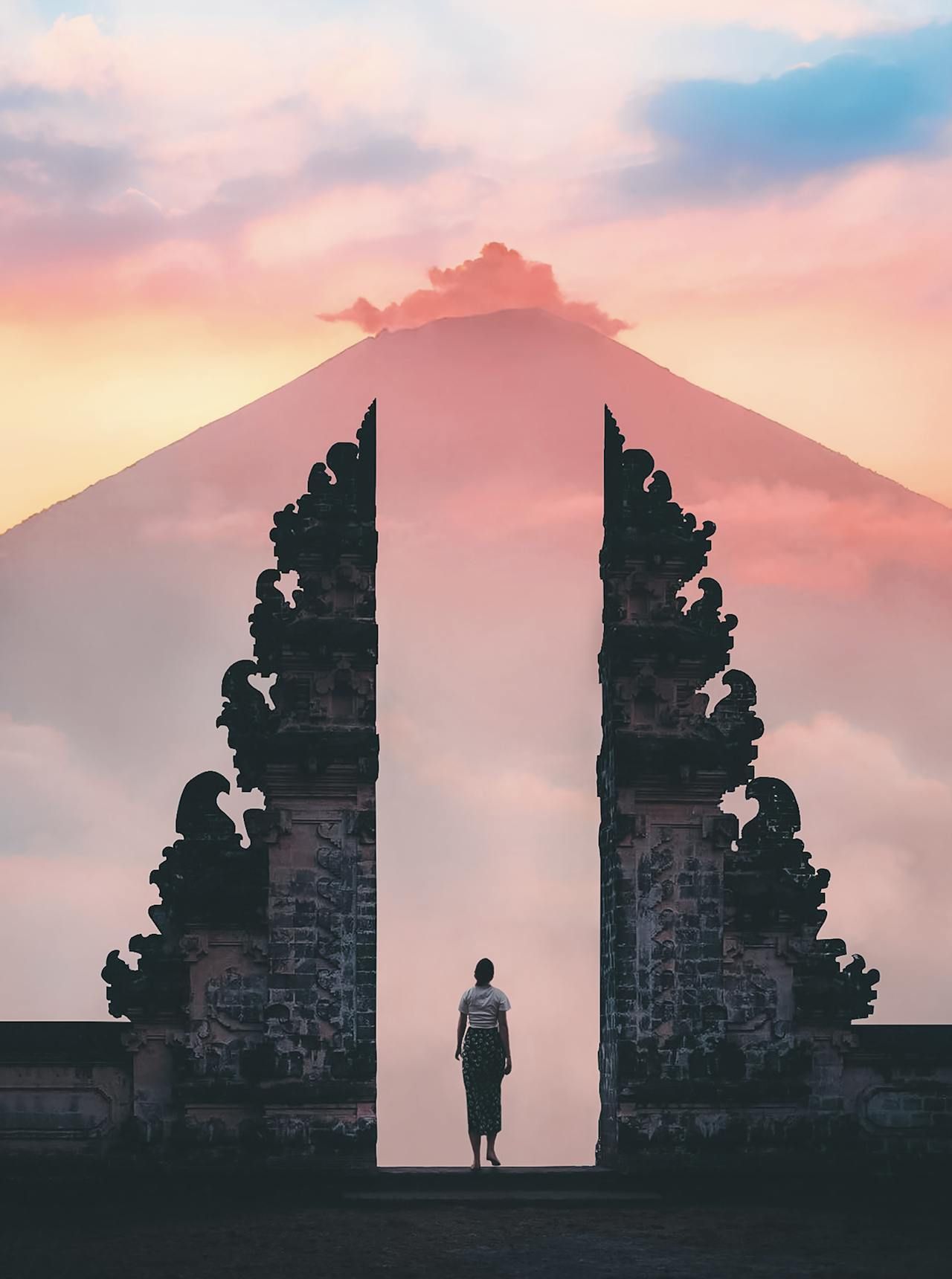
Lempuyang Gate of Heaven temple Bali sunrise Indonesia liveaboard cultural excursion
Regiões de Mergulho de Bali
Tulamben e Amed — Costa Nordeste
A costa nordeste é onde a maioria dos mergulhadores visitantes passa a maior parte do tempo. O USAT Liberty em Tulamben ancora a área — um naufrágio de 120 metros repousando a 5-30m com entrada pela praia diretamente da praia de seixos pretos. A superestrutura mais rasa é adequada para iniciantes; seções mais profundas e penetrações no casco são adequadas para mergulhadores avançados. A vida marinha é densa: cardumes de peixes-rei, tartarugas descansando no convés, cavalos-marinhos pigmeus em corais leque, nudibrânquios em todas as fendas. O amanhecer vale a pena para acordar — o início da manhã traz a melhor luz e menos mergulhadores, e grandes cardumes de peixes são mais ativos antes do sol estar alto. O jardim de corais adjacente e o drop-off fornecem mergulhos adicionais fortes no mesmo dia.³
Amed, a uma curta distância de carro para o leste, adiciona variedade em ambientes de recife, parede e muck. A Baía de Jemeluk é calma e adequada para iniciantes, com avistamentos regulares de tartarugas nas ervas marinhas. O local Pyramids atrai cardumes de peixes em torno de estruturas artificiais. Macro forte em toda a área torna Amed uma boa base para fotógrafos. As aldeias tradicionais de produção de sal e os coloridos barcos de pesca jukung dão aos intervalos de superfície mais caráter do que a maioria das cidades de mergulho.
Nusa Penida — Mantas, Mola Mola, and Big Water
Nusa Penida sits 18km southeast of the main island. It lies within the Coral Triangle — where 76% of the world's coral species are found⁷⁸ — and the Nusa Penida Marine Protected Area, declared in 2010, covers 20,057 hectares holding 576 fish species and 296 coral species.⁵
Reef manta rays (Mobula alfredi) are present year-round at the south coast cleaning stations. Research identified 624 individual reef mantas from 5,913 sightings over six years at Manta Bay and Manta Point.² These are primarily juveniles and sub-adults — a different character from the large mixed-age aggregations at Komodo or Raja Ampat. For diving with manta rays across Indonesia, see our Indonesia manta guide.
Mola mola (Mola alexandrini) appear July through October when cold Indian Ocean upwelling drops temperatures sharply around the south coast.¹ Crystal Bay is the primary site, with encounters at 18–40m. They only come up when conditions are right — the site needs gentle current for the cleaner fish to work, and strong upwelling is what brings the mola. Peak months are August and September. See our Indonesia big animal diving guide for context.
The north sides of Penida and Lembongan offer drift dives along current-swept walls with schooling trevally, fusiliers, and reef sharks. These are one-way dives with boat pickup — manageable for most divers when guides read conditions well.
Menjangan Island — Northwest Bali
Menjangan Island sits inside West Bali National Park in calm, clear water. Walls drop vertically through massive sea fans and barrel sponges with minimal current. Visibility regularly reaches 25–30m — the best in Bali. The shallow coral gardens in 5–15m suit snorkellers and beginners. An unhurried, photogenic dive that contrasts well with the stronger conditions at Nusa Penida. It's a full day trip from south or east Bali, so it works best if you're staying in the northwest.
Candidasa and Padang Bai — Eastern Bali
Candidasa has offshore island sites with strong hard coral diversity and occasional mola mola encounters during upwelling season. Currents can be significant and conditions suit experienced divers. Padang Bai has calmer sites with consistent turtle encounters and is a departure point for fast-boat transfers to Nusa Penida and Lombok.
Liveaboards Departing from Bali
Bali is not a dedicated liveaboard departure port — most Indonesia routes leave from Sorong, Labuan Bajo, or Ambon. But a small number of operators run routes east from Serangan or Benoa harbour, and for divers already in Bali the convenience is real: no domestic flight, no extra transfer day.
Most of these itineraries head east toward Komodo, covering Sumbawa's reefs along the way. Boats typically depart in the morning and reach Sumbawa waters by evening or early the following morning. Some stop at the Nusa Islands for a check dive or snorkel on the first day before crossing to Lombok and beyond. Standard sites along the route include Moyo Island, Satonda crater lake, Saleh Bay — which has a bagan whale shark encounter from August to September — and Sangeang volcano before reaching Komodo. The return route often mirrors this in reverse, ending back in Bali. Duration is typically 10–14 days covering the full loop.
This makes a Bali-departure liveaboard a natural fit for divers who want to add land-based diving on the Liberty or Nusa Penida before or after the trip, without needing to fly anywhere. Spaces on these Bali-departure routes are limited — fewer operators run them than Labuan Bajo departures for Komodo. See our Komodo guide for what the park offers.
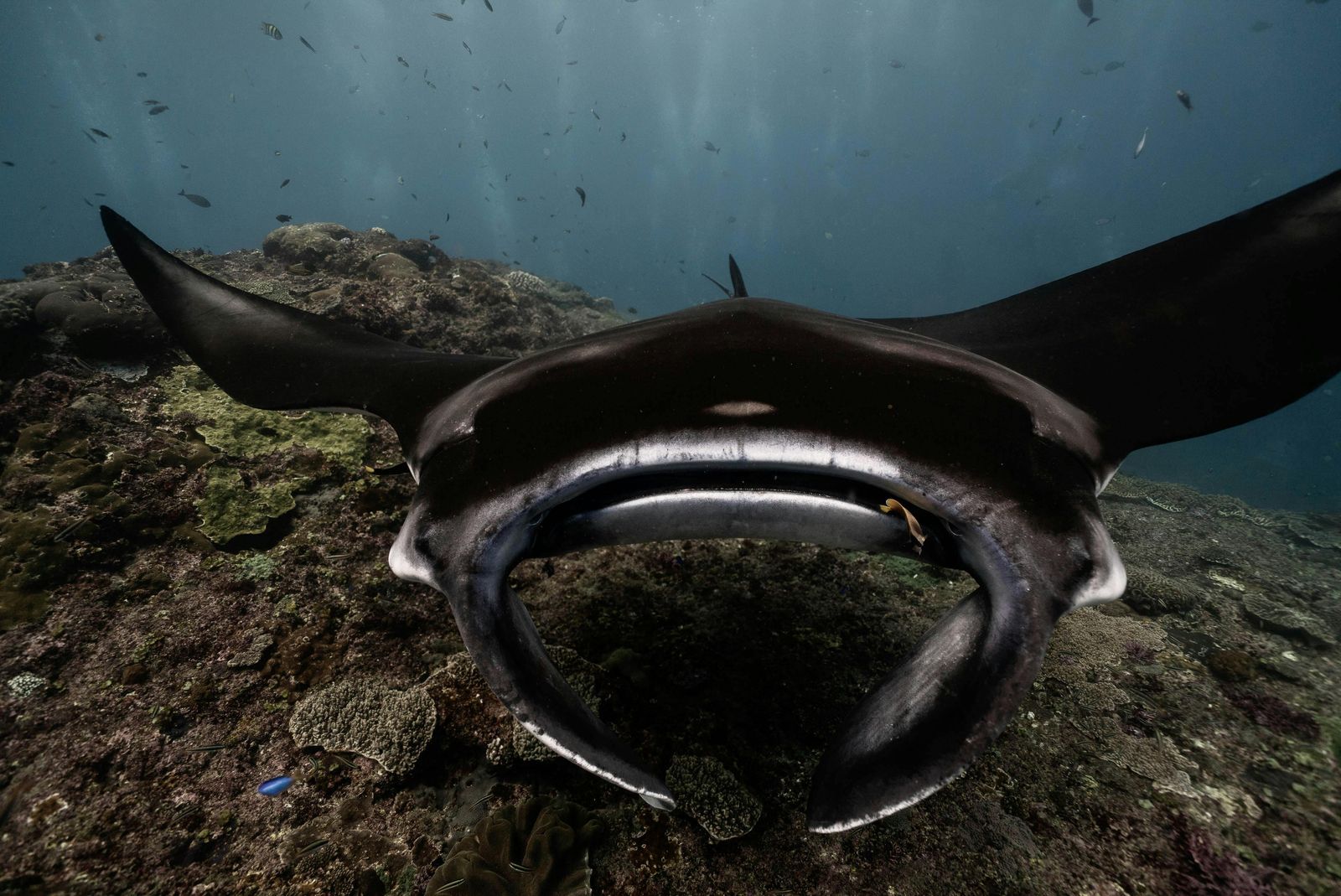
Manta ray closeup facing camera during Indonesia liveaboard diving showing detailed manta ray features and markings
The USAT Liberty
On 11 January 1942, the Liberty was torpedoed in the Lombok Strait while carrying railway parts and rubber to the Philippines. Towed by USS Paul Jones and Dutch destroyer Van Ghent toward Singaraja, she took on too much water and was beached at Tulamben to save her cargo.³ She sat on the beach for 21 years until Mount Agung erupted in 1963 — tremors slid her off the sand and into the sea.⁴
She now lies split in two on a black sand slope at 5–30m, forty metres from shore. Decades of coral growth have transformed the steel hull into a different kind of reef — hard corals blanketing the superstructure, soft corals on the deeper sections, nudibranchs and frogfish in the crevices. Shore entry means multiple dives per day are straightforward. Night dives reveal lionfish hunting, cuttlefish, and parrotfish in mucus cocoons. Arrive before 6am to get the wreck largely to yourself.
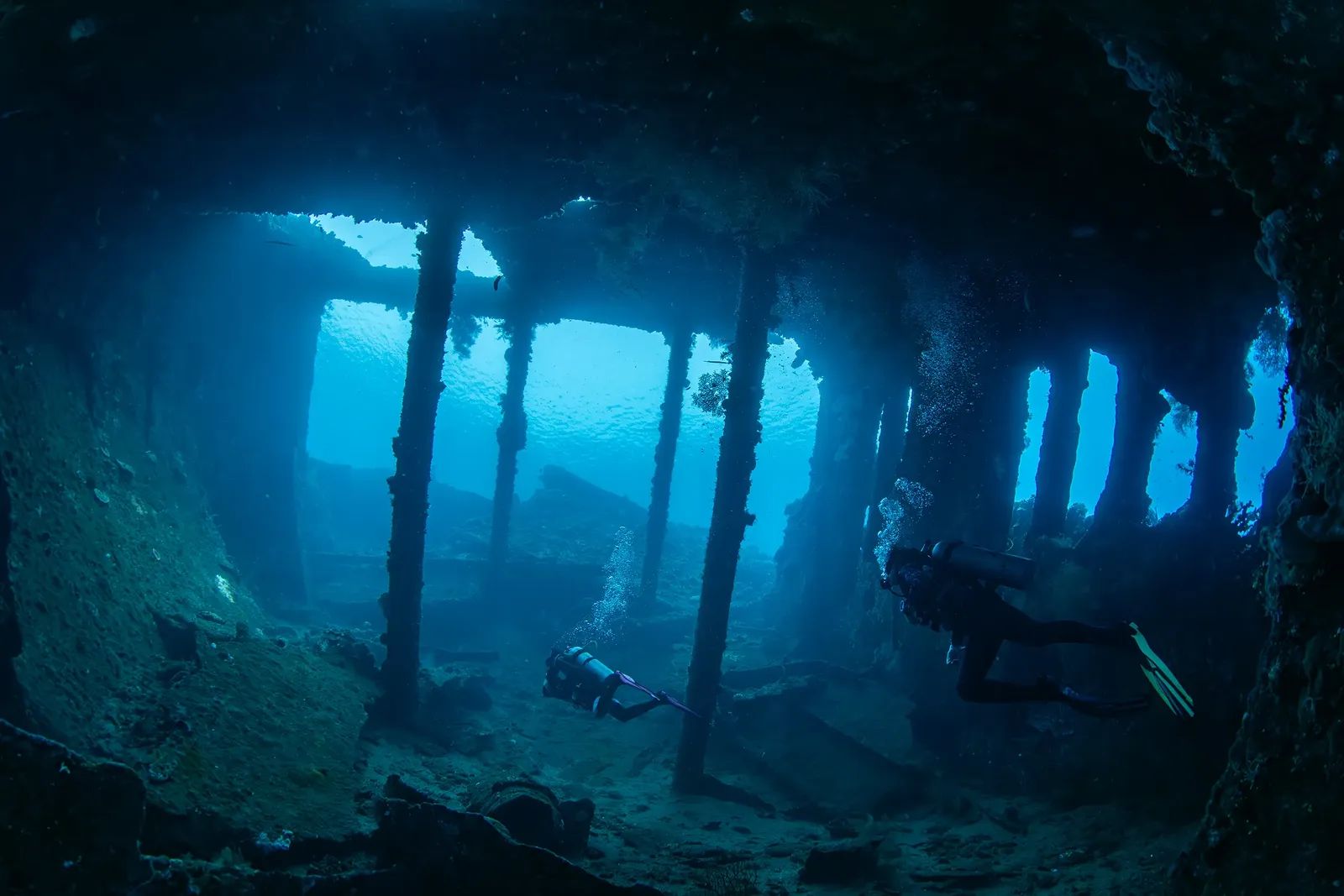
Picture of divers in cargo hold at the USAT Liberty in Tulamben Bali for land-based diving safari in Indonesia - Picture by Neptune Liveaboards
Culture Worth Staying For
La cultura hindú de Bali no es un telón de fondo, es una razón para estar aquí de forma independiente. El paisaje de arrozales y las tradiciones de templos de la isla fueron inscritos como Patrimonio de la Humanidad por la UNESCO en 2012.⁶ El sistema de riego Subak, desarrollado durante más de mil años, crea los campos en terrazas que caracterizan el interior. Las ceremonias se celebran en los patios de las aldeas y en las puertas de los templos como parte de la vida diaria, no como una actuación.
La realidad práctica: las carreteras de Bali son estrechas, la isla es montañosa y el tráfico en el sur, alrededor de Seminyak, Kuta y Ubud, puede ser lento. Ir de una cresta a otra a través de pequeños valles lleva más tiempo de lo que sugiere el mapa. El mejor enfoque es planificar tu alojamiento en función de lo que quieras hacer: alójate en Amed o Tulamben para bucear en el noreste, ten tu base en Nusa Lembongan para acceder a Penida, o elige la costa noroeste para Menjangan, y explora los sitios culturales dentro de esa región en lugar de intentar cubrir toda la isla. Dicho esto, para grupos en los que no todos bucean, Bali sigue siendo el destino indonesio más fácil con el que trabajar: el que no bucea siempre tiene algo que vale la pena cerca.
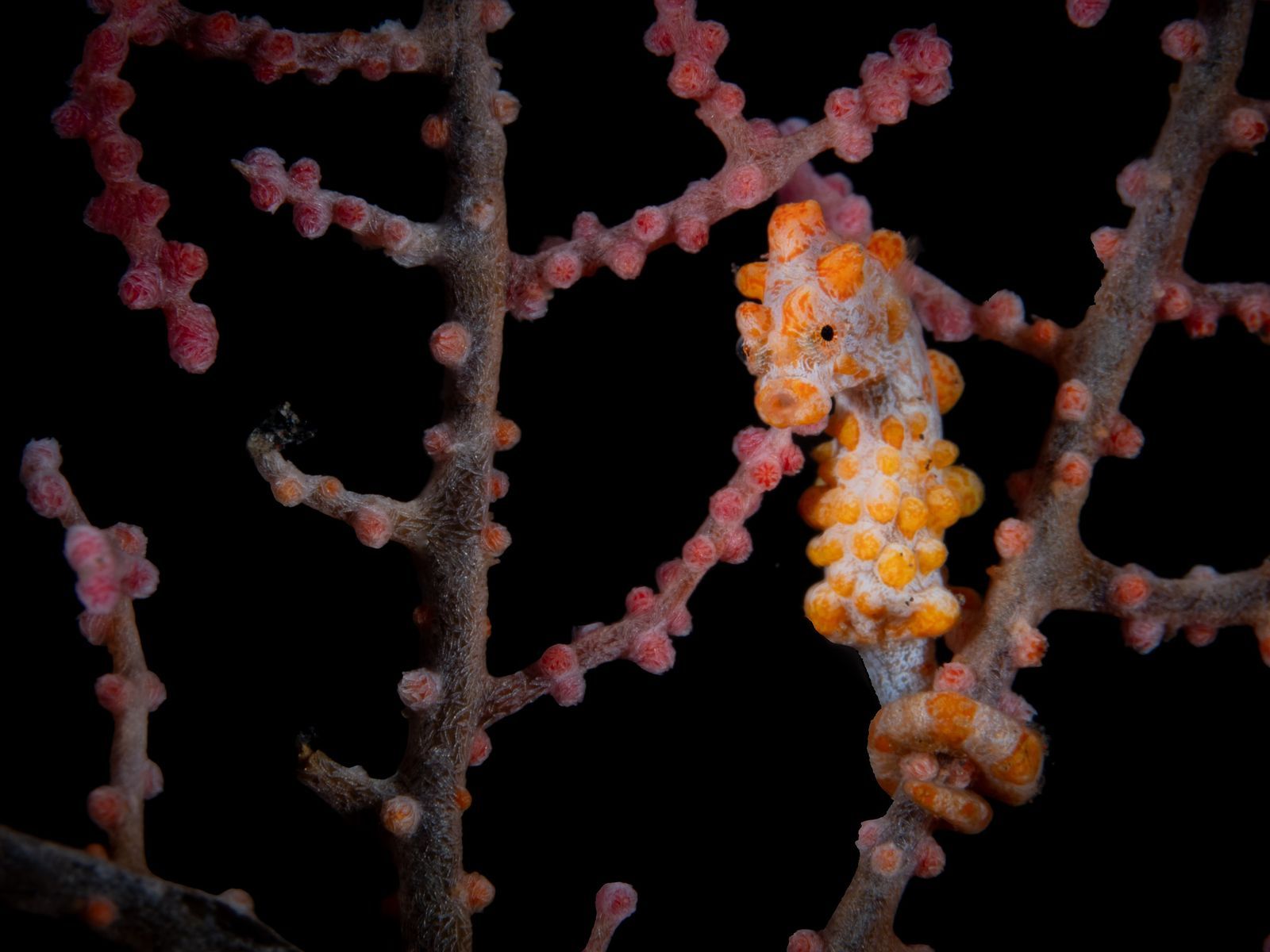
Rare Yellow Pigmy Seahorse sitting in a Coral Sea Fan - Liveaboard Indonesia - Picture by Leon Lemke
Gestionar las expectativas
Los sitios más populares de Nusa Penida para mantas y mola mola se llenan, especialmente Manta Point los fines de semana de temporada alta, que puede ver un gran número de barcos de excursión de snorkel junto a los buceadores. Manta Point también puede ser agitado y frío durante los meses de invierno del sur. La costa sur de Bali en general, y Ubud, se encuentran entre las zonas más visitadas de Bali. Ten en cuenta el tiempo de viaje en cualquier plan: las distancias parecen cortas en un mapa, pero el tráfico y la topografía montañosa añaden tiempo.
La visibilidad varía sustancialmente según el sitio. Menjangan y los arrecifes exteriores de Nusa Penida ofrecen las condiciones más claras. Los sitios de la costa noreste a menudo se ven afectados por la escorrentía de los ríos: 10-20 m es lo típico. No esperes la visibilidad de aguas abiertas del Mar de Banda o la Bahía de Cenderawasih.
Las mola mola requieren condiciones de afloramiento frío: cuando el agua se calienta, no suben. De julio a octubre ofrece la mejor probabilidad, pero no es predecible día a día. Ten en cuenta múltiples inmersiones en Nusa Penida a lo largo de varios días si las mola mola son una prioridad.
Los encuentros con mantas son más consistentes durante todo el año, pero varían con los ciclos de las mareas. Las inmersiones matutinas con marea entrante en Manta Point dan los mejores resultados.
Los cruceros de Bali a Komodo implican cruces oceánicos genuinos a través de los estrechos de Lombok y Sape. Las condiciones no siempre son tranquilas, especialmente durante el monzón del sureste. Esto es parte de la experiencia, no un problema, pero vale la pena saberlo antes de embarcar.
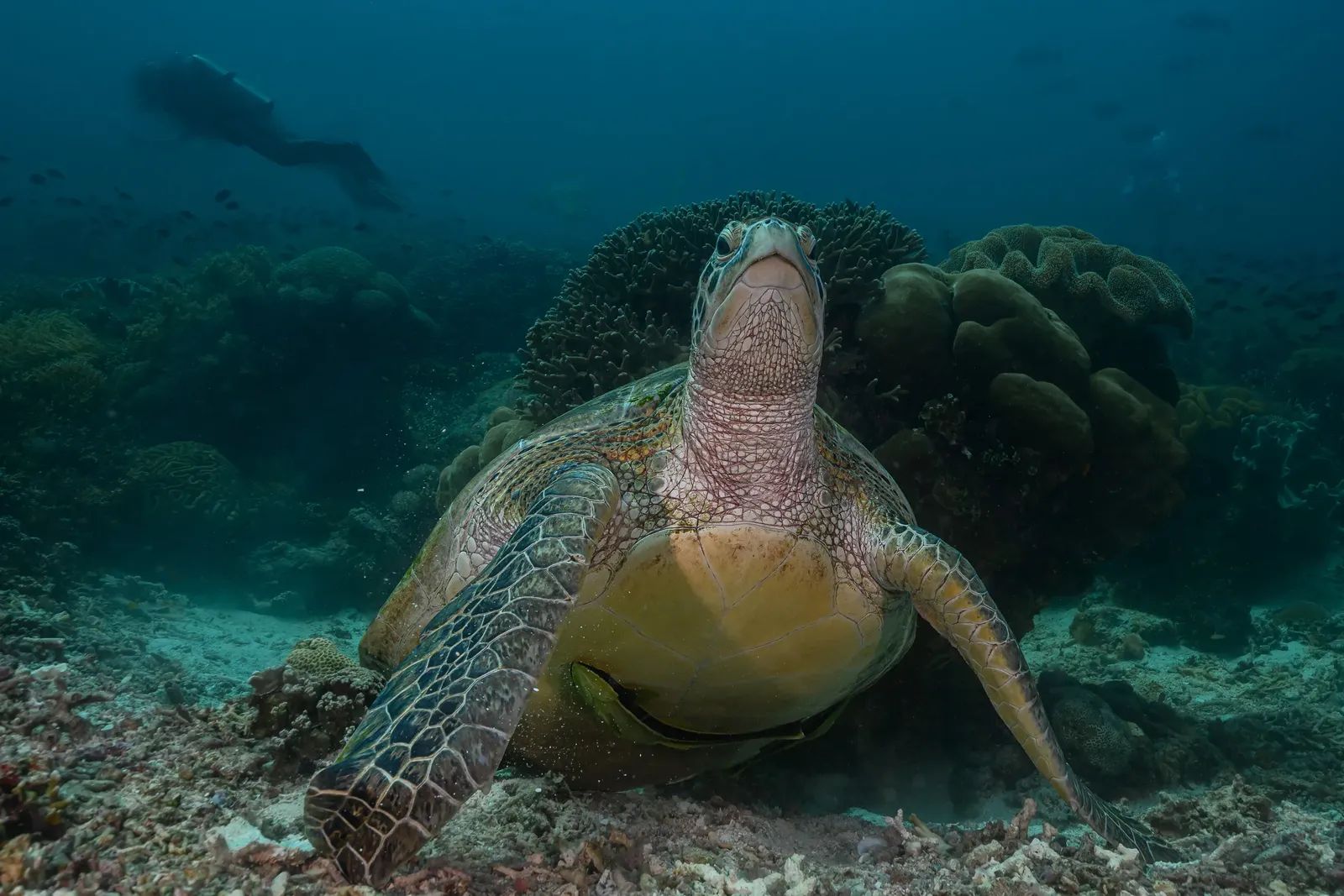
Green sea turtle facing camera with detailed shell and facial patterns on coral reef in Raja Ampat marine sanctuary - Picture by Neptune Liveaboards
FAQ
Is Bali suitable for beginner divers?
Yes, although site selection matters. The shallower Liberty sections, Jemeluk Bay in Amed, and Menjangan's calm gardens are all excellent for new divers. Most Nusa Penida dive sites are manageable — guides assess current before committing to a site and will adjust the plan if conditions don't suit the group. Crystal Bay for mola mola and some deeper wall dives suit Advanced divers best.
How do I get from Bali to other Indonesian liveaboard destinations?
Komodo routes can depart from Bali directly by liveaboard. Raja Ampat and Papua routes start from Sorong — reachable from Bali via Jakarta or Makassar. Banda Sea routes typically start from Ambon or Bali depending on operator. Coralbound works with VIFA Holiday, the leading DMC for Indonesia's diving industry, for domestic flight monitoring and rebooking on all connections.
What is the Nusa Penida Marine Protected Area?
Nusa Penida MPA was declared in 2010, covering 20,057 hectares around Nusa Penida, Nusa Lembongan, and Nusa Ceningan.⁵ It protects resident manta ray and mola mola habitat, 576 fish species, and 296 coral species. Destructive fishing methods are banned. The MPA is managed with the Coral Triangle Centre and local communities.
What's the difference between Bali diving and a Komodo liveaboard?
Different in character and scale. Bali offers accessible, well-serviced sites with comfortable infrastructure and cultural depth. Komodo is a national park environment — stronger currents, concentrated pelagic action, and a genuine protected wilderness character. Many divers combine both: a few days on the Liberty and Nusa Penida, then a Komodo liveaboard departing from Bali, returning to debrief at a Tulamben resort. See our Komodo guide for the full picture.
What should I pack for Bali diving?
A 3mm wetsuit is adequate for most Bali diving. Bring a 5mm or wear a hood for Nusa Penida during mola mola season — upwelling drops temperatures sharply at depth and Manta Point can be cold. Reef-safe sunscreen for boat days. Closed shoes for temple visits and volcano hikes. Most equipment can be rented from quality dive centres, but personal regulators and computers are recommended. For a full list, see our Indonesia liveaboard packing guide.
How does Bali fit into a broader Indonesia diving itinerary?
Most international divers fly through Denpasar (DPS), making Bali a natural start or end point. A common pattern: arrive in Bali, three or four days on the Liberty and Nusa Penida, fly to Sorong for a Raja Ampat liveaboard, return through Bali for a couple of days before the international flight home. Or: Komodo liveaboard departing from Bali, ending back in Bali for the northeast coast wind-down. It connects efficiently to everywhere in the archipelago.
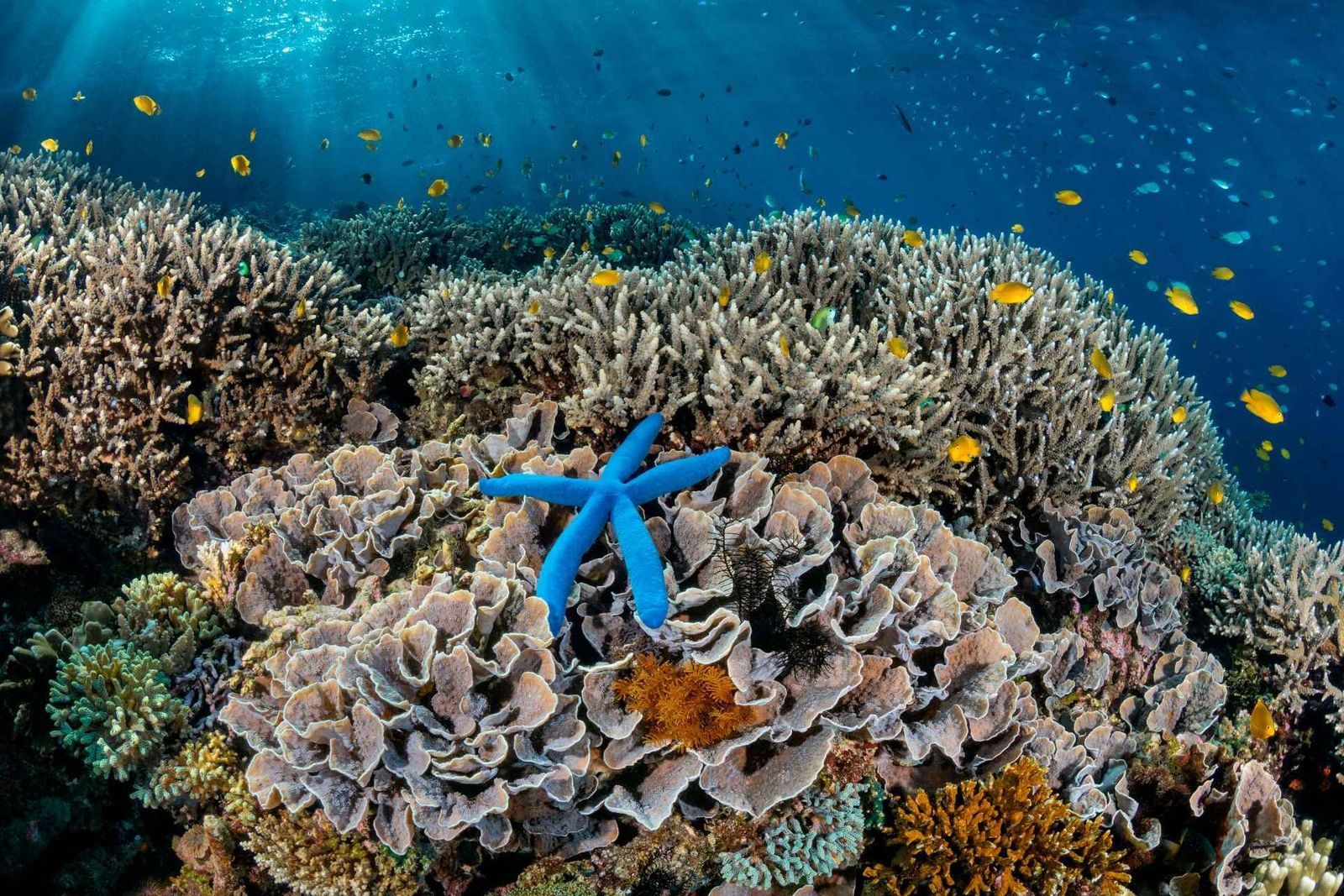
Diverse coral reef ecosystem with blue sea star and yellow fish in Indonesian waters, liveaboard diving - Picture by Majik Liveaboard
Book Your Bali Diving Trip
Whether you want day diving at the Liberty and Nusa Penida or a liveaboard departing from Bali for Komodo and Sumbawa, we can sort it. You'll pay the same price booking through us as booking direct — operators maintain price parity across all channels. Every liveaboard booking through Coralbound includes a booking gift — including the option of a complimentary hotel night — and domestic flight coordination through VIFA Holiday for any onward connections.
Questions? Message us on WhatsApp or reach us via our contact form. Want to know more about how we work? Read our why book with Coralbound page.