Wake up, dive or snorkel, eat, repeat. Here is what a liveaboard day looks like, from boarding to the last morning.
This guide walks through a typical day on an Indonesia liveaboard. It sits alongside our Indonesia liveaboard guide. Booking your first trip? Our beginner's guide to Indonesian liveaboards covers the planning side.
Every operator sets its own schedule, so the times below are examples, not a fixed timetable. The rhythm is the same on most boats: early start, long meals, early nights. Diving days and leisure days follow the same shape.
Quick Facts
- Wake-up: around 05:30 to 06:00¹ ²
- First briefing: 06:00 to 07:00¹ ²
- Dives per day: usually three to four¹ ³
- Surface intervals: usually two to three hours¹
- Fourth dive: a night dive when conditions allow, or an excursion instead¹
- Snorkel sessions: usually one in the morning and one in the afternoon, plus kayaking, paddleboarding and treks
- Dives are optional: skip any dive and tell the cruise director
- Boarding: usually in the morning, set by the port and local flight times
- Last dive: generally late morning on the second-to-last day
- Wait before flying: at least 18 hours after multi-day diving⁴
Quick Answers
What is a typical day on a liveaboard in Indonesia?
A typical day starts early with coffee and fruit, a briefing and the first dive. A big breakfast and the second dive follow. After lunch comes a third dive, then a night dive, an excursion or a move to the next site¹ ². Leisure cruises swap the dives for snorkel sessions, kayaking and treks.
How many dives a day do you do on a liveaboard?
Most Indonesia liveaboards run three to four dives a day¹ ³. That is usually two morning dives and an afternoon dive, then a night dive when conditions allow. Some routes and trip types schedule fewer. For how they differ, see our guide to liveaboard trip types.
What happens on the first day of a liveaboard?
Boarding is usually in the morning, depending on the port and flight schedules. Lunch, introductions and boat and safety briefings follow⁵. Dive boats may then make a check dive⁶ or sail overnight and dive the next morning⁵, while leisure cruises often start with a snorkel stop.
Can you dive on the last day of a liveaboard?
Usually not. The last dive is generally around 10:00 to 11:00 on the second-to-last day. DAN recommends waiting at least 18 hours before flying after several days of diving⁴.
Can I skip dives and snorkel on a liveaboard?
Yes. Skip any dive to snorkel, kayak or join an excursion, and tell the cruise director. Non-divers follow the same days, with a snorkel guide at the reef stops. Our guide to snorkeling on Indonesia liveaboards has the detail.
Aerial view of a snorkeler swimming over a shallow coral reef in clear turquoise water, wearing fins and a snorkel mask
Boarding Day
Boarding is usually in the morning to mid-morning. The exact time depends on the port, because operators align it with flight schedules. Some keep boarding open until after lunch.
Check-in windows are set by port. Sorong can run from early morning to early afternoon, while Bali departures board in the afternoon⁷. Many Raja Ampat leisure cruises board between 08:00 and 10:00. Some meet you at the airport or hotel and take you straight to the boat⁸.
Most operators suggest flying in the day before⁵ ⁶. The transfer from the airport or hotel to the boat is usually included. The airport-to-hotel transfer is not, and some budget operators, particularly in Labuan Bajo, do not include either.
Early boarding is sometimes possible on embarkation day, depending on how early you arrive. Boats usually spend a few days in port between trips, but this differs by operator. Check your operator's window before you book flights.
On arrival, expect lunch, introductions, and a boat and safety briefing. Then you set up your equipment and settle into your cabin before dinner⁵.
A check dive comes either that day or the next morning. It usually takes place in a sheltered, low-current spot⁹. It is not a test. It lets you adjust your weighting and buoyancy while the crew watch how you dive.
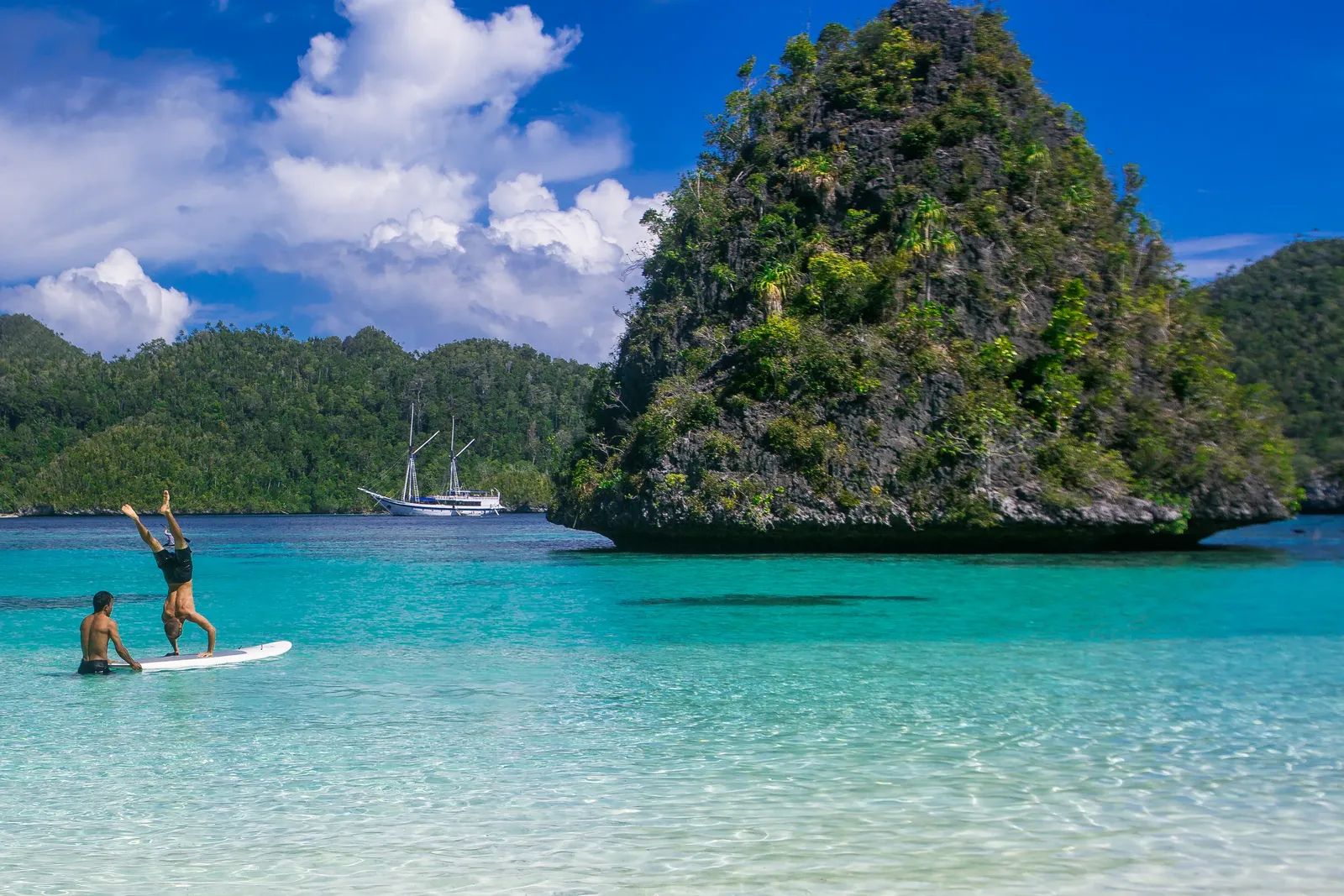
A guest performs a handstand on a paddleboard with the help of a crew member, with the phinisi anchored near limestone karst formations in the background.
A Typical Dive Day
One Indonesia operator publishes this example schedule¹⁰:
- 06:30: light breakfast and dive briefing
- 07:30: first dive
- 09:00: full breakfast
- 11:00: second dive
- 13:00: lunch
- 15:00: third dive
- 18:00: night dive or sunset drinks
- 19:30: dinner
Other boats differ. Here is how the day plays out.
Early morning. Crew wake you around 06:00 or 07:00 for a briefing¹ ². A light breakfast comes first, often coffee and fruit².
Briefing and first dive. The cruise director or dive guide covers the site, the current, the plan and the safety procedures⁹. Pay attention, as details change from day to day. A tender takes you to the site. A big cooked breakfast is waiting when you surface². Dive two follows after a second briefing, with surface intervals of two to three hours¹.
Lunch and afternoon. After lunch, rest in the cabin or have a nap². A third dive follows in the afternoon, often shallower and more relaxed¹.
Evening. The fourth slot varies. Many days end with a sunset or night dive, depending on conditions¹ ². Other days bring an excursion or a move to the next site instead.
Dinner follows, then the cruise director shows the next day's route². Most people head to bed early. As one operator puts it, 21:30 feels like midnight¹.
A Typical Day on a Leisure Cruise
Leisure-only cruises, and the leisure days on diving and leisure trips, keep the same rhythm without the dive blocks. Days are built around snorkeling, paddling and time ashore. Snorkel gear, kayaks and paddleboards are usually included.
Most trips build in a morning and an afternoon snorkel session. Each lasts around an hour to 90 minutes, with a snorkel guide in the water. See what a snorkel session involves.
Early morning. Some days start before sunrise. In Raja Ampat, a dawn hike of around 40 to 45 minutes⁸ leads to a birdwatching platform. The target is the red bird of paradise.
Morning. Breakfast comes first. Then there is a snorkel session, or a kayak or paddleboard along a lagoon or jungle shoreline.
Afternoon. Lunch is served on board while the boat moves. Then comes another snorkel, a village visit, a beach stop or a viewpoint hike. In Komodo, it is when you walk to see the dragons or climb Padar¹¹.
Evening. Sundowners on deck come before dinner under the stars. Most trips, diving or leisure, include a beach barbecue at some point.
Disembarkation Day
Operators align the schedule with the flights. Most guests leaving Sorong take the early Garuda flight at 08:30. So boats finish diving by about 10:00 to 11:00 on the second-to-last day. Some skip that last dive to leave enough time.
DAN recommends a minimum of 12 hours after a single no-decompression dive and 18 hours after multi-day repetitive diving⁴. On most boats this means guests can fly on checkout day after lunch. If you only snorkel, there is no wait before flying.
Check-out varies by operator. Some itineraries set it at 08:00⁷, while others allow 10:00 in Raja Ampat⁵ or 11:00 in Komodo¹². For very early flights it can be as early as 05:00 or 06:00, because the boat is usually in port on the last night or arrives overnight.
Shorter Komodo trips sometimes dive on the last day. They return to port in the early afternoon.
For a Bali departure, our Bali guide covers what to do before and after the trip. If you want a few nights on land first, see our guide to trip extensions.
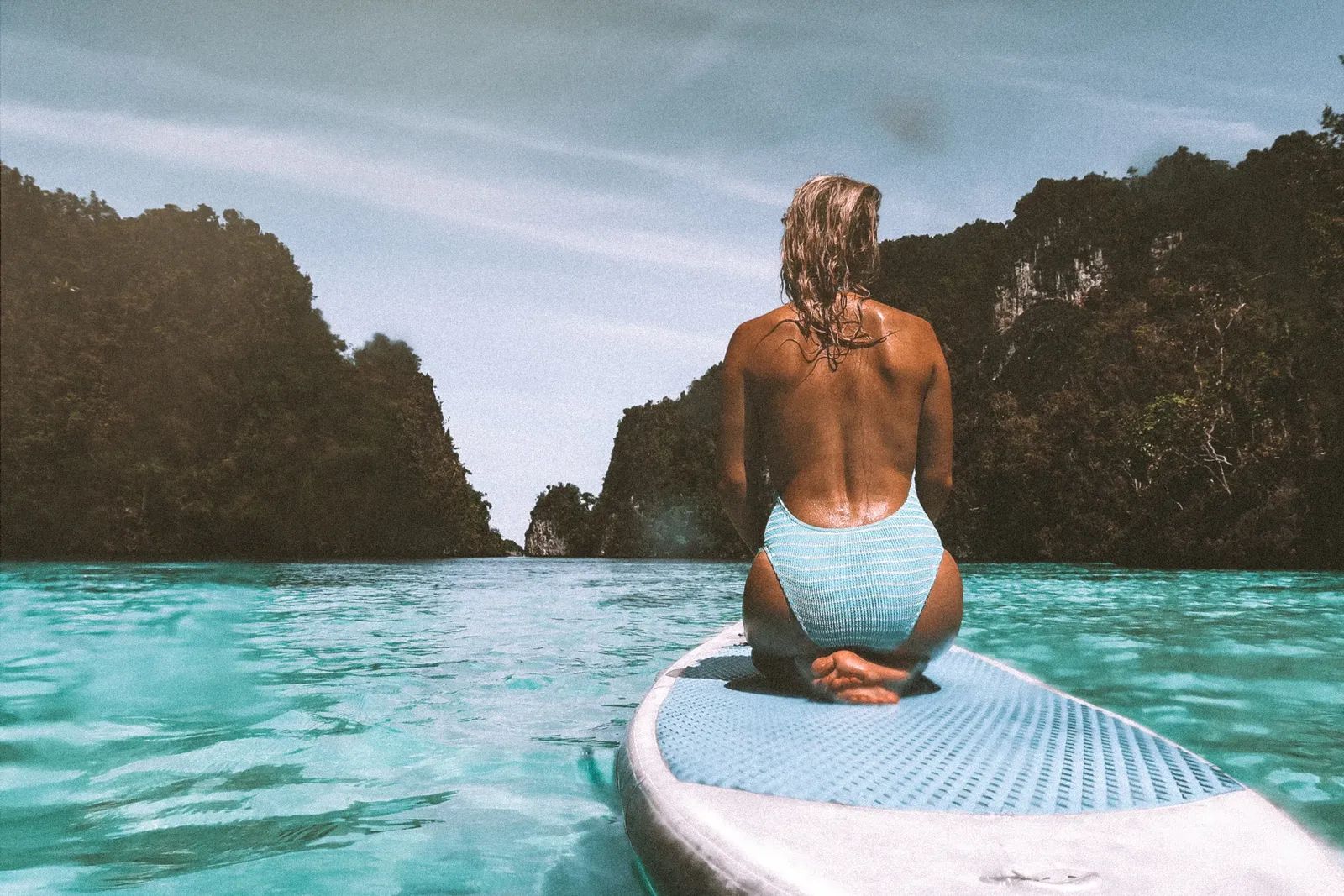
Woman on paddleboard surrounded by towering limestone karst islands in calm turquoise waters of Raja Ampat archipelago - Picture by Calico Jack Cruises
Managing Expectations
Schedules and routes change. Itineraries are samples based on past trips, and the captain and crew can change them.
The plan depends on the divers, conditions, currents, tides and weather. Sometimes it depends on other boats. In Raja Ampat, for example, Misool uses a ticket system.
Every operator is different. Dive counts, meal times, extras, boarding times and surface intervals vary. Snorkeling conditions also change from site to site with current, wind and swell.
Night dives happen when conditions allow, and they are not guaranteed¹. Check the itinerary of your trip, and ask us if something is unclear.
If something bothers you on board, tell the cruise director. The cruise director is the link between guests and crew. Speak up early and give the crew a chance to fix it. Most issues are easy to sort out on the day, and much harder afterwards.
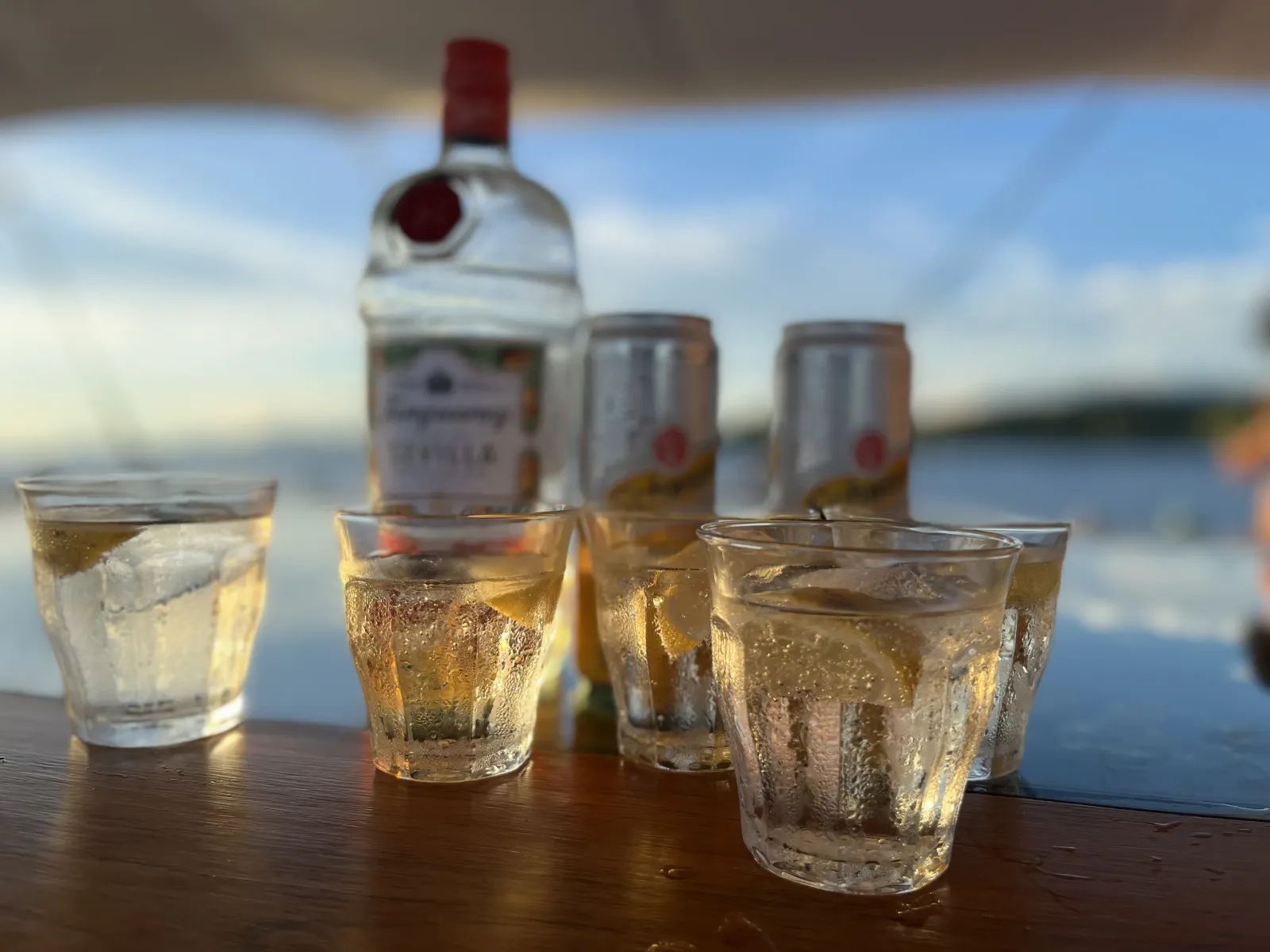
Sunset cocktails with gin and tonic served on liveaboard deck with panoramic ocean views in Indonesian archipelago - Picture by Ilike Liveaboard
Frequently Asked Questions
What is covered in a liveaboard dive briefing?
A pre-dive briefing covers the site's features, the current and visibility, entry and exit, and the dive plan with depth and bottom time. It also covers safety procedures, such as a lost buddy or a strong current⁹. The cruise director or the dive master gives it. Attend the briefing for every dive you plan to do, as plans can change from one dive to the next.
Should I arrive the day before my liveaboard departs?
Yes, although it is not always required. If your flight lands after boarding closes, you miss the boat. Delays on domestic flights are common, and operators generally suggest arriving the day before⁵ ⁶. It also gives you a rested start to the first dive.
Can I bring a partner who does not dive?
Yes, although the trip type matters. Leisure-only and diving and leisure trips plan a program for non-divers. A diving-only itinerary usually accepts them but builds less around them.
Our guide to liveaboards for non-divers covers how to choose. Travelling as a mixed group? See our guide to booking a liveaboard for divers and non-divers together.
Should I tip the crew on a liveaboard?
Tipping is voluntary, and practices differ. One operator suggests USD 15 to 25 per guest per day, pooled among the crew³. Bring cash and ask your operator how they handle it.
What is usually not included in a liveaboard price?
It varies by operator. Marine park fees, nitrox, rental equipment, drinks and crew tips are commonly extra³. Some also add fuel surcharges, onboard courses or massages. Check what your trip includes before you book.
Our packing guide covers what to bring.
Are there land excursions on a liveaboard?
Yes, most operators include excursions. Typical ones are viewpoint hikes, village visits and dawn birdwatching walks in Raja Ampat. In Komodo, there is the dragon trek on Komodo or Rinca¹². Many boats also carry stand-up paddleboards or kayaks.
Our guide to diving in Komodo covers the park.
Diving trips cost the same whether you book with Coralbound or direct with the operator. Booking gifts are available, including the option of a complimentary hotel night. Ask us anything about what a trip involves via live chat on the platform, WhatsApp or our contact form. Curious how we work? See why divers book with Coralbound.