You don't need a scuba certification to see Indonesia's best marine life — you just need the right trip.
Indonesia is one of the best destinations for snorkeling and leisure cruises, not just diving. This guide covers what makes it worth it, which trip type actually suits a snorkeler, and where to go. For the broader picture of how Indonesia liveaboards work, start with our Indonesia liveaboard guide.
If you don't dive, are traveling with someone who does, or just want to know whether snorkeling here is actually worth the trip, this is where to start.
Quick Facts
- Coral health: Indonesia sits inside the Coral Triangle, home to 76% of the world's coral species¹
- Megafauna: manta rays, whale sharks, and turtles are all snorkel-visible, not just dive-visible
- Best regions: widespread — Raja Ampat, Komodo, Derawan, Halmahera, Central Sulawesi, and Banda Sea all deliver
- Land-based option: Bali's Nusa Penida offers strong snorkeling without a liveaboard at all
- Trip type: diving & leisure or leisure-only trips are usually the best fit for a snorkeler
- Gear: most boats provide or rent snorkeling gear, but this varies by operator
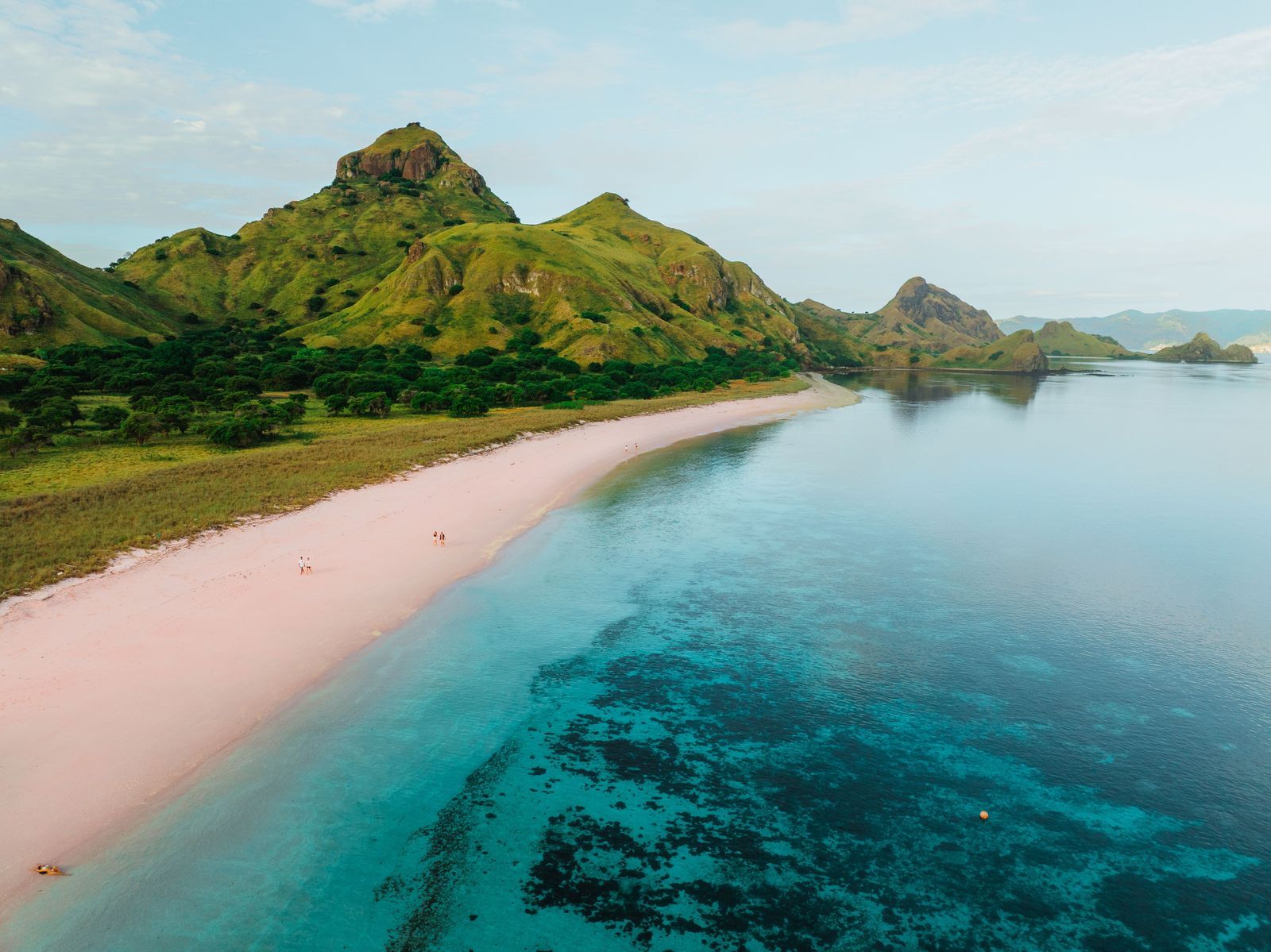
View of Pink Beach on Komodo Island in Komodo National Park
Quick Answers
Can I snorkel instead of dive on a liveaboard in Indonesia?
Yes, on the right trip type. Diving-only trips leave little room for it, but on diving & leisure or leisure-only trips, the itinerary itself is planned with non-divers in mind — operators choose sites that work well for snorkeling too, not just the best dive spots.
Is Indonesia good for snorkeling?
Yes, genuinely one of the best places in the world for it. Expect shallow, healthy reefs, good visibility, turtles, reef sharks, and big pelagic encounters, alongside a huge amount of reef fish — Indonesia sits inside the Coral Triangle, the global center of marine biodiversity.
Do I need experience to snorkel in Indonesia?
No. You'll typically have a guide in the water with you and a tender boat nearby — you're not just dropped in the water on your own. Comfort in open water helps, since some sites have current, but no formal certification is needed.
Is snorkeling better than diving to see some marine life in Indonesia?
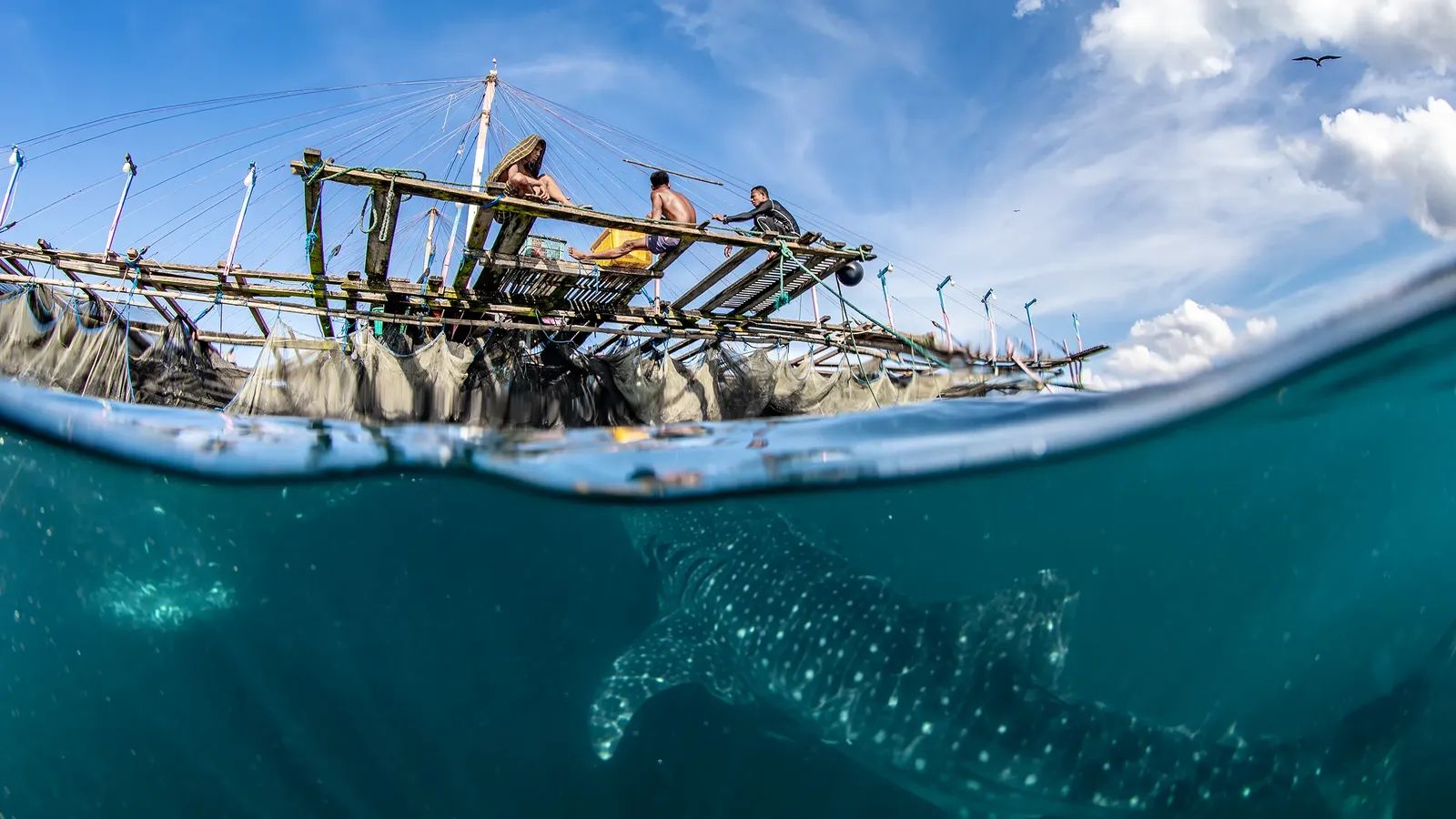
Yes, for a few things specifically. Whale sharks at bagan fishing platforms can be dived too, but snorkeling puts you right at the surface where they're feeding — arguably the better view. Turtles on shallow seagrass beds aren't much of a dive site at all, but they're great to snorkel, often alongside stingrays. Mantas feeding at the surface are the same story — diving means watching from below, while snorkeling puts you right at the action. Coral also just looks better from above, with the light hitting it directly.
Whale shark feeding under traditional fishing platform bagan, unique encounter on Triton Bay liveaboard trips West Papua Indonesia
Which Trip Type Fits You as a Snorkeler
Not every Indonesia liveaboard trip type works well for a snorkeler. Here's the honest breakdown:
Diving-only trips: skip these. The schedule is built entirely around dive time, and there's little room left for snorkeling as anything more than an occasional add-on.
Diving & leisure trips, either flavor: generally a good fit. These itineraries are planned with non-divers in mind too, not just divers — operators choose sites that work well for snorkeling and build real time for it into the schedule, rather than treating snorkelers as an afterthought.
Leisure-only trips: the right choice if nobody in your group dives at all. Full days built around snorkeling and other leisure activities, no diving involved.
Our trip types guide covers all four in full detail if you want to compare them properly before booking, and our category guide covers budget-to-luxury boat options separately, since that's a different decision from trip type.
Best Regions for Snorkeling
This isn't a shortlist of one or two famous spots. Good snorkeling — some of the best on the planet — exists across most of the Indonesian archipelago: healthy coral, clear water, plenty of fish. That's the draw.
Raja Ampat holds 574 recorded coral species, 95% of the Coral Triangle's total and 72% of the world's², plus healthy manta and reef fish populations throughout. Trips here usually build in more than just time in the water too — viewpoint hikes, the jellyfish lake, kayaking through the karst formations, stand-up paddling, and beach stops are all common. Misool's marine reserve, a former shark-finning camp turned 300,000-acre no-take zone, has seen its manta population double and fish biomass rise sharply since protection began³. See our Raja Ampat guide for the full picture.
Komodo National Park pairs healthy reefs and plenty of mantas with a full leisure itinerary alongside them — viewpoint hikes, a chance to see the dragons themselves, and beach stops are all part of a typical trip. Snorkelers already make up a meaningful share of the park's visitors alongside divers⁴. See our Komodo guide.
Derawan Islands (East Kalimantan, Borneo) pairs 507 coral species and 872 fish species⁵ with two things snorkelers love: Southeast Asia's largest green turtle nesting population, at around 15,000 clutches a year⁶, and Kakaban's jellyfish lake, home to four stingless jellyfish species you can swim among⁷. See our Derawan Islands guide.
Halmahera holds 544 coral species, the third-highest count of any of 141 reef ecoregions studied globally⁸ — outstanding, and still far less crowded than the better-known destinations. See our Halmahera guide.
Central Sulawesi and Cenderawasih Bay are both strong picks too. Cenderawasih's whale sharks — around 160 individuals, mostly juvenile males, gathered at fishing platforms called bagans⁹ — are commonly encountered snorkeling right at the surface rather than on scuba. See our Cenderawasih Bay guide.
Banda Sea is good too, on the right trip — it rewards a route built for more than just divers, rather than every departure equally. See our Banda Sea guide for the routes and seasons that work best.
Nusa Penida, in Bali, is worth calling out separately: it's excellent snorkeling without needing a liveaboard at all. Its marine protected area supports 296 coral and 576 fish species¹⁰, and its resident reef mantas — 624 individually identified individuals as of the most recent count¹¹ — are reliably seen year-round from a day boat. If a full liveaboard trip isn't in the cards, our Bali guide covers this and other land-based options.
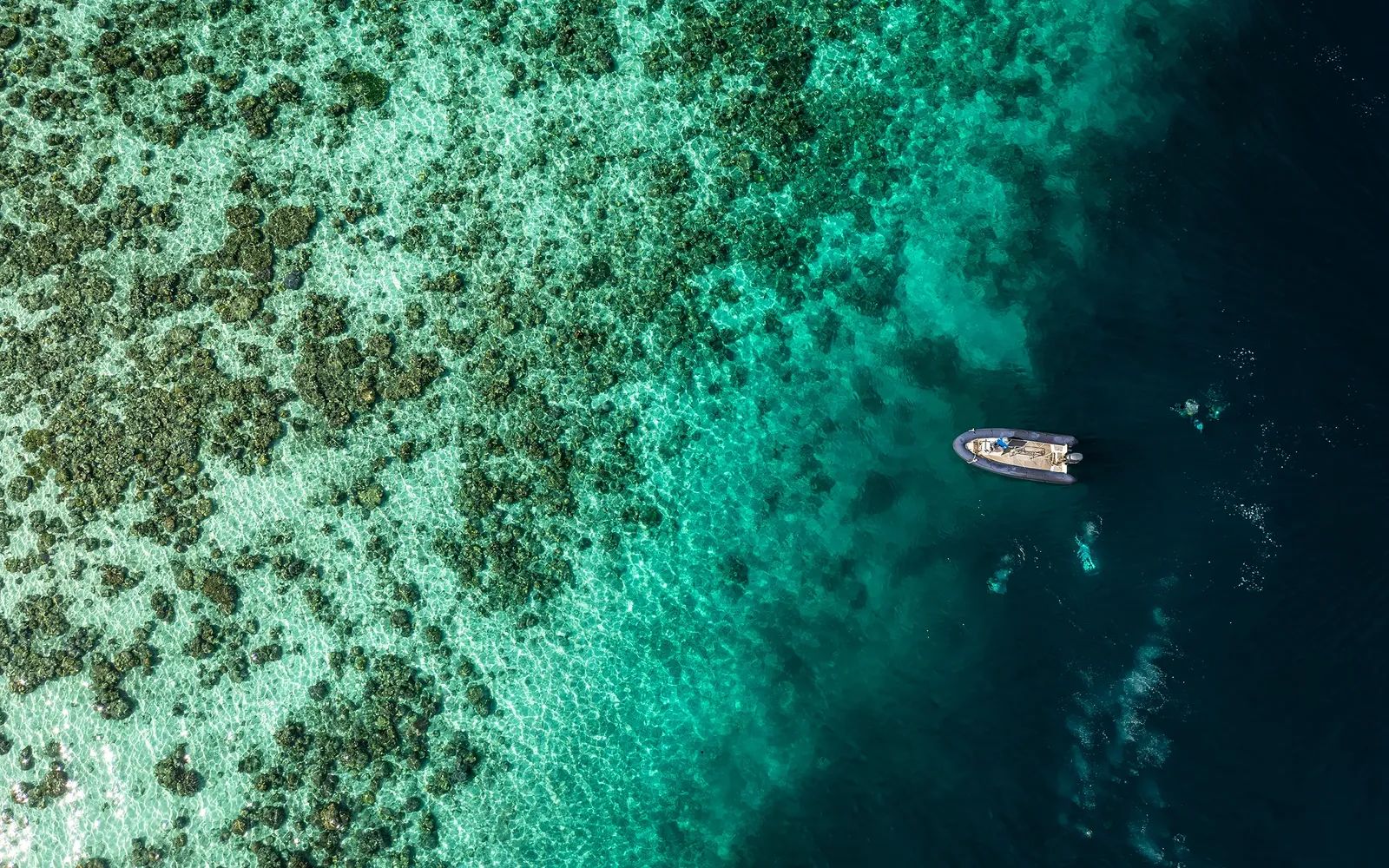
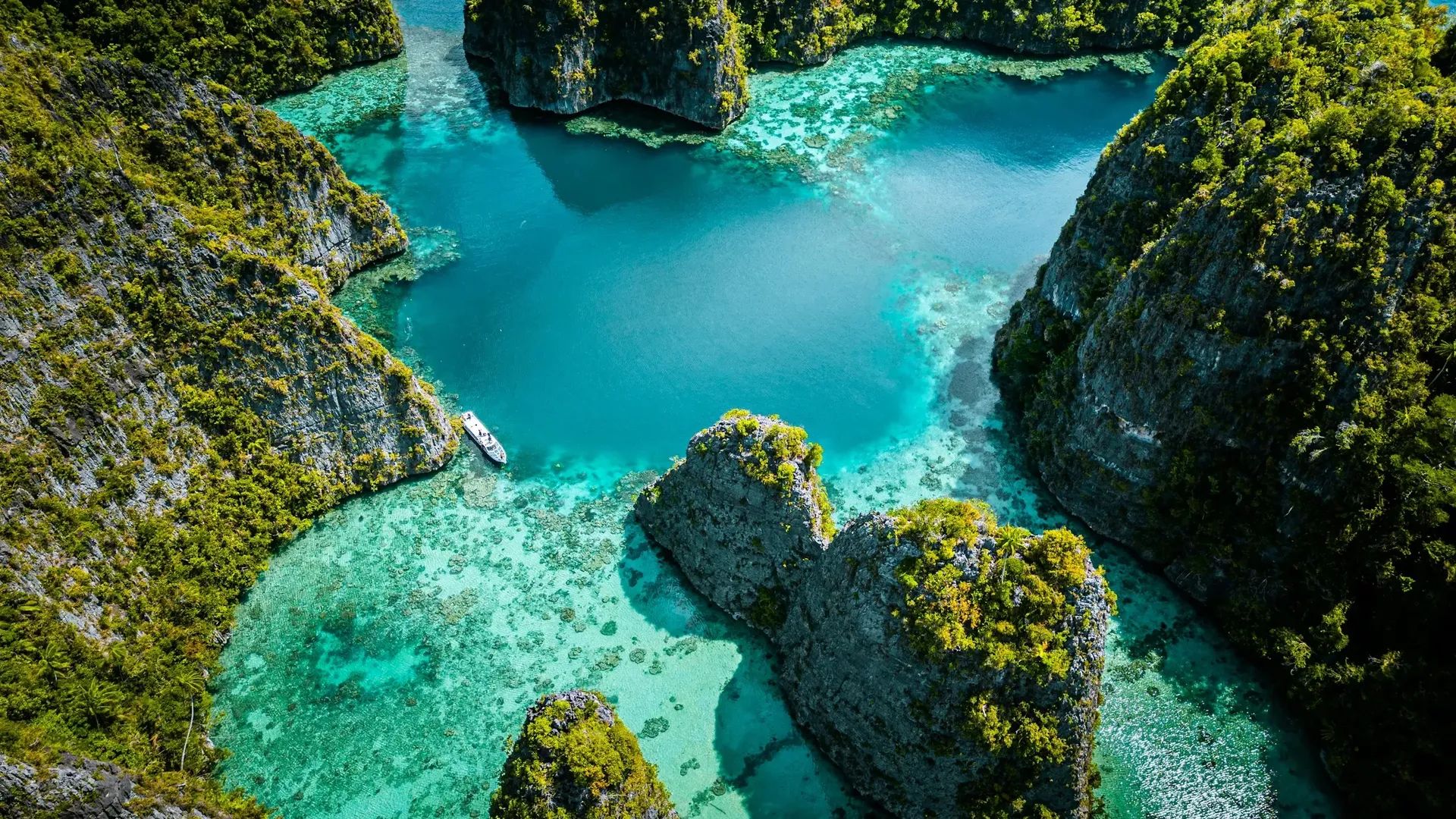
Aerial view of healthy coral ecosystem with diverse marine life and excellent visibility in Raja Ampat waters - Picture by Neptune Liveaboards
Land-Based Snorkeling in Indonesia
Nusa Penida isn't the only land-based option — several other regions have resorts with direct access to good reefs too. Raja Ampat has strong land-based choices. Halmahera has a handful of resorts with access to really good coral. North Sulawesi is another: Bunaken leans toward wall diving, but nearby Bangka Island has excellent coral and good resorts to match. Just outside Komodo National Park, there are land-based options with solid nearby reefs too, and the same goes for parts of Bali and the Derawan Islands.
We don't focus on land-based trips on the platform — if that's specifically what you're after, get in touch and we can point you in the right direction. But a liveaboard covers far more ground: you see a much larger area, food and a guide are included, and the boat handles the logistics a land-based trip leaves you to sort out yourself. That's what you're paying for.
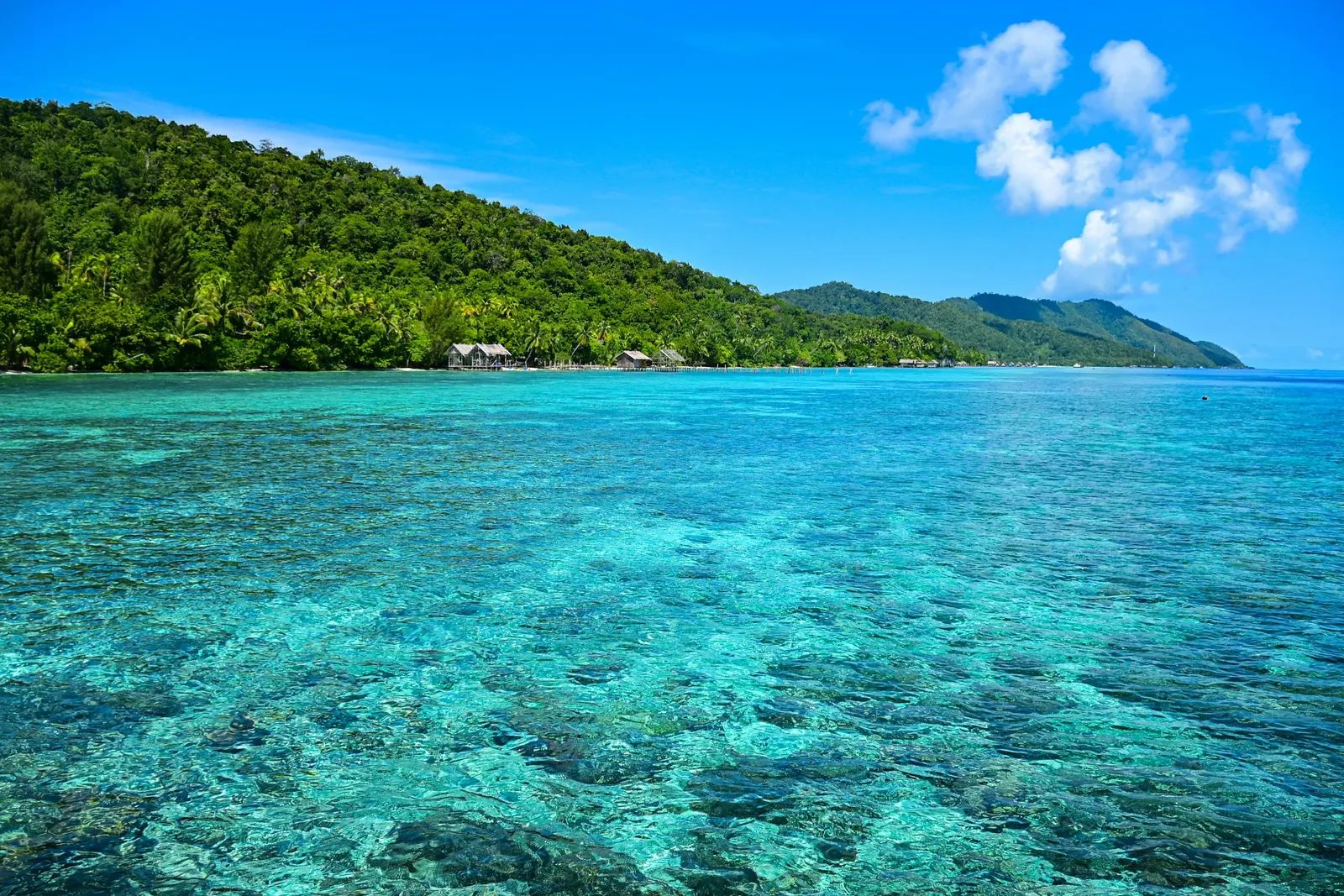
Clear turquoise water over a shallow reef with a jungle-covered island and stilted wooden huts in the background, Raja Ampat, Indonesia
What a Snorkeling Day Actually Looks Like
Most itineraries build in two snorkel sessions a day — usually one in the morning, one in the afternoon, each around an hour to an hour and a half in the water. If you want to snorkel more than that, you usually can — nobody's forcing you onto a hike or a beach stop instead, and boats typically have enough tenders and crew to accommodate it. Just talk to the cruise director early about what you're hoping for, and they'll work with you on it.
A typical day otherwise runs breakfast, a morning session, lunch, then something in the afternoon — a viewpoint hike, a beach stop, or just downtime: stand-up paddling, reading on deck, or simply relaxing. It's a vacation. You don't have to fill every hour.
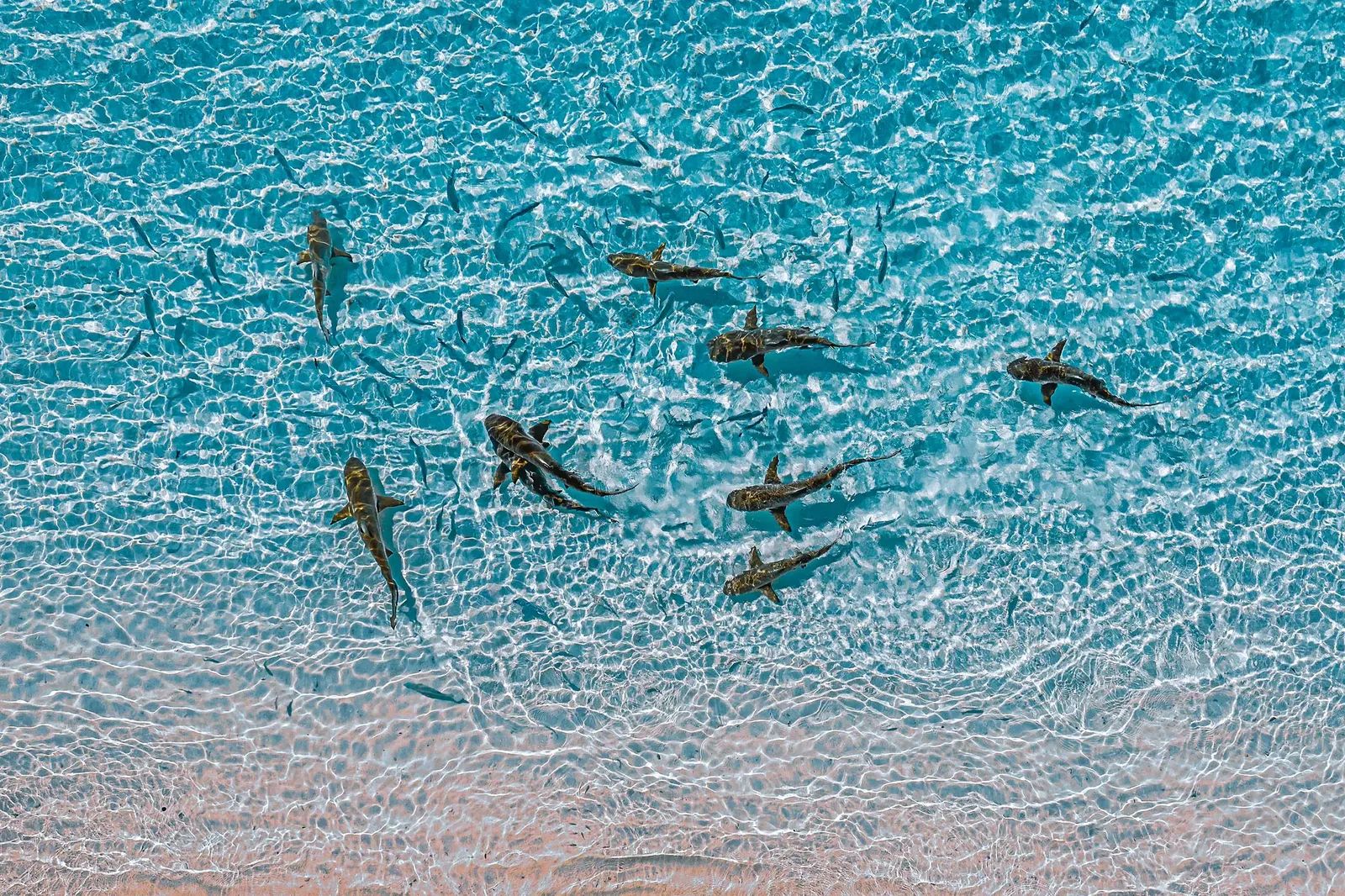
School of blacktip reef sharks swimming in shallow crystal-clear turquoise waters over sandy bottom in Raja Ampat lagoon - Picture by Calico Jack Cruises
Managing Expectations
Visibility and conditions can change site to site — current, wind, and swell all play a part, and there can be some chop on the way to a site even on a generally calm day. Operators try to route toward protected, sheltered sites where it's mostly flat, both for comfort and to avoid seasickness, but nature doesn't always cooperate. Weather can turn, a storm somewhere in the distance can stir up visibility, and some days just aren't what you hoped for — that's the tropics, not something anyone can control.
Seeing mantas feeding, whale sharks at the bagans, or turtles is close to a sure thing at the right sites and season, but nothing in nature is ever fully guaranteed. Go in with realistic expectations and you'll rarely be disappointed.
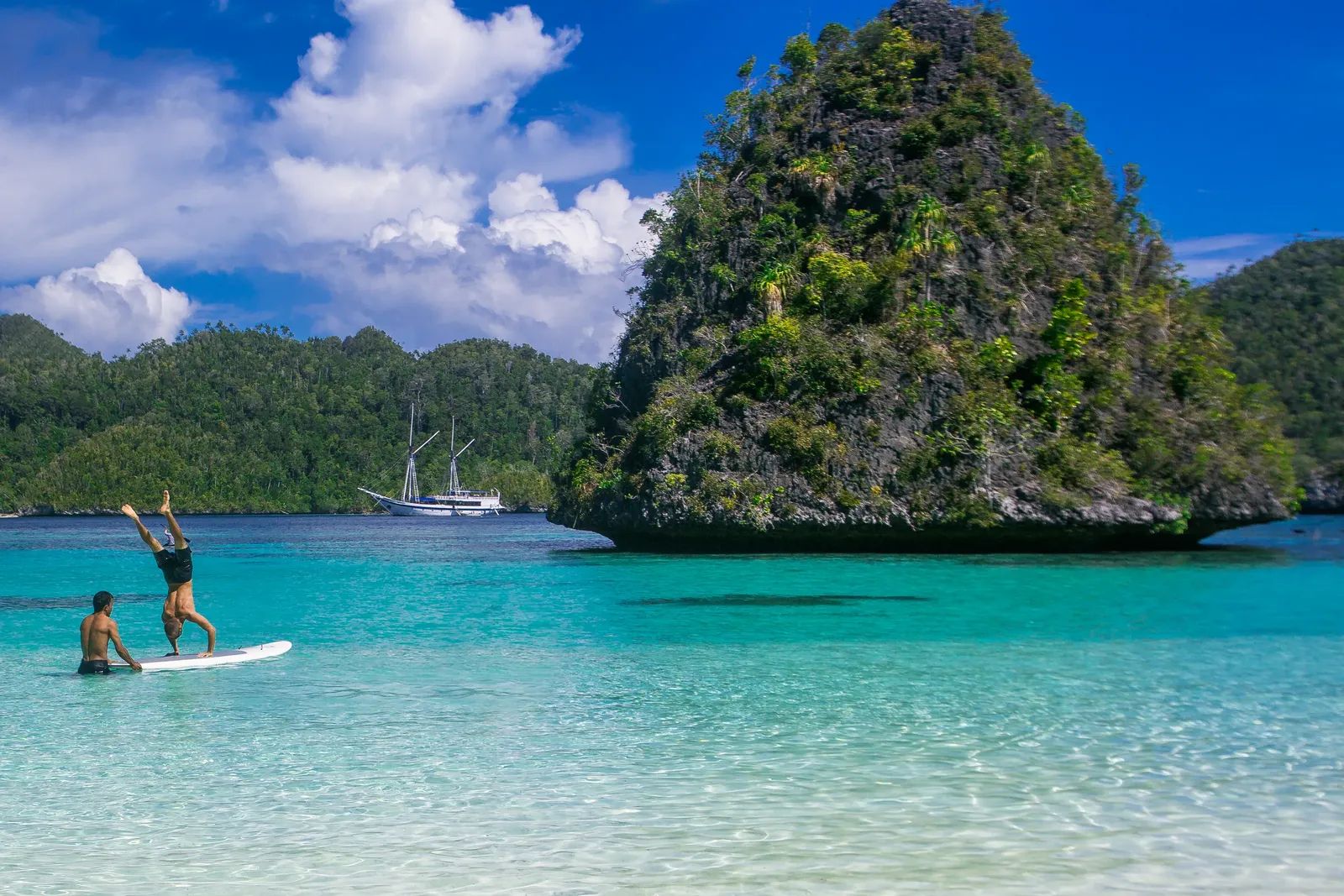
A guest performs a handstand on a paddleboard with the help of a crew member, with the phinisi anchored near limestone karst formations in the background.
Frequently Asked Questions
Will I see the same things snorkeling as the divers on my boat?
Mostly, especially in shallower or surface-associated habitats — but not everything. Some marine life and deeper reef structure is only visible with scuba, so ask your operator what a given site actually offers snorkelers before you go.
Is snorkeling safe for kids in Indonesia?
Not every operator takes kids — diving & leisure and leisure-only boats are generally more open to it than diving-focused ones, but it also depends on the other guests on board, since some trips run as adults-only. Kids' rates often exist too, but aren't displayed on the platform. If you're planning a family trip, talk to us directly and we'll help find a boat that fits.
Can I snorkel with whale sharks in Indonesia?
Yes. The main spots are Cenderawasih Bay, Triton Bay, and Saleh Bay in Sumbawa, where whale sharks gather at bagan fishing platforms to feed at the surface and are regularly encountered snorkeling rather than diving.
Can I snorkel with manta rays in Indonesia?
Yes, at several sites across the country, including Raja Ampat, Komodo, and Nusa Penida in Bali. Our manta ray guide covers all of them in detail. Mantas are commonly seen feeding at the surface, which often makes for a better snorkeling encounter than a dive.
Can I snorkel with turtles in Indonesia?
Yes, widely. Our turtle guide has the full detail, but green turtles in particular graze on shallow seagrass beds in places like the Derawan Islands, making them easy and reliable to snorkel with.
Ready to Book?
Coralbound books the same trip at the same price as booking direct, including the option of a complimentary hotel night on qualifying trips. Use live chat on the platform, message us on WhatsApp, or reach out through our contact form if you have questions before booking — or read why divers book with Coralbound first.