Indonesia has more reliable whale shark encounters than anywhere else on Earth — and the reason is the bagan.
Whale sharks across the Indonesian archipelago are covered in this guide — where to find them, when to go, and what to expect. It's part of Coralbound's Indonesia liveaboard guide; our big animal diving guide covers the broader megafauna picture, and why divers choose Indonesia covers the case for the country overall. If you're ready to look at boats, the Cenderawasih Bay destination page and Triton Bay destination page give quick overviews of the two premier whale shark destinations.
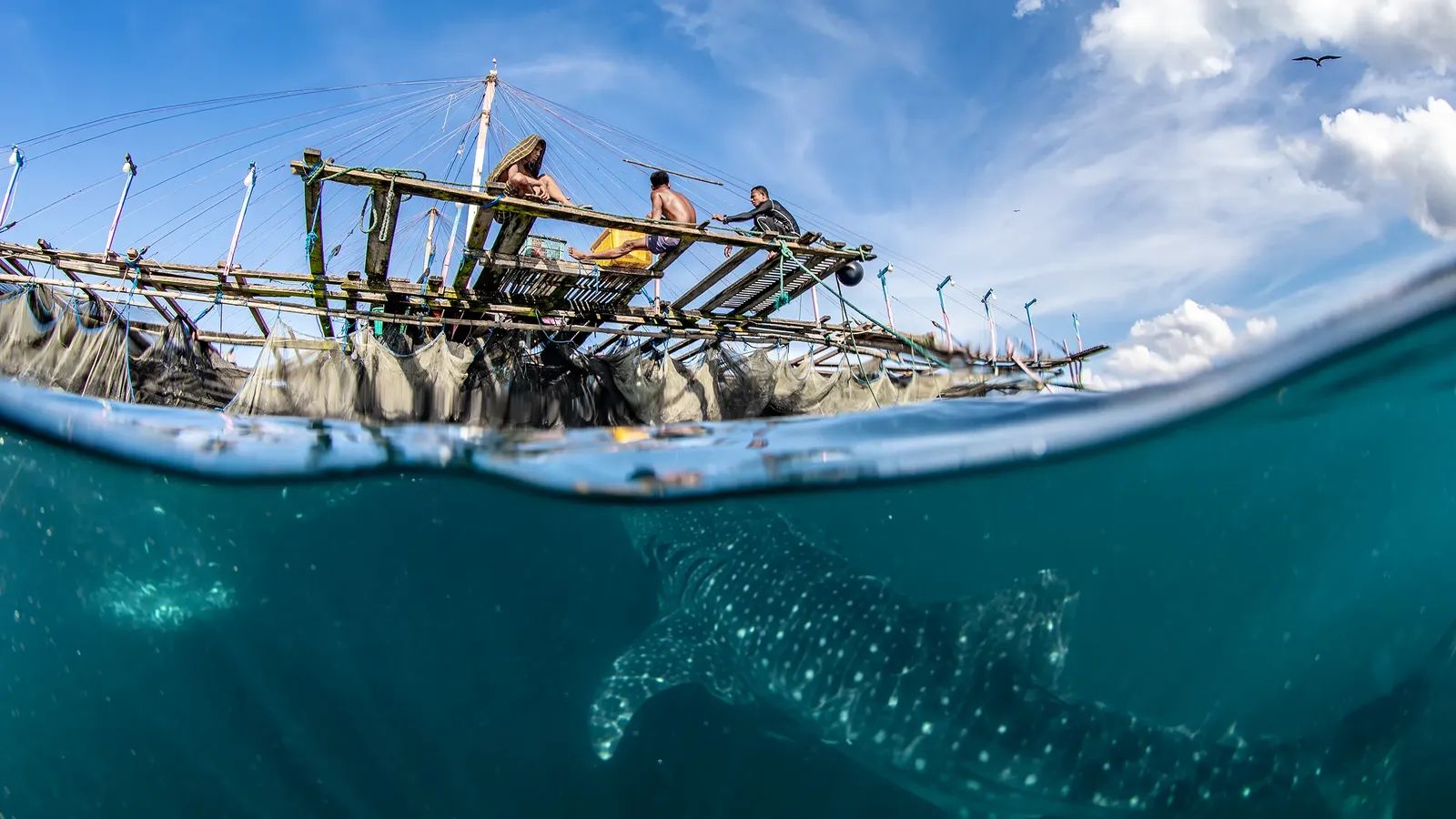
Indonesia hosts multiple resident populations year-round, most tied to traditional fishing platforms called bagans. These wooden platforms catch small fish overnight using lights; whale sharks have learned to feed on the baitfish that escape. Research across the Bird's Head Seascape documented 268 unique individuals between 2010 and 2023 — 159 in Cenderawasih Bay, 95 in the Kaimana region (which includes Triton Bay), and smaller numbers in Raja Ampat and Fakfak¹. These sub-regions share little population overlap, so each figure reflects a distinct local group with its own high residency and resighting rates.
Quick Facts
- Best season: year-round at bagan sites; July–October optimal in Cenderawasih Bay; October–April in Triton Bay; May–September in Saleh Bay
- Water temperature: 27–30°C at most bagan sites
- Visibility: 15–30m depending on site and season
- Experience level: Open Water minimum for diving; no certification required for snorkelling
- Trip length: 8–14 days for West Papua destinations; 7–12 days for Komodo/Sumbawa routes
- Who can join: divers and snorkellers; encounters occur at 5–10m, fully surface-accessible
- Cost range: $300–600/day mid-range; $600–1,000+/day luxury
- Key marine life: whale shark (Rhincodon typus), IUCN Endangered²
- Gateway airports: Manokwari (MKW) or Nabire (NBX) for Cenderawasih Bay; Sorong (SOQ) or Kaimana (KNG) for Triton Bay routes; Labuan Bajo (LBJ) or Ngurah Rai (DPS) for Saleh Bay and Komodo routes
- Booking lead time: 3–6 months for peak departures; 6–12 months for specialist Cenderawasih Bay vessels
Quick Answers
Where is the best place to dive with whale sharks in Indonesia?
Cenderawasih Bay in West Papua is Indonesia's most studied whale shark site. Research spanning 2010 to 2023 identified 159 individual whale sharks in Cenderawasih Bay alone, with high long-term residency — one individual was resighted 34 times over three years¹. Whale sharks are present year-round at the bagan platforms, with July–October offering the calmest surface conditions for liveaboard operations. Triton Bay (Kaimana) is a strong second, with 95 identified individuals and equally reliable bagan encounters¹.
Is whale shark diving in Indonesia ethical?
The bagan relationship is worth understanding honestly. Whale sharks associate with fishing platforms because fish escape the nets — this is opportunistic feeding on a genuine food source, not provisioning. The same research that documented these populations found 80% of individuals carried human-caused scarring, primarily from bagan structure and boat contact¹. Choose operators with documented responsible encounter protocols and maintain the recommended three-metre minimum distance.
¿Pueden los principiantes y los buceadores con tubo ver tiburones ballena en Indonesia?
Sí, aunque algunos barcos en estos itinerarios bucean en otros sitios que requieren Advanced Open Water. Los encuentros con tiburones ballena en las plataformas de bagan se producen a entre cinco y diez metros, lo que los hace totalmente accesibles para los buceadores Open Water. Los buceadores con tubo tienen encuentros igual de buenos desde la superficie; muchas embarcaciones de crucero ahora dan la bienvenida a huéspedes no buceadores específicamente para el snorkel con tiburones ballena, y la postura de alimentación vertical que adoptan los tiburones en los bagans significa que la acción ocurre justo en la línea de flotación.
¿Cuál es la mejor época para ver tiburones ballena en Indonesia?
Depende del destino. La Bahía de Cenderawasih tiene tiburones ballena residentes durante todo el año; se prefiere julio-octubre para las operaciones de crucero debido a las condiciones más tranquilas. Triton Bay opera de octubre a abril. La Bahía de Saleh en Sumbawa alcanza su punto álgido de mayo a septiembre, coincidiendo con la temporada de cruceros Bali-Komodo. Nuestra guía del clima en Indonesia cubre las condiciones estacionales en todos los destinos en detalle.
Whale shark feeding under traditional fishing platform bagan, unique encounter on Triton Bay liveaboard trips West Papua Indonesia
Dónde encontrar tiburones ballena en Indonesia
Bahía de Cenderawasih
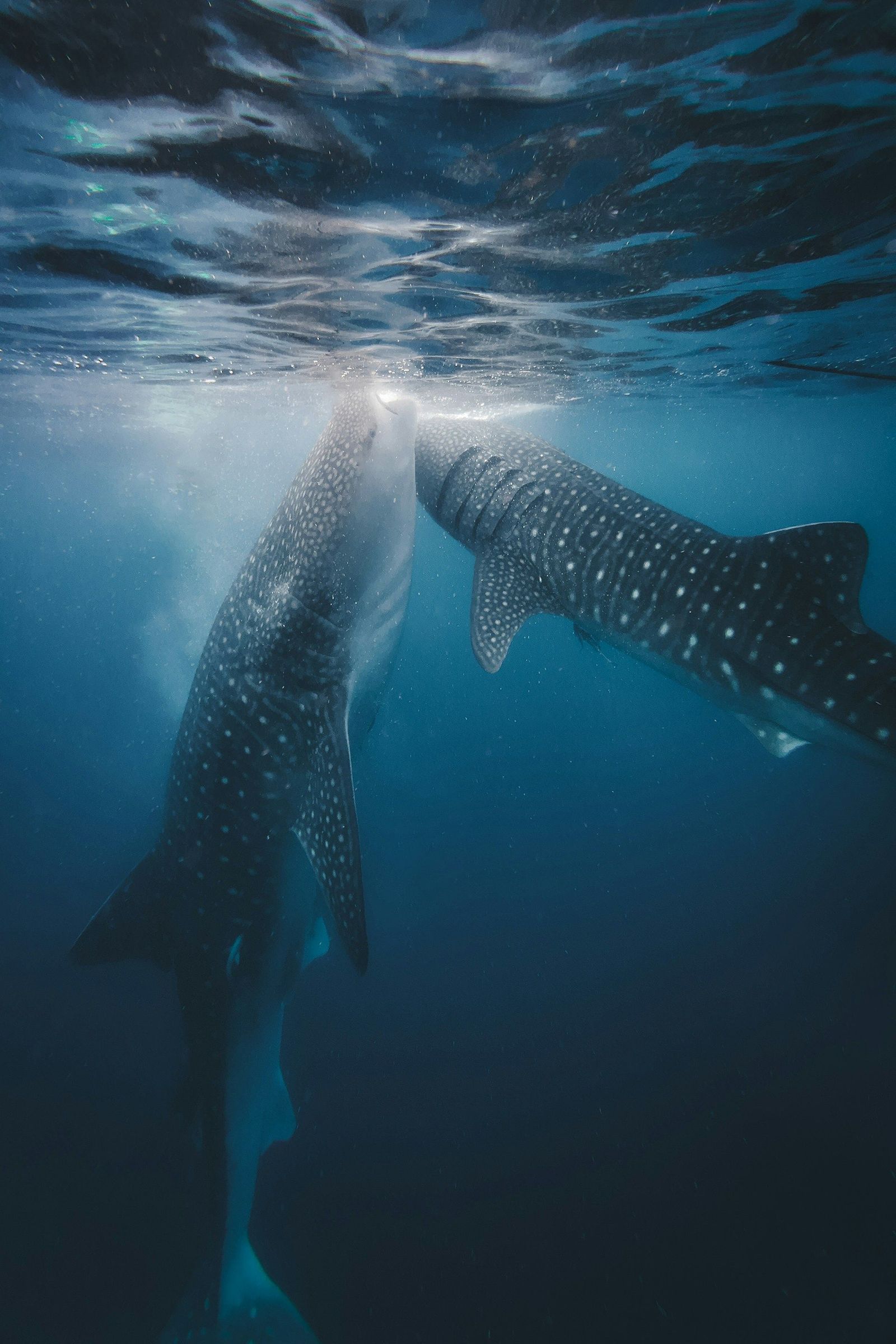
La Bahía de Cenderawasih es el principal destino de tiburones ballena de Indonesia. La zona de Kwatisore, en la bahía sur, tiene al menos 30 bagans operativos en cualquier momento¹, y los tiburones ballena regresan a ellos a lo largo de los años. La investigación documentó la alimentación tanto en una postura horizontal como en una postura vertical distintiva con la cabeza hacia arriba en la superficie¹ — la imagen más asociada con este destino. En la práctica, te acercas en una embarcación auxiliar en la oscuridad previa al amanecer, la plataforma del bagan se cierne sobre ti, y las aletas rompen la superficie antes de que siquiera entres al agua.
Los tiburones ballena aquí son abrumadoramente machos juveniles, típicamente de cuatro a cinco metros, que se alimentan de anchoas, arenques y espadines. Las salidas de los operadores se concentran en julio-agosto, cuando las condiciones de la superficie son mejores, aunque los tiburones ballena están presentes durante todo el año. Para obtener detalles completos del destino, incluidos los sitios de buceo, especies endémicas y logística, lea nuestra guía de la Bahía de Cenderawasih o explore la página del destino de la Bahía de Cenderawasih.
Triton Bay (Kaimana)
The Frontiers 2025 research identified 95 individual whale sharks in the Kaimana region, which includes Triton Bay, reflecting a distinct local population with its own high residency patterns¹. Triton Bay is less visited and less documented as a tourism destination, but the encounter foundation is strong. Season runs October–April; the southeast monsoon closes the bay from May to September. Most itineraries combine Triton Bay with southern Raja Ampat, making it accessible without a standalone commitment.
Beyond whale sharks, the bay hosts walking sharks (Hemiscyllium henryi), wobbegongs, and dense soft coral coverage. If manta rays are also on your list, our guide to diving with manta rays in Indonesia covers the best sites and seasons. Full planning detail is in our Triton Bay guide and Triton Bay destination page.
Saleh Bay (Sumbawa)
Saleh Bay sits on the Bali–Komodo liveaboard route and offers bagan-based encounters during the dry season, May–September. The whale sharks are resident year-round at the bagans, but liveaboard access concentrates in this window when seas cooperate. Satellite tracking has confirmed that Saleh Bay functions as one of a small number of irreplaceable year-round foraging habitats for whale sharks in the Indo-Pacific⁶.
Saleh Bay is the most accessible whale shark destination in Indonesia and consequently the most visited. In peak season, day trips, leisure cruises, and diving liveaboards all operate simultaneously. Liveaboards offer better bagan positioning — fewer boats, more flexibility to move between platforms. Most itineraries combine Saleh Bay with Komodo National Park; some depart directly from Bali and work the route south to north.
There have been recent accounts of it being very crowded, with fishermen feeding the whale sharks specifically to attract them for tourists rather than as part of natural bagan activity. This disrupts natural behaviour and migration patterns. The conservation picture is genuinely complicated: in areas where the alternative has historically been commercial harvest, the shift toward tourism - even imperfect tourism - has in many cases kept communities from returning to that. It's a trade-off the industry continues to grapple with. If this matters to you, ask operators directly about their encounter protocols before booking - and push for honest answers.
Talisayan Bay (Derawan Region)
Talisayan, near the Derawan Islands on the East Kalimantan coast, hosts bagan-based whale sharks throughout the year. WWF Indonesia research documented 93 individuals as of 2018 across the broader Berau waters, with Talisayan confirmed as a year-round site³. The encounter dynamic shifts seasonally: for most of the year whale sharks feed near bagans close to Derawan Island itself; when south winds arrive mid-June to mid-September, the bagans relocate to the more sheltered Talisayan area, roughly two hours from Derawan.
The Derawan Islands are not yet on the main liveaboard circuit — only a handful of operators run there — so Talisayan sees very little boat traffic. For those who make it, operators report multiple whale sharks present simultaneously at a single platform.
A Note on Gorontalo
Botubarani village outside Gorontalo in North Sulawesi offers whale shark encounters, and it's well known among Indonesian divers. It's a different dynamic from the bagan sites above — encounters here are provisioned, with shrimp fed to attract the sharks rather than opportunistic bagan feeding. Season is loosely reported as March to June but varies. Some liveaboards running North Sulawesi itineraries — combining Bunaken, Lembeh, and the Togian Islands — include a Gorontalo whale shark stop as part of the route. If that combination appeals, it's a practical way to tick both without a dedicated expedition.
Conservation Context
Whale sharks are Endangered on the IUCN Red List² and have been protected under Indonesian law since 2013⁷. Key encounter sites sit within marine protected areas — Cenderawasih Bay National Park covers approximately 1.45 million hectares⁴. The Frontiers 2025 research found 80% of documented individuals carried human-caused scarring, primarily from bagan structure contact and boat propellers¹. Most were non-life-threatening abrasions, but the prevalence underlines why responsible encounter protocols matter.
The bagan tourism economy creates genuine incentives to protect both the whale sharks and the fishing platforms they depend on⁸. For context on how Indonesia protects other large marine species facing similar pressures — from hammerhead sharks in the Banda Sea to sea turtles across the archipelago — the pattern of MPA protection combined with community-based tourism is consistent across the region.
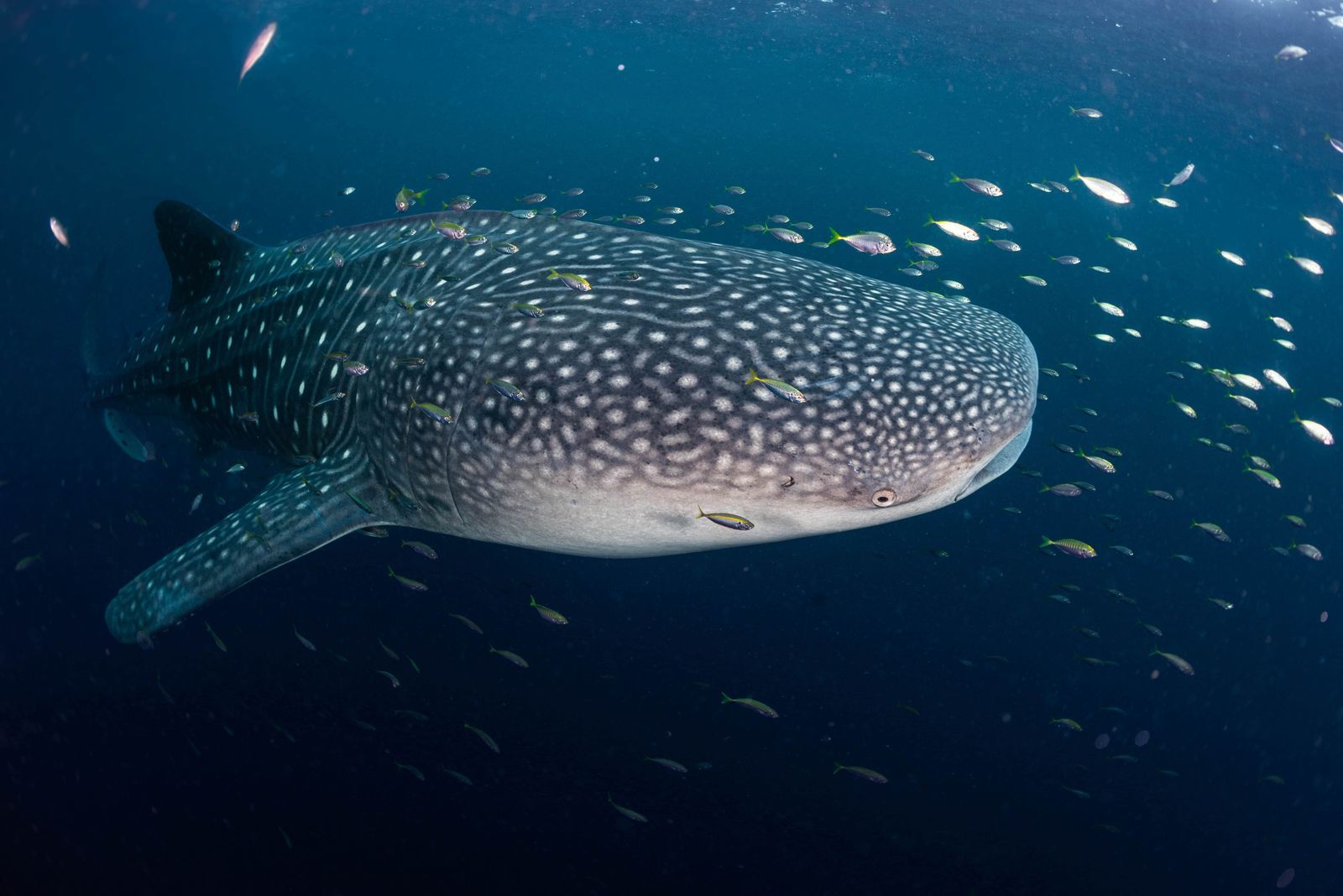
Whale shark swimming with tropical fish in Indonesian waters, ultimate liveaboard diving experience - Picture by Dewi Nusantara
Managing Expectations
No encounter is guaranteed. Whale sharks are wild animals and move away from bagans when they choose. Operators at established bagan sites consistently report high encounter frequency, but moon phase, baitfish presence, weather, and boat activity all affect whether whale sharks are present on any given morning. Encounters near the new moon tend to be more reliable — darker nights concentrate baitfish more densely around the bagan lights, which keeps whale sharks close longer. If you have flexibility on dates, ask your operator where your trip falls in the lunar cycle.
When an encounter does happen, the scale can be disorienting. A typical juvenile here is four to five metres — roughly the length of a small car — and they will often swim directly toward you with their mouth open before turning away. This is normal feeding behaviour. The recommended three-metre distance exists to protect the animal, not because they pose any risk to you.
West Papua is remote. Reaching Cenderawasih Bay requires multiple flight connections and a full travel day from Bali. Itineraries are weather-dependent. Factor this in as an honest picture of expedition diving, not as a deterrent.
Responsible encounter protocols at bagan sites typically include a three-metre minimum distance from the body, limits on the number of swimmers in the water simultaneously, and time caps on individual encounters. Confirm these with your operator before booking.
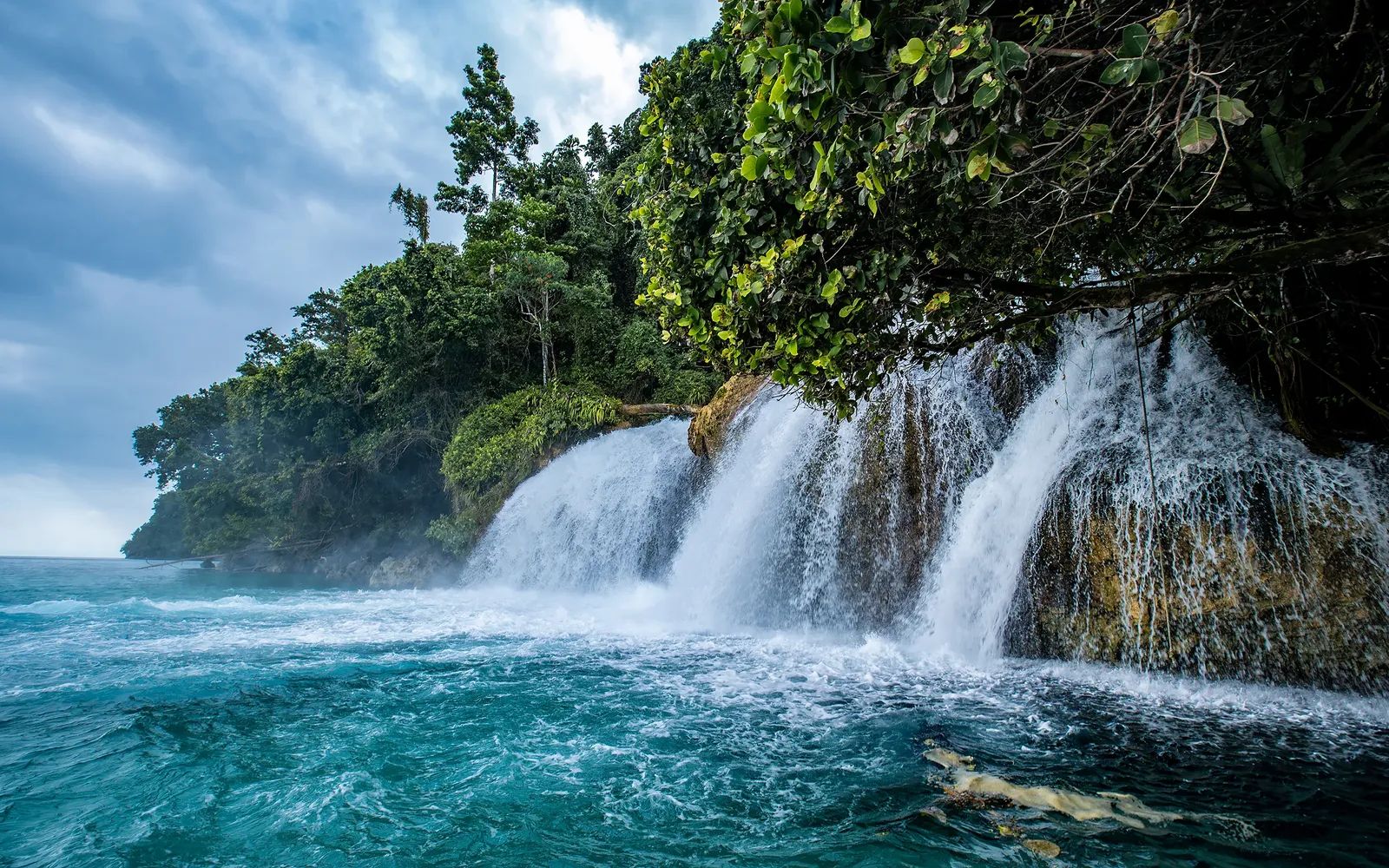
Waterfall cascading directly into turquoise ocean, scenic natural attraction visited during Triton Bay liveaboard trips West Papua Indonesia
Frequently Asked Questions
How many whale sharks will I see at one time?
At bagan sites, operators consistently report multiple individuals present simultaneously — the Frontiers 2025 research documented whale sharks feeding in groups at single platforms¹. Triton Bay encounters typically involve one to three individuals. Cenderawasih Bay, with at least 30 active bagans in the Kwatisore area, offers the highest likelihood of multiple simultaneous encounters.
Do I need dive insurance for liveaboard trips in Indonesia?
Yes. Dive insurance with medical evacuation coverage is mandatory under Indonesian law and non-negotiable for remote expedition diving. Standard travel insurance policies frequently exclude evacuation from remote areas — verify your policy explicitly covers Indonesia and remote-area extraction. For expensive itineraries to destinations like Cenderawasih Bay, comprehensive travel insurance covering trip interruption is strongly recommended. Our liveaboard packing guide covers insurance and pre-trip preparation in detail.
Can I combine whale shark diving with other destinations?
Yes, depending on where you're going. Triton Bay combines naturally with Raja Ampat on a single West Papua itinerary (October–April). Saleh Bay fits any Bali–Komodo route (May–September). Cenderawasih Bay is geographically isolated and works best as a dedicated expedition. For pairing ideas, our liveaboard extensions guide covers the options.
What time of day do encounters happen at bagans?
La actividad de alimentación alcanza su punto máximo a primera hora de la mañana, normalmente entre las 6 y las 9 de la mañana, cuando los pescadores izan las redes después de una noche de pesca. La mayoría de los operadores parten antes del amanecer para llegar a los baganes durante la hora de mayor actividad. A última hora de la mañana, los tiburones ballena generalmente se alejan de las plataformas.
¿Necesito Advanced Open Water para bucear con tiburones ballena?
No. Los encuentros en las plataformas de bagan son accesibles para buceadores Open Water y snorkelers; ocurren a profundidades de cinco a diez metros. Es posible que se requiera Advanced Open Water para otros sitios de buceo en el mismo itinerario. Consulta con tu operador específico al reservar. Nuestra guía para principiantes de liveaboard cubre los requisitos de certificación en todos los destinos de Indonesia.
¿Está disponible el nitrox en los liveaboards de Indonesia?
La disponibilidad varía según la embarcación. En los barcos de lujo y orientados al buceo, el nitrox a menudo se incluye o está disponible con un recargo. En los sitios de bagan, los encuentros son lo suficientemente superficiales como para que el nitrox ofrezca un beneficio práctico mínimo; se vuelve más relevante para los sitios de arrecifes y pelágicos del mismo itinerario. Nuestra guía de categorías de liveaboard cubre lo que cada nivel de embarcación incluye típicamente.
¿Son peligrosos los tiburones ballena?
No. Los tiburones ballena son filtradores y completamente inofensivos para los humanos⁵. Su tamaño puede resultar intimidante de cerca, pero no representan ninguna amenaza. Mantén la distancia mínima para proteger al animal y reducir el riesgo de contacto accidental con las aletas.
Whale shark underwater encounter Indonesia liveaboard diving gentle giant experience
Planifica tu viaje
Coralbound reserva liveaboards de tiburones ballena en todos los destinos de Indonesia al mismo precio que pagarías reservando directamente, incluida la opción de una noche de hotel gratuita. Sabemos qué embarcaciones realizan itinerarios dedicados a la Bahía de Cenderawasih, cuáles combinan la Bahía de Triton con Raja Ampat y cómo la Bahía de Saleh encaja en una ruta Bali-Komodo. Contáctanos por WhatsApp o a través del formulario de contacto — o lee más sobre cómo trabajamos antes de ponerte en contacto.