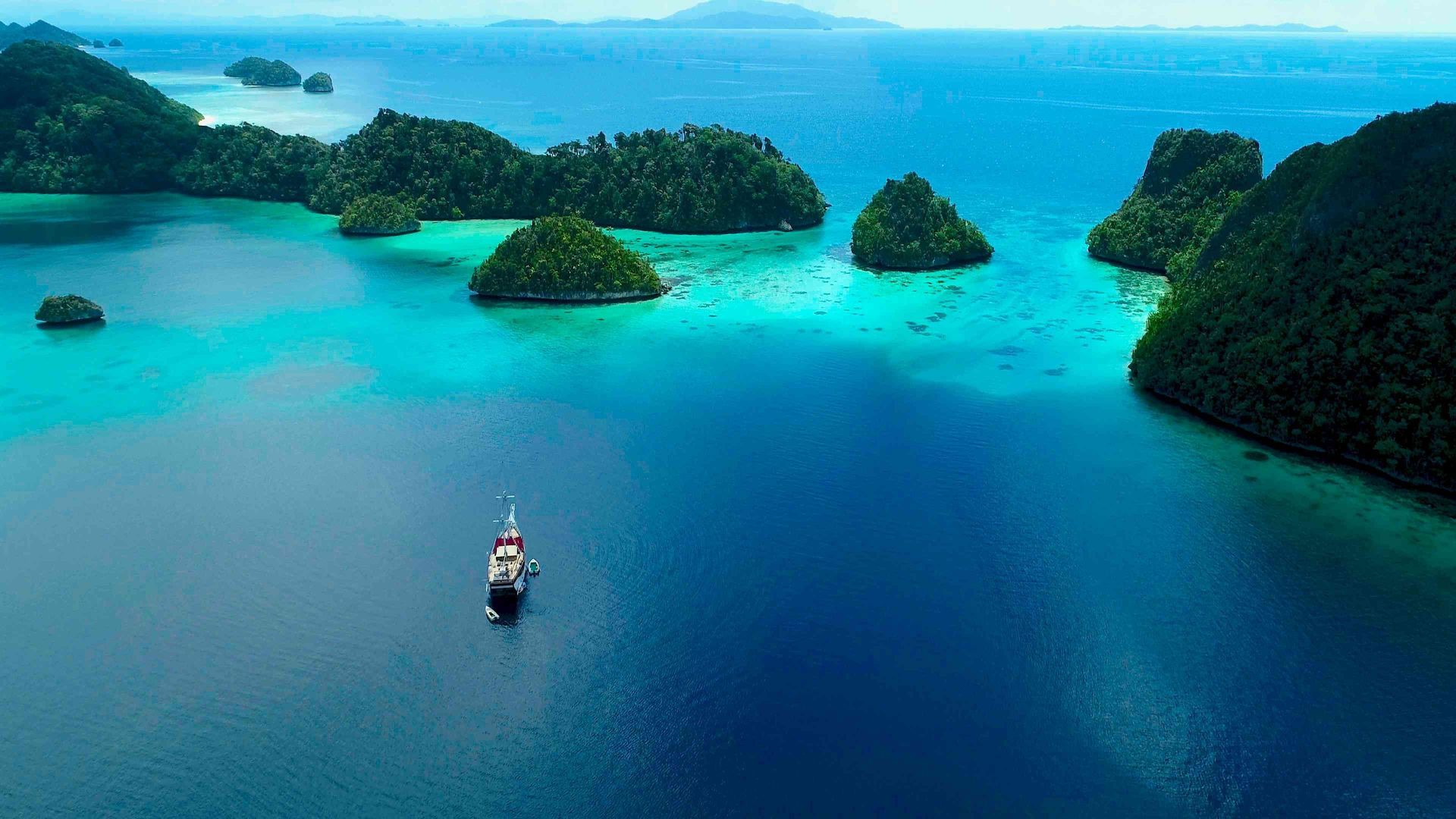
Triton Bay nằm ở bờ biển phía nam của Tây Papua, nép mình trong Khu bảo tồn biển Kaimana — một trong những khu vực ít được lặn nhất và đa dạng sinh học nhất của Indonesia. Những cuộc gặp gỡ đặc trưng là cá mập đi bộ, cá mập voi tại các nền tảng đánh cá và các rạn san hô mềm với mật độ đặc biệt. Lần đầu tiên được khảo sát đầy đủ vào năm 2006, vịnh vẫn đang được khám phá, với các địa điểm lặn mới được tìm thấy trong các chuyến thám hiểm gần đây.¹
Hướng dẫn này bao gồm mọi thứ bạn cần để lên kế hoạch cho một chuyến đi tàu lặn Triton Bay: mùa thích hợp, cách đến đó, những gì mong đợi dưới nước và cách nó phù hợp với các tuyến đường rộng lớn hơn của Tây Papua và Biển Đầu Chim. Đây là một phần của hướng dẫn tàu lặn Indonesia hoàn chỉnh của chúng tôi. Muốn xem tổng quan nhanh trước? Xem trang điểm đến Triton Bay của chúng tôi.
Sự thật nhanh: Lặn tàu lặn Triton Bay
Sự thật nhanh về lặn Triton Bay
- Mùa tốt nhất: tháng 10–tháng 4
- Loài san hô: 471 loài được ghi nhận¹
- Loài cá: hơn 1.000 loài¹
- Nhiệt độ nước: 27–30°C quanh năm
- Tầm nhìn: 10–15m trong vịnh; hơn 25m ở các rạn san hô ngoài khơi và Bán đảo Bomberai
- Số lần lặn mỗi ngày: 3–4 trong hầu hết các lịch trình
- Cấp độ kinh nghiệm: Phù hợp với mọi cấp độ
- Thời lượng chuyến đi: 8–14 ngày
- Phạm vi chi phí: 400–600 USD+/ngày tùy thuộc vào hạng tàu
- Sân bay trung chuyển: Sân bay Kaimana (KNG) qua Sorong (SOQ) hoặc Makassar (UPG); một số lịch trình lên tàu ở Sorong
- Thời gian đặt trước: 6–12 tháng cho mùa cao điểm
Câu hỏi thường gặp
Thời điểm tốt nhất để lặn Triton Bay là khi nào?
Từ tháng 10 đến tháng 4 là thời điểm chính — biển lặng, tầm nhìn tốt ở các rạn san hô ngoài khơi và những cuộc gặp gỡ cá mập voi đáng tin cậy nhất tại các bagan. Hầu hết các tàu lặn Triton Bay hoạt động cùng với mùa Raja Ampat, cao điểm từ tháng 10–tháng 3. Gió mùa đông nam từ tháng 5 đến tháng 9 mang đến điều kiện khó khăn và hầu hết các nhà điều hành không lên lịch các chuyến đi trong thời gian này. Đối với các kiểu thời tiết rộng lớn hơn của Indonesia, hãy xem hướng dẫn thời tiết và mùa lặn của Indonesia của chúng tôi.
Tôi có thể nhìn thấy cá mập voi ở Triton Bay không?
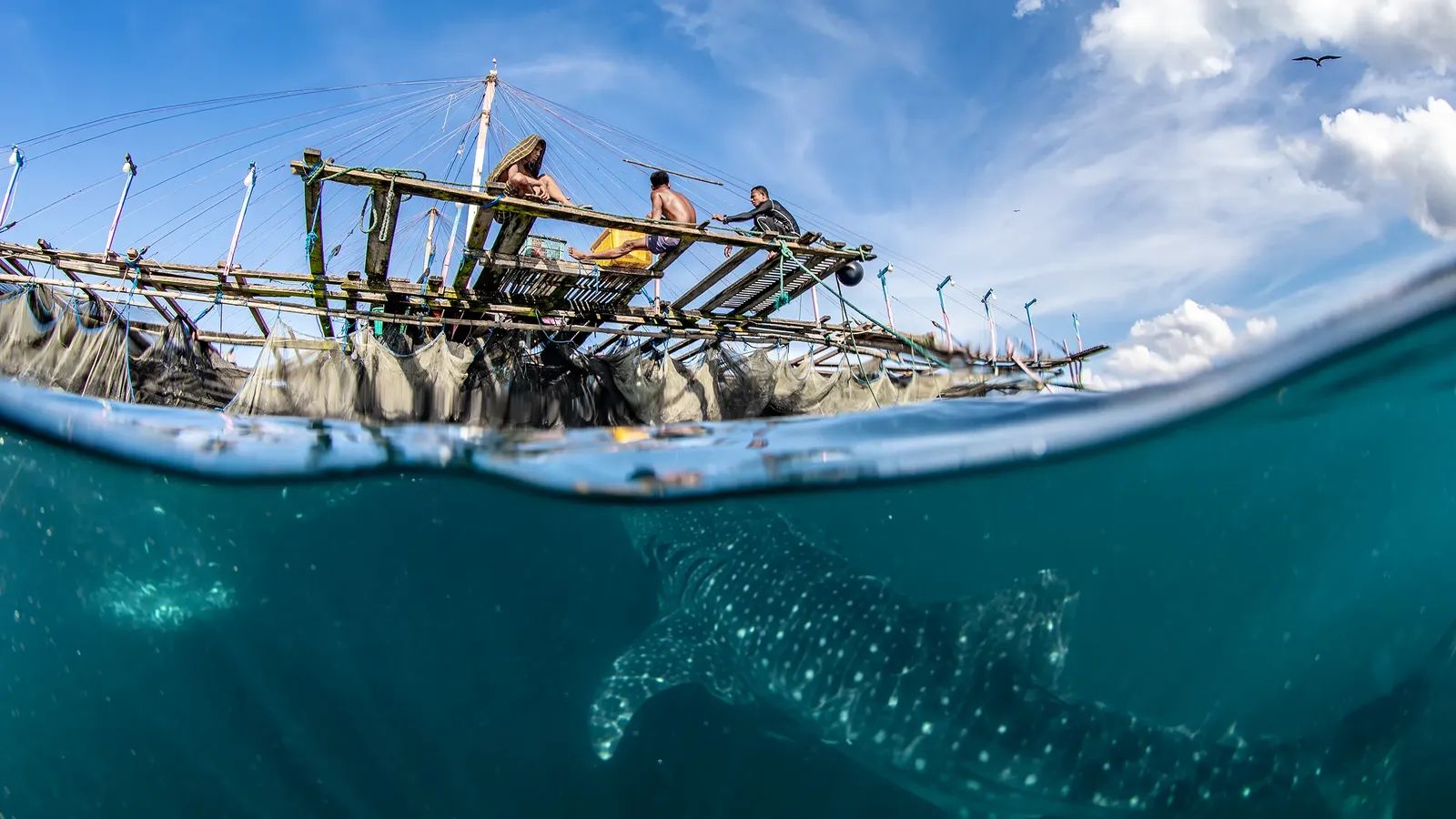
Có — cá mập voi tập trung quanh năm tại các nền tảng đánh cá truyền thống gọi là bagan ở khu vực Đông Kaimana và Namatota.²³ Cơ chế kiếm ăn của bagan giống như ở Vịnh Cenderawasih: ngư dân thu hút cá nhỏ vào ban đêm bằng ánh sáng, và cá mập voi tập trung trên mặt nước để kiếm ăn. Cá heo cũng thường xuyên được bắt gặp quanh các bagan. Các cuộc gặp gỡ đáng tin cậy nhất từ tháng 10–tháng 4. Đối với việc lặn cá mập voi trên khắp Indonesia, hãy xem hướng dẫn cá mập voi Indonesia của chúng tôi.
Apa itu hiu berjalan?
Hiu bintik Triton Bay (Hemiscyllium henryi) endemik di perairan ini — dideskripsikan secara ilmiah baru pada tahun 2008.⁷ Ia menggunakan sirip dadanya untuk berjalan di atas terumbu karang dan melalui area terumbu dangkal daripada berenang terus menerus. Nokturnal dan bergerak lambat, ini adalah salah satu pertemuan paling tidak biasa dalam penyelaman di Indonesia. Beberapa spesies ikan terumbu endemik lainnya juga telah didokumentasikan di sini sejak survei pertama.¹
Bagaimana cara ke Teluk Triton?
Sebagian besar rencana perjalanan Teluk Triton naik kapal di Sorong (SOQ) dan bergerak ke selatan melalui Misool dan sepanjang Semenanjung Bomberai untuk mencapai Teluk Triton. Beberapa kapal berangkat langsung dari Kaimana (KNG). Sejumlah kecil operator menjalankan penyeberangan dari Ambon melalui Laut Banda. Selalu konfirmasikan pelabuhan naik dan turun kapal Anda yang tepat sebelum memesan penerbangan domestik — pelabuhan tersebut sangat bervariasi tergantung pada rencana perjalanan.
Berapa biaya perjalanan liveaboard Teluk Triton?
Kapal mulai sekitar $400/hari untuk phinisi gaya ekspedisi dan naik hingga $600+/hari untuk operator mewah. Total biaya perjalanan berkisar $3.200–$10.000+ untuk rencana perjalanan 8–14 hari sebelum penerbangan dan biaya tambahan. Untuk rincian tingkatan lengkap, lihat panduan kategori liveaboard Indonesia.
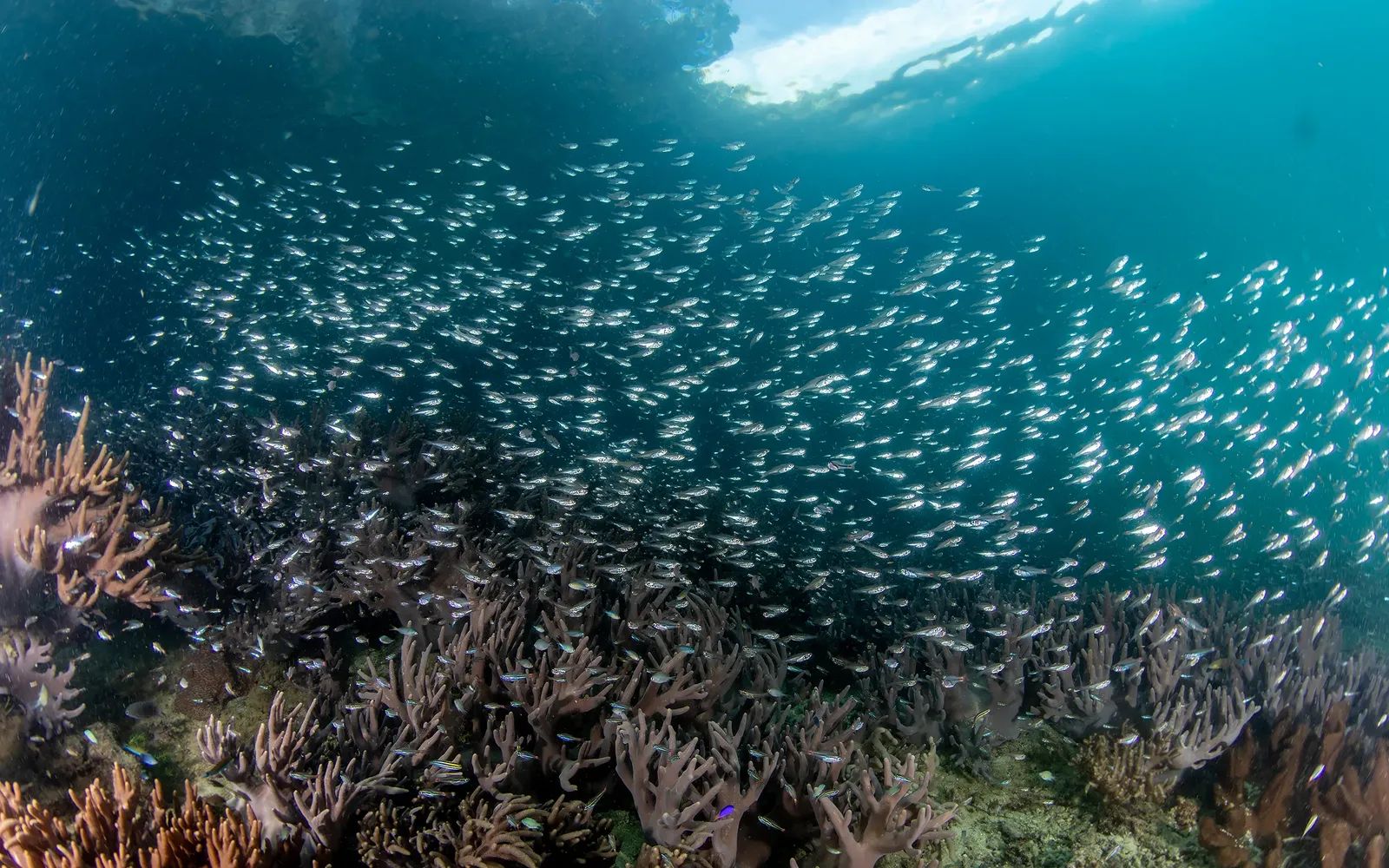
Massive baitfish tornado school over coral reef, signature dive encounter at Triton Bay liveaboard sites West Papua Indonesia
Mengapa Teluk Triton
Teluk Triton adalah bagian dari Cagar Laut Kepala Burung⁹ — koridor laut yang signifikan secara global di Papua Barat yang mencakup Raja Ampat, Teluk Cenderawasih, dan Kaimana. Ia berada dalam Kawasan Konservasi Laut Kaimana seluas 6.000 km², yang didirikan pada tahun 2008 setelah survei ilmiah pertama oleh ahli ikhtiologi Conservation International Dr. Gerald Allen.¹ Selama survei tahun 2006 itu, Allen mencetak rekor dunia untuk keanekaragaman ikan — 330 spesies dihitung di satu lokasi penyelaman.¹ Konteks Segitiga Koral memberikannya salah satu kepadatan keanekaragaman hayati laut terdokumentasi tertinggi di mana pun di Bumi.⁴⁵
Daya tarik utama bagi sebagian besar penyelam liveaboard adalah kombinasinya: Teluk Triton menyatukan Misool — area selatan Raja Ampat yang paling beragam hayati — dengan tujuan yang sangat sedikit penyelam pernah kunjungi. Rencana perjalanan biasa naik kapal di Sorong, mencakup Misool dan Kepulauan Pisang, melewati sepanjang Semenanjung Bomberai, dan mencapai Teluk Triton. Anda mendapatkan yang terbaik dari penyelaman Raja Ampat yang sudah mapan dikombinasikan dengan eksplorasi perbatasan yang sesungguhnya.
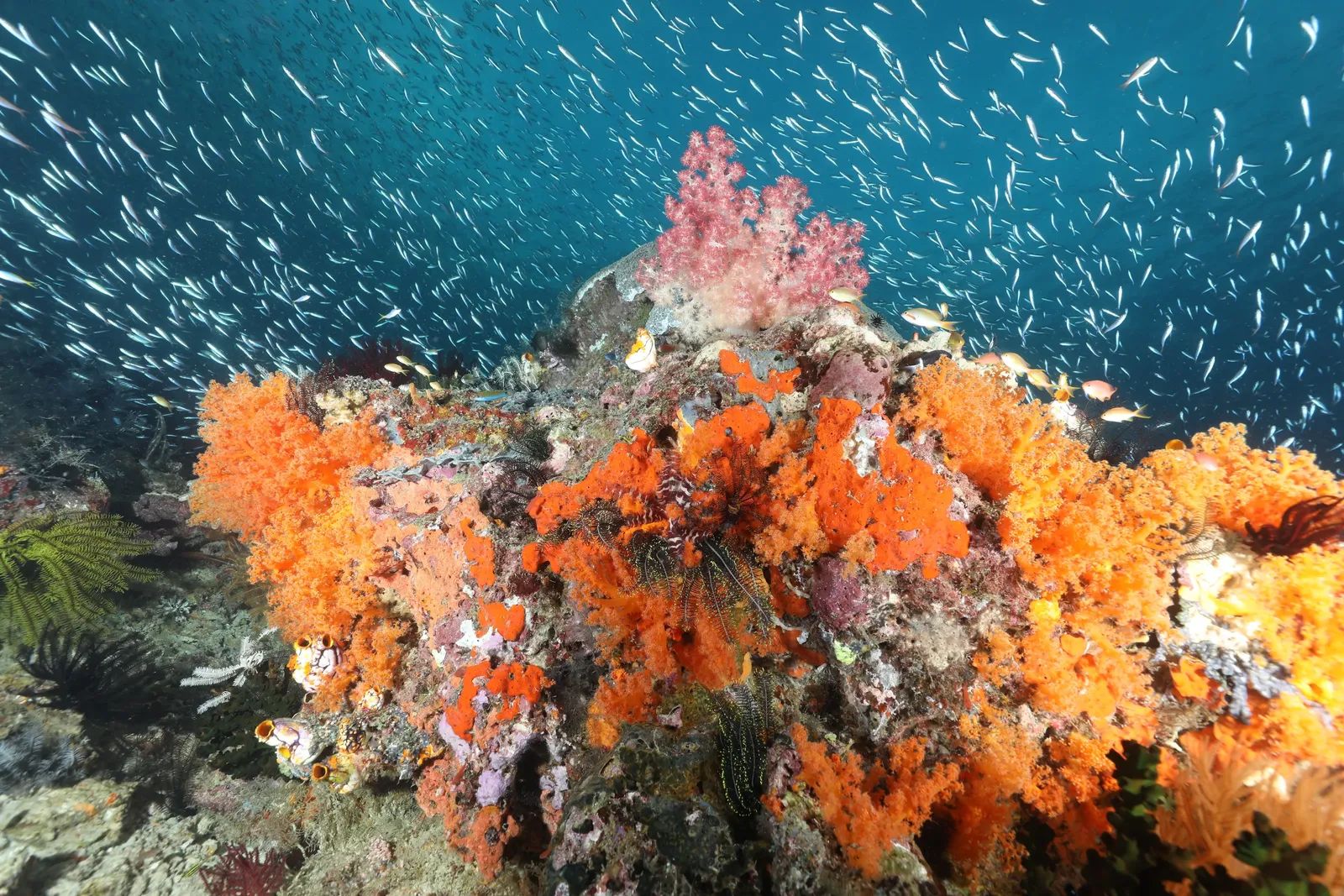
What makes Triton Bay itself distinct is the soft coral. Where Raja Ampat is known for hard coral cover and fish diversity, Triton Bay is defined by dense Dendronephthya gardens, black coral forests, and gorgonian fans growing across boulders and walls. The nutrient-rich water that reduces in-bay visibility to 10–15m is the same water feeding these extraordinary gardens. The outer reefs and Bomberai Peninsula — where visibility opens to 25m+ — offer a completely different diving character on the same trip.
The walking shark (H. henryi) is endemic here and found nowhere else.⁷ Whale sharks gather at bagans year-round.² Dolphins are regular companions around the fishing platforms. The Namatota rock paintings have been dated to the epipalaeolithic period — 12,000 to 5,000 BC.⁸ This is a destination with layers, and most divers leave wanting more.
For a dedicated whale shark trip, see our Cenderawasih Bay guide — the bay to the north with the largest documented resident population in Indonesia.
Best Season
October through April is the main season. Most Triton Bay itineraries are timed around the Raja Ampat season, which means boats are already in the region and heading south toward Kaimana as the season progresses. October–April is the heart of it, with most operators repositioning toward Komodo and the Banda Sea after April.
Whale shark encounters at the bagans are most reliable around new moon phases, when baitfish activity peaks.² Planning your trip timing around the lunar cycle is worth discussing with your operator.
The southeast monsoon from May to September brings rough conditions and most operators don't run Triton Bay trips during this period.
Book 6–12 months ahead. Operator frequency to Triton Bay is lower than any other destination in the Bird's Head Seascape — some operators run just one or two itineraries per year.
Colorful soft coral bommie surrounded by baitfish school, pristine dive site on Triton Bay liveaboard itinerary West Papua Indonesia
Getting There
Most Triton Bay liveaboards depart from Sorong (SOQ) — fly via Jakarta (CGK) or Bali (DPS), connecting through Makassar if coming from Bali. Sorong is the standard Raja Ampat gateway and the most straightforward entry point for itineraries that work south through Misool to Triton Bay.
Some operators depart from Kaimana (KNG) directly, reached via Sorong or Makassar. Kaimana flights are limited — confirm schedules well in advance and plan to overnight in Kaimana before joining the boat. A small number of operators run Banda Sea crossings that depart from Ambon and end in Kaimana or Sorong.
Always confirm your exact embarkation and disembarkation ports before booking domestic flights. Getting this wrong on a remote West Papua expedition is expensive to fix.
Coralbound works with VIFA Holiday, the leading DMC for Indonesia's diving industry, who monitor your connections and rebook when schedules shift.
Garuda Indonesia aircraft runway Indonesian domestic flights liveaboard transfers
Marine Life
Walking Sharks
The Triton Bay epaulette shark (Hemiscyllium henryi) — endemic to Kaimana coastal waters, described scientifically in 2008, and found nowhere else.⁷ It walks across coral heads using its muscular pectoral fins, is most active after dark, and is typically found sheltering under table corals during the day. Patient and slow-moving — it rewards divers who slow down and look carefully. Night dives are the best opportunity, but daytime sightings are common at the right sites.
Whale Sharks and Dolphins
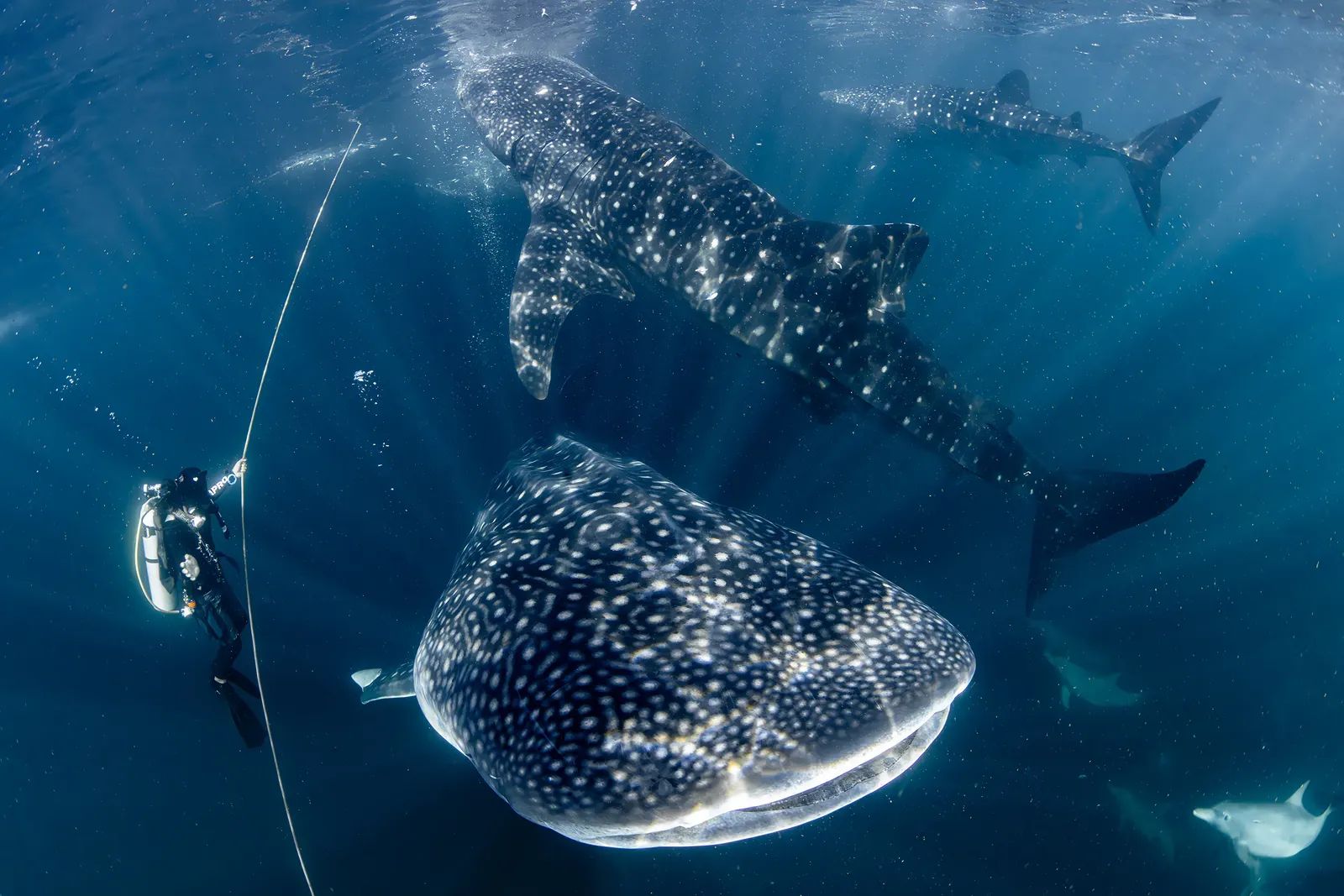
Hiu paus berkumpul di bagan di Kaimana Timur dan Namatota, tertarik oleh ikan umpan yang ditarik oleh platform penangkapan ikan.⁶ Hiu paus terdaftar sebagai Terancam Punah dalam Daftar Merah IUCN,¹⁰ menjadikan populasi yang dilindungi di Teluk Triton signifikan jauh melampaui pertemuan menyelam. Kelompok tiga hingga empat individu yang makan secara bersamaan di permukaan sering dilaporkan. Lumba-lumba adalah teman yang sering dijumpai di lokasi bagan — pertemuan tambahan yang tidak banyak destinasi hiu paus tawarkan. Pertemuan berfokus pada permukaan dan dapat diakses oleh penyelam snorkel. Untuk gambaran lengkap menyelam hiu paus di seluruh Indonesia, lihat panduan hiu paus Indonesia dan panduan menyelam hewan besar Indonesia.
Taman Karang Lunak
Karakteristik bawah laut yang mendefinisikan Teluk Triton. Dendronephthya yang padat berwarna merah muda, oranye, dan ungu di atas batu-batu besar dan dinding. Hutan karang hitam dan kipas gorgonian di bagian yang lebih dalam. Kepadatan karang lunak menyaingi tempat lain di Indonesia dan tidak mirip dengan terumbu karang keras Raja Ampat — kedua destinasi ini saling melengkapi, bukan tumpang tindih.
Kehidupan Makro
Kuda laut kerdil di kipas gorgonian, ikan hantu, ikan kodok dalam berbagai morf warna, cumi-cumi bobtail, kepiting permen, dan spesies nudibranch dalam variasi tinggi. Wrasse penari Teluk Triton endemik (Paracheilinus sp.) adalah sorotan bagi fotografer ikan. Penyelaman malam menambahkan cacing bobbit, ikan mandarin, dan krustasea. Untuk gambaran makro lengkap Indonesia, lihat panduan menyelam hewan kecil Indonesia.
Kehidupan Laut Lainnya
Kerapu besar, Napoleon wrasse, dan giant trevally dalam jumlah yang mencerminkan perlindungan MPA yang efektif sejak 2008. Kawanan barracuda chevron, eagle ray, dan jack di titik-titik yang terkena arus dan seamount. Paus Bryde dan dugong telah didokumentasikan di wilayah Kaimana yang lebih luas. Terumbu luar Semenanjung Bomberai menambahkan karakter menyelam yang sama sekali berbeda — dinding yang terpapar pelagis dengan kehidupan ikan yang kuat dan visibilitas yang lebih baik daripada situs teluk bagian dalam.
Multiple whale sharks swimming together with diver, seasonal encounter on Triton Bay liveaboard diving trips West Papua Indonesia
Aktivitas Darat
Lukisan batu Namatota adalah salah satu perhentian darat paling menarik di Papua Barat. Jejak tangan oker merah, ikan, penyu, dan figur manusia yang dilukis di dinding tebing batu kapur di atas permukaan air — pertama kali dicatat oleh pedagang Belanda Johannes Keyts pada tahun 1678 dan kemudian diberi tanggal ke periode epipalaeolitik, sekitar 12.000–5.000 SM.⁸ Lukisan-lukisan tersebut tersebar di beberapa pulau di perairan Kaimana, termasuk Namatota dan Teluk Triton itu sendiri.
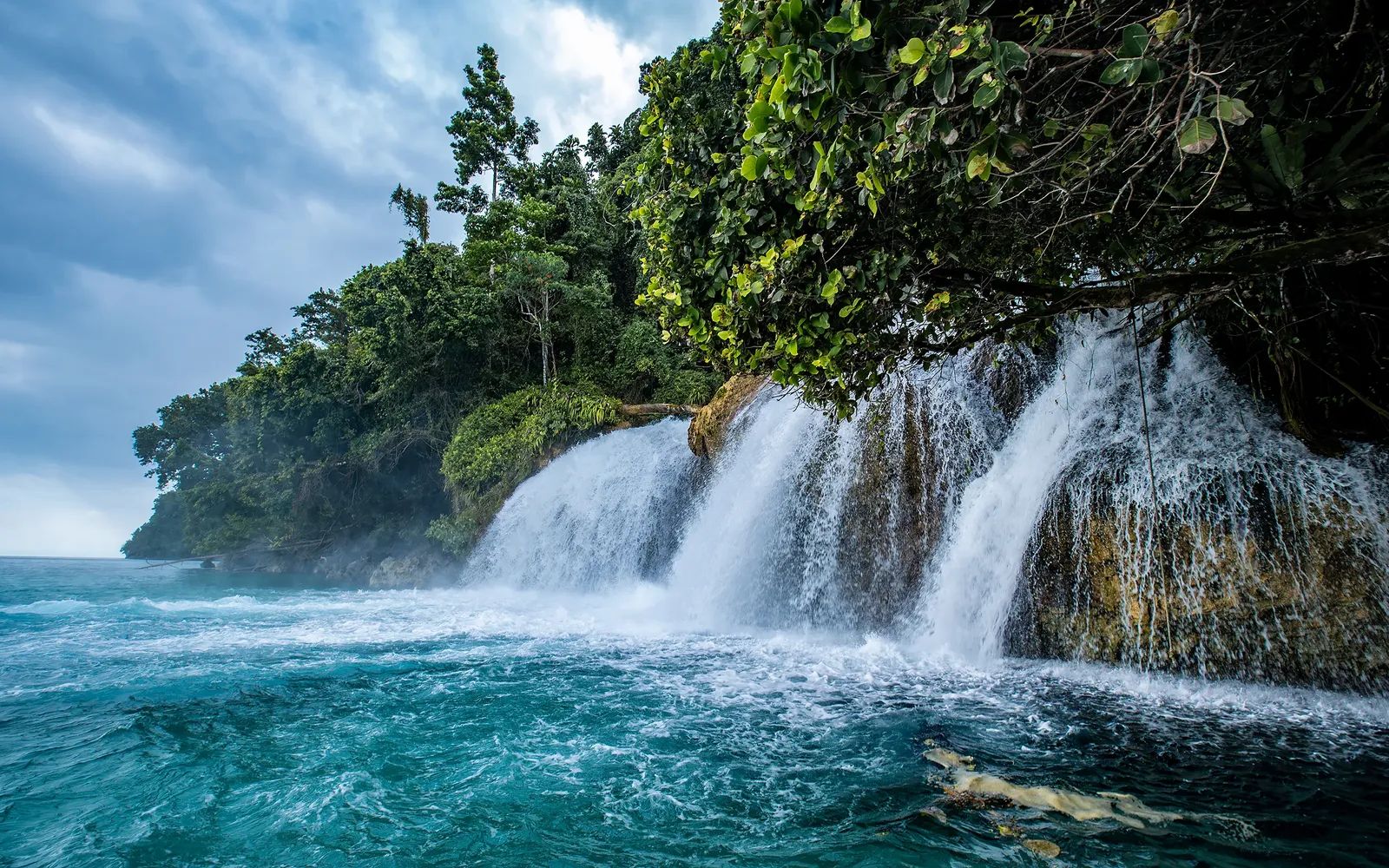
The Kiti-Kiti Waterfall on the Bomberai Peninsula is a standout stop — fresh water cascades directly into the sea at the base of the Kumawa Mountains. Boats anchor offshore and guests swim or snorkel directly in the waterfall where it meets the ocean. Jungle treks to the waterfall base are offered by some operators.
Village visits to local Papuan communities give context to the conservation work that underpins the MPA — the same adat systems of traditional resource management found throughout the Bird's Head Seascape.
For trip extensions or pre/post accommodation planning, see our Indonesia liveaboard extensions guide.
Waterfall cascading directly into turquoise ocean, scenic natural attraction visited during Triton Bay liveaboard trips West Papua Indonesia
Managing Expectations
Visibility inside Triton Bay is 10–15m — lower than most Indonesian liveaboard destinations. This is a direct consequence of the nutrient-rich water that produces the extraordinary fish biomass and soft coral density. Most divers find it a completely acceptable trade. The outer reefs and Bomberai Peninsula offer 25m+ visibility on the same itinerary, so you're not locked into poor viz for the whole trip.
Whale shark encounters are reliable during season but not guaranteed on any specific dive. Guides time visits to tidal and lunar cycles, and operators know which bagans are most active. Follow your guide's lead and let the sharks come to you.
The walking shark requires patience. A diver who moves slowly and gives the animal space will always see more than one who approaches quickly. Night dives significantly increase encounter chances — they're worth doing even for divers who wouldn't normally bother.
Triton Bay itineraries are remote. Medical resources in Kaimana are limited; the nearest hospital with meaningful capacity is in Sorong or Ambon. Dive insurance with emergency evacuation is mandatory. Travel insurance is strongly recommended — deposits are non-refundable and trips cost $3,200–$10,000+.
Whale shark feeding under traditional fishing platform bagan, unique encounter on Triton Bay liveaboard trips West Papua Indonesia
Frequently Asked Questions
Is Triton Bay suitable for beginner divers?
Yes — many sites are calm, shallow, and well-suited to all certification levels. The bagan whale shark encounters are surface events accessible to snorkellers. The soft coral gardens and critter diving are at recreational depths with mild current. Some outer reef walls and current-swept seamounts suit Advanced divers best. Check individual operator requirements before booking.
How does Triton Bay compare to Raja Ampat?
They're different destinations in the same Bird's Head Seascape. Raja Ampat has greater overall fish diversity, more operator options, and more established infrastructure. Triton Bay has denser soft corals, walking sharks found nowhere in Raja Ampat, whale sharks at bagans, and almost no boat traffic. Most Triton Bay itineraries combine both — starting in Sorong through Misool (the best of Raja Ampat) and continuing south to Triton Bay. That combination is the standard and is widely considered the most comprehensive single trip in the Bird's Head Seascape.
What is Misool and how does it relate to Triton Bay?
Misool is the southernmost major island group in Raja Ampat, famous for its labyrinthine karst islands, exceptional biodiversity, and the Misool Foundation's conservation story — a former shark finning camp converted into a 300,000-hectare no-take reserve. Most Triton Bay liveaboards pass through Misool en route south, making it a standard part of the itinerary rather than a separate add-on. See our Raja Ampat guide for the full Misool context.
What is the Kaimana Marine Protected Area?
The Kaimana MPA covers 6,000 sq km of West Papua coastline including Triton Bay, established in 2008 following surveys by Conservation International.¹ It is managed through collaboration between local communities, government, and conservation organisations. Papuan communities use traditional adat systems to govern resource use alongside formal MPA regulations. The fish biomass and reef health reflect over 15 years of effective protection.
Do I need special equipment for Triton Bay diving?
A surface marker buoy is mandatory. Reef hook for current-swept outer reef sites. A 3mm wetsuit is adequate. Macro photography gear is strongly recommended — a dedicated macro lens captures the walking shark and the endemic flasher wrasse behaviour for which Triton Bay is known. A torch for night dives is worthwhile. For a full gear list, see our Indonesia liveaboard packing guide.
Can I combine Triton Bay with other Indonesian destinations?
The standard combination is a Sorong-to-Kaimana itinerary covering Misool, the Pisang Islands, the Bomberai Peninsula, and Triton Bay. Some operators extend into the Banda Sea from Kaimana as a continuation — see our Banda Sea guide for that route. Others run the trip in reverse from Kaimana to Sorong. Reach out via WhatsApp to map out the options based on timing and availability.
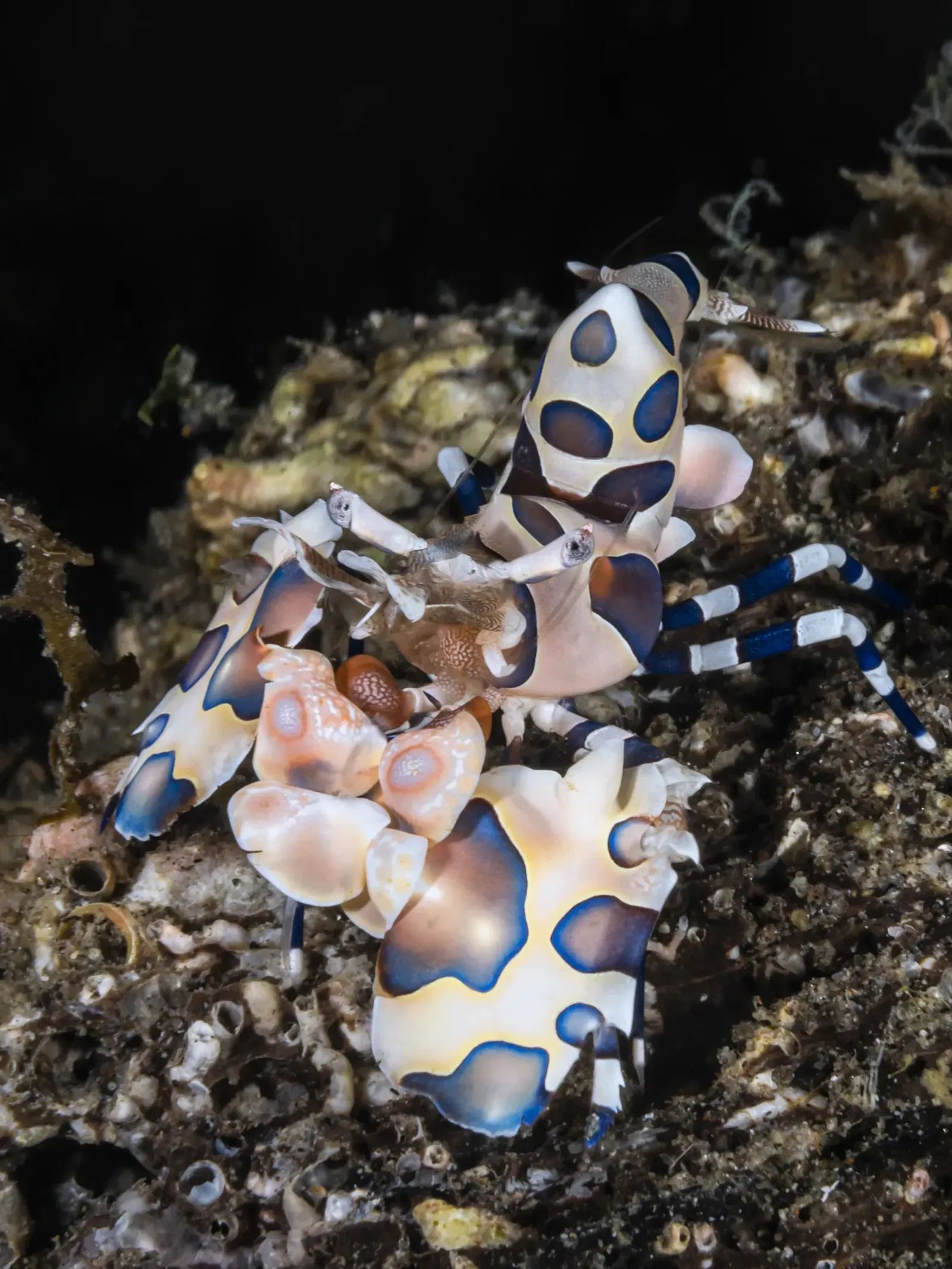
Harlequin shrimp Hymenocera picta Indonesia macro diving liveaboard underwater photography rare species - Picture by Majik Liveaboard
Book Your Triton Bay Trip
We're a Bali-based platform run by divers who know Triton Bay well. You'll pay the same price booking through us as booking direct — operators maintain price parity across all channels. Every booking through Coralbound includes a booking gift — including the option of a complimentary hotel night — and you get real support on top: domestic flight coordination through VIFA Holiday and a team that understands what remote West Papua expeditions actually involve.
Questions before you book? Message us on WhatsApp or reach us via our contact form. Want to know more about how we work? Read our why book with Coralbound page.