Im April 2026 nannte das TIME-Magazin die Cenderawasih-Bucht zu einem der größten Orte der Welt – und nannte die seltene Aussicht, von mehreren Walhaien gleichzeitig umgeben zu sein.⁶ Eine treffende Beschreibung. Diese abgelegene Bucht in Westpapua beherbergt eine ständige Population von rund 160 dokumentierten Walhaien, die das ganze Jahr über an traditionellen papuanischen Fischerplattformen zusammenkommen und Begegnungen ermöglichen, die nirgendwo sonst auf der Erde zu finden sind.
Dieser Leitfaden behandelt alles, was Sie für die Planung einer Liveaboard-Reise in die Cenderawasih-Bucht benötigen: wann Sie reisen sollten, was Sie erwartet, wie Sie dorthin gelangen und was die Walhai-Erfahrung hier von jedem anderen Reiseziel unterscheidet. Er ist Teil unseres vollständigen Liveaboard-Leitfaden für Indonesien — der zentrale Knotenpunkt für alle indonesischen Tauchziele. Möchten Sie zuerst einen schnellen Überblick? Sehen Sie sich unsere Zielseite Cenderawasih-Bucht.
Schnelle Fakten über das Tauchen in der Cenderawasih-Bucht
- Beste Jahreszeit: Juni bis Oktober (optimale Bedingungen); Walhaie ganzjährig vorhanden
- Korallenarten: Über 150 Arten dokumentiert⁴
- Fischarten: Über 836 Arten⁴
- Wassertemperatur: 27–30 °C ganzjährig
- Sichtweite: Typisch 15–30 m; variiert je nach Bedingungen
- Tauchgänge pro Tag: 3–4 auf den meisten Routen
- Erfahrungsstufe: Für alle Niveaus geeignet; ruhige Bedingungen an den Bagan-Standorten
- Reisedauer: 10–14 Tage empfohlen, um die Bucht vollständig zu erkunden
- Kostenbereich: 400–600 $/Tag, je nach Schiffskategorie
- Ankunftsflughäfen: Manokwari (MKW), Nabire (NBX), Biak (BIK)
- Buchungsfrist: 6–12 Monate für die Hauptsaison
Schnelle Antworten
Kann ich in der Cenderawasih-Bucht das ganze Jahr über Walhaie sehen?
Ja – das macht die Cenderawasih-Bucht einzigartig. Die Bucht beherbergt eine ständige Population von rund 160 dokumentierten Exemplaren, meist junge Männchen, die in der Bucht bleiben, anstatt zu wandern.²³ Sie versammeln sich an traditionellen Fischerplattformen, den sogenannten Bagans, wo das Nahrungsangebot sie konstant präsent hält. Die meisten anderen Walhai-Reiseziele sind saisonal. Dieses hier nicht. Triton Bay bietet eine ähnliche Bagan-basierte Begegnung – der einzige andere Ort in Indonesien, an dem dies geschieht.
Was macht die Walhai-Begegnungen hier anders?
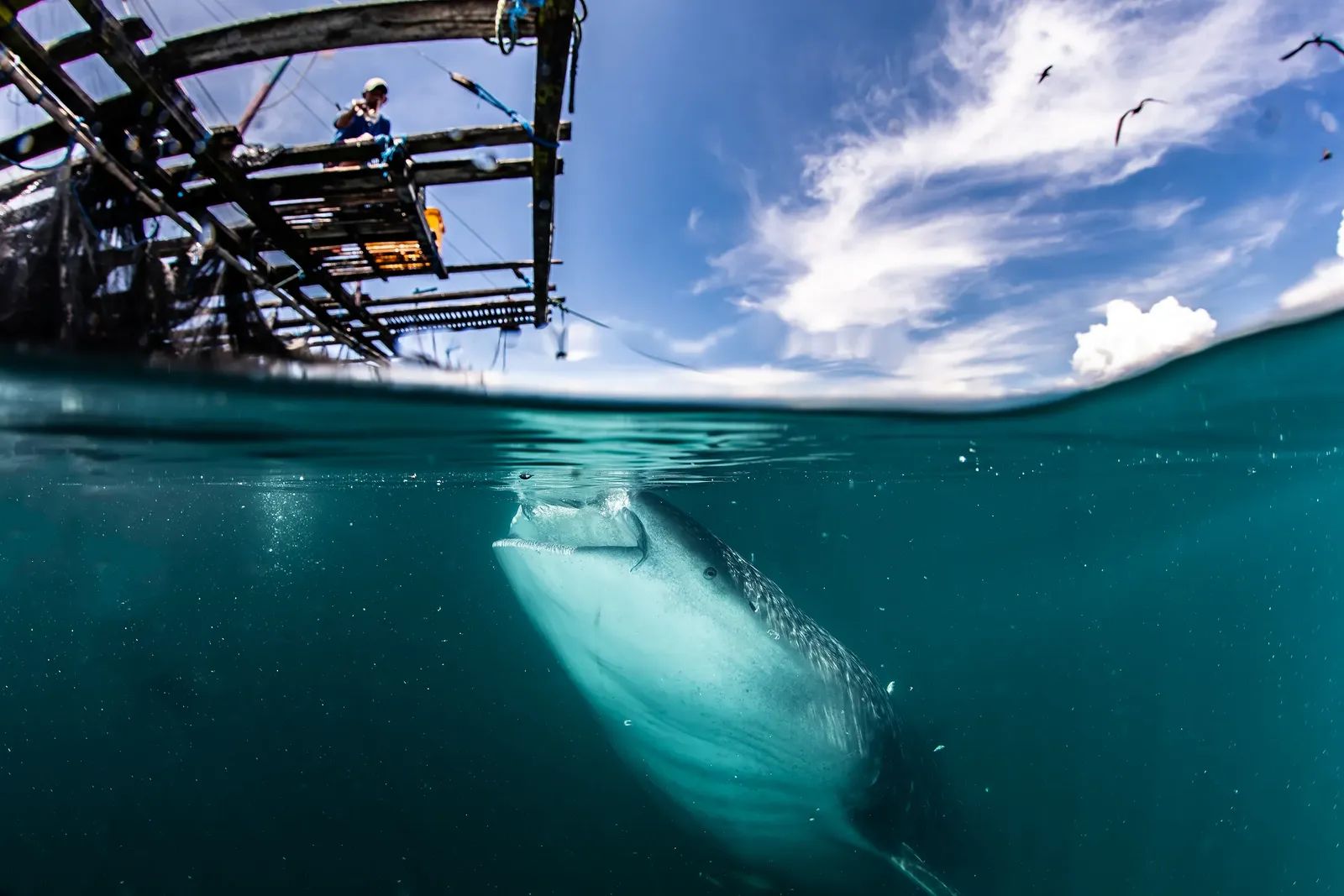
Die Bagans. Lokale papuanische Fischer nutzen schwimmende Hebenetzplattformen, um Sardinen anzulocken, und die Walhaie haben gelernt, sich von ihnen zu ernähren – sie schwimmen vertikal, um Oberflächenköderfische zu erreichen, ein Verhalten, das fast ausschließlich in der Cenderawasih-Bucht dokumentiert ist.² Gruppen von drei bis sieben Individuen, die gleichzeitig fressen, sind eine regelmäßige Erscheinung. Betreiber berichten durchweg von sehr hohen Begegnungsraten während der gesamten Saison.
Wie lange sollte meine Reise dauern?
Es werden mindestens 10–12 Tage empfohlen. Die Cenderawasih-Bucht ist riesig – sie erstreckt sich über mehr als 300 km – und die besten Walhai-Spots von jedem Abfahrtshafen aus zu erreichen, braucht Zeit. Längere Reiserouten eröffnen auch die Wracks des Zweiten Weltkriegs, die Erkundung von Inseln und Tauchgänge zu endemischen Arten, die dies zu mehr als nur einer Walhai-Reise machen.
Wie komme ich zur Cenderawasih-Bucht?
Die meisten Reisen starten von Manokwari (MKW), dem Hauptknotenpunkt für Liveaboards in der Cenderawasih-Bucht. Einige Betreiber nutzen auch Nabire (NBX) oder Biak (BIK) – Flug über Jakarta oder Makassar. Alle Routen erfordern mehrere Inlandsverbindungen und dauern 6–9 Stunden von jedem internationalen Tor. Übernachten Sie in Ihrer Abflugstadt, bevor Sie an Bord gehen. Bestätigen Sie Ihren genauen Einschiffungshafen mit Ihrem Betreiber, bevor Sie Flüge buchen.
Was gibt es außer Walhaien noch zu sehen?
Beträchtlich. Die Bucht hat über 150 Korallenarten, endemische Fische, die nirgendwo sonst vorkommen, darunter die Cenderawasih-Feenlippfische (Cirrhilabrus cenderawasih), Schiffswracks und Flugzeuge aus dem Zweiten Weltkrieg auf dem Grund der Bucht, Meeresschildkröten, Dugongs, Delfine und Makroleben auf den sandigen Hängen. Für Taucher, die das vollständige Bild des Tauchens auf Großtiere in Indonesien erhalten möchten, siehe unseren Leitfaden für Großtier-Tauchen in Indonesien.
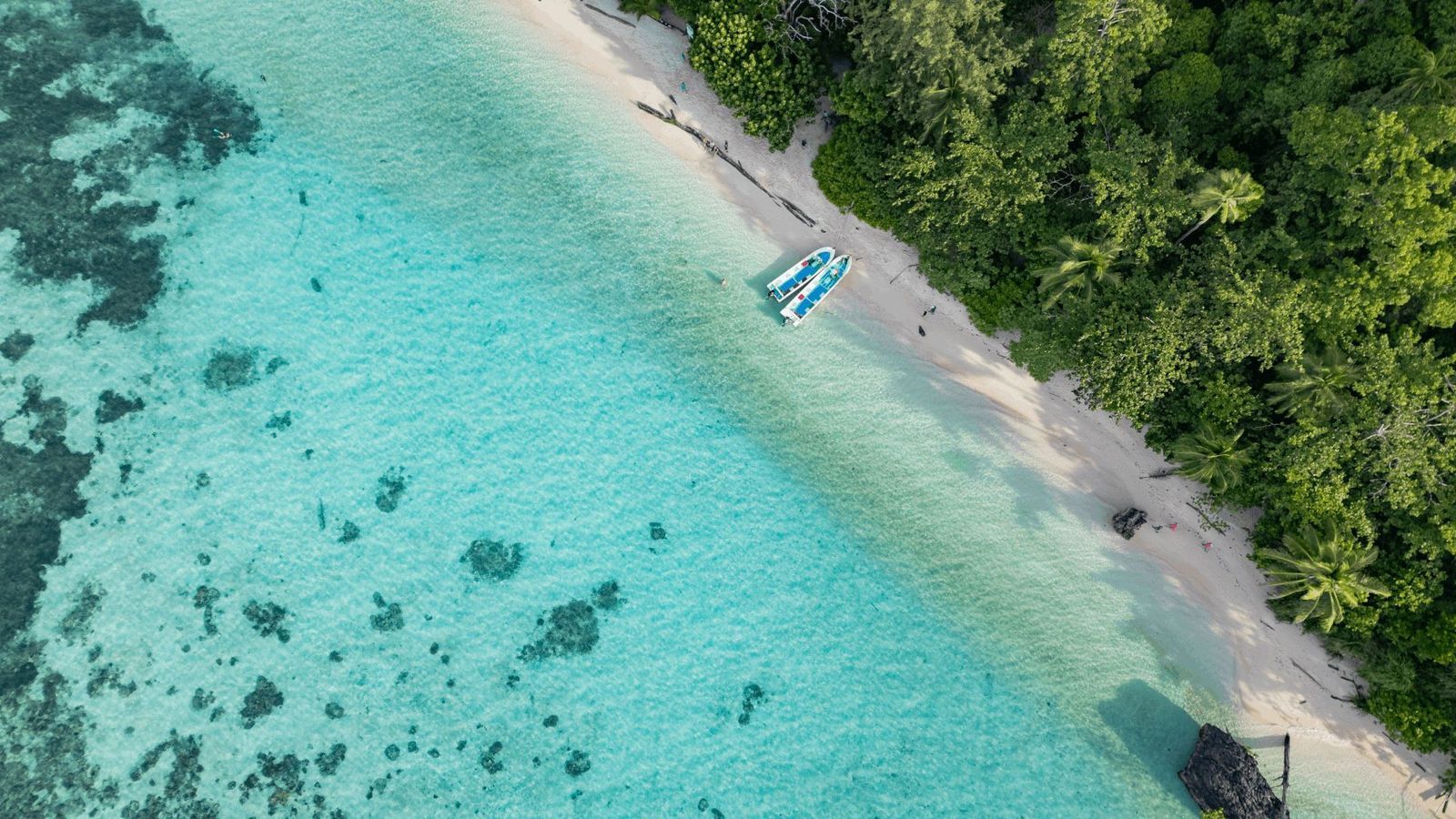
Liveaboard diving tenders on pristine Indonesian beach in Indonesia with coral bommies visible in crystal clear waters - Picture by Dancing Wind Liveaboard
Warum Cenderawasih-Bucht
Der Teluk Cenderawasih Nationalpark ist Indonesiens größter Meeresschutzpark – 1.453.500 Hektar geschütztes Wasser, Riff und Inselhabitat, ausgewiesen im Jahr 2002.¹⁴ Die Bucht erstreckt sich über mehr als 300 km Breite mit über 700 km Küstenlinie. Ihre Lage am Treffpunkt der australischen und pazifischen tektonischen Platten, kombiniert mit der halbinselartigen Geografie der Bucht, schafft Bedingungen für außergewöhnliche Biodiversität und hohe Endemismusraten.⁴
Aber die Schlagzeile sind die Walhaie – eine gefährdete Art¹¹ mit einer der bedeutendsten ansässigen Populationen, die hier dokumentiert ist. Rund 160 Individuen wurden in der Bucht identifiziert – eine Forschungsanstrengung, an der seit über einem Jahrzehnt teilnehmende Taucher und Wissenschaftler beteiligt sind.²⁵ Bemerkenswert an dieser Population ist ihr Verhalten. Anstatt des typischen offenen Meeres-Filtrationsfressens fressen die Walhaie in Cenderawasih direkt von Fischplattformen, manchmal vertikal, manchmal in Gruppen. Diese Beziehung zwischen den Haien und den lokalen papuanischen Fischergemeinden – die glauben, dass Walhaie Glück bringen – hat etwas geschaffen, das in der Tauchwelt seinesgleichen sucht.²
Der Park liegt im Korallendreieck, dem globalen Epizentrum der marinen Biodiversität.⁷⁸ Seine Isolation hat Arten hervorgebracht, die nirgendwo sonst vorkommen: Über 15 endemische Riffische wurden dokumentiert, darunter der Cenderawasih-Feenlippfisch.⁴ Tiefwasserarten wurden in Freizeittauch-Tiefen gefunden – ein Ergebnis der einzigartigen geologischen Geschichte der Bucht.
Dies ist kein Reiseziel, das man mit viel anderem kombinieren kann. Die Logistik macht es zu einer eigenständigen Expedition. Taucher, die mehrere Papua-Ziele ansteuern möchten, planen normalerweise Raja Ampat oder Triton Bay als separate Reisen. Aber für Taucher, die etwas Einzigartiges erleben möchten, liefert die Cenderawasih-Bucht genau das.
Underwater split-shot showing whale shark feeding at surface with diving boat visible above in crystal-clear Raja Ampat waters - Picture by Neptune Liveaboards
Beste Jahreszeit
Juni bis Oktober ist das Haupttauchfenster. Trockenzeit, ruhigere See und die klarste Sicht. Die meisten Anbieter führen ihre Cenderawasih-Routen in dieser Zeit durch, und die Flugverbindungen nach Manokwari, Nabire und Biak sind am zuverlässigsten.
Walhaie sind das ganze Jahr über präsent – dies bestätigen Langzeit-Satelliten-Tagging- und Foto-ID-Forschungen über mehrere Saisons hinweg.²⁹ Die Bagans (Fischfangplattformen) sind das ganze Jahr über in Betrieb, was die Population erhält. Sie müssen kein saisonales Fenster für die Hauptbegegnung jagen. Für Walhai-Tauchen in ganz Indonesien siehe unseren Leitfaden zu Walhaien in Indonesien.
November bis Mai bringt die Regenzeit, rauere Bedingungen und die meisten Anbieter führen keine Reisen durch. Der abgelegene Standort und die langen Entfernungen zwischen den Tauchplätzen machen das Wetter zu einem wichtigen operativen Faktor.
Buchen Sie 8–12 Monate im Voraus für Abflüge in der Hauptsaison. Das Angebot ist begrenzt – weniger Anbieter betreiben die Cenderawasih-Bucht als jedes andere große indonesische Reiseziel. Für die allgemeineren saisonalen Muster Indonesiens siehe unseren Leitfaden zu Wetter und Tauchsaisons in Indonesien.
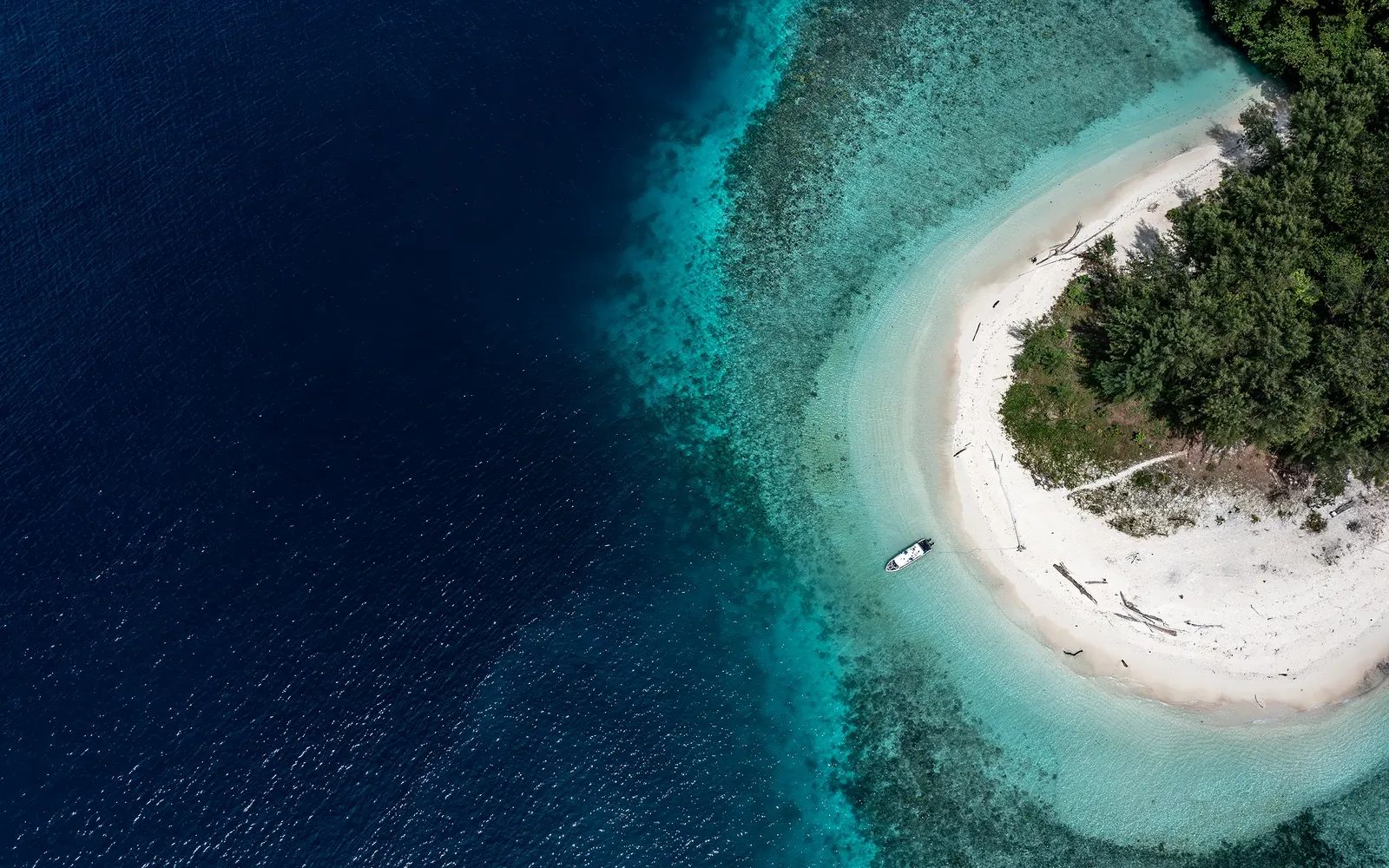
Aerial view of pristine white sand beach with crystal-clear turquoise lagoon and coral gardens surrounded by tropical jungle in Indonesia - Picture by Neptune Liveaboards
Anreise
Alle Routen zur Cenderawasih-Bucht erfordern mehrere Inlandsflüge. Fliegen Sie international nach Jakarta (CGK) oder Bali (DPS) und steigen Sie dann um:
- Manokwari (MKW): über Makassar, ca. 6–8 Stunden insgesamt von Jakarta
- Nabire (NBX): über Ambon oder Makassar, ca. 7–9 Stunden insgesamt
- Biak (BIK): über Makassar, ca. 5–7 Stunden insgesamt
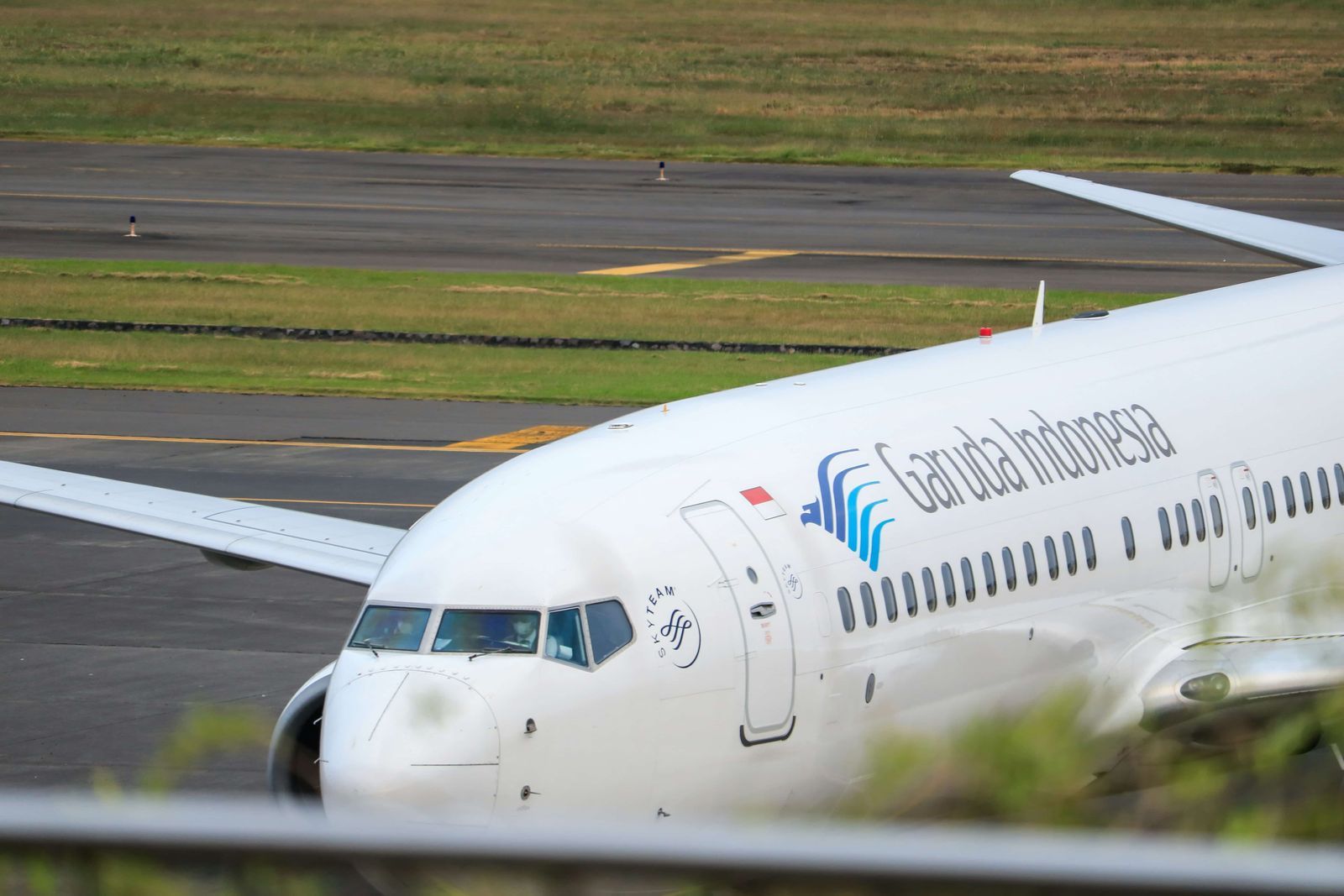
Garuda Indonesia und Lion Air bedienen alle drei Flughäfen. Planen Sie eine Übernachtung in Ihrer Abflugstadt ein, bevor Sie einsteigen – die Flugpläne im Osten Indonesiens sind unvorhersehbar und die Umsteigezeiten sind zu knapp, um sie am Reisetag zu riskieren.
Bestätigen Sie Ihren genauen Einschiffungshafen bei Ihrem Betreiber. Einige Boote legen in Manokwari ab, andere in Nabire – die von ihnen angefahrenen Orte unterscheiden sich je nach Startpunkt. Wenn Sie dies bei einer abgelegenen Expedition falsch machen, ist die Korrektur teuer.
Die Fluglogistik zur Cenderawasih Bay gehört zu den komplexesten in Indonesien. Coralbound arbeitet mit VIFA Holiday, dem führenden DMC für Indonesiens Tauchindustrie, zusammen, der Ihre Verbindungen überwacht und bei Flugplanänderungen umbucht.
Garuda Indonesia aircraft runway Indonesian domestic flights liveaboard transfers
Meeresleben
Walhaie
Die rund 160 dokumentierten ansässigen Walhaie sind meist juvenile Männchen im Alter von 2–8 Metern, wobei die Mehrheit in die Größenklasse von 4–5 Metern fällt.² Sie versammeln sich an Bagans – traditionellen schwimmenden Fischfangplattformen mit Hebenetzen –, wo Sardinen, die von den Lichtern angezogen werden, eine leichte Nahrungsquelle darstellen. Die Haie ernähren sich, indem sie vertikal zur Oberfläche schwimmen, manchmal in Gruppen von drei bis sieben gleichzeitig.
Begegnungen werden von den Betreibern während der gesamten Saison durchweg gemeldet. Die maximale Gruppengröße pro Walhai beträgt sechs Schnorchler oder Taucher – respektvolle Grenzen, die das Erlebnis überschaubar und die Haie komfortabel halten.
Endemische und ungewöhnliche Arten
Die über 15 dokumentierten endemischen Riffischarten des Parks umfassen den Cenderawasih-Falterlippfisch (Cirrhilabrus cenderawasih), der nur in diesen Gewässern vorkommt.⁴ Die geologische Isolation der Bucht hat auch ein bemerkenswertes Phänomen hervorgebracht: den Burgess-Schmetterlingsfisch (Chaetodon burgessi), der normalerweise anderswo in 60–80 m Tiefe angetroffen wird, aber hier in nur 10–12 m Tiefe vorkommt.¹⁰ Ein Ergebnis der alten Meeresgeschichte der Bucht – geologisch seit Millionen von Jahren von den pazifischen Gezeiten isoliert, was es Tiefwasserarten ermöglichte, sich in flachen Zonen mit geringem Wettbewerb zu etablieren.
Für das vollständige Bild von Indonesiens Makro- und Critter-Tauchen siehe unseren Leitfaden für das Tauchen auf Indonesiens kleinen Tieren.
Geschichte des Zweiten Weltkriegs
Japanische Streitkräfte nutzten Manokwari und Biak während des Zweiten Weltkriegs als strategische Stützpunkte im Pazifik. Alliierte Operationen hinterließen Schiffswracks und Flugzeuge auf dem Meeresboden der Bucht, die nun stark mit Korallen überkrustet sind. Diese Stätten verleihen der Expedition eine historische Dimension, die das natürliche Tauchen ergänzt. Einige Wracks sind in Freizeittiefen zugänglich; andere erfordern mehr technische Erfahrung.
Anderes Meeresleben
Meeresschildkröten – darunter Karettschildkröten und Grüne Meeresschildkröten – werden regelmäßig gesichtet. Dugongs grasen Seegraswiesen in der Bucht. Mehrere Delfinarten frequentieren das offene Wasser. Das Makroleben an den sandigen Hängen umfasst Zwergseepferdchen, Anglerfische, Geisterpfeifenfische und Nacktschneckenarten. Nachttauchgänge offenbaren endemische Fangschreckenarten.
Landaktivitäten und kultureller Kontext
Die Beziehung zwischen den lokalen papuanischen Fischergemeinschaften und den Walhaien ist zentral für das Funktionieren der Cenderawasih-Bucht als Tauchziel. Die Bagans – schwimmende Plattformen, die zur Sardinenfischerei genutzt werden – ziehen die Haie durch den Köder an, und die Fischer haben gelernt, ihren Fang zu teilen. Lokale Gemeinschaften glauben, dass Walhaie Glück bringen, und diese Symbiose besteht seit Jahrzehnten.⁴
Einige Liveaboard-Betreiber arrangieren Besuche in lokalen Dörfern auf den Inseln der Bucht. Die 14.000 Einwohner des Parks in 72 Dörfern pflegen traditionelle Fischereipraktiken und traditionelle Systeme (Adat) für nachhaltiges Ressourcenmanagement.⁴ Diese Gemeinschaften sind zentral für den Naturschutz im Park – nicht peripher dazu.
Die Inseln Mioswaar, Roon, Rumberpon und Yoop sind innerhalb des Parks zugänglich, jede mit unterschiedlichen Landschaften und Gemeinschaften. Einige Betreiber bauen Inselerkundungen und kulturelle Besuche in ihre Reiserouten ein.
Für Reiseverlängerungen rund um die Abflugstädte siehe unseren Leitfaden für Indonesien Liveaboard-Verlängerungen.
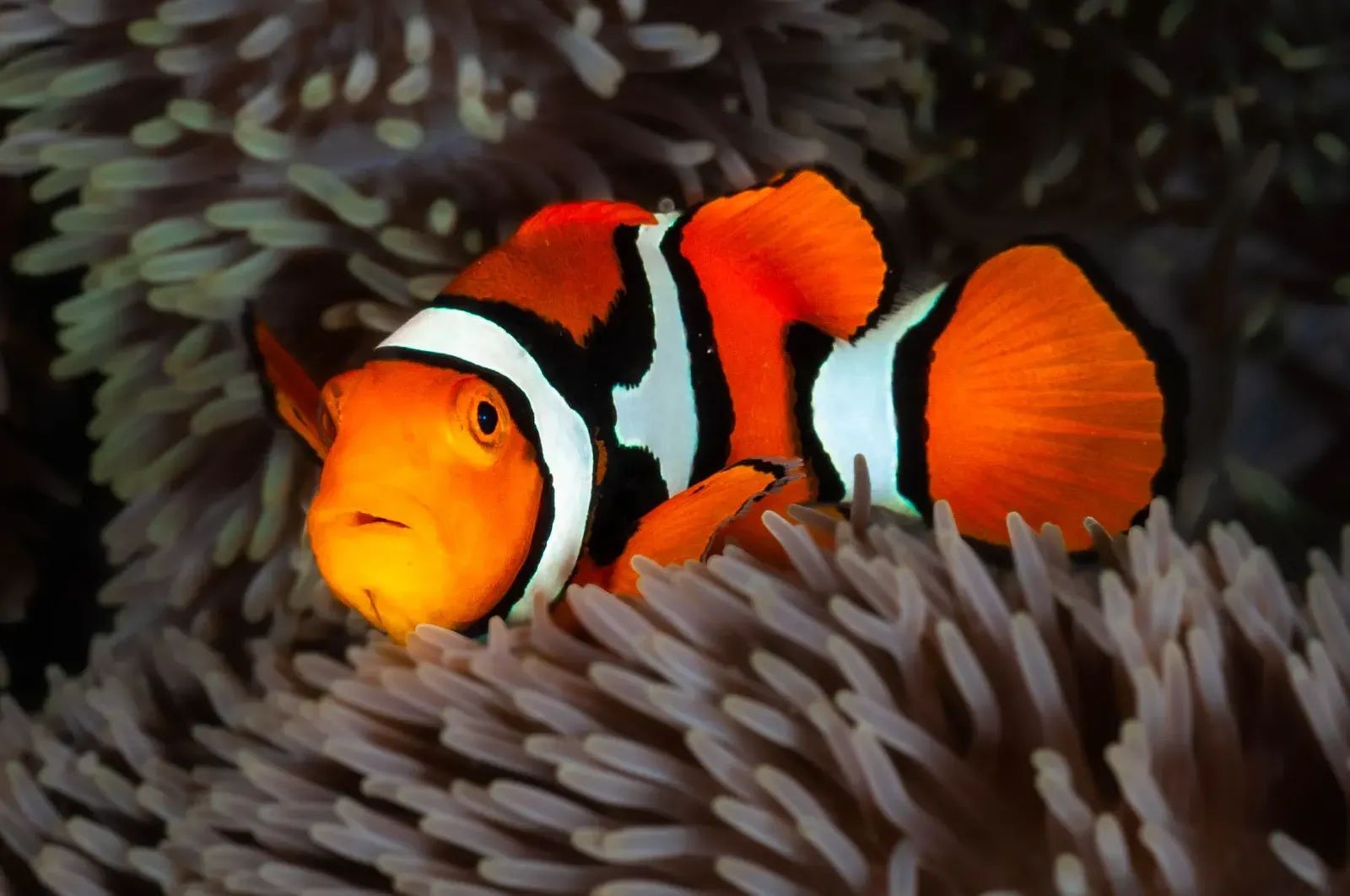
Endemic anemonefish clownfish Cenderawasih Bay Papua Indonesia marine national park liveaboard diving underwater photography - Picture by Dewi Nusantara
Erwartungen managen
Walhai-Begegnungen werden von den Betreibern während der gesamten Saison durchweg gemeldet, aber Wildtiere sind bei keinem einzelnen Tauchgang garantiert. Die ansässige Population und die Fütterungsdynamik der Bagan machen dies zum zuverlässigsten Walhai-Ziel in Indonesien – aber „zuverlässig“ ist nicht dasselbe wie „auf Abruf garantiert“. Befolgen Sie die Anweisungen Ihres Führers an den Bagan-Standorten, halten Sie die erforderlichen Abstände ein und lassen Sie die Haie die Interaktion bestimmen.
Die Bucht ist riesig und abgelegen. Überfahrten zwischen den Orten dauern Zeit, und die beteiligten Entfernungen bedeuten, dass Sie wirklich auf See sind. Medikamente gegen Reisekrankheit sind es wert, mitgenommen zu werden. Starlink ist jetzt bei vielen Betreibern verfügbar, aber die Konnektivität ist in den abgelegensten Gebieten immer noch intermittierend.
Medizinische Ressourcen sind begrenzt. Die nächste Dekompressionskammer befindet sich in Bali. Tauchversicherung mit Notfallrettung ist keine Option – bestätigen Sie, dass Ihre Police Tauchgänge bis mindestens 40 m abdeckt. Reiseversicherung wird dringend empfohlen: Cenderawasih Bay Expeditionen kosten 5.000–12.000+ US-Dollar und Anzahlungen sind nicht erstattungsfähig.
Dies ist ein abgelegenes Expeditions-Tauchen. Die Tauchgänge sind nach indonesischen Verhältnissen im Allgemeinen ruhig – die geschützte Bucht hat milde Strömungen und stabile Temperaturen –, aber die Logistik und die erforderliche Eigenständigkeit sind real. Fortgeschrittene Taucher können das Tauchen selbst bewältigen; die Herausforderung ist die Reise und der abgelegene Kontext.
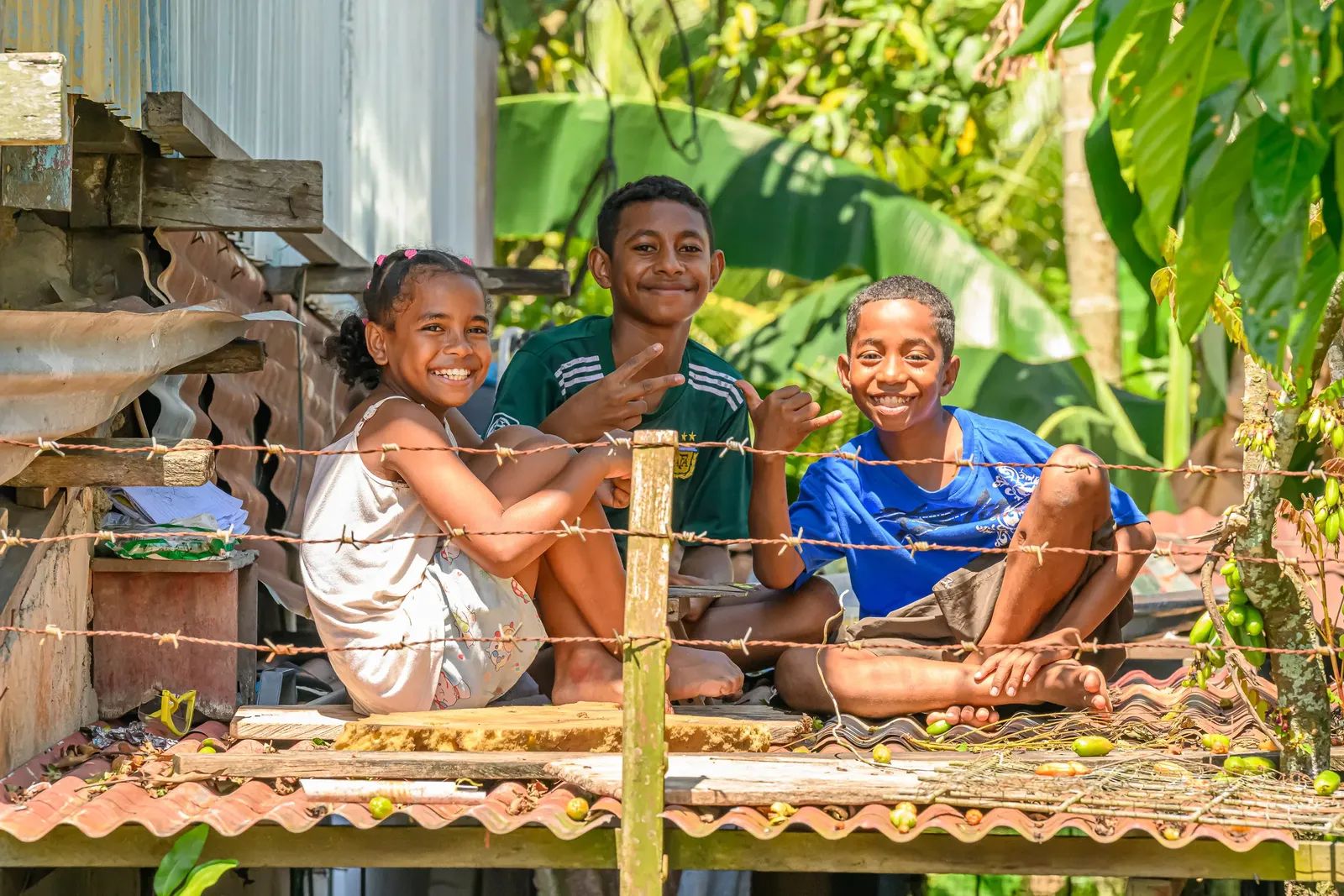
Three smiling local Indonesian children waving from traditional village setting surrounded by tropical vegetation in West Papua - Picture by Neptune Liveaboards
Häufig gestellte Fragen
Welche Zertifizierung benötige ich für die Cenderawasih-Bucht?
Die Begegnungen mit Walhaien in Bagan sind ruhig, flach und für alle Niveaus geeignet, auch für Anfänger – sogar für Schnorchler. Die Walhaie kommen an die Oberfläche, um zu fressen, was bedeutet, dass man kein starker Taucher sein muss, um eine nahe Begegnung zu haben. Einige äußere Riffplätze und Wracktauchgänge aus dem Zweiten Weltkrieg gehen tiefer und können leichte Strömungen aufweisen, wo Advanced Open Water nützlich ist. Die meisten Betreiber begrüßen Open Water Taucher; prüfen Sie die spezifischen Anforderungen auf den einzelnen Angeboten.
Wie viele Walhaie kann ich erwarten zu sehen?
Gruppen von drei bis sieben Individuen an Futterplattformen sind üblich, mit außergewöhnlichen Begegnungen, bei denen mehr dabei sind. Betreiber berichten durchweg von hohen Erfolgsraten während der Saison. Die ansässige Population und die Fütterungsdynamik in Bagan machen dies zuverlässiger als jedes andere Walhai-Reiseziel in Indonesien. Einige einzelne Begegnungen beinhalten Haie im Bereich von 6–8 Metern.
Ist das für Schnorchler geeignet?
Ja – die Begegnungen in Bagan sind Oberflächenereignisse und Schnorcheln ist oft der beste Weg, sie zu erleben. Walhaie fressen hier an der Oberfläche, was bedeutet, dass Schnorchler genauso gut positioniert sein können wie Taucher. Die meisten Betreiber bieten Nicht-Tauchern die Möglichkeit, an den Walhai-Interaktionen teilzunehmen.
Kann ich die Cenderawasih-Bucht mit anderen indonesischen Zielen kombinieren?
Die Cenderawasih-Bucht wird am besten als eigene Expedition behandelt. Die Entfernungen und die Logistik machen es schwierig, sie in einer einzigen Reise effizient mit anderen Liveaboard-Zielen zu kombinieren. Die meisten Taucher, die mehrere indonesische Ziele sehen möchten, planen separate Reisen zu verschiedenen Jahreszeiten. Kontaktieren Sie uns über WhatsApp, wenn Sie Hilfe bei der Strukturierung einer breiteren Indonesien-Tauchroute benötigen.
Was sind die Richtlinien für die Walhai-Interaktion?
Parkvorschriften verbieten das Berühren von Walhaien, und verantwortungsbewusste Betreiber weisen die Gäste vor jeder Bagan-Begegnung gründlich ein. Standardrichtlinien beinhalten passive Beobachtung – halten Sie Abstand, blockieren Sie keine Futterwege, bewegen Sie sich ruhig und lassen Sie die Haie das Tempo bestimmen. Blitzfotografie ist nicht gestattet. Lokale Vorschriften begrenzen die Anzahl der Personen, die sich gleichzeitig im Wasser befinden. Ihr Betreiber wird Sie vor Ihrer ersten Begegnung über die spezifischen Protokolle informieren – befolgen Sie diese genau.
Gibt es gutes Tauchen jenseits von Walhaien?
Ausgezeichnet. Die Wracks aus dem Zweiten Weltkrieg verleihen historische Tiefe. Die endemischen Arten – insbesondere der Cenderawasih-Fahnenbarsch – sind für Fans der Fischidentifikation faszinierend. Sandige Hänge bieten starke Makro-Begegnungen. Hartkorallenformationen in der gesamten Bucht gehören zu den gesündesten in Indonesien.⁴ Dies ist kein Ziel mit nur einem Highlight für erfahrene Taucher.
Was sollte ich für eine Reise zur Cenderawasih-Bucht budgetieren?
Mittelklasse-Schiffe kosten 400–600 $/Tag; Luxus 600 $/Tag. Für eine 10–14-tägige Reise belaufen sich die Gesamtkosten für das Schiff auf 4.000–12.000 $+ vor zusätzlichen Kosten. Rechnen Sie mit zusätzlichen 400–800 $ für Inlandsflüge je nach Route, Gebühren für Meeresschutzgebiete pro Person und Trinkgeldern für die Crew. Reise- und Tauchversicherung ist obligatorisch und sollte separat budgetiert werden.
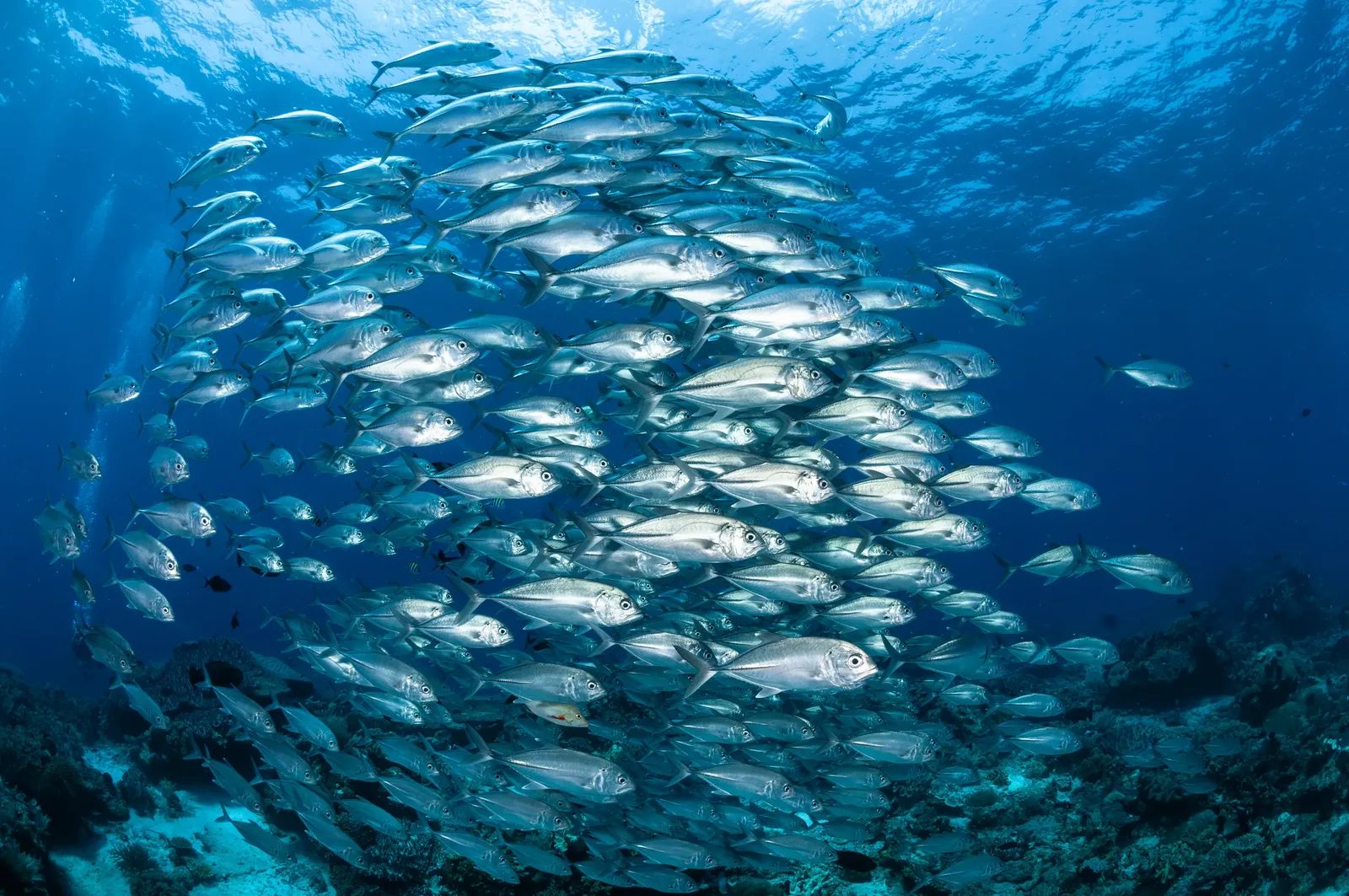
Massive school of silver trevally forming dense baitball in crystal-clear blue waters over coral reef in Indonesian archipelago - Picture by Dewi Nusantara
Buchen Sie Ihre Reise zur Cenderawasih-Bucht
Wir sind eine in Bali ansässige Plattform, die von Tauchern betrieben wird, die die Cenderawasih-Bucht gut kennen. Sie zahlen den gleichen Preis, wenn Sie über uns buchen, wie bei einer Direktbuchung – die Betreiber halten die Preise über alle Kanäle hinweg einheitlich. Jede Buchung über Coralbound beinhaltet ein Buchungsgeschenk – einschließlich der Option auf eine kostenlose Hotelnacht – und Sie erhalten zusätzlich echten Support: Koordination von Inlandsflügen über VIFA Holiday und ein Team, das versteht, was abgelegene Papua-Expeditionen tatsächlich beinhalten.
Fragen vor der Buchung? Schicken Sie uns eine Nachricht auf WhatsApp oder erreichen Sie uns über unser Kontaktformular. Möchten Sie mehr darüber erfahren, wie wir arbeiten? Lesen Sie unsere Seite Warum mit Coralbound buchen.