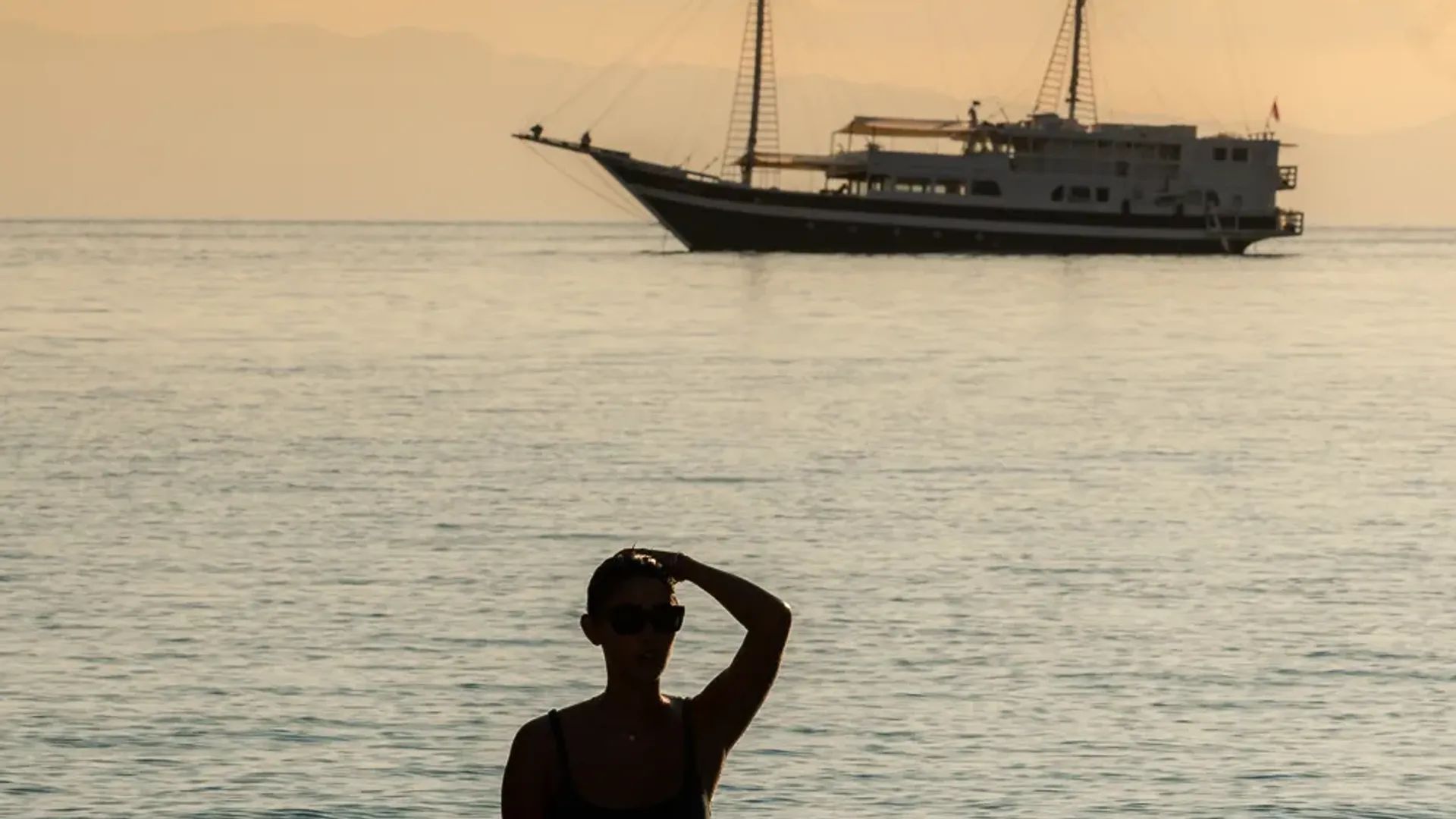
Ein Liveaboard ist ein Tauchboot, auf dem man lebt – man schläft, isst und taucht vom selben Schiff aus und wacht jeden Morgen am Tauchplatz auf. In Indonesien ist dies der einzige Weg, um die besten Tauchplätze des Landes zu erreichen.
Indonesien ist der größte Archipel der Welt – 17.508 Inseln¹ erstrecken sich über drei Zeitzonen und liegen im Herzen des Korallendreiecks. Kein anderes Reiseziel auf der Erde kann mit seiner marinen Artenvielfalt, Abgelegenheit oder schieren Vielfalt an Unterwassererlebnissen mithalten.
Dies ist die zentrale Anlaufstelle für alle Inhalte über Liveaboard-Tauchen in Indonesien auf Coralbound. Wir sind ein in Bali ansässiges Team mit direkter Erfahrung in der Planung und Buchung von Liveaboard-Touren in Indonesien – nutzen Sie diesen Leitfaden zur Orientierung und folgen Sie dann den Links zu Reisezielführern, Ressourcen zur Meeresfauna und praktischen Planungswerkzeugen.
Neu beim Liveaboard-Tauchen? Beginnen Sie mit unserem Anfängerleitfaden für Liveaboards in Indonesien , bevor Sie weiterlesen.
Indonesien Liveaboard: Wichtige Fakten
- Korallenarten: 600+ Arten – 76 % aller bekannten Korallenarten weltweit²
- Fischarten: 2.000+ Riffischarten im gesamten Archipel⁶
- Wassertemperatur: 25–30 °C ganzjährig, mit Kaltwasserauftrieb in einigen Regionen Juni–November
- Sichtweite: 15–30 m typisch, über 40 m an abgelegenen Stellen
- Tauchgänge pro Tag: 3–4 Tauchgänge inklusive Nachttauchgänge auf den meisten Routen
- Tauchsaisons: Ganzjährig – wenn eine Region außerhalb der Saison ist, ist eine andere am besten
- Wer kann teilnehmen: Die meisten Boote heißen alle Gäste willkommen, ob tauchend oder nicht
- Reiselänge: 6–14 Tage je nach Reiseziel
- Kostenbereich: 150–1.200+ $ pro Tag je nach Schiffskategorie
- Ankunftsflughäfen: Jakarta (CGK), Bali (DPS), Makassar (UPG)
- Buchungsvorlaufzeit: 6–12 Monate empfohlen für die Hauptsaison
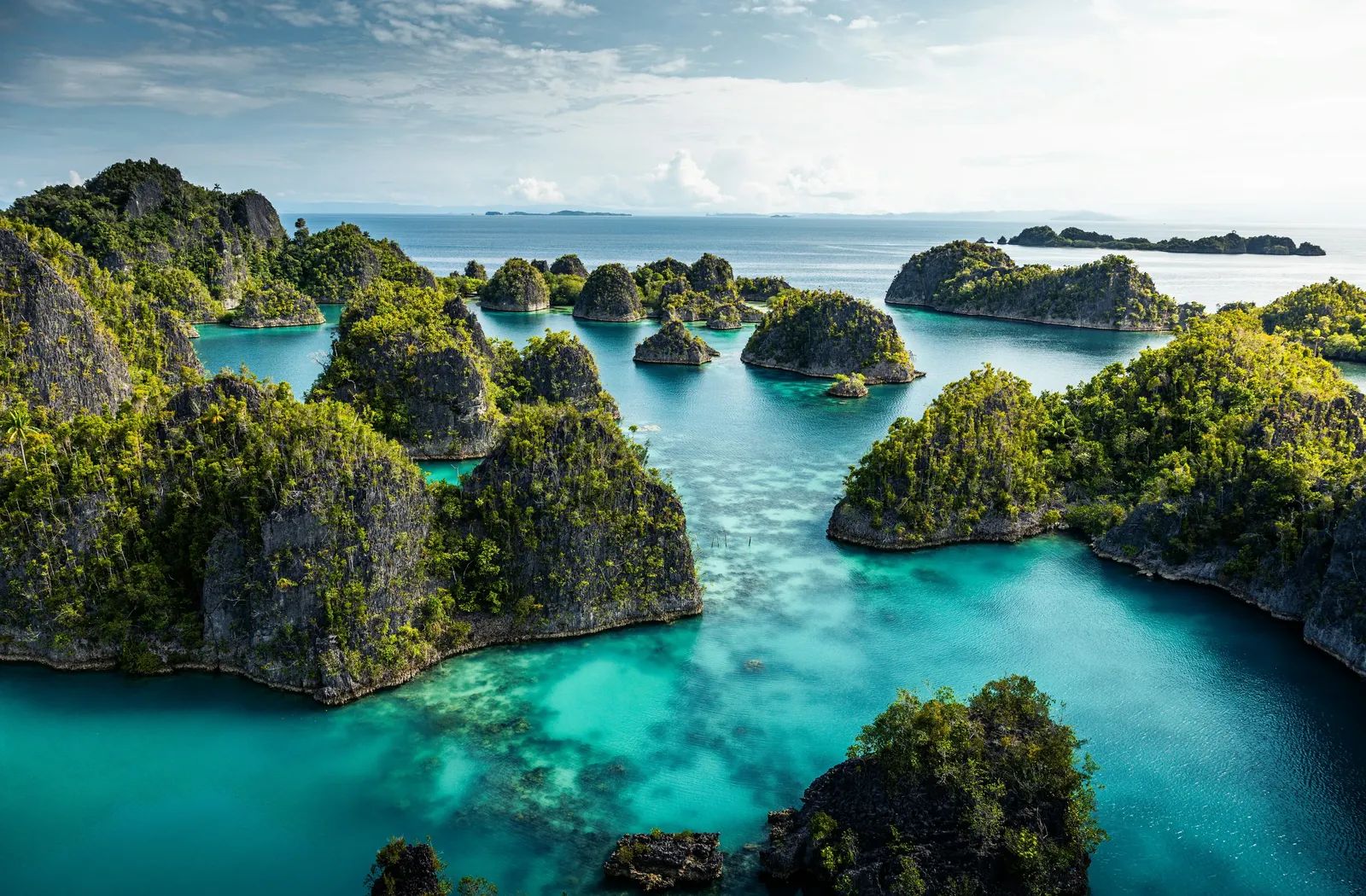
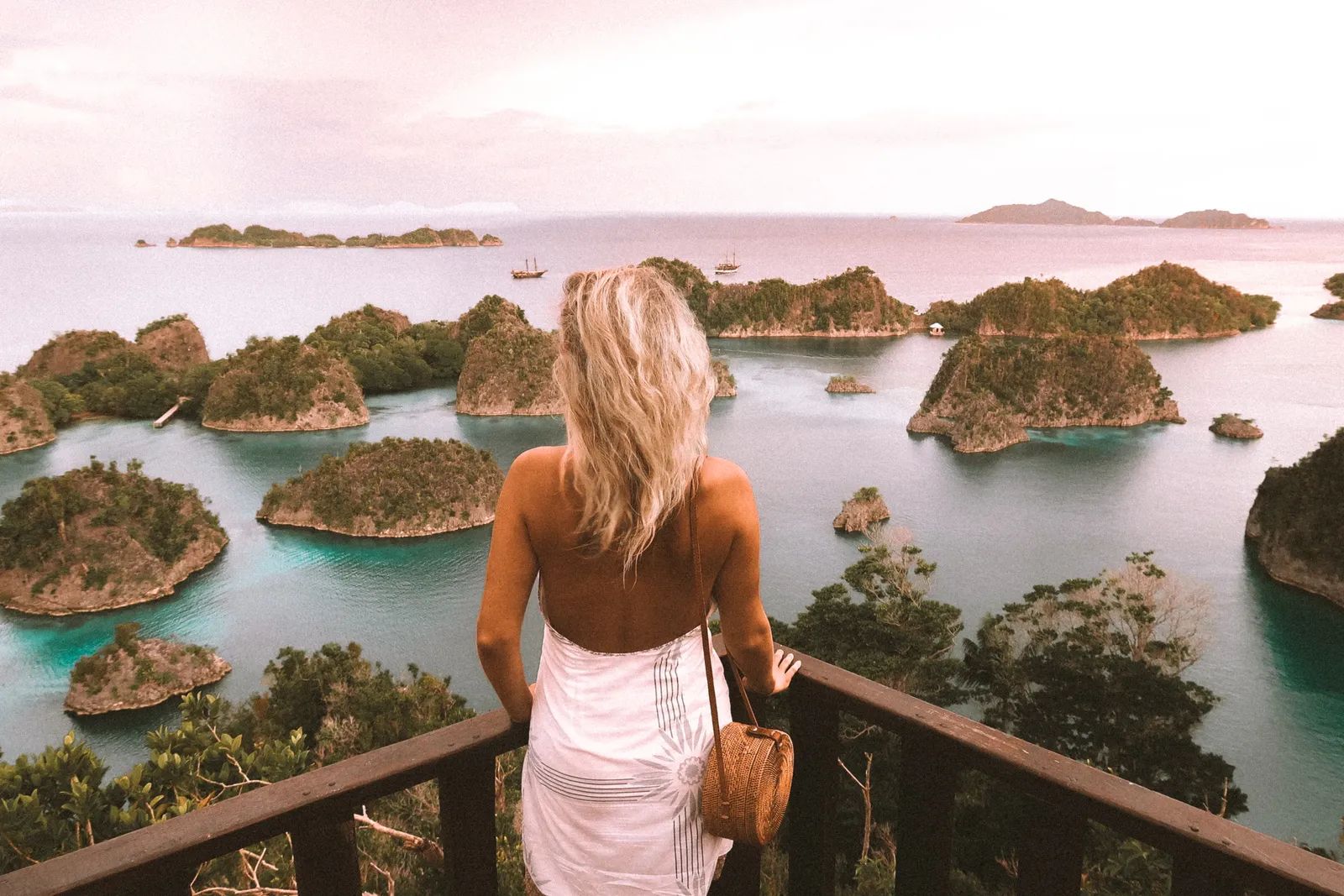
Misool karst limestone islands and turquoise lagoons, iconic viewpoint on Raja Ampat liveaboard itinerary West Papua Indonesia
Indonesien Liveaboard: Häufig gestellte Fragen
Warum gilt Indonesien als das beste Tauchziel der Welt?
Indonesien liegt im Zentrum des Korallendreiecks – der artenreichsten Meeresregion der Erde.
Was es besonders macht, ist nicht nur eine Sache. Der Indonesische Durchfluss, ein riesiges Strömungssystem, das den Pazifik und den Indischen Ozean verbindet, transportiert nährstoffreiches Wasser über den Archipel. Die vulkanische Geologie schafft eine dramatische Unterwasserlandschaft. Die Tiefen und die natürlich kühleren Wassertemperaturen in vielen Gebieten haben die Riffe im Vergleich zu anderen tropischen Reisezielen in bemerkenswert gutem Zustand gehalten.
Das Ergebnis: 76 % der weltweiten Korallenarten² in einer Region und Tauchplätze, an denen die Artenzahlen regelmäßig die von ganzen Ozeanregionen anderswo übertreffen.
Wann ist die beste Zeit zum Tauchen in Indonesien?
Das hängt davon ab, wohin Sie reisen.
Raja Ampat hat seine Hauptsaison von Oktober bis April. Komodo ist am besten von Mai bis September. Die Hammerhai-Saison im Banda-Meer dauert von Oktober bis November. Alor ist am besten von April bis November. Die Cenderawasih-Bucht bietet das ganze Jahr über Begegnungen mit Walhaien.
Die gute Nachricht ist, dass Indonesiens Ausmaß bedeutet, dass irgendwo das ganze Jahr über optimale Bedingungen herrschen. Unser saisonale Planungsleitfaden behandelt die wichtigsten Reiseziele und Monsunmuster im Detail.
Wie viel kostet ein Liveaboard in Indonesien?
Budget-Boote beginnen bei 150–300 $ pro Tag.
Mittelklasse kostet 300–600 $ pro Tag – private Kabinen, kleinere Gruppen, abgelegenere Routen.
Luxus reicht von 600–1.200 $ pro Tag. Private Charter beginnen bei 3.000 $ pro Tag für das gesamte Schiff, abhängig von Größe und Luxusniveau.
Kategorien sind fließend – einige mittelpreisige Boote bieten Master-Kabinen, die in den Luxuspreisbereich vordringen. Unser Leitfaden für Liveaboard-Kategorien erklärt genau, was Sie auf jeder Ebene bekommen.
Welches indonesische Reiseziel sollte ich wählen?
Für marine Biodiversität: Raja Ampat.
Für dramatische Topographie mit Mantas: Komodo.
Für abgelegene Expeditions-Tauchgänge mit Hammerhaien: Banda-See.
Für unberührte Riffe ohne Menschenmassen: Alor.
Für fast garantierte Walhaie: Cenderawasih Bay oder Triton Bay.
Für Makro- und Critter-Tauchgänge: Raja Ampat, Alor oder Lembeh Strait.
Die folgenden Abschnitte über Reiseziele geben Ihnen die wichtigsten Fakten für jedes.
Welche Art von Booten verwenden indonesische Liveaboards?
Die meisten indonesischen Liveaboards nutzen traditionelle Phinisi – hölzerne Segelschiffe, die von den Bugis- und Konjo-Gemeinschaften Süd-Sulawesis handgefertigt wurden.
Phinisi verfügen typischerweise über breite offene Decks, Essbereiche im Freien und großzügige Gemeinschaftsbereiche. Es ist ein wirklich anderes Erlebnis als die Tauchschiffe mit Stahlrumpf, die auf den Malediven oder im Roten Meer üblich sind – das Boot selbst trägt dazu bei, was Indonesien besonders macht.
Die meisten Mittelklasse- und Luxus-Phinisi verfügen über spezielle Kameraräume mit Spülbecken, Ladestationen und Arbeitsbereichen. Indonesien zieht ernsthafte Unterwasserfotografen an, insbesondere für Makroaufnahmen – das ist wichtig. Günstige Boote haben normalerweise keine speziellen Kameraeinrichtungen.
Eine kleinere Anzahl speziell gebauter Schiffe mit Stahlrumpf verkehrt in Indonesien, im Allgemeinen mit mehr Kabinen und einer stärker auf das Tauchen ausgerichteten Aufteilung.
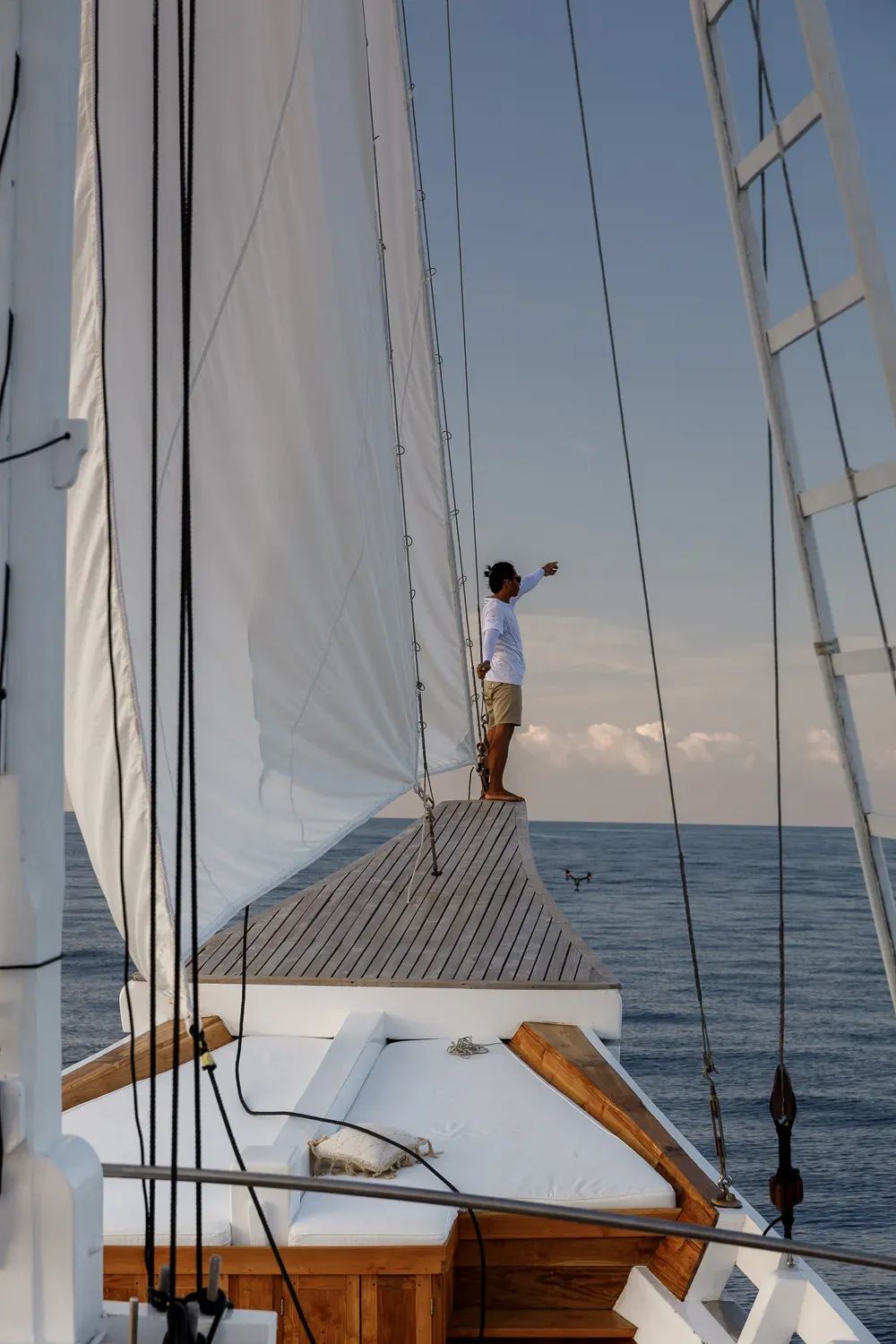
Crew member pointing from traditional sailing yacht bow with white sails against ocean horizon and cloudy sky - Picture by Aliikai Voyages
Warum Indonesien das beste Tauchziel der Welt ist
Indonesiens Lage, wo der Indische, Pazifische und Südliche Ozean aufeinandertreffen, schafft Bedingungen, die nirgendwo sonst zu finden sind.
Der Indonesian Throughflow³ treibt nährstoffreiche Strömungen über den Archipel und versorgt einige der produktivsten Riffsysteme der Erde. Die vulkanische Geologie schafft dramatische Unterwasserlandschaften – Wände, Pinnacles, Seamounts – und die natürliche Tiefe und die kühleren Wassertemperaturen in vielen Gebieten haben die Riffe in besserem Zustand gehalten als fast überall sonst in den Tropen.
Was Ihnen unter Wasser sofort auffallen wird, ist das Riff selbst. Die Hartkorallenbedeckung an gesunden indonesischen Standorten ist außergewöhnlich. Das Fischleben, das davon abhängt, folgt – Artenzählungen pro Tauchgang in Raja Ampat übersteigen regelmäßig die von ganzen Regionen anderswo. Allein das Makroleben – endemische Zwergseepferdchen, nirgendwo sonst auf der Erde vorkommende Geisterkrabben, Hunderte von Nacktschneckenarten – würde Indonesien auch ohne die Megafauna außergewöhnlich machen.
Und es gibt reichlich Megafauna. Die ozeanischen Strömungen bringen alles mit sich: Mantarochen, Walhaie, Hammerhaie, Fuchshaie, Tigerhaie, mehrere Wal- und Delfinarten. Kaltwasserauftrieb von Juni bis November bringt Mola Mola nach Nusa Penida und Komodo und zieht Hammerhaie nach Alor und in die Bandasee.
Indonesien hat auch etwas, das die meisten Tauchdestinationen nicht bieten – eine echte kulturelle Tiefe. Traditionelle Bootsbau-Gemeinschaften, alte Gewürzhandelsrouten, vielfältige Inselkulturen im gesamten Archipel. Eine Tauchreise hier fühlt sich nach mehr an als nur nach Tauchen.
Fragen Sie sich, wie Indonesien im Vergleich zu anderen spezifischen Reisezielen abschneidet? Unser Leitfaden „Warum Indonesien wählen“ deckt das Gesamtbild ab.
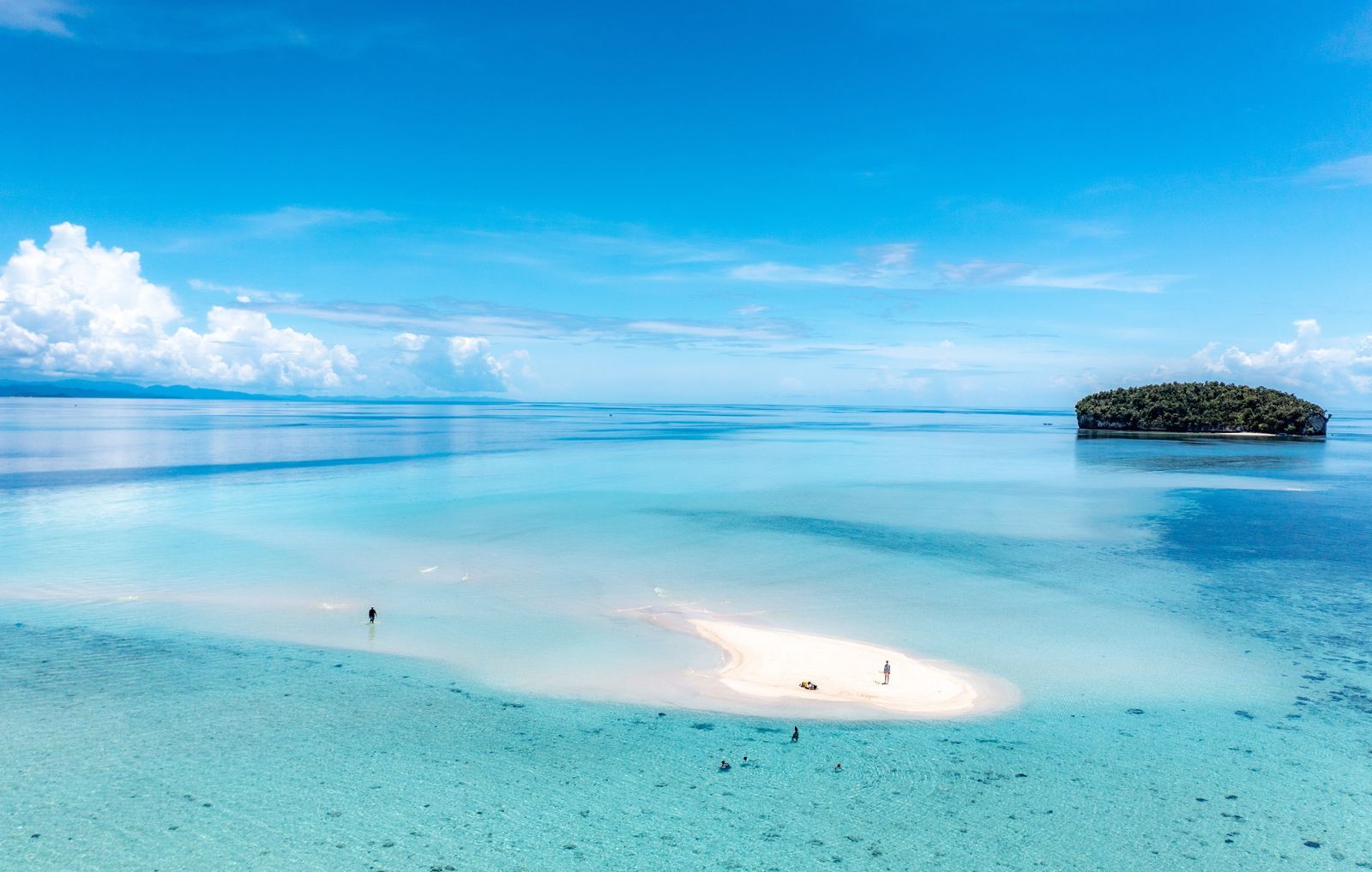
Pristine white sandbar in Raja Ampat Indonesia with crystal clear turquoise waters and tropical island, perfect liveaboard diving destination - Picture by Calico Jack Cruises
Liveaboard-Destinationen in Indonesien
Raja Ampat
Das Zentrum der marinen Biodiversität der Welt. Raja Ampats über 1.500 Inseln in West-Papua beherbergen mehr Korallen- und Fischarten pro Quadratkilometer als jeder andere Ort auf der Erde.
Manta-Rochen-Reinigungsstationen, endemische Laufhaie, Zwergseepferdchen auf Fächerkorallen, von gesunden Korallen bedeckte Wände – an fast jedem Tauchplatz.
Die beste Saison dauert von Oktober bis April, wenn die See am ruhigsten ist und die Manta-Aktivität ihren Höhepunkt erreicht, obwohl zentrale Routen das ganze Jahr über gut zu betauchen sind.
Anreise: Sorong (SOQ) über Jakarta, Manado oder Makassar.
Möchten Sie einen schnellen Überblick? Sehen Sie sich unsere Raja Ampat Zielseite. Für alles, was Sie zur Planung Ihrer Reise benötigen, lesen Sie unseren Raja Ampat Liveaboard-Leitfaden.
Komodo-Nationalpark
Drachen oben, Mantas unten. Die UNESCO-geschützten Gewässer von Komodo kombinieren starke Strömungen, vulkanische Topografie und zuverlässige Manta-Begegnungen an mehreren Stellen.
Nord-Komodo erreicht im Mai–September seinen Höhepunkt. Im Süd-Komodo kommt typischerweise von Juni–Oktober kaltes Wasser aus dem Indischen Ozean – was Hammerhai- und Mola-Mola-Sichtungen mit sich bringt, aber auch erhebliche Dünung, die an rauen Tagen den Zugang zu Orten wie Manta Alley einschränken kann.
Die meisten Reiserouten beinhalten eine Komodo-Drachen-Wanderung auf Rinca oder Komodo Island.
Anreise: Labuan Bajo (LBJ) über Bali, Jakarta oder Surabaya.
Möchten Sie einen schnellen Überblick? Sehen Sie sich unsere Komodo-Zielseite an. Für vollständige Planungsdetails lesen Sie unseren Komodo Liveaboard-Leitfaden an.
Banda-See
Indonesiens erstklassiges Expeditionsziel. Die Banda-See zu erreichen bedeutet mehrtägige Überfahrten – und diese Abgeschiedenheit ist genau der Punkt.
Gefleckte Hammerhaie versammeln sich im Oktober–November an vulkanischen Tiefseebergen, was dies zum zuverlässigsten Hammerhai-Tauchen in Indonesien macht. Außerhalb der Hammerhaisaison: unberührte Korallenwände, Zweiter-Weltkriegs-Geschichte auf den Banda-Inseln und Seeschlangen am Vulkan Manuk.
Anreise: Ambon (AMQ) über Jakarta, Bali oder Makassar. Je nach Reiseroute können die Touren auch in Maumere, Kalabahi oder Kupang enden.
Möchten Sie einen schnellen Überblick? Sehen Sie sich unsere Banda-See-Zielseite. Für vollständige Planungsdetails lesen Sie unseren Banda-See-Liveaboard-Leitfaden.
Alor
Das am besten gehütete Geheimnis Ost-Indonesiens. Dramatische Wände, starke Strömungen, außergewöhnliche Sicht – und praktisch kein touristischer Druck.
Kalte australische Winterströmungen ziehen im Juni–November nach Norden und bringen Hammerhai-Begegnungen und herausragendes Makro-Leben. Die lokale Kultur fügt eine Dimension hinzu, die nur wenige Tauchziele bieten können – traditionelle Gemeinschaften mit jahrhundertealten Bräuchen, die weitgehend unverändert von Tourismus geblieben sind.
Anreise: Kalabahi (ARD) über Kupang, mit einigen Direktverbindungen von Bali.
Für vollständige Planungsdetails lesen Sie unseren Alor-Tauchführer.
Cenderawasih-Bucht
Das weltweit zuverlässigste Ziel für Walhaie. Eine ortsansässige Population versammelt sich das ganze Jahr über um traditionelle Bagan-Fischplattformen in dieser abgelegenen Bucht von Westpapua – ein Verhalten, das nirgendwo sonst auf der Welt zu finden ist.
Indonesiens größter Meeresnationalpark⁴ bietet auch Wracks aus dem Zweiten Weltkrieg, endemische Papua-Arten und unberührte Hartkorallengärten, die selten von Tauchern besucht werden.
Anreise: Manokwari (MKW), Sorong (SOQ) oder Nabire (NAB), je nach Reiseroute.
Möchten Sie einen schnellen Überblick? Sehen Sie sich unsere Zielseite Cenderawasih-Bucht an. Für vollständige Planungsdetails lesen Sie unseren Cenderawasih-Bucht-Leitfaden.
Triton-Bucht
Ein Hotspot der Biodiversität im Bird's Head Seascape, der die Gewässer Westpapuas mit Raja Ampat und der Cenderawasih-Bucht teilt.
Bekannt für endemische Arten wie Laufhaie und den Paracheilinus nursalim-Fähnchenlippfisch, außergewöhnliches Weichkorallenwachstum und fast garantierte Walhai-Begegnungen an lokalen Fischplattformen. Die Sicht kann variieren, aber die Dichte an Kleintieren ist herausragend.
Anreise: Kaimana (KNG) über Sorong oder Ambon. Viele Reiserouten kombinieren die Triton-Bucht mit Raja Ampat.
Möchten Sie eine schnelle Übersicht? Sehen Sie sich unsere Zielseite Triton Bay an. Für vollständige Planungsdetails lesen Sie unseren Tauchführer Triton Bay.
Derawan-Inseln
Die Schildkrötenhauptstadt von Ost-Kalimantan (Borneo). Der Derawan-Inselkomplex ist eines der bedeutendsten Brutgebiete für grüne Meeresschildkröten in Südostasien⁵ mit neun kritischen Niststränden im gesamten Archipel. Quallen ohne Stiche bei Kakaban, Mantarochen bei Sangalaki und Barrakuda-Tornados bei Maratua runden das Erlebnis ab.
Beste Jahreszeit Mai–September – eine natürliche Ergänzung zu Komodo für Taucher, die im selben Zeitraum besuchen.
Anreise: Tarakan (TRK) oder Berau (BEJ) über Balikpapan oder Jakarta.
Für vollständige Planungsdetails lesen Sie unseren Tauchführer Derawan-Inseln.
Halmahera
Das Grenzland-Reiseziel von Nord-Maluku. Dugongs, Mantarochen rund um den Goraichi-Archipel und unberührte Riffe mit fast keinem Tauchverkehr.
Reiserouten kombinieren typischerweise Halmahera mit der Lembeh Strait in Nord-Sulawesi für eine makrofokussierte Überquerung. Beste Jahreszeit Juni–September.
Anreise: Ternate (TTE) über Jakarta, Manado oder Makassar.
Für vollständige Planungsdetails lesen Sie unseren Tauchführer für Halmahera.
Bali
Indonesiens am leichtesten zugängliche Tauchbasis – und ein Weltklasse-Ziel für sich.
Das Wrack der USAT Liberty in Tulamben, Mantarochen und Mola Mola bei Nusa Penida (Mola Mola Saison Juli–Oktober) und vielfältige Tauchgänge von der Küste und vom Boot auf der ganzen Insel. Bali eignet sich auch perfekt als Basis vor oder nach einem Liveaboard.
Unser Partner inVINCible Tours ist auf maßgeschneiderte Bali-Reiserouten spezialisiert – Tauchen, Surfen, Villen, kulturelle Erlebnisse, Inselerkundungen und alles dazwischen.
Anreise: Denpasar (DPS) – Direktflüge von den meisten großen Drehkreuzen.
Für vollständige Planungsdetails lesen Sie unseren Tauchführer für Bali.
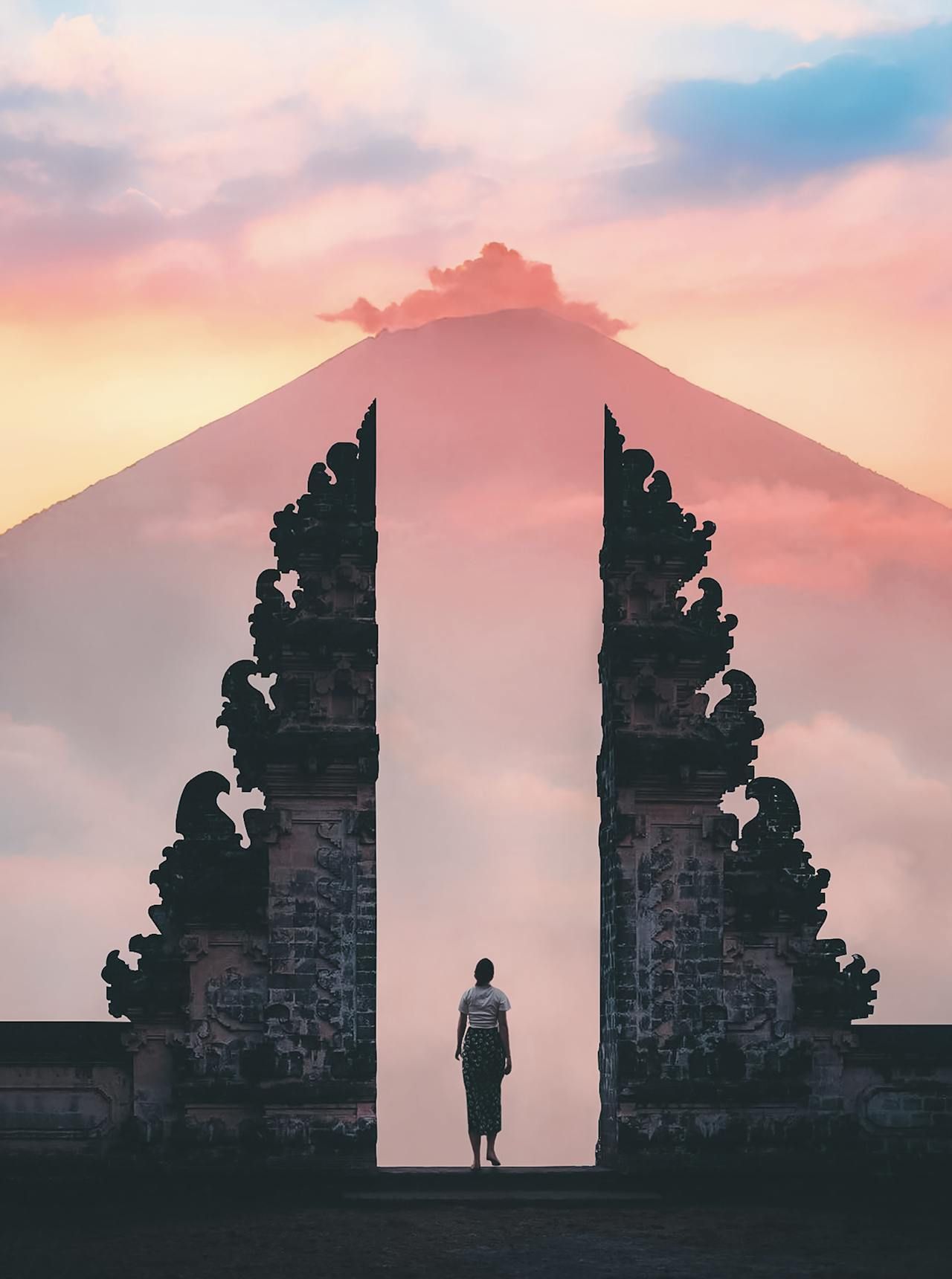
Lempuyang Gate of Heaven temple Bali sunrise Indonesia liveaboard cultural excursion
Beste Tauchzeit Indonesien: Saisonführer
Indonesiens Ausdehnung bedeutet, dass das Tauchen das ganze Jahr über irgendwo möglich ist.
Oktober–April: Raja Ampat vom Feinsten. Ruhige See, Manta-Aktivität auf dem Höhepunkt, ausgezeichnete Sicht in den nördlichen und zentralen Regionen.
Mai–September: Komodo erreicht während der südöstlichen Trockenzeit seinen Höhepunkt. Alor, Derawan und Halmahera sind ebenfalls in ihrem optimalen Zeitfenster.
Oktober–November: Banda-See Hammerhai-Saison — das engste und zeitlich am meisten eingeschränkte Fenster im indonesischen Tauchen.
Ganzjährig: Cenderawasih Bay und Triton Bay für Walhaie. Bali und Nusa Penida sind das ganze Jahr über konstant.
Monsunmuster beeinflussen den Zugang zu abgelegenen Tauchplätzen mehr als die Tauchqualität an einzelnen Orten. Betreiber passen Reiserouten an die Bedingungen an – Flexibilität ist Teil des indonesischen Liveaboard-Tauchens. Unser Saisonmuster-Leitfaden behandelt die wichtigsten Reiseziele und Monsunmuster im Detail.
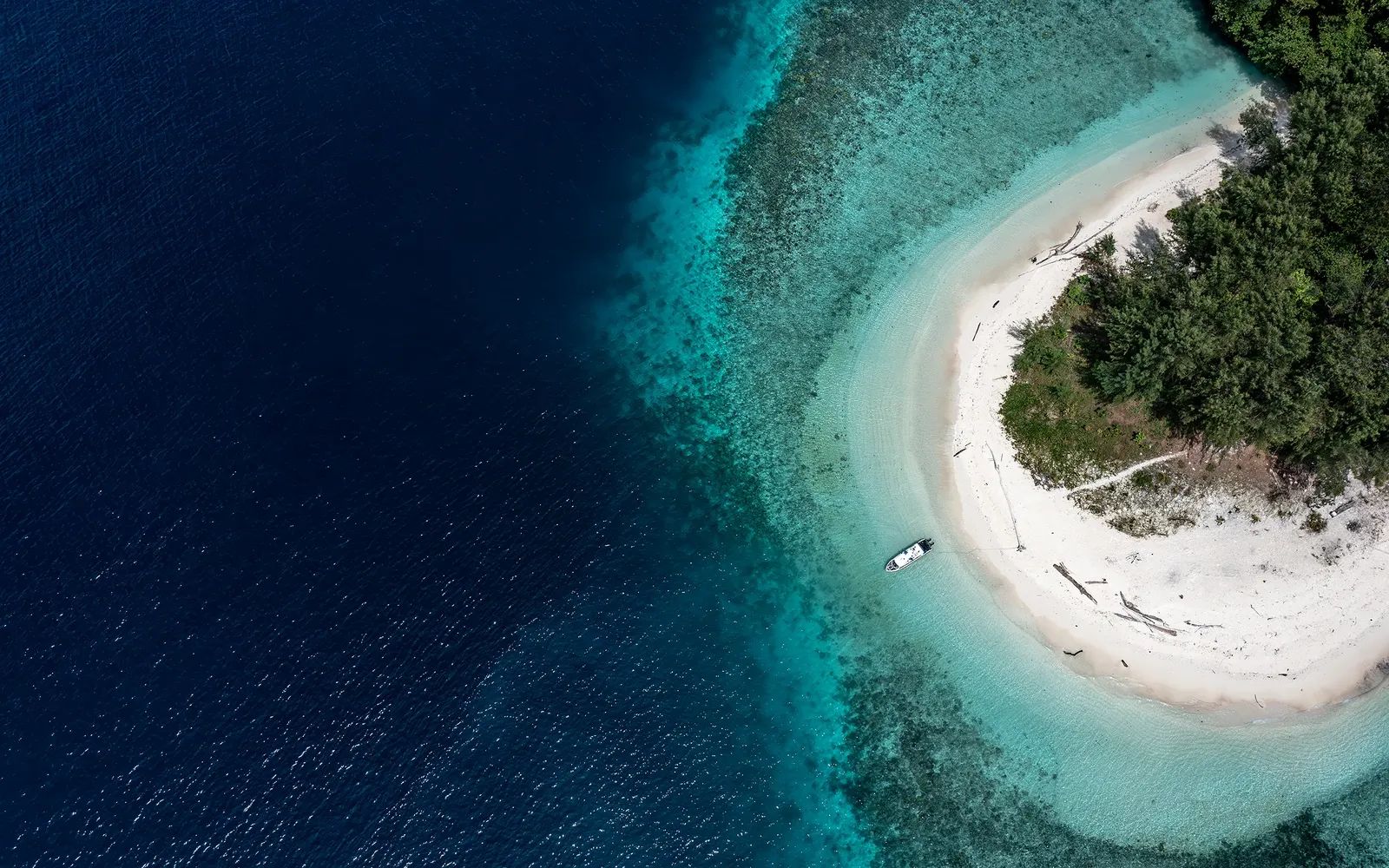
Aerial view of pristine white sand beach and turquoise lagoon, remote anchorage during Raja Ampat liveaboard trip Indonesia
Planen Sie Ihre Indonesien Liveaboard-Reise
Reiselänge
6–10 Tage eignen sich für Reisen zu einem einzigen Ziel – Komodo und die zentralen Routen von Raja Ampat passen gut in dieses Zeitfenster.
10–14 Tage ermöglichen Kombinationen mehrerer Ziele oder eine gründliche Abdeckung größerer Gebiete wie der nördlichen, zentralen und südlichen Regionen von Raja Ampat. Reisen zu mehreren Zielen wie Komodo zum Banda-Meer oder Banda-Meer nach Raja Ampat dauern in der Regel 10–14 Tage.
Kostenübersicht
Budget-Boote (150–300 $/Tag) bieten professionelles Tauchen und Sicherheit mit einfacher Gemeinschaftsunterkunft. Kameraeinrichtungen sind auf diesem Niveau normalerweise nicht inbegriffen.
Mittelklasse (300–600 $/Tag) bietet private Kabinen, kleinere Gruppen, normalerweise Nitrox und auf den meisten Schiffen eigene Kameraräume.
Luxus-Tauchboote (600–1.200 $/Tag) bieten zusätzlich Premium-Ausrüstung, erfahrene Guides und geräumige Kabinen als Standard.
Luxus-Lifestyle-Boote zum gleichen Preis legen Wert auf Komfort und Annehmlichkeiten im Resort-Stil gegenüber Taucheinrichtungen.
Private Yachtcharter beginnen bei 3.000 $+ pro Tag für das gesamte Schiff, abhängig von Größe und Luxusniveau.
Kategorien sind fließend. Betreiber bieten manchmal Last-Minute-Rabatte auf verbleibende Kabinenverfügbarkeiten an – wenn Ihre Daten flexibel sind, lohnt es sich zu fragen. Unser Leitfaden für Liveaboard-Kategorien behandelt jeden Preispunkt im Detail.
Zusätzliche Kosten, die budgetiert werden müssen
Die meisten Reiserouten haben zusätzliche Gebühren, die nicht im Tagessatz enthalten sind: Park- und Hafengebühren (oft als P&P zusammengefasst), Treibstoffzuschläge, Nitrox, falls nicht enthalten, Ausrüstungsmiete und Trinkgelder für die Crew (10–15 % sind Standard). Einige abgelegene Reiseziele haben auch Naturschutzgebühren und lokale Dorfgebühren. Die Beträge variieren je nach Reiseziel und Betreiber – bestätigen Sie immer die vollständige Kostenaufschlüsselung, bevor Sie buchen.
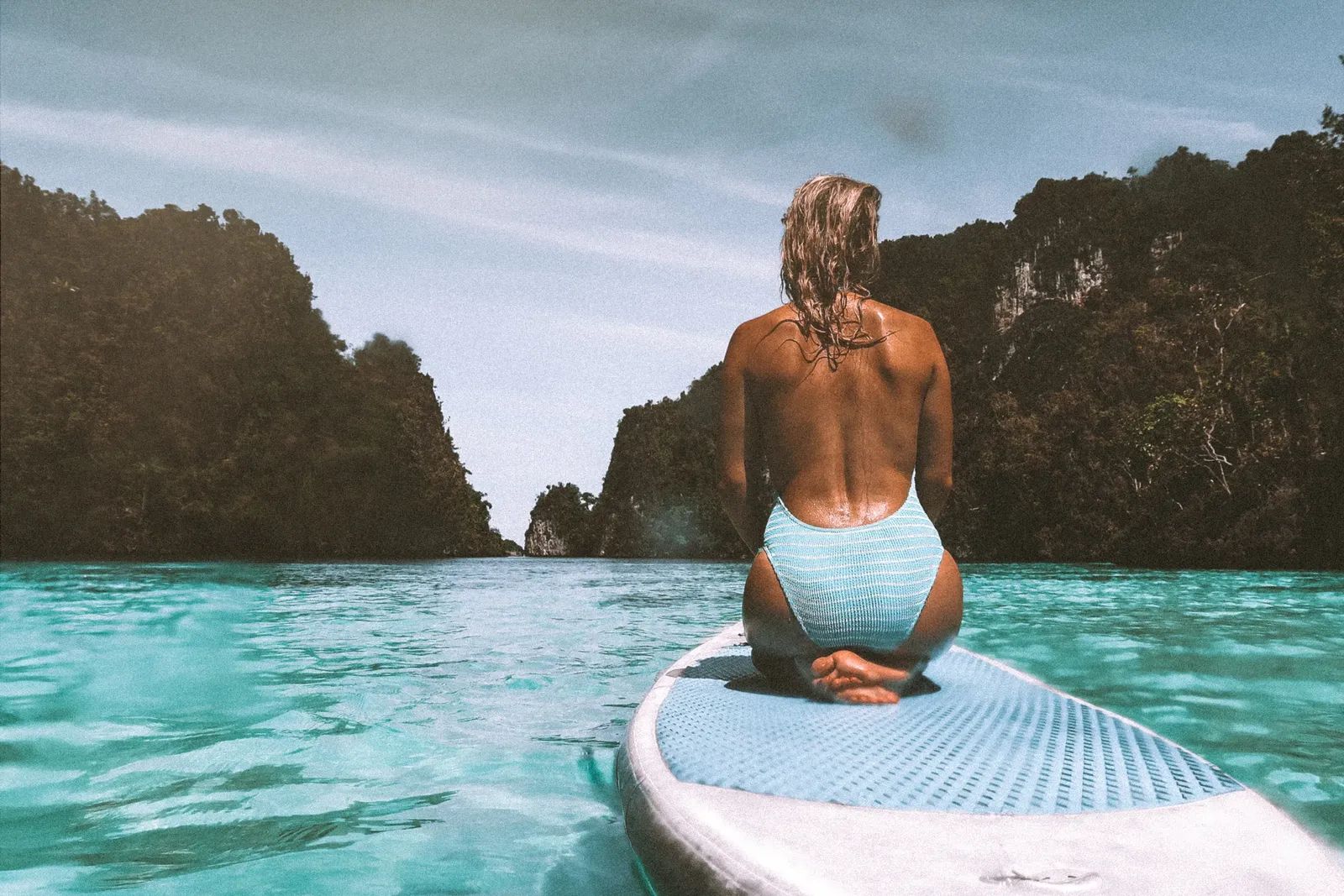
Woman on paddleboard surrounded by towering limestone karst islands in calm turquoise waters of Raja Ampat archipelago - Picture by Calico Jack Cruises
Meeresleben in Indonesien: Megafauna und Makro-Tauchen
Indonesiens Lage, wo der Indische, Pazifische und Südliche Ozean zusammenlaufen, schafft außergewöhnliche Bedingungen für Meereslebewesen aller Art.
Megafauna
Indonesien liegt an einer ozeanischen Kreuzung – und alles passiert dort.
Manta-Rochen sind an den Reinigungsstationen in Raja Ampat und Komodo zuverlässig anzutreffen. Walhaie sind in der Cenderawasih-Bucht und der Triton-Bucht fast garantiert. Hammerhaie versammeln sich im Banda-Meer von Oktober bis November und erscheinen in Alor von Juni bis November, wenn kalte südliche Strömungen nach Norden ziehen. Das gleiche kalte Wasser bringt Mola Mola von Juli bis Oktober nach Nusa Penida und Komodo.
Jenseits der Hauptarten: mehrere Walarten, Delfine im gesamten Archipel, Fuchshaie in Alor, Tigerhaie an bestimmten Orten und Riffhai-Populationen an fast jedem gesunden Standort.
Unser Leitfaden für Megafauna in Indonesien behandelt Begegnungsraten, Saisons und Reiseziel-Empfehlungen für jede Art.
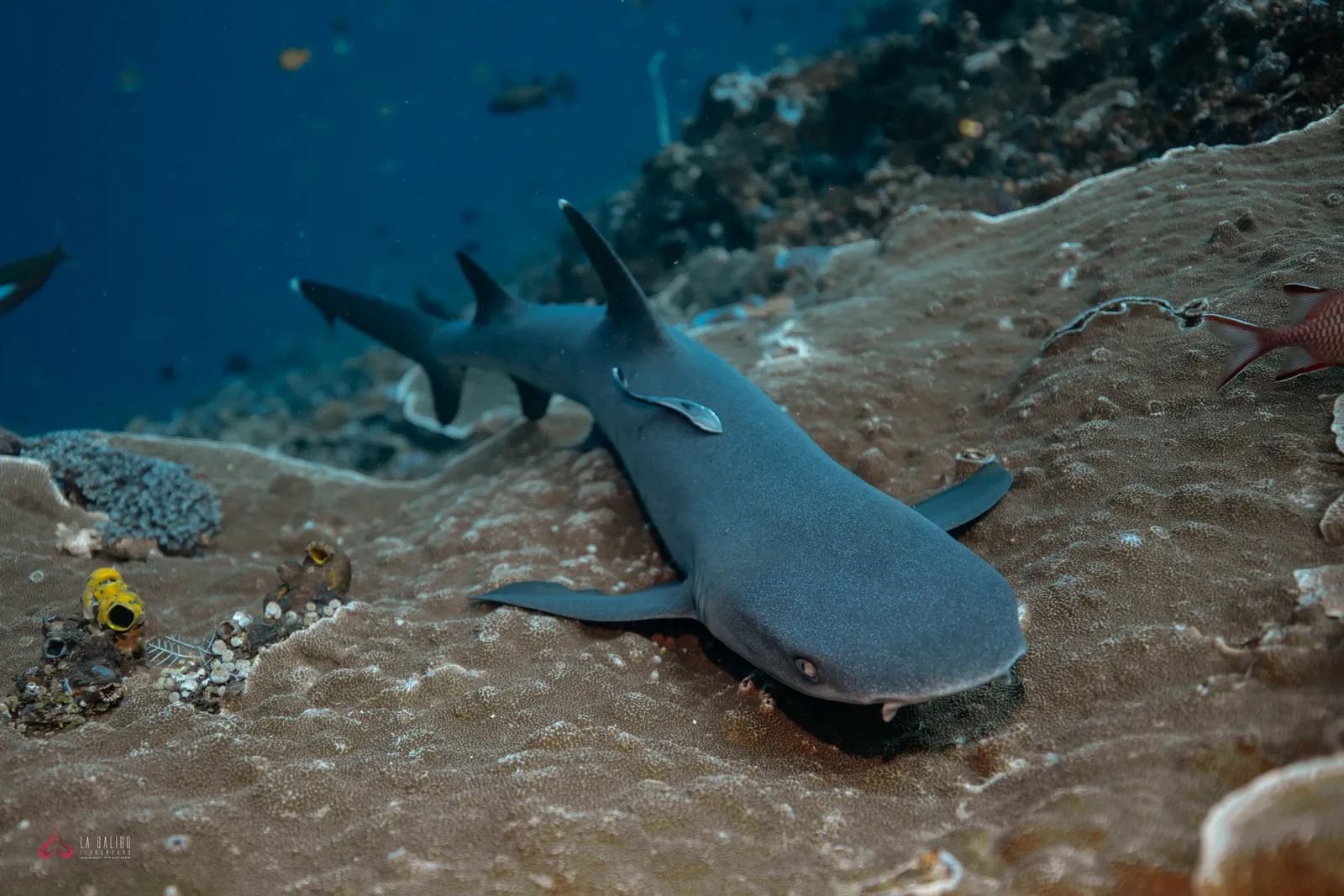
White tip reef shark resting on coral reef during Indonesia liveaboard diving expedition - Picture by La Galigo Liveaboard
Makroleben
Indonesien ist wohl die Makro-Tauchhauptstadt der Welt.
Raja Ampat beherbergt endemische Zwergseepferdchenarten, die nirgendwo sonst vorkommen. Alor bietet Makro-Tauchen vom Feinsten mit herausragender Artenvielfalt. Die Straße von Lembeh in Nordsulawesi ist der globale Maßstab für Muck Diving. Laufende Haie, Mimik-Oktopusse, Mandarin-Fische und Hunderte von Nacktschneckenarten sind in der gesamten Inselgruppe zu finden.
Die meisten Mittelklasse- und Luxusboote sind für Unterwasserfotografen ausgestattet – Kameraräume, Spülbecken und Guides, die die Tiere kennen. Indonesien hat seinen Ruf teilweise darauf aufgebaut.
Unser Kreaturen- und Makro-Guide deckt die besten Reiseziele und Arten nach Region ab.
Für die planungsspezifische Suche nach Arten: Walhaie · Manta Rochen · Hammerhaie · Meeresschildkröten
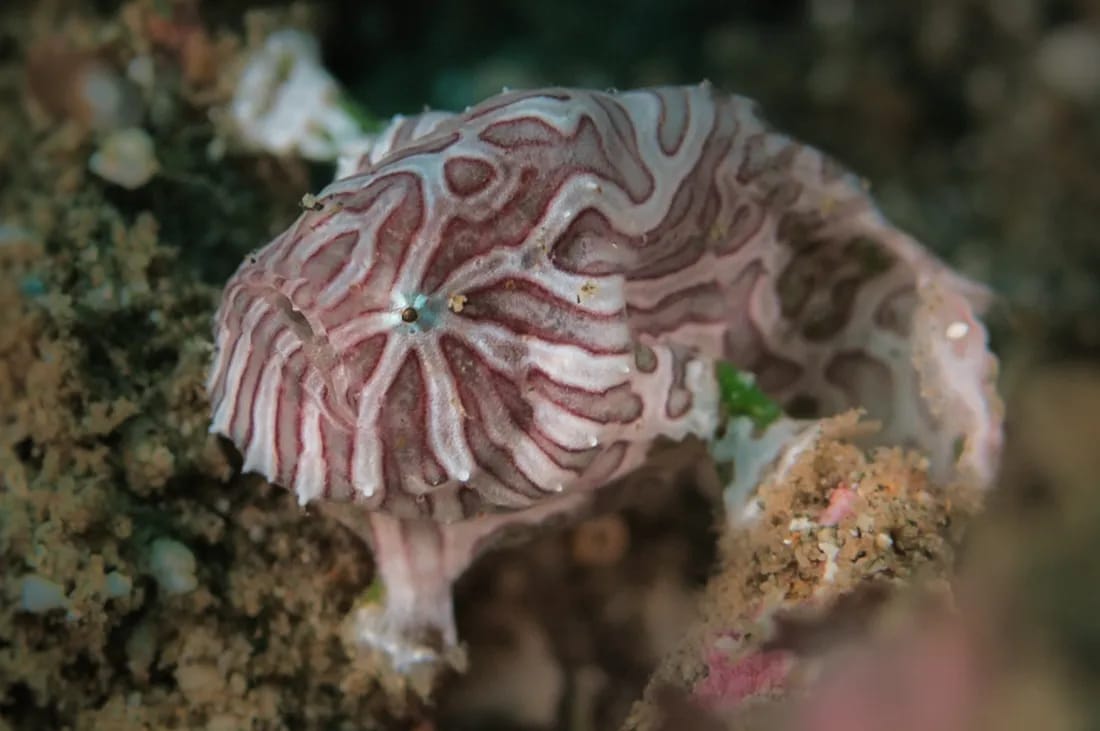
Psychedelic frogfish Histiophryne psychedelica rare species Indonesia macro diving liveaboard Ambon underwater photography - Picture by Dewi Nusantara
Anreise nach Indonesien: Flughäfen und Abfahrtshäfen
Die meisten internationalen Reisenden kommen über Jakarta (CGK) oder Bali (DPS) an. Von dort aus erreichen Inlandsflüge jeden Abfahrtshafen für Liveaboards.
Wichtige Abfahrtshäfen:
- Raja Ampat: Sorong (SOQ) — über Jakarta, Manado, Makassar oder Ambon
- Komodo: Labuan Bajo (LBJ) — über Bali, Jakarta oder Surabaya
- Banda-See: Ambon (AMQ) — über Jakarta, Bali oder Makassar
- Alor: Kalabahi (ARD) — über Kupang, einige direkte Verbindungen nach Bali
- Cenderawasih-Bucht: Manokwari (MKW), Sorong (SOQ) oder Nabire (NAB)
- Triton Bay: Kaimana (KNG) — über Sorong oder Ambon
- Derawan: Tarakan (TRK) oder Berau (BEJ) über Balikpapan
- Halmahera: Ternate (TTE) — über Jakarta, Manado oder Makassar
- Flores/Banda-See-Überquerungen: Maumere (MOF) — über Bali oder Makassar
Indonesiens Inlandsnetz ist umfangreich, aber komplex. Flugpläne ändern sich häufig, viele Fluggesellschafts-Websites akzeptieren keine ausländischen Kreditkarten, und Verbindungen zu abgelegenen Häfen erfordern lokale Kenntnisse.
Wir koordinieren Inlandsflüge über VIFA Holiday — den führenden DMC für Indonesiens Tauchindustrie — die Buchungen in Echtzeit überwachen und bei Störungen sofort umbuchen.
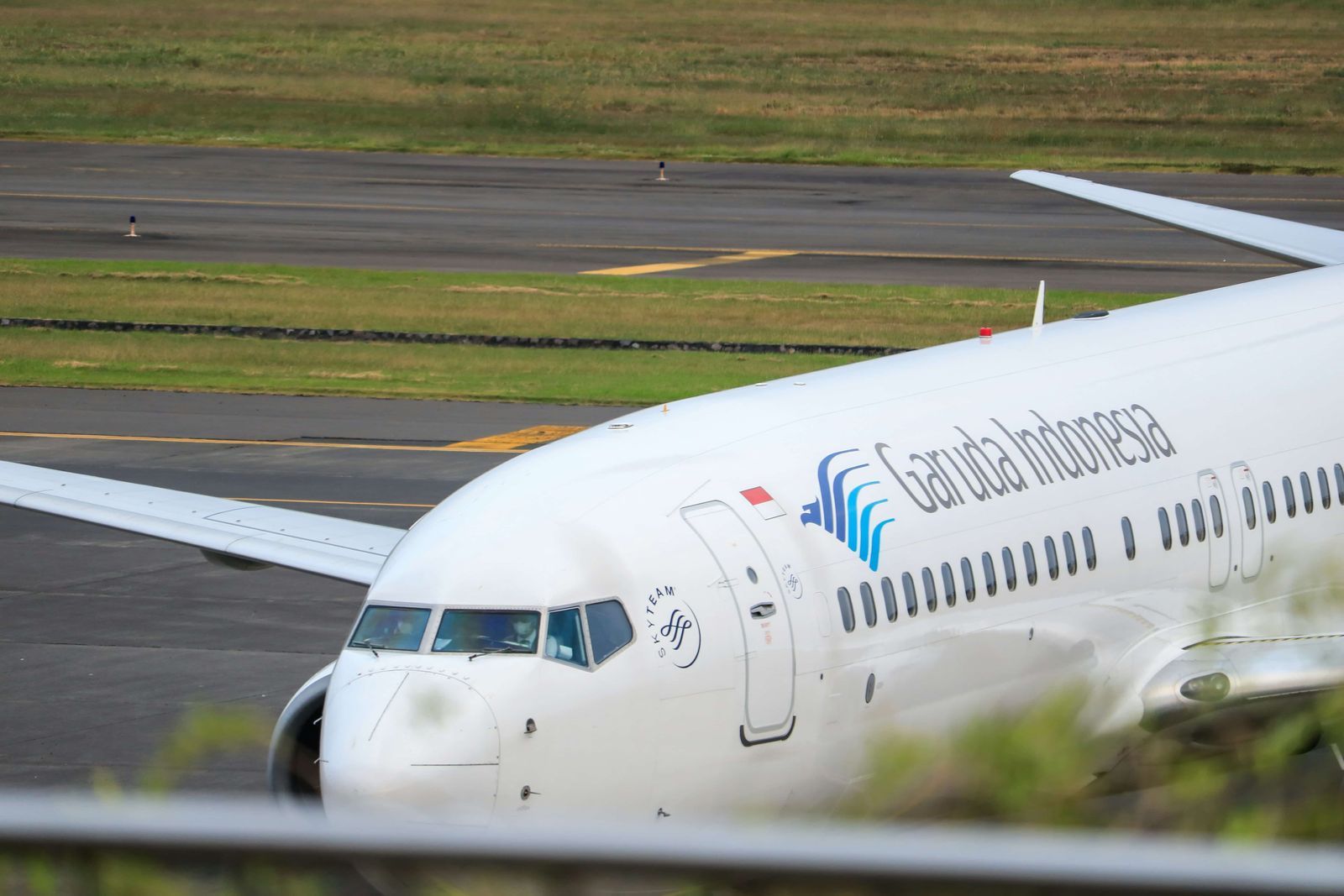
Garuda Indonesia aircraft runway Indonesian domestic flights liveaboard transfers
Liveaboard-Erweiterungen und Abenteuer in Indonesien
Eine Liveaboard-Reise eröffnet eines der vielfältigsten Länder der Welt für die Erkundung an Land. Beliebte Optionen:
- Aufenthalte vor/nach dem Resort in Raja Ampat oder Flores
- Bali-Kultur-Reiserouten, Tauchen oder Surfen
- Surfen in Lombok oder auf den abgelegenen Mentawai-Inseln
- Vulkanwanderungen auf Java
- Orang-Utan-Expeditionen auf Borneo
- Toraja-Kulturerlebnisse in Sulawesi
Herauszufinden, was tatsächlich funktioniert — welche Verbindungen Sinn ergeben, welche Hotels sich lohnen, was wirklich gut ist und was nur Touristenkram ist — erfordert lokale Kenntnisse und Zeit, die die meisten Leute nicht haben. Wir kümmern uns um Inlandsflüge, Hotels und Erweiterungen über unsere Partner inVINCible Tours für Bali und kulturelle Reiserouten und VIFA Holiday für die Logistik in ganz Indonesien. Ein Ansprechpartner für die gesamte Reise.
Unser Leitfaden für Liveaboard-Erweiterungen in Indonesien deckt alle Optionen im Detail ab.
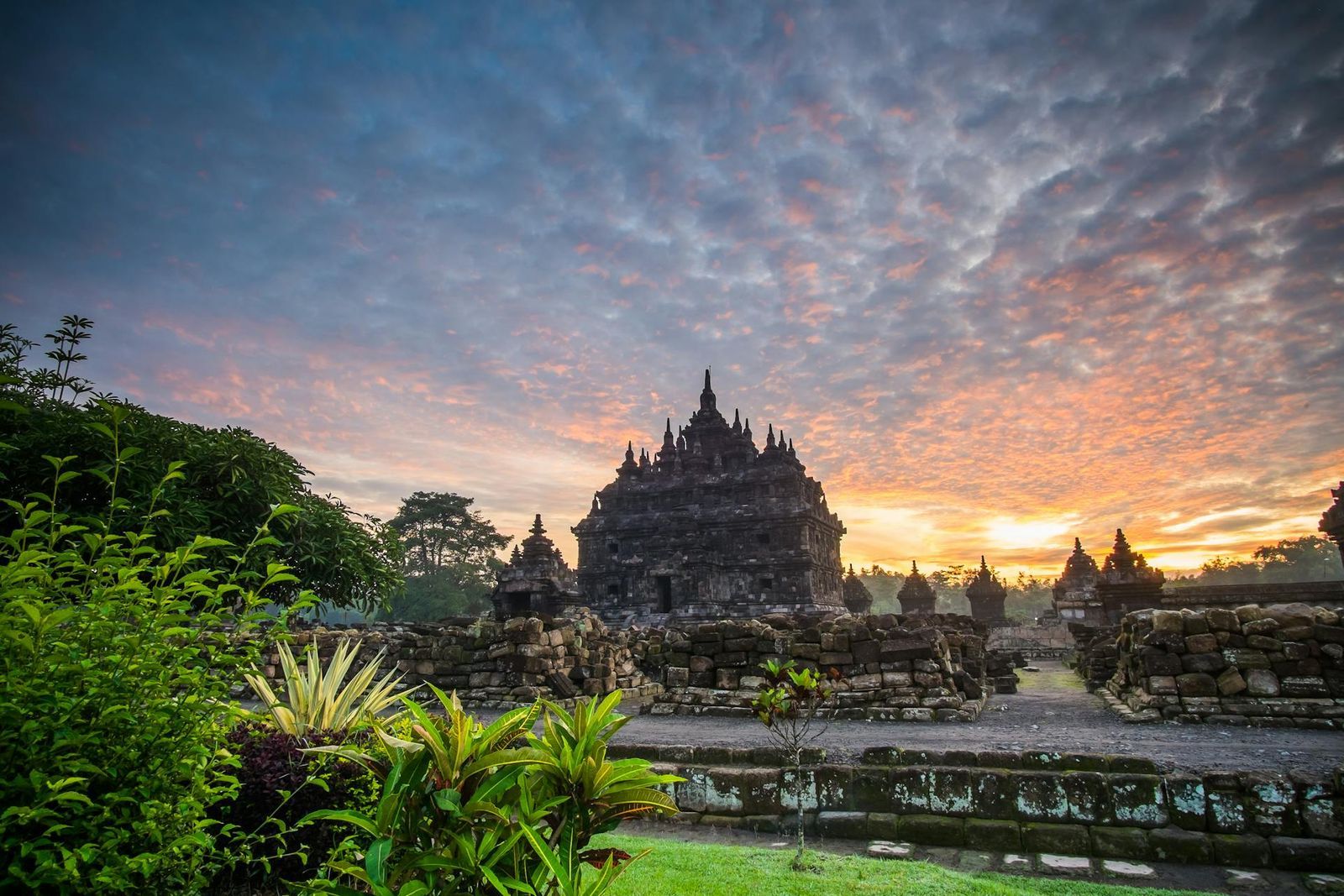
Borobudur Temple Java cultural extension Indonesia liveaboard diving trips - UNESCO heritage site custom tour add-on
Erwartungen managen
Indonesien bietet außergewöhnliche Tauchmöglichkeiten. Ein paar Dinge, die Sie vor Ihrer Reise wissen sollten:
Wetter- und Reiseplanänderungen sind normal. Betreiber passen Routen je nach Bedingungen an. Erfahrene Kapitäne wissen, wo das Tauchen am besten ist, und finden Alternativen – Flexibilität ist Teil des Erlebnisses.
Entlegene Ziele sind wirklich entlegen – aber nicht beunruhigend. Indonesiens Tauchziele sind im Vergleich zu Städten entlegen, nicht im Vergleich zu anderen Expeditionstauchzielen weltweit. Wenn Sie medizinische Hilfe benötigen, ist eine Evakuierung möglich. Abgesehen davon ist eine umfassende Tauchversicherung mit medizinischer Evakuierungsdeckung in Indonesien obligatorisch und wird von den meisten Betreibern verlangt. Hyperbare Behandlung kann teuer sein – eine angemessene Deckung ist nicht verhandelbar.
Tierbeobachtungen sind nie garantiert. Die Begegnungsraten an Top-Spots sind hoch, aber der Ozean folgt keinem Zeitplan. Die Hammerhai-Saison in der Banda-See bietet die besten Chancen in Indonesien – sie garantiert aber keine Schule bei jedem Tauchgang.
Planen Sie Pufferzeit für Inlandsflüge ein. Planen Sie mindestens eine Nacht in der Abflugstadt ein, bevor Sie an Bord Ihres Schiffes gehen. Verspätungen und Annullierungen auf abgelegenen Routen sind häufig. Wir kümmern uns um Flugbuchungen und Überwachung über VIFA Holiday – wenn etwas schiefgeht, sind wir bereits dran.
Das Liveaboard-Erlebnis variiert je nach Boot. Kabinen auf Premium-Schiffen können 12–20 m² groß sein, mit richtigen Betten und eigenen Bädern. Budget-Boote sind kompakter. Die meisten Taucher gewöhnen sich schnell ein, unabhängig davon – aber zu wissen, was Ihr Boot bietet, bevor Sie buchen, ist wichtig. Unser Anfängerleitfaden erklärt, was Sie erwartet. Was Sie packen sollten, finden Sie in unserem Packliste für Indonesien.
Wir können bei mehr als nur dem Boot helfen. Inlandsflüge, Hotels vor und nach der Reise, Verlängerungen und kulturelle Ausflüge – wir koordinieren alles. Eine Sorge weniger, um die Sie sich selbst kümmern müssen.
Panoramic sunrise view over famous Pianemo lagoon with mushroom-shaped limestone islands and traditional boats in Raja Ampat - Picture by Calico Jack Cruises
Häufig gestellte Fragen zu Indonesien Liveaboards
Wie weit im Voraus sollte ich einen Indonesien Liveaboard buchen?
Planen Sie 6–12 Monate im Voraus für Abfahrten in der Hauptsaison, insbesondere für Raja Ampat von Oktober bis April und die Hammerhai-Saison in der Banda-See. Beliebte Boote zu Prime-Terminen sind lange im Voraus ausgebucht. Betreiber bieten manchmal Last-Minute-Rabatte für verbleibende Kabinenkapazitäten an – wenn Ihre Daten flexibel sind, lohnt es sich zu fragen – aber die Auswahl wird begrenzt sein.
Welche Zertifizierung benötige ich für Indonesien Liveaboard Tauchgänge?
Das hängt vom Boot und der Reiseroute ab. Viele Boote – insbesondere in der Mittel- und Luxuskategorie – heißen alle Erfahrungsstufen willkommen, einschließlich Anfänger und Nicht-Taucher. Technischere Ziele wie die Banda-See erfordern in der Regel eine Advanced-Zertifizierung mit protokollierten Erfahrungen. Wenn Sie ein erfahrener Taucher sind und eine abgelegene Expeditionsroute planen, sind gute Tarierung und Strömungserfahrung wichtiger als das Zertifizierungsniveau. Erkundigen Sie sich vor der Buchung bei Ihrem spezifischen Boot nach den Anforderungen.
Ist Nitrox auf Liveaboards in Indonesien verfügbar?
Ja, die meisten Mittelklasse- und Luxusboote beinhalten Nitrox oder bieten es zu geringen Kosten an. Budget-Boote variieren – prüfen Sie vor der Buchung. Es lohnt sich, sich vor Ihrer Reise für Nitrox zertifizieren zu lassen, wenn Sie drei bis vier Tauchgänge täglich planen.
Was ist im Liveaboard-Preis inbegriffen?
Im Allgemeinen: Unterkunft, alle Mahlzeiten, geführte Tauchgänge, Tanks und Flughafentransfers (bei den meisten Mittelklasse- und Luxusbooten). Landausflüge und Landbesuche sind in der Regel ebenfalls inbegriffen – indonesische Betreiber sind dafür bekannt, sei es eine Wanderung zu einem Aussichtspunkt, ein Strandaufbau oder ein Dorfbesuch.
Nicht immer inbegriffen: Nitrox, Park- und Hafengebühren, Treibstoffzuschläge, Ausrüstungsverleih und Trinkgelder für die Crew (10–15 % sind üblich). Budget-Boote berechnen tendenziell mehr Zusatzleistungen. Bestätigen Sie immer die vollständige Kostenaufschlüsselung vor der Buchung.
Können Solo-Reisende an Indonesien-Liveaboards teilnehmen?
Ja. Die meisten Boote arbeiten auf Basis von Gemeinschaftskabinen – Kabinen werden normalerweise einzeln gebucht, mit geschlechtsspezifischen Aufteilungen, wo zutreffend. Wenn Sie eine private Kabine wünschen, fällt in der Regel ein Einzelzimmerzuschlag an. Einige Boote haben spezielle Einzelkabinen mit geringerem oder keinem Aufschlag. Das Liveaboard-Format fördert auf natürliche Weise Kameradschaft – Alleinreisen funktioniert gut.
Benötige ich eine Tauchversicherung für Indonesien?
Ja – eine umfassende Reiseversicherung, die Tauchunfallversicherung und medizinische Evakuierung einschließt, ist in Indonesien obligatorisch und wird von den meisten Betreibern verlangt. Wenn Sie sich in einem abgelegenen Gebiet befinden und eine Überdruckkammerbehandlung benötigen, können die Evakuierungskosten erheblich sein. DAN (Divers Alert Network) Versicherung wird weithin empfohlen. Überspringen Sie dies nicht.
Was sollte ich für ein Indonesien-Liveaboard einpacken?
Ein 3-mm-Neoprenanzug ist für die meisten Regionen und Jahreszeiten geeignet. Von Juni bis November können Kaltwasseraufströmungen – angetrieben von australischen Winterströmungen, die nach Norden drängen – die Temperaturen erheblich senken, insbesondere in Alor, Süd-Komodo und der Banda-See. Wenn Sie in diesem Zeitraum tauchen, sollten Sie einen 5-mm-Anzug oder einen 3-mm-Anzug mit thermischer Unterlage und Handschuhen in Betracht ziehen. Unser Packliste für Indonesien deckt alles im Detail ab.
Wie erreiche ich abgelegene indonesische Abfahrtshäfen?
Buchen Sie frühzeitig, planen Sie Pufferübernachtungen ein und nutzen Sie professionelle Hilfe für Verbindungen. Viele indonesische Fluggesellschafts-Websites funktionieren nicht mit ausländischen Karten und die Flugpläne ändern sich ohne Vorankündigung. Wir koordinieren Inlandsflüge über VIFA Holiday, die Buchungen überwachen und proaktiv umbuchen, wenn Probleme auftreten.
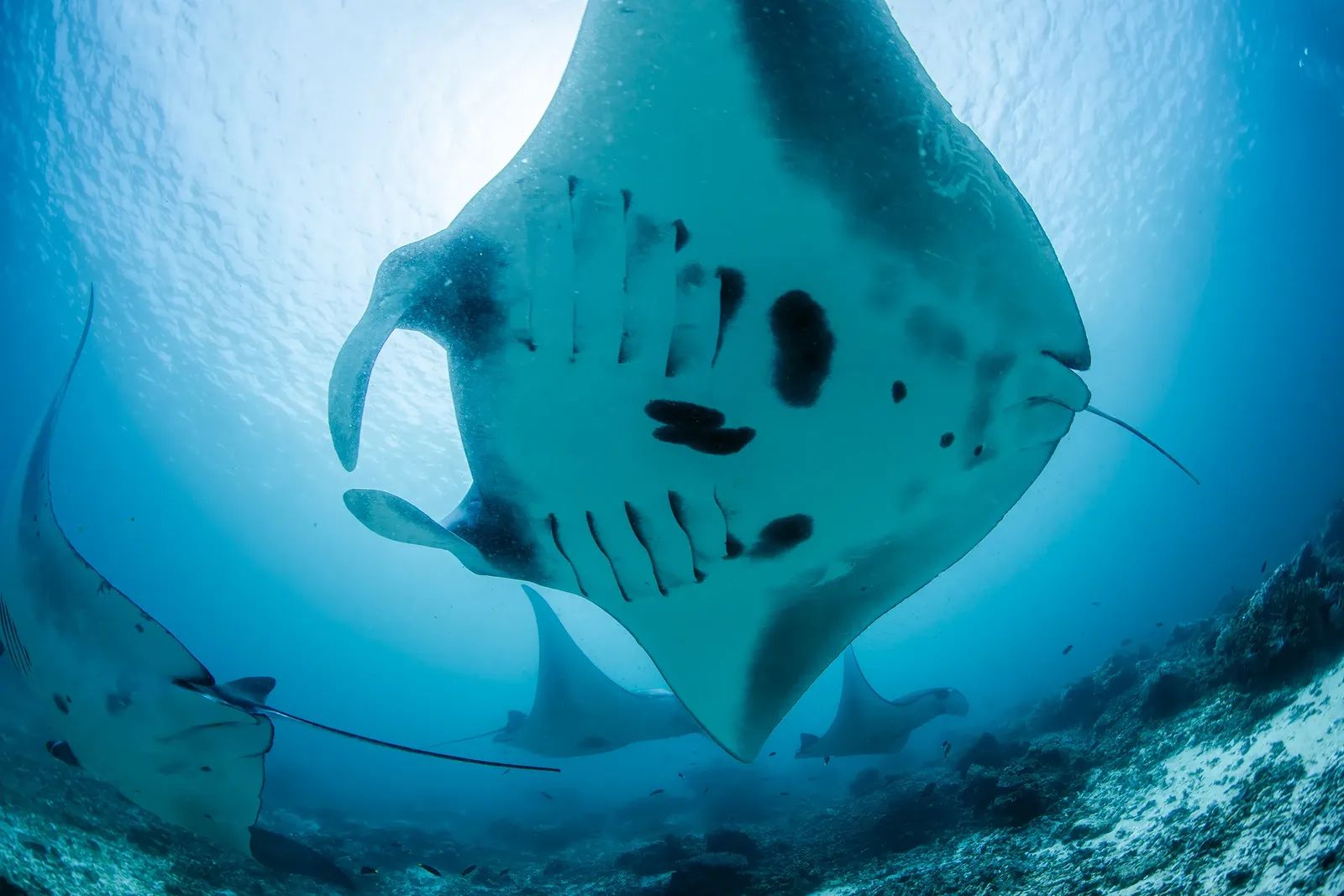
Manta ray diving Komodo National Park Indonesia liveaboard expedition underwater photography - Picture by Neptune Liveaboards
Bereit, Ihr Indonesien-Liveaboard zu buchen?
Wir sind eine auf Bali ansässige Plattform, die von Tauchern betrieben wird, die Indonesien gut kennen. Du zahlst bei einer Buchung über uns denselben Preis wie bei einer Direktbuchung — die Anbieter halten die Preisparität über alle Kanäle hinweg aufrecht.
Was du zusätzlich erhältst, ist echter Support: Koordination von Inlandsflügen über VIFA Holiday, Buchungsgeschenke beim Checkout, Hilfe bei Hotels und Verlängerungen sowie ein Team, dem es wirklich wichtig ist, dass deine Reise gut verläuft — nicht nur darum, eine Transaktion abzuschließen.
Fragen vor der Buchung? Schreib uns auf WhatsApp oder kontaktiere uns über unser Kontaktformular. Möchtest du mehr darüber erfahren, wie wir arbeiten? Lies unsere Warum mit Coralbound buchen Seite.