Indonesien hat nicht nur Kleintiere – es beherbergt mehr Arten kleiner Meereslebewesen als jeder andere Ort auf der Erde, und man findet sie bei fast jedem Tauchgang.
Dieser Leitfaden beschreibt, wo und wann man Indonesiens bestes Makroleben findet, nach welchen Arten man Ausschau halten sollte und wie die Reiseziele im Vergleich abschneiden. Er ist Teil von Coralbound's Indonesien-Liveaboard-Leitfaden; wenn Begegnungen mit großen Meerestieren Ihre Priorität sind, behandelt unser Leitfaden für große Meereslebewesen diese Seite des Archipels. Für den allgemeinen Fall, warum Indonesien als Tauchziel empfehlenswert ist, warum Taucher Indonesien wählen behandelt dies direkt.
Kleintiere tauchen bei nahezu jedem Tauchgang in ganz Indonesien auf. Pygmäen-Seepferdchen, Nacktschnecken, Anglerfische und Oktopusse sind nicht auf Spezialreiseziele beschränkt – sie gehören zur Textur des indonesischen Tauchens überall, von Raja Ampat bis Komodo. Einige Orte sind schlicht bekannter für ihre Dichte und Artenvielfalt – die Lembeh-Straße, die Ambon-Bucht, Tulamben auf Bali, die Kalabahi-Bucht in Alor – und dort konzentrieren sich engagierte Makrotaucher. Muck-Diving, bei dem man dunkle vulkanische oder schlammige Untergründe nach getarnten Tieren absucht, ist ein spezifischer Stil innerhalb dieses Bereichs, der Geduld erfordert und besonders Fotografen belohnt. Ohne Kamera kann ein Muck-Dive sich anfühlen wie stundenlang auf Sand zu starren. Mit einer Kamera ist es eine der lohnendsten Unterwasserfotografien auf dem Planeten.
Kurzübersicht
- Beste Saison: ganzjährig – es gibt immer einen guten Ort für Makroleben, unabhängig vom Monat
- Wassertemperatur: 26–30°C; einige Tauchplätze kühler durch Auftrieb
- Sichtweite: 5–25m an Muck-Tauchplätzen; 15–40m an Riff-Makro-Tauchplätzen
- Erfahrungsniveau: Open Water als Minimum; gute Auftriebskontrolle macht einen echten Unterschied
- Reisedauer: 7–10 Tage für dedizierte Makro-Reiseziele; Makroleben auf jedem Indonesien-Liveaboard jeder Länge
- Wer kann teilnehmen: Taucher; Schnorcheln an Muck-Tauchplätzen weniger ergiebig
- Kostenrahmen: $150–300/Tag Budget-Liveaboards; $300–600/Tag Mittelklasse; $600–1.000+/Tag Luxus; landbasierte Resort-Optionen in Lembeh, Ambon, Tulamben
- Schlüsselarten: Pygmäen-Seepferdchen, Nacktschnecken, Anglerfische, Rhinopias, Mimic-Oktopus, Wunderpus, Blaugeringelter Oktopus, Harlekin-Garnele, Fangschreckenkrebse
- Flughäfen: Manado (MDC) für Lembeh; Ambon (AMQ) für die Ambon-Bucht; Ngurah Rai (DPS) für Bali/Tulamben; Kupang (KOE) für Alor
- Buchungsvorlaufzeit: 2–4 Monate für die meisten Reiseziele; Lembeh Resort Hochsaison 3–6 Monate
Schnelle Antworten
Wo ist der beste Ort, um Makroleben in Indonesien zu sehen?
Die Lembeh-Straße in Nord-Sulawesi ist der globale Maßstab – die höchste Konzentration seltener und endemischer Makroarten weltweit, auf charakteristischem schwarzen Vulkansand. Die Ambon-Bucht ist ein starker zweiter Platz für Seltenheit und Endemismus. Aber Makroleben findet sich überall in Indonesien; die Frage ist, wonach man sucht. Riffbasiertes Makrotauchen in Raja Ampat oder Halmahera bringt Pygmäen-Seepferdchen, Nacktschnecken und Oktopusse an unberührten Korallen hervor. Lembeh und Ambon sind die Ziele der Muck-Spezialisten.
Brauche ich eine Kamera, um Kleintiere in Indonesien zu genießen?
Nein – und das sollte klar gesagt werden. Indonesiens Makroleben ist unabhängig davon, ob man es fotografiert oder nicht, wirklich außergewöhnlich zu beobachten. Guides an Spezialreisezielen wissen genau, wo einzelne Tiere leben, und bringen einen vor Dinge, die man alleine niemals finden würde. Einem Mimic-Oktopus beim Gestaltwandel zuzusehen, einen winzigen Anglerfisch reglos auf einem Schwamm zu entdecken oder eine haarige Nacktschnecke in leuchtendem Orange zu sehen – all das erfordert keine Kamera, um bemerkenswert zu sein. Die Makrofotografie ist eine eigene Disziplin und äußerst lohnend; aber das Beobachten ist der Ausgangspunkt.
Können Anfänger in Indonesien Kleintiere sehen?
Ja – das ist eine der großen Stärken Indonesiens. Die Guides wissen, wo die Tiere sind, die Tauchplätze sind flach und die Artenvielfalt bedeutet, dass bei praktisch jedem Tauchgang etwas Interessantes auftaucht, unabhängig vom Erfahrungsstand. Bali und Raja Ampat sind die zugänglichsten Ausgangspunkte. Lembeh und Ambon besucht man besser nach etwas Taucherfahrung, nicht wegen der technischen Schwierigkeit, sondern weil die geduldigsten, ruhigsten Taucher am meisten aus den speziellen Muck-Tauchplätzen herausholen.
Wann ist die beste Zeit, um Makroleben in Indonesien zu sehen?
Ganzjährig – Indonesien ist groß genug, dass es immer ein produktives Reiseziel gibt, unabhängig von der Jahreszeit. April–Oktober ist optimal für die Lembeh Strait und die meisten östlichen Ziele, mit ruhigeren Meeren und Spitzen-Sichtweiten. Die Ambon-Bucht ist ganzjährig produktiv. Bali und Raja Ampat liefern Makroleben in jedem Monat. Unser Indonesien-Wetterführer behandelt saisonale Bedingungen in allen Reisezielen.
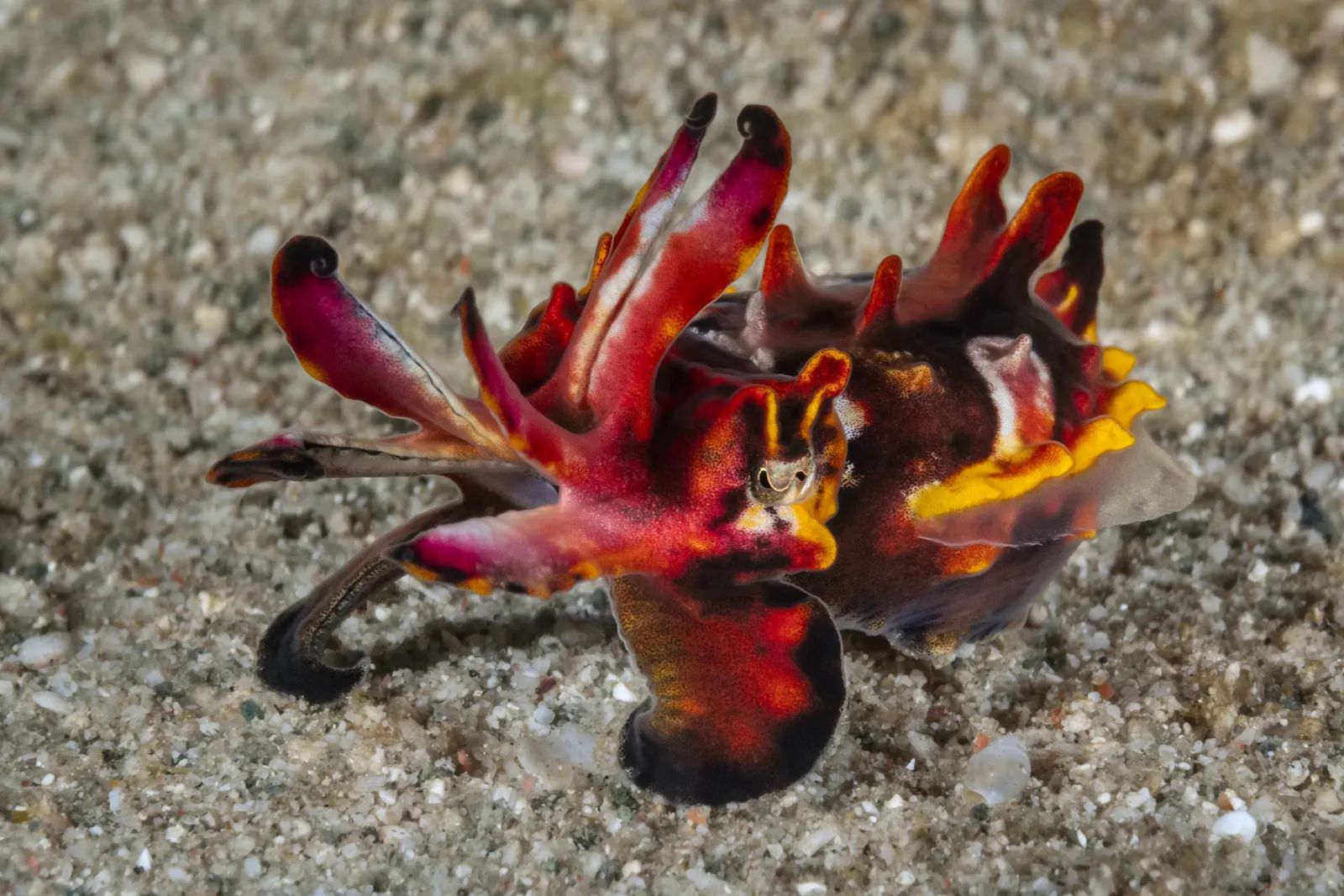
Flamboyant cuttlefish Metasepia pfefferi displaying warning colors Indonesia macro diving liveaboard photography - Picture by Majik Liveaboard
Wo man Makroleben in Indonesien findet
Lembeh Strait
Lembeh ist die Muck-Diving-Hauptstadt der Welt – eine schmale Meerenge zwischen dem nord-sulawesischen Festland und der Insel Lembeh, mit schwarzen vulkanischen Sandböden, die eine außergewöhnliche Dichte an seltenen und endemischen Arten¹ unterstützen. Mimik-Oktopusse, Wonderpusse, Rhinopias, Haarige Anglerfische, Flamboyante Tintenfische und Dutzende von Nacktschneckenarten werden regelmäßig dokumentiert. Lokale Guides, die seit Jahrzehnten die gleichen Tauchplätze betreuen, machen den Unterschied zwischen dem Finden und dem gänzlichen Verpassen von Tieren.
Lembeh ist hauptsächlich ein landbasiertes Resort-Ziel. Viele Liveaboards, die Nord-Sulawesi-Routen fahren, starten oder enden in Bitung – dem Hafen fünfzehn Minuten von Lembeh entfernt – und beinhalten ein bis zwei Tage Makro-Tauchen dort als Teil der Route. Wenn Sie mehr als zwei Tage möchten, ist ein dedizierter Lembeh-Resort-Aufenthalt der richtige Weg.
Ambon-Bucht und Laha-Bucht
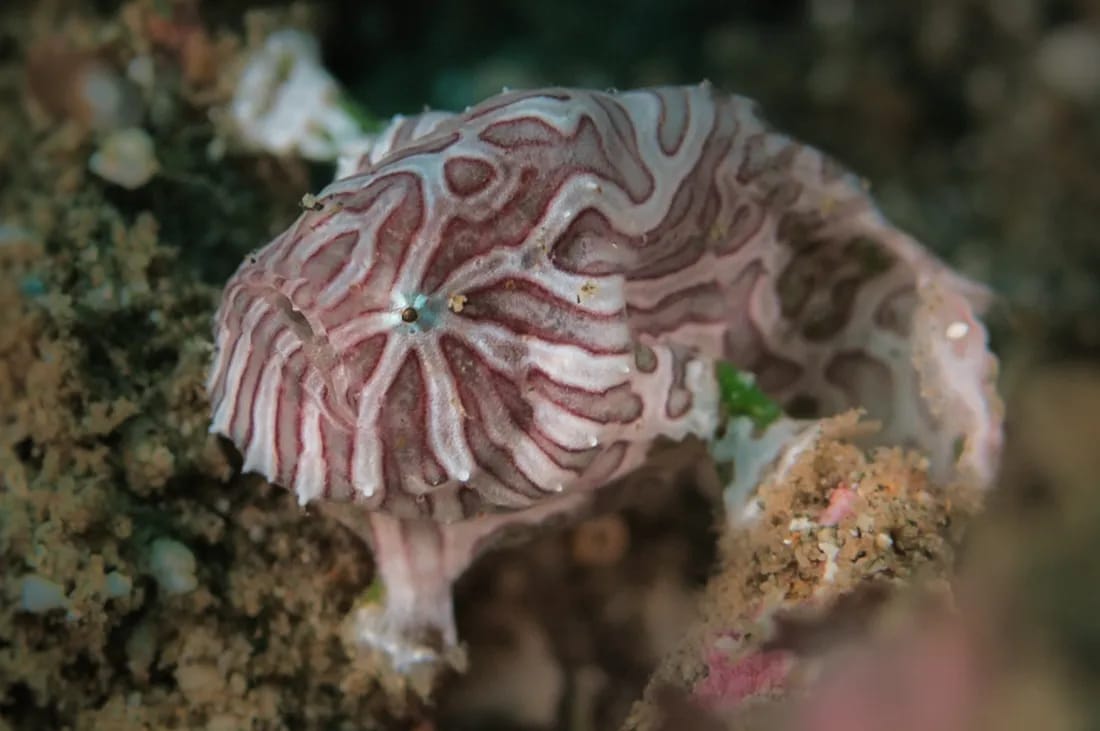
Die Ambon-Bucht auf den Molukken ist Lembehs engster Rivale für seltene Artenbegegnungen. Die vulkanischen Substrate beherbergen endemische Arten, die nirgendwo sonst vorkommen, darunter der psychedelische Froschfisch (Histiophryne psychedelica)² – der hier erstmals dokumentiert wurde – und eine bemerkenswerte Vielfalt an Kopffüßern. Die Bucht von Laha, neben dem Flughafen von Ambon, ist besonders bekannt für Rhinopias-Sichtungen.
Ambon ist hauptsächlich resortbasiert, aber Liveaboards in der Banda-See beinhalten häufig ein oder zwei Tage in der Bucht von Laha als Teil ihrer Reiseroute. Wenn die Banda-See auf Ihrer Liste steht und Makroleben für Sie wichtig ist, prüfen Sie, ob die Bucht von Laha enthalten ist.
Bali — Tulamben und Amed
Tulamben ist Balis Makro-Tauch-Hub, verankert durch das Wrack der USAT Liberty – 1942 torpediert, in Tulamben gestrandet und durch den Ausbruch des Mount Agung im Jahr 1963 ins Wasser geschoben³. Das Wrack beherbergt heute Geisterpfeifenfische, Froschfische und eine reiche Vielfalt an Nacktschnecken und Krebstieren neben seinen berühmten Fischschwärmen. Amed, eine kurze Fahrt nach Osten, bietet Tauchgänge an vulkanischen Hängen mit ähnlichen Arten. Beide sind vom Ufer aus zugänglich und ideal für neuere Taucher, die Makroerfahrung sammeln. Für die vollständige Tauchplanung für Bali siehe unseren Bali-Guide.
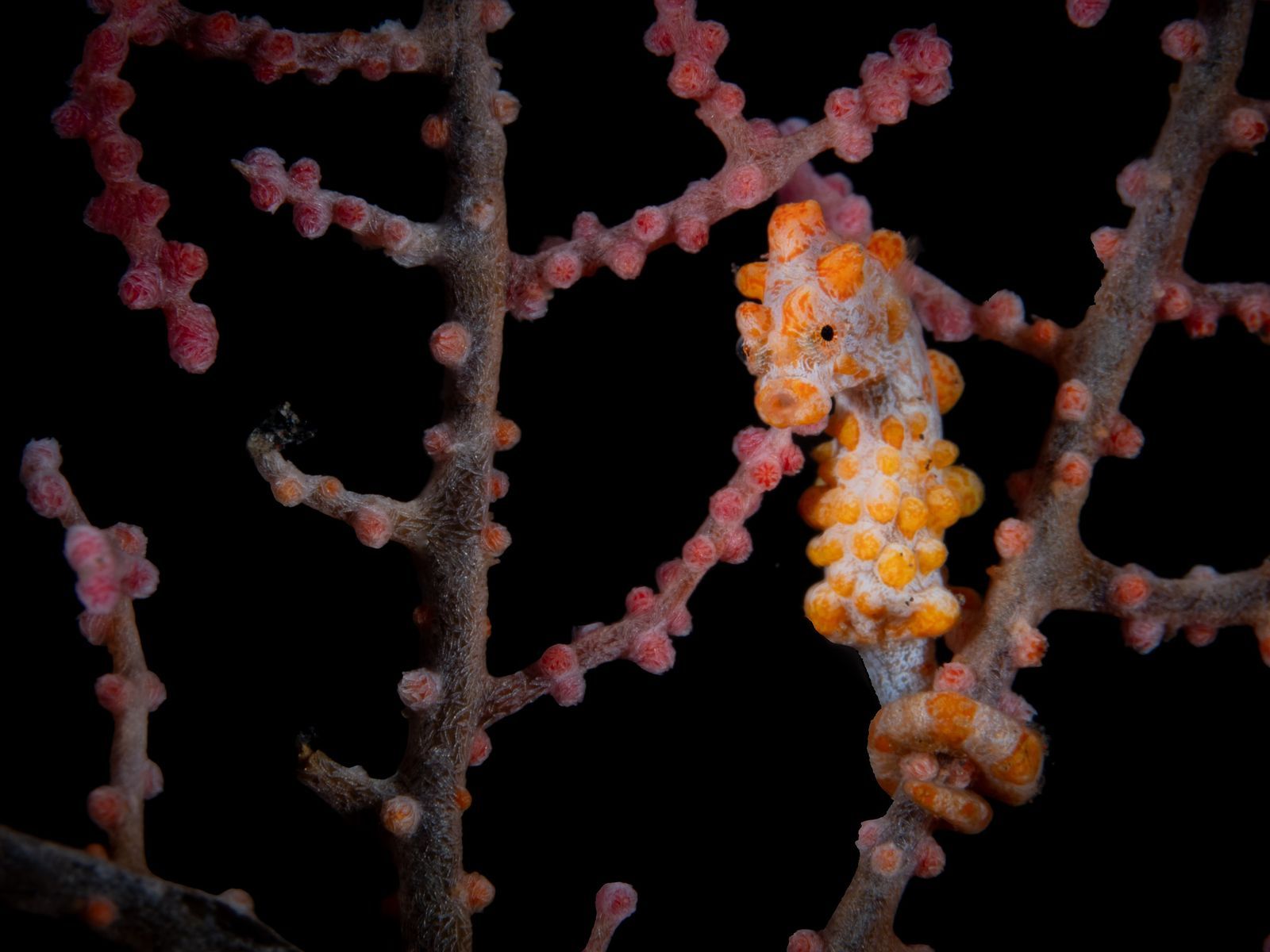
Rare Yellow Pigmy Seahorse sitting in a Coral Sea Fan - Liveaboard Indonesia - Picture by Leon Lemke
Alor — Kalabahi-Bucht
Alor ist hauptsächlich für Hammerhai-Begegnungen und Tauchgänge mit starken Strömungen bekannt, aber die Kalabahi-Bucht – die geschützte Bucht neben der Hauptstadt – ist ein produktiver Makro-Standort, den die meisten Alor-Liveaboards einschließen. Rhinopias, Froschfische und eine Vielfalt an Nacktschnecken werden durchweg gemeldet. Die Kombination aus pelagischem Tauchen am Morgen und Makrotauchen in der Bucht am Nachmittag macht Alor zu einem der besten Allround-Reiseziele für Liveaboards in Indonesien. Für vollständige Planungsdetails siehe unseren Alor-Guide.
Triton-Bucht
Die Triton-Bucht in Kaimana ist außergewöhnlich für Makroleben auf Weichkorallengärten – das tanninreiche Wasser der Bucht schafft Bedingungen, die ein außergewöhnliches Weichkorallenwachstum begünstigen, und damit eine dichte Gemeinschaft von Krabbeltieren. Gehender Haie (Hemiscyllium henryi), Teppichhaie und endemische Arten erscheinen regelmäßig neben den berühmten Walhai-Begegnungen der Bucht. Für vollständige Planungsdetails siehe unseren Triton-Bucht-Guide.
Raja Ampat und Halmahera
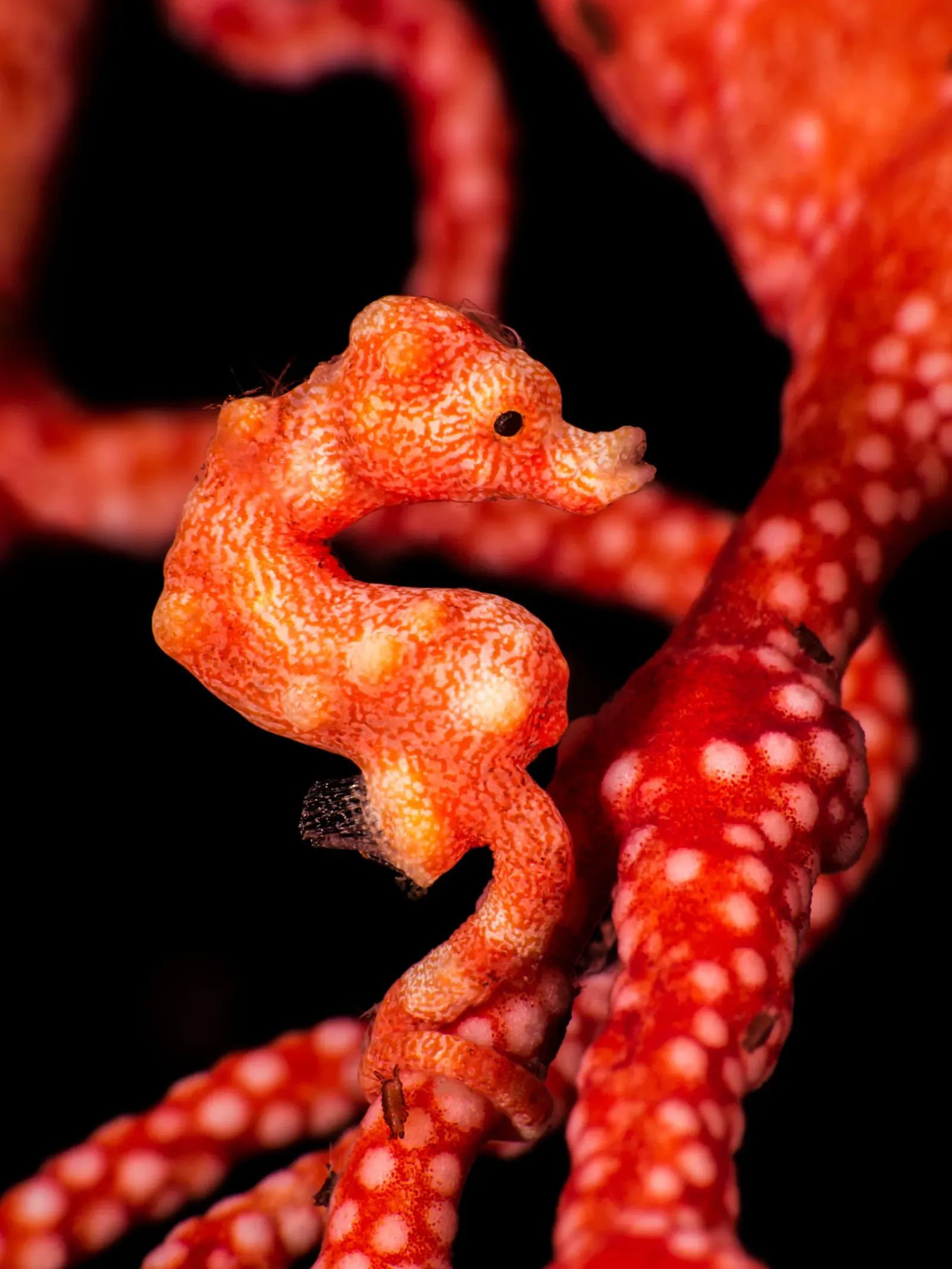
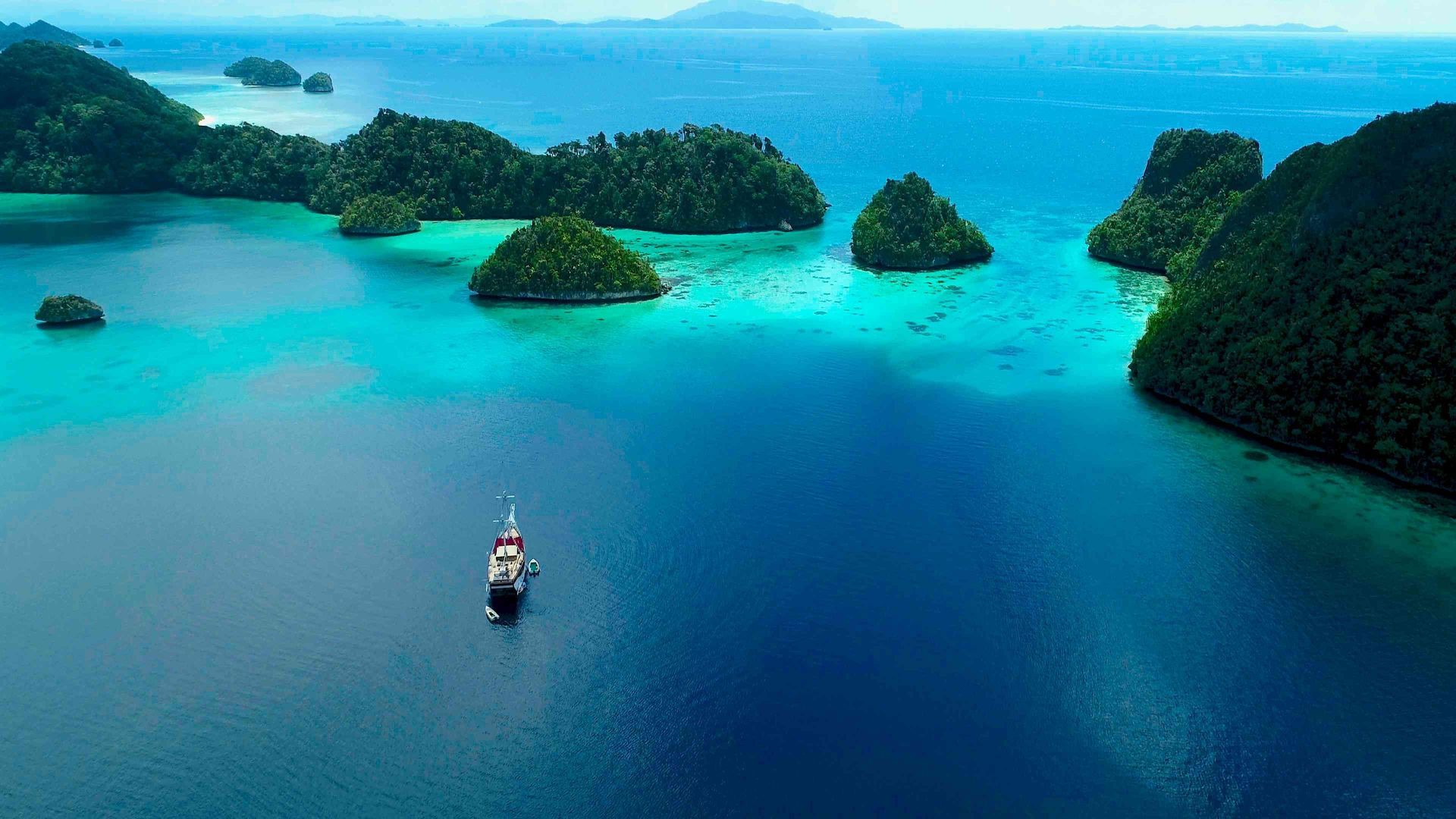
Makrotauchen in Raja Ampat ist riffbasiert und nicht schlammbasiert – Zwergseepferdchen auf Seefächer, Nacktschnecken auf Weichkorallen, Anglerfische auf Schwämmen, Laufhaie (Hemiscyllium freycineti) in den flachen Gewässern. Acht endemische Zwergseepferdchenarten sind in indonesischen Gewässern dokumentiert und die meisten davon kommen in Raja Ampat vor⁴. Halmahera bietet ähnlich reiches Makrotauchen an Riffen mit einigen der artenreichsten Riffe im Indopazifik, einschließlich des endemischen Laufhais Hemiscyllium halmahera. Beide Ziele lassen sich gut mit Begegnungen mit großen Meerestieren bei demselben Tauchgang kombinieren.
Makro-Leben überall sonst
Die Banda-See produziert Nacktschnecken und Kopffüßer bei jedem Stopp. Die Derawan-Inseln haben Wunderpus und Mimik-Oktopusse an sandigen Hängen. Cenderawasih Bay hat über 35 endemische Fischarten. Der Punkt ist, dass Indonesiens Krabbeltier-Dichte nicht auf spezielle Schlamm-Destinationen beschränkt ist – sie folgt der Biodiversität des Korallendreiecks⁸ über den gesamten Archipel.
Was Sie finden werden
Zwergseepferdchen
Indonesien beherbergt acht endemische Zwergseepferdchenarten, die nirgendwo sonst auf der Erde vorkommen⁴. Am häufigsten anzutreffen ist das Zwergseepferdchen von Bargibant (Hippocampus bargibanti) – 2,4 cm groß, lebt ausschließlich auf Seefächern der Gattung Muricella, das Farbe und Textur seines Wirts so präzise nachahmt, dass ein lokaler Führer praktisch unerlässlich ist. Das Zwergseepferdchen von Denise ist mit 1,5 cm noch kleiner und lebt auf einer größeren Vielfalt von Seefächern und Weichkorallen. Alle Arten erfordern geduldige Beobachtung und einen Führer, der die spezifische Koralle kennt, an der ein Exemplar gesichtet wurde.
Nacktschnecken
Indonesien hat über 400 dokumentierte Nacktschneckenarten⁵ – die höchste Vielfalt der Welt. Sie reichen von 5-mm-Exemplaren, die Vergrößerung erfordern, bis zu 10-cm-Chromodoriden mit leuchtend blauer, gelber und violetter Färbung, die aus zwei Metern Entfernung sichtbar sind. Lembeh und Ambon produzieren die höchsten Artenzahlen pro Tauchgang, aber jedes Ziel in Indonesien hat Nacktschnecken – die Dichte und Seltenheit der Arten variiert eher als ihre Anwesenheit.
Anglerfische
Zwölf Froschfischarten in indonesischen Gewässern, vom behaarten Froschfisch (Antennarius striatus) der bewegungslos zwischen Algen auf schwarzem Sand sitzt, bis zum psychedelischen Froschfisch (Histiophryne psychedelica) der nur in Ambon vorkommt². Froschfische gehören zu den am meisten gesuchten Motiven für Unterwasserfotografen – sie bewegen sich nicht, sind spektakulär getarnt und wenn sie sich doch bewegen, nutzen sie einen Jetantrieb, den niemand erwartet. Bemalte, warzige, riesige und Clown-Froschfische sind im gesamten Archipel zu finden.
Oktopusse
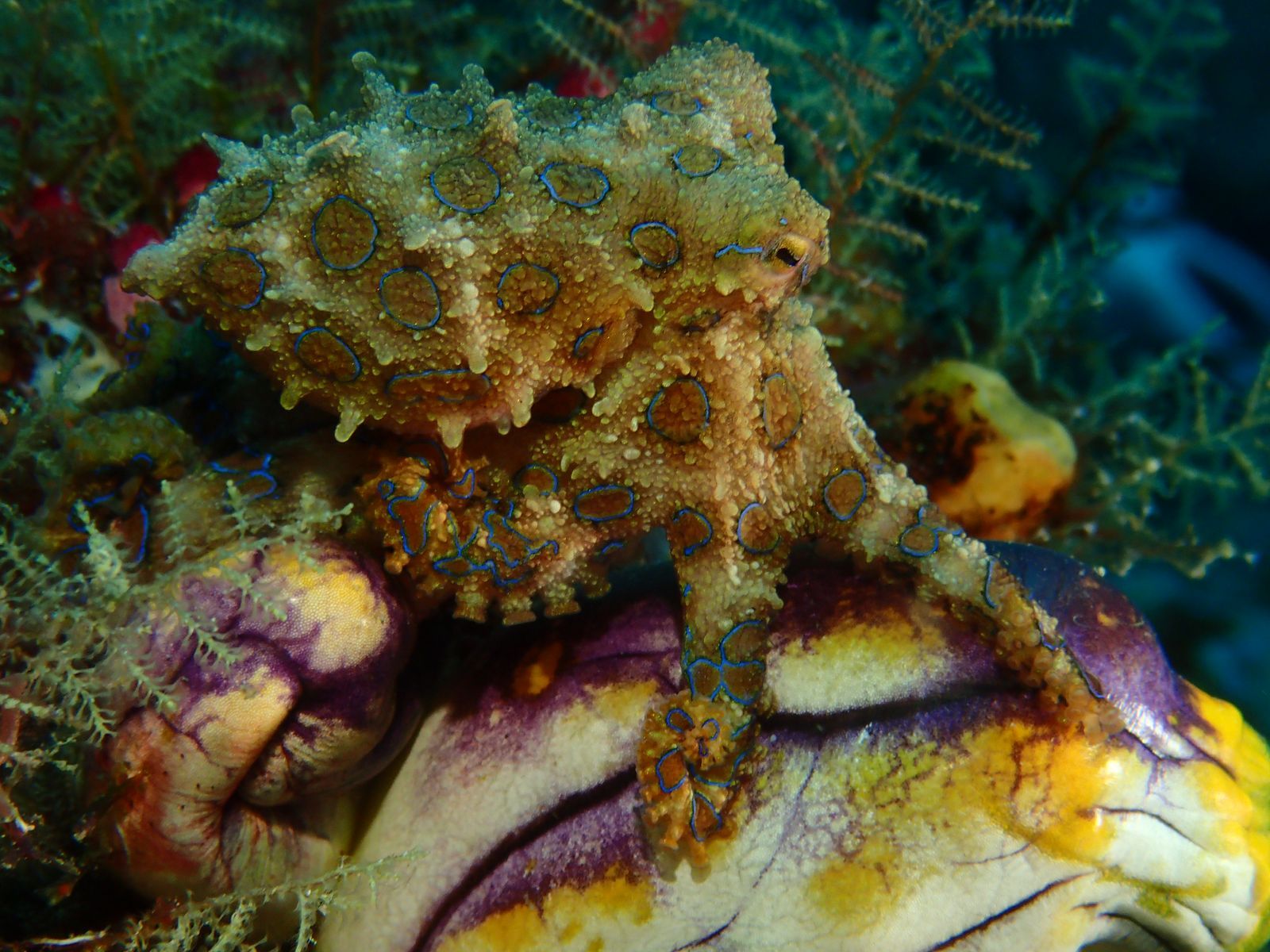
Indonesiens vier charakteristische Oktopusarten kommen alle in der Region Lembeh und Ambon vor. Der Mimik-Oktopus (Thaumoctopus mimicus) imitiert Plattfische, Rotfeuerfische und Seeschlangen durch Körperform und Bewegung – erstmals dokumentiert in indonesischen Gewässern im Jahr 1998⁶. Der Wunderpus (Wunderpus photogenicus) ist durch sein einheitliches weiß-gestreiftes Muster und seine ungewöhnliche Tagesaktivität gekennzeichnet. Der Kokosnuss-Oktopus (Amphioctopus marginatus) trägt Kokosnussschalen als mobilen Unterschlupf – einer der wenigen dokumentierten Fälle von Werkzeuggebrauch bei wirbellosen Tieren⁶. Blauring-Oktopusse (Hapalochlaena Arten) kommen in flachen Riffgebieten in ganz Indonesien vor; sie sind extrem giftig – nur beobachten, niemals anfassen.
Blue-ringed octopus Hapalochlaena species Raja Ampat Indonesia macro diving liveaboard venomous marine life underwater photography - Picture by Tina Bogdanova
Rhinopias
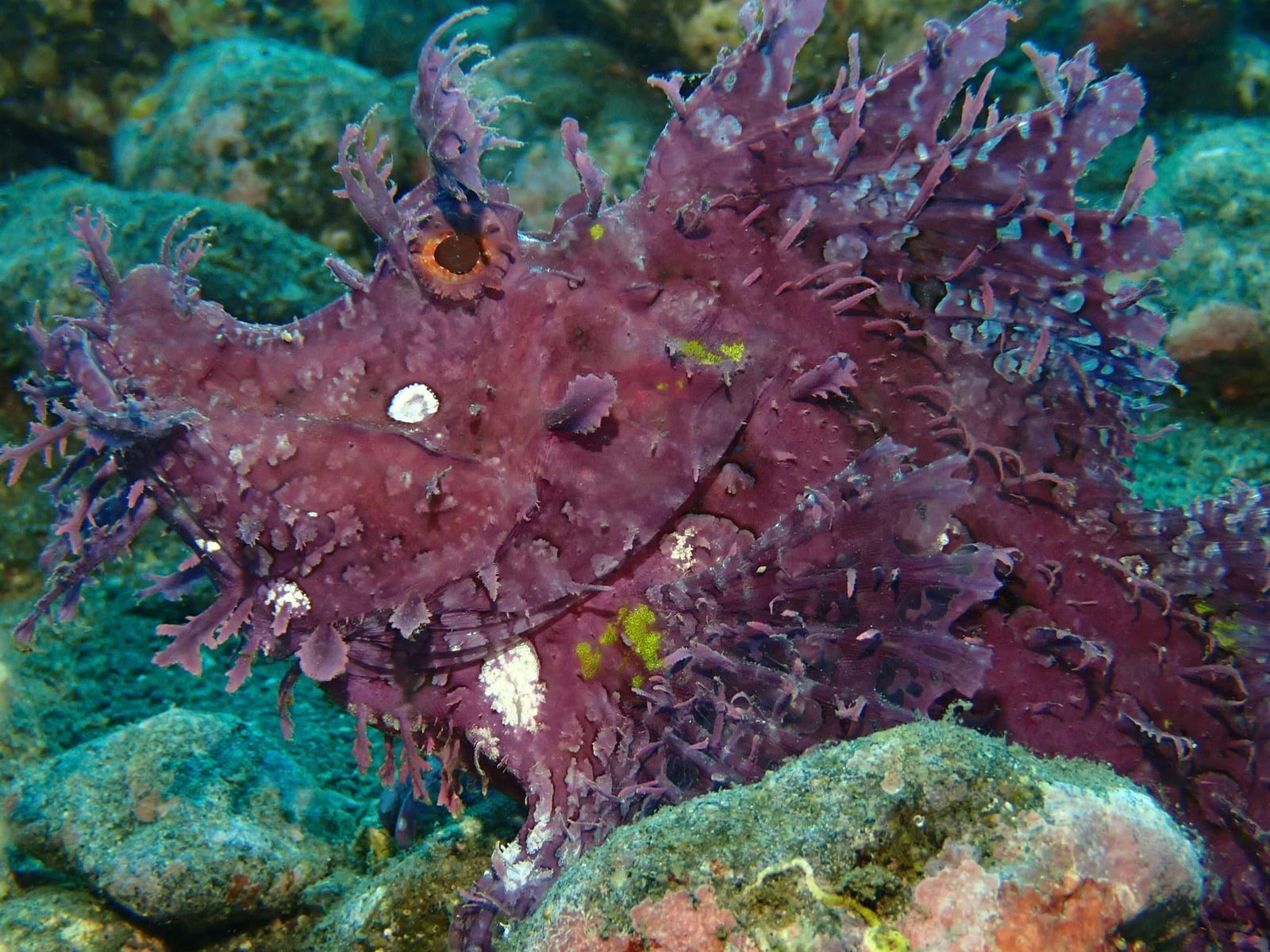
Rhinopias-Skorpionfische gelten als der heilige Gral des indonesischen Makro-Tauchens. Der Blatt-Skorpionfisch (Rhinopias frondosa) und der Eschmeyers Skorpionfisch (Rhinopias eschmeyeri) sind die beiden Arten, die in indonesischen Gewässern am häufigsten dokumentiert wurden⁷ und hauptsächlich in Lembeh, Ambon und Alor vorkommen. Begegnungen sind wirklich selten – Guides verfolgen aktiv einzelne Tiere zwischen den Tauchgängen. Wenn ein Rhinopias gefunden wird, hält er normalerweise lange genug still, um ausgiebige Fotografie zu ermöglichen.
Weitere wissenswerte Arten
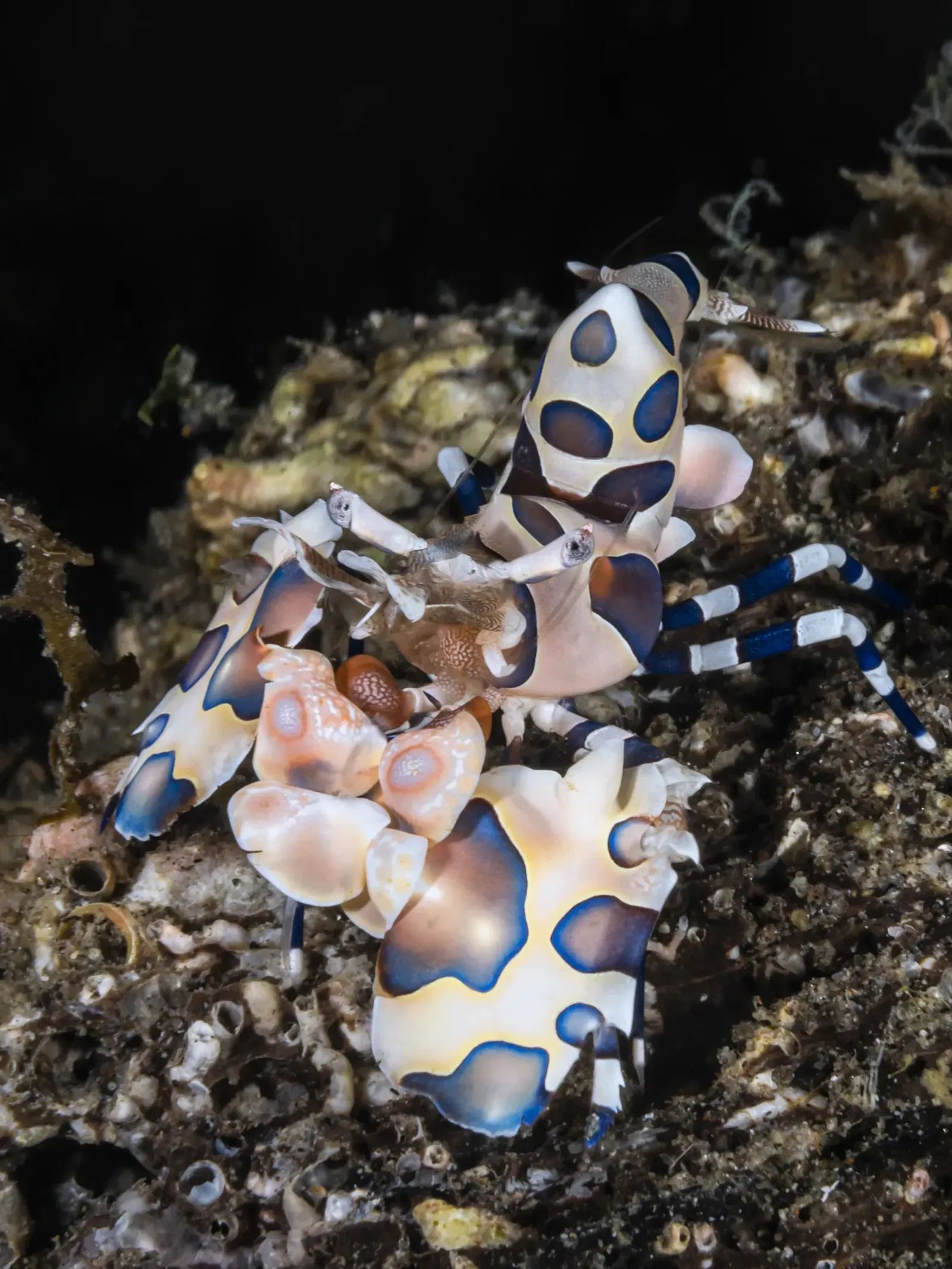
Harlekin-Garnelen (Hymenocera picta) ernähren sich ausschließlich von Seesternen und werden normalerweise paarweise angetroffen – klein, spektakulär gemustert und sehr fotogen. Fangschreckenkrebse, einschließlich des Pfauen-Fangschreckenkrebses (Odontodactylus scyllarus), leben in Höhlen in sandigen Gebieten in ganz Indonesien. Flamboyante Cuttlefische (Metasepia pfefferi) in Lembeh und Ambon zeigen Warnfarben, während sie über das Substrat laufen. Geisterpfeifenfische verschiedener Arten kommen in Tulamben und im gesamten Archipel vor, wo immer Weichkorallen und Hydroiden Deckung bieten. Und Mandarinfische – einer der meistfotografierten Fische Indonesiens – führen ihren Paarungstanz in der Dämmerung an bestimmten Geröll- und Weichkorallenstellen in Raja Ampat und Nord-Sulawesi auf.
Harlequin shrimp Hymenocera picta Indonesia macro diving liveaboard underwater photography rare species - Picture by Majik Liveaboard
Fotografiehinweise
Ein Makroobjektiv (60–105 mm), zwei Blitze und eine Fokusleuchte sind die Kernausrüstung für die Makrofotografie in Indonesien. Eine gute Tarierungskontrolle ist wichtiger als jede Ausrüstungswahl – ein Taucher, der den Untergrund aufwühlt oder instabil schwebt, wird mehr Tiere verpassen als einer, der mit einer Einsteigerkamera fotografiert, aber ruhig positioniert bleibt. Viele Reiseziele bieten Ausrüstungsverleih an; Bali und Lembeh sind die zuverlässigsten Anlaufstellen. Unser Packleitfaden für Liveaboards erklärt, was Sie mitbringen sollten.
Denise's pygmy seahorse Hippocampus denise camouflaged on sea fan Indonesia macro diving liveaboard photography - Picture by Majik Liveaboard
Erwartungen managen
Tauchen, um Makroleben an Spezialzielen – Lembeh, Ambon, Kalabahi – zu sehen, ist wirklich produktiv. Was es nicht ist, ist schnell oder actionorientiert. Ein erfolgreicher Tauchgang kann fünfzig Meter Untergrund in fünfundvierzig Minuten abdecken. Die Belohnung liegt im Finden und Beobachten. Taucher, die sich auf diese Art des Tauchens einlassen, finden sie oft tief fesselnd. Wer Strömung, Sicht und Riffische bevorzugt, ist an den anderen Tauchplätzen des Reiseziels besser aufgehoben.
Lokale Guides sind an Spezial-Makrozielen nicht optional – sie sind der Unterschied zwischen dem Sehen von Tieren und dem Nichtsehen. Derselbe Guide, der jeden Tag denselben Tauchplatz betaucht, entwickelt über Jahre hinweg ein intimes Wissen darüber, wo einzelne Tiere leben, das keine Einweisung wiedergeben kann. Buchen Sie Betreiber mit erfahrenen lokalen Guides anstelle von allgemeinen Tauchleitern.
Nachttauchen in Lembeh und Ambon offenbart eine völlig andere Tierwelt – Oktopusse, die aktiv jagen, Mandarinfische, die bei Einbruch der Dämmerung an bestimmten Stellen ihren Paarungstanz aufführen, und Krebstiere, die den Tag über vergraben sind. Wenn Sie ein Spezialziel besuchen, sind Nachttauchgänge lohnenswert.
Psychedelic frogfish Histiophryne psychedelica rare species Indonesia macro diving liveaboard Ambon underwater photography - Picture by Dewi Nusantara
Häufig gestellte Fragen
Ist Makrotauchen nur etwas für Unterwasserfotografen?
Nein. Makroleben ist faszinierend zu beobachten, unabhängig davon, ob man es fotografiert. Einen Mimik-Oktopus beim Formenwechsel zu beobachten, ein Zwergseepferdchen auf einem Fächerkorallen zu finden oder einen Anglerfisch zwanzig Minuten lang völlig regungslos sitzen zu sehen, ist an sich schon lohnend. Wenn Sie Lembeh speziell ohne Kamera besuchen, konzentrieren Sie sich auf die Beobachtung und nicht auf die Fotografie und passen Sie Ihre Erwartungen an den Muck-Diving-Stil entsprechend an.
Benötige ich eine spezielle Zertifizierung, um Makroleben in Indonesien zu sehen?
Nein. Die meisten Makro-Spots in Indonesien befinden sich in Freizeittiefen von fünf bis zwanzig Metern. Advanced Open Water ist nützlich für Tauchplätze, an denen tiefere Arten gefunden werden, aber die Mehrheit ist für Open Water Taucher zugänglich. Peak Performance Buoyancy ist die praktisch nützlichste Spezialisierung – Stillstand unter Wasser ist die Fähigkeit, die Ergebnisse liefert. Unser Anfänger-Liveaboard-Guide behandelt die Zertifizierungsanforderungen für indonesische Reiseziele.
Wie lange sollte ich an einem spezialisierten Makro-Reiseziel verbringen?
Mindestens fünf bis sieben Tage in Lembeh oder Ambon ermöglichen es, sich mit den lokalen Guides vertraut zu machen, produktive Tauchplätze erneut zu besuchen und Arten zu finden, die mehrere Tauchgänge benötigen, um sie anzutreffen. Als Teil einer Liveaboard-Route bieten ein bis zwei Tage in Bitung (Lembeh) oder Laha Bay (Ambon) eine solide Einführung, ohne dass ein separater Hotelaufenthalt erforderlich ist.
Kann ich auf derselben Reise Makroleben mit Begegnungen mit großen Meerestieren kombinieren?
Ja – das ist eine der besonderen Stärken Indonesiens. Raja Ampat liefert beides bei demselben Tauchgang. Liveaboards in Nord-Sulawesi kombinieren Lembeh Makro-Tauchen mit Bunaken Riffhaien und Meeresschildkröten. Alor kombiniert Kalabahi Bay Makro-Tauchen mit Hammerhai-Begegnungen in der Pantar-Straße. Die Banda-See kombiniert Laha Bay Makro-Tauchen mit Hammerhaien, Mantarochen und Pelagik. Unser Liveaboard-Erweiterungs-Guide behandelt die Kombination von Reisezielen im Detail.
Ist Nitrox auf Liveaboards in Indonesien verfügbar?
Die Verfügbarkeit variiert je nach Schiff. Auf Luxus- und Mittelklasse-Tauchbooten ist Nitrox oft inklusive oder gegen Aufpreis erhältlich. Selbst an flachen Makro-Tauchplätzen ist Nitrox, wo verfügbar, lohnenswert – ein höherer Sauerstoffgehalt reduziert die Stickstoffbelastung, was Ihre Nullzeitgrenzen verlängert und unabhängig von der Tiefe besser für Ihren Körper ist. Unser Liveaboard-Kategorien-Guide behandelt, was jede Schiffsklasse typischerweise beinhaltet.
Was ist der Unterschied zwischen Lembeh und Raja Ampat für Makroleben?
Lembeh ist Muck Diving – schwarzer Vulkan-Sand, schlammige Substrate und die weltweit höchste Konzentration an seltenen und endemischen Arten in einem relativ begrenzten Gebiet. Die Tiere sind in außergewöhnlicher Zahl vorhanden; die Umgebung ist nicht konventionell schön. Raja Ampat ist Riff-basiertes Makro-Tauchen – Pygmäen-Seepferdchen auf Seefächern, Nacktschnecken auf Weichkorallen, Anglerfische auf Schwämmen, vor dem Hintergrund eines der gesündesten Riffe der Welt. Beide bieten außergewöhnliches Makroleben, aber das Erlebnis ist völlig anders. Lembeh ist das Spezialziel für Fotografen, die seltene Arten jagen; Raja Ampat ist, wo Makroleben natürlich neben allem anderen stattfindet, was ein großartiges Tauchziel zu bieten hat.
Benötige ich eine Tauchversicherung für Liveaboard-Tauchgänge in Indonesien?
Ja. Eine Tauchversicherung mit medizinischer Evakuierungsdeckung ist nach indonesischem Recht obligatorisch und für abgelegene Ziele nicht verhandelbar. Standardpolicen schließen die Evakuierung aus abgelegenen Gebieten häufig aus – vergewissern Sie sich, dass Ihre Police Indonesien ausdrücklich abdeckt. Unser Packratgeber für Liveaboards behandelt Versicherung und Vorbereitung im Detail.
Purple rhinopias frondosa rare scorpionfish Alor Indonesia macro diving liveaboard underwater photography holy grail species - Picture by Tina Bogdanova
Planen Sie Ihre Reise
Coralbound bucht Liveaboards in allen indonesischen Destinationen zum gleichen Preis wie bei direkter Buchung, einschließlich der Option auf eine kostenlose Hotelnacht. Wir wissen, wo die Tiere sind – welche Routen in Nordsulawesi Lembeh einschließen, welche Routen im Banda-Meer Laha Bay anlaufen und welche Alor-Liveaboards Zeit in Kalabahi verbringen. Kontaktieren Sie uns über WhatsApp oder über das Kontaktformular – oder lesen Sie mehr darüber, wie wir arbeiten, bevor Sie sich melden.