Your first liveaboard should be memorable for the right reasons. Here's what to know before you go.
Indonesia is one of the world's great liveaboard destinations — and it's more accessible to newer divers than most people assume. Operators are experienced at running mixed-ability boats, they assess every diver on day one, and they adapt dive sites and group assignments accordingly. If the operator has accepted your booking, they're confident they can give you a great experience. This guide covers what to expect, how to prepare, and how to choose the right trip. For the full picture on destinations and planning, start with our complete Indonesia liveaboard guide.
The most common mistake beginner divers make is either ruling Indonesia out entirely — assuming it's only for advanced divers — or booking without thinking about preparation. Both are avoidable with the right information.
Quick Facts
- Best season: April–November for most destinations; October–April for Raja Ampat
- Experience level: Open Water certification minimum; logged dive requirements vary by operator and trip
- Trip length: 7–10 days typical for first liveaboards; shorter Komodo routes available
- Dives per day: 3–4; all optional — you can sit out any dive without pressure
- Who can join: beginners welcome on most routes; lifestyle-focused boats particularly well suited
- Cost range: $300–$600+/day for mid-range and above — the right starting point for a first trip
- Key marine life: mantas, whale sharks, reef sharks, turtles, pygmy seahorses, nudibranchs
- Gateway airports: Bali (DPS), Sorong (SOQ), Labuan Bajo (LBJ) depending on destination
- Booking lead time: 6–12 months for peak season; talk to us if you're unsure which trip fits
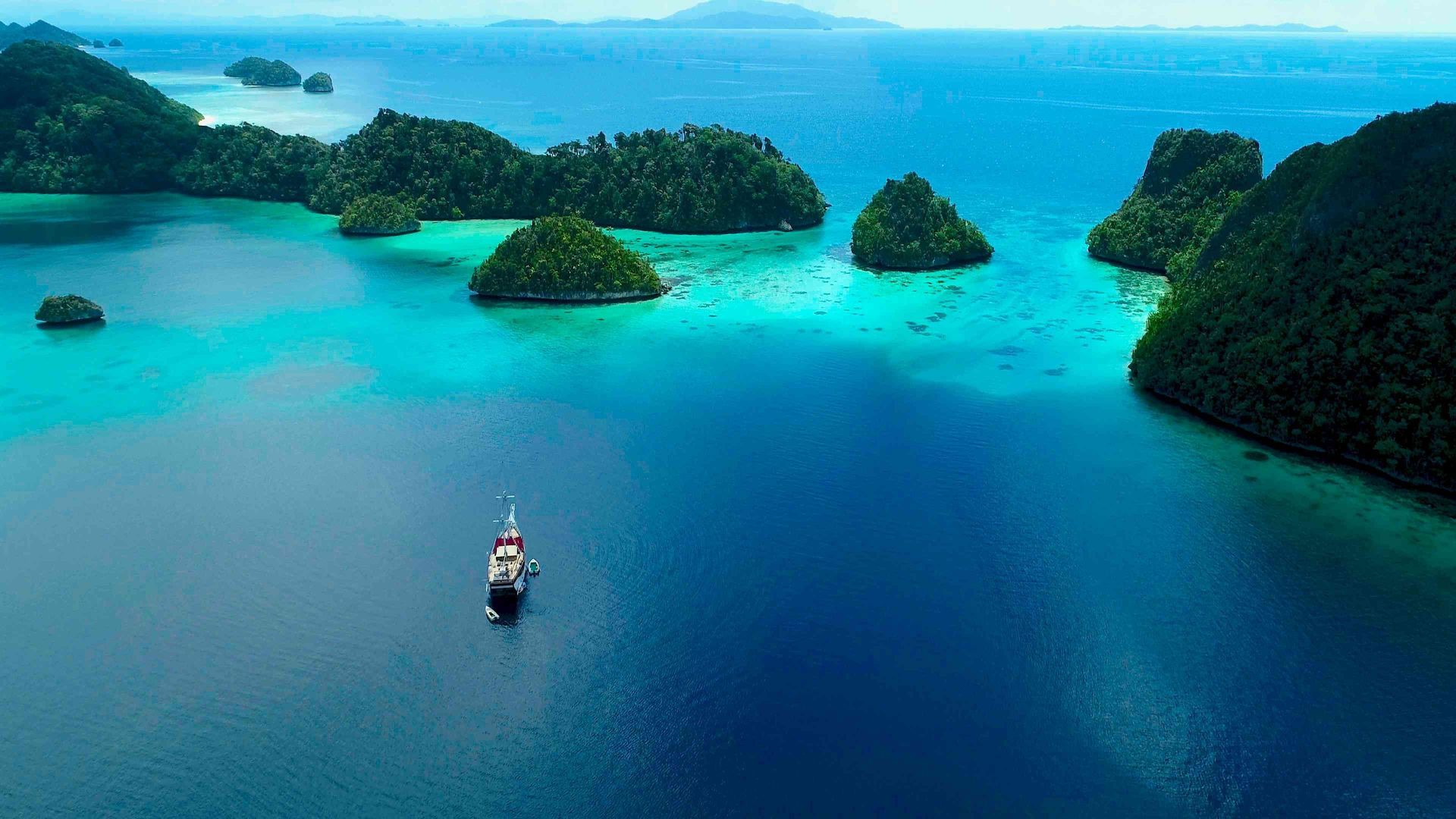
Panoramic sunrise view over famous Pianemo lagoon with mushroom-shaped limestone islands and traditional boats in Raja Ampat - Picture by Calico Jack Cruises
Quick Answers
Do I need to be an advanced diver to join an Indonesia liveaboard?
No. Open Water certification is the standard minimum, but what's required varies considerably by boat. Some boats are primarily diving-focused and prefer guests with more experience; others welcome complete beginners, non-divers, and even guests who want to do their Open Water course or try dives onboard for the first time. The right boat exists for every experience level — it's just about matching the two correctly. If you're unsure where you fit, talk to us before booking.
What happens if I struggle with a dive site?
Operators handle this routinely. Every liveaboard begins with a check dive — a shallow, sheltered assessment dive where guides evaluate your buoyancy, comfort, and equipment handling. From there they assign groups, adjust depth profiles, and select sites appropriate for everyone aboard. If conditions at a site aren't right for less experienced divers, operators switch sites or adjust the order. This is standard practice, not an exception.
Do I need to have dived recently before joining a liveaboard?
Yes, although the threshold varies by operator. If you haven't dived in 12 months or more, most operators will require a refresher before or at the start of the trip. We strongly recommend two to three warm-up dives in Bali before any liveaboard — it settles nerves, refreshes muscle memory, and means you get more from your first proper dive day offshore.
Which destination is best for beginner divers?
Any destination works for beginners with the right operator and boat. Operators know their sites and tailor the programme to the group aboard — if they've accepted your booking, they're confident they can deliver a great experience. The destination matters less than the operator's approach and the boat's culture. Raja Ampat, Komodo, and Cenderawasih Bay all have routes that work well for newer divers. If you're not sure which trip suits your experience level, we're happy to help narrow it down.
Is nitrox recommended for beginner divers?
Yes — nitrox is worth having for any liveaboard diver. It reduces decompression stress on the body and extends your no-decompression limits, which matters most on deeper dives and when you're doing three to four dives a day. The benefit is real even if you're diving conservatively. Most operators offer nitrox certification onboard if you don't already have it. That said, if you don't have it, surface intervals between dives are long enough that you'll still dive safely and comfortably on air.
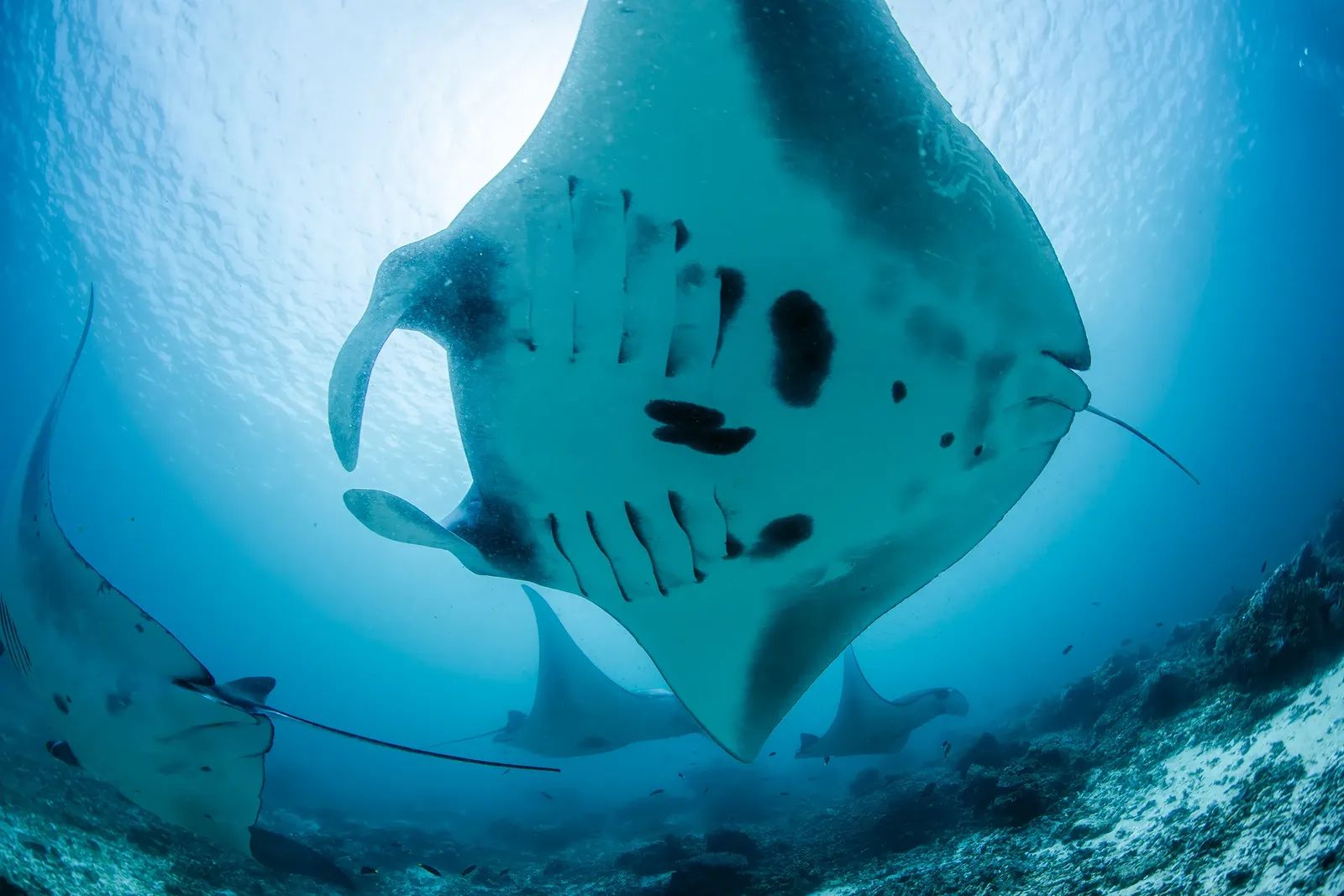
Manta ray diving Komodo National Park Indonesia liveaboard expedition underwater photography - Picture by Neptune Liveaboards
What to Expect Onboard
The Check Dive
Every liveaboard starts with a check dive, usually on day one in a sheltered bay or near the embarkation point. It's not a test — it's a calibration. Guides watch how you handle your equipment, check your buoyancy, and get a sense of your comfort level underwater. Based on what they see, they structure the diving for the rest of the trip. Be honest and relaxed. Guides have done this hundreds of times and they're on your side.
Daily Dive Schedule
Most itineraries run three to four dives per day, including a night dive on most evenings. All dives are optional — you can sit any out without explanation or pressure. On crossing nights, the boat moves between regions overnight and dive count may be lower on those days. The pace builds naturally: most first-timers find themselves more comfortable and more confident by day three than they expected.
Surface Intervals and Life Onboard
Surface intervals are long enough to rest and debrief properly. Indonesian liveaboards are sociable — meals are communal, the dive deck is a natural gathering point, and the crew are usually excellent company. The onboard experience is a significant part of what makes liveaboard diving different from day trips. If you're thinking about extending your trip beyond the liveaboard, see our Indonesia liveaboard extensions guide for what's possible before and after.
Night Dives
Night dives are optional on most boats. They're worth doing if you're comfortable — the marine life is completely different after dark, and many divers find them easier than expected once they've done one. No pressure if you'd rather rest.
Preparation: What Actually Makes a Difference
Get in the Water Before You Go
Two to three warm-up dives before your liveaboard makes a measurable difference to how quickly you settle in. Bali is the obvious choice — good dive centres, easy conditions, and plenty of interesting sites. Nusa Penida offers diving with mantas year-round and mola mola in season (July–October). Tulamben has the USAT Liberty wreck, shallow and accessible, and one of the best dive sites in Indonesia for a confidence-building session. See our Bali guide for more on pre-trip diving options.
Equipment: What to Bring, What to Rent
Bring your own mask — fit matters more than anything else for comfort underwater, and rental masks are a lottery. If you have fins that fit well, bring those too. Everything else — BCD, regulator, wetsuit, tank — is provided or available to rent on the boat.
On dive computers: rental computers are often not included in the standard equipment rental price, so you're paying extra anyway. Entry-level personal computers are reasonably priced, last a long time, and — importantly — you'll know how to read yours. Being familiar with your own computer matters when you're underwater watching your no-decompression limits on multiple dives a day. If you plan to dive regularly, buying one before your first liveaboard is a worthwhile investment.
Reef-safe sunscreen only. Most operators ask for it and some enforce it. Pack closed shoes if your itinerary includes island hikes — Raja Ampat excursions to Kali Biru (Blue River) or the Aljui Bay pearl farm involve walking on uneven terrain.
For a full packing breakdown, see our Indonesia liveaboard packing guide.
Dive Insurance
Not optional. Dive insurance with hyperbaric chamber coverage and medical evacuation is mandatory for any liveaboard. DAN (Divers Alert Network) is the most widely used provider — check their current recommended minimums for Indonesia, as evacuation from remote regions can be expensive. Comprehensive travel insurance covering trip cancellation and delays is strongly recommended on top.
Physical Fitness
You don't need to be an athlete. Diving is physically accessible to most people in reasonable health. Four dives a day with surface intervals and communal meals in between is the rhythm — it's engaging but not exhausting. If you have any medical conditions that affect diving, check with a dive medicine physician before your trip.
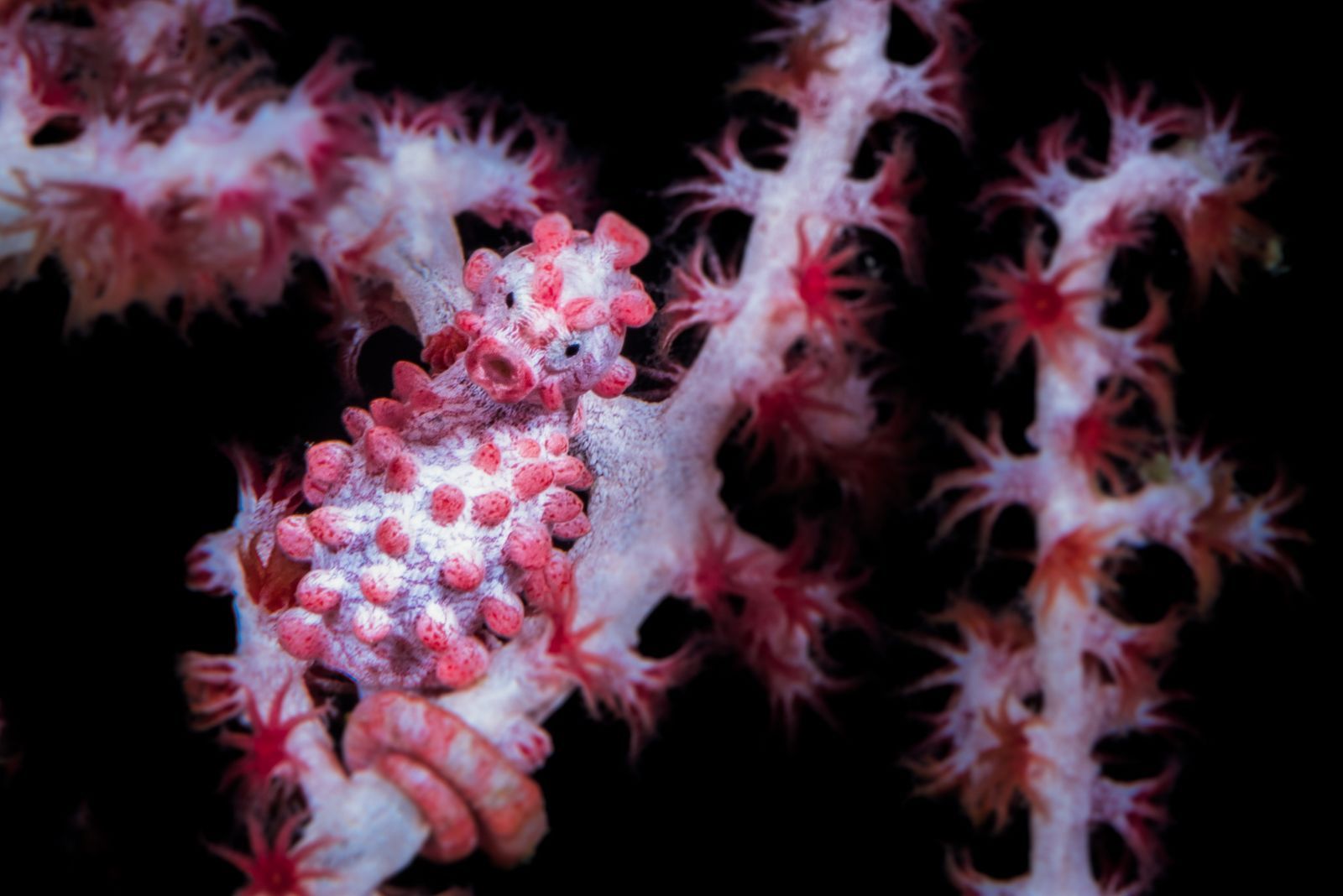
Pygmy seahorse camouflaged on soft coral in Indonesia - macro diving photography from liveaboard diving trip - Picture by Dewi Nusantara
Choosing the Right Boat
The most important variable for a beginner's first liveaboard isn't the destination — it's the boat. Specifically, the boat's culture and how the operator approaches mixed-ability groups.
Some boats are primarily diving-focused — three to four dives a day, serious about site selection and dive operations, guides who are experts in their routes. These are excellent for beginners who are motivated and want to improve quickly.
Lifestyle-focused boats tend to be more relaxed about the diving programme — one to two dives or snorkel sessions alongside beach stops, watersports, and shore excursions. These suit beginners who want to ease in gradually, or mixed groups where not everyone dives seriously.
Mid-range and above is the right starting point for a first liveaboard. Dedicated guides, proper safety equipment, good food, and a professional crew make the whole experience easier and more enjoyable. See our Indonesia liveaboard category guide for a full breakdown of what each price point includes.
If you're not sure which boat suits your experience level and goals, talk to us. It's one of the more nuanced decisions in liveaboard booking and the answer depends on your specific situation.
Komodo dragon close-up Indonesia liveaboard Komodo National Park wildlife tour
Sustainable Diving in Indonesia
Indonesia's reefs are extraordinary and worth protecting. A few practices that make a real difference: maintain good buoyancy control — contact with coral causes damage that takes years to recover. Never touch or feed marine life. Use reef-safe sunscreen. These aren't just rules — they're the reason sites that have been dived for decades still look the way they do.
The Coral Triangle contains 76% of all known coral species globally¹. Indonesia's marine protected area network covers tens of millions of hectares². When you dive responsibly and choose operators who support conservation, your trip contributes to keeping these reefs intact.
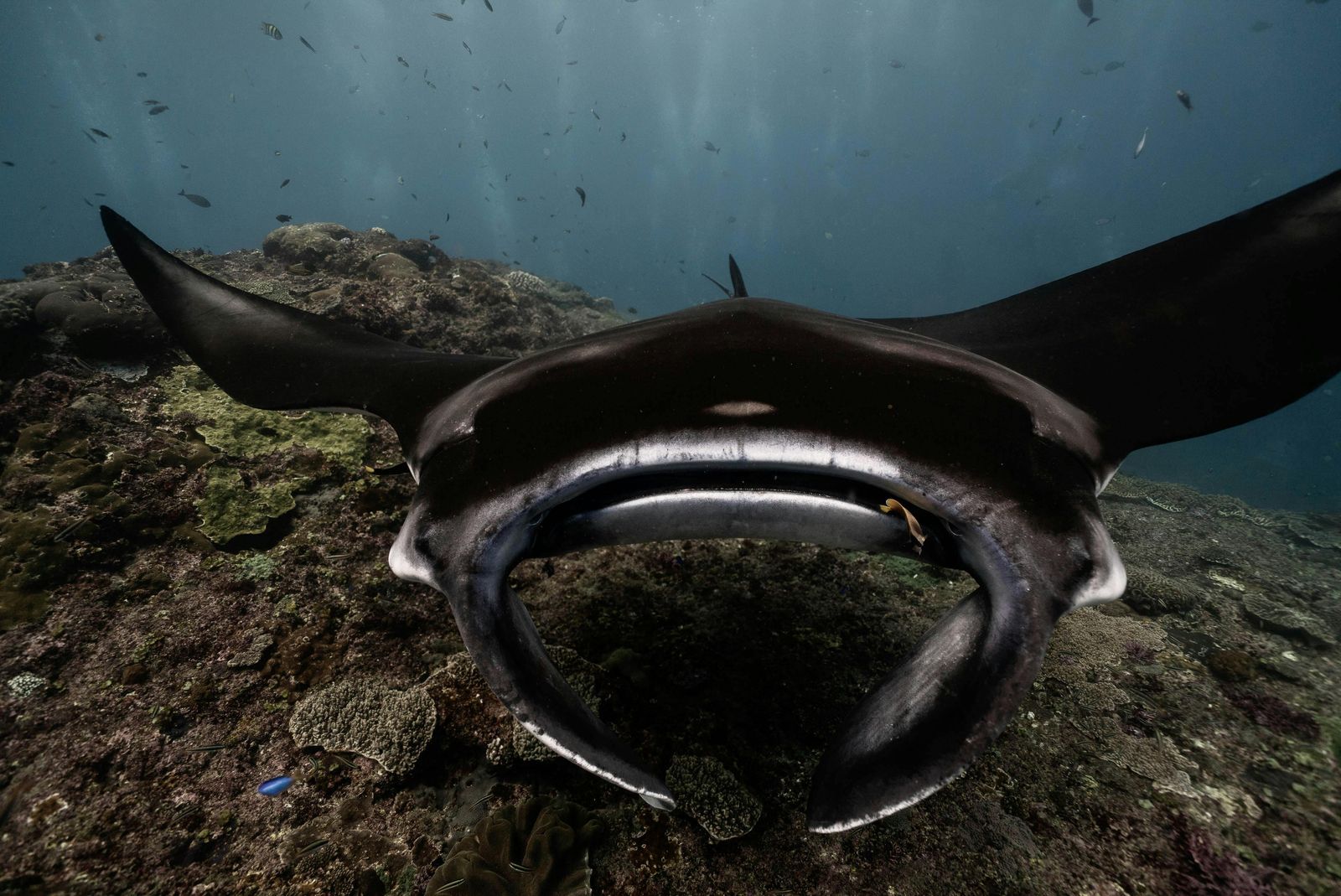
Manta ray closeup facing camera during Indonesia liveaboard diving showing detailed manta ray features and markings
Managing Expectations
Not every dive will be extraordinary. Weather affects conditions, currents shift, and some days the visibility is lower than expected. This is true on every liveaboard everywhere in the world. The difference in Indonesia is the sheer variety — if one site underperforms, the next one is usually something else entirely.
Seasickness is a real possibility, particularly on overnight crossings. Patches, tablets, and ginger are your friends. Most people find they adapt within a day or two, and nights at anchor are usually calm.
Don't expect to master everything on your first trip. The first liveaboard is about getting comfortable with the format, building confidence underwater, and seeing what Indonesia has to offer. Most beginners leave wanting to come back and do it all over again at the next level.
If you haven't dived in over a year, do the warm-up dives in Bali. Don't skip this step — it makes a significant difference to how quickly you settle in and how much you enjoy the first few days.
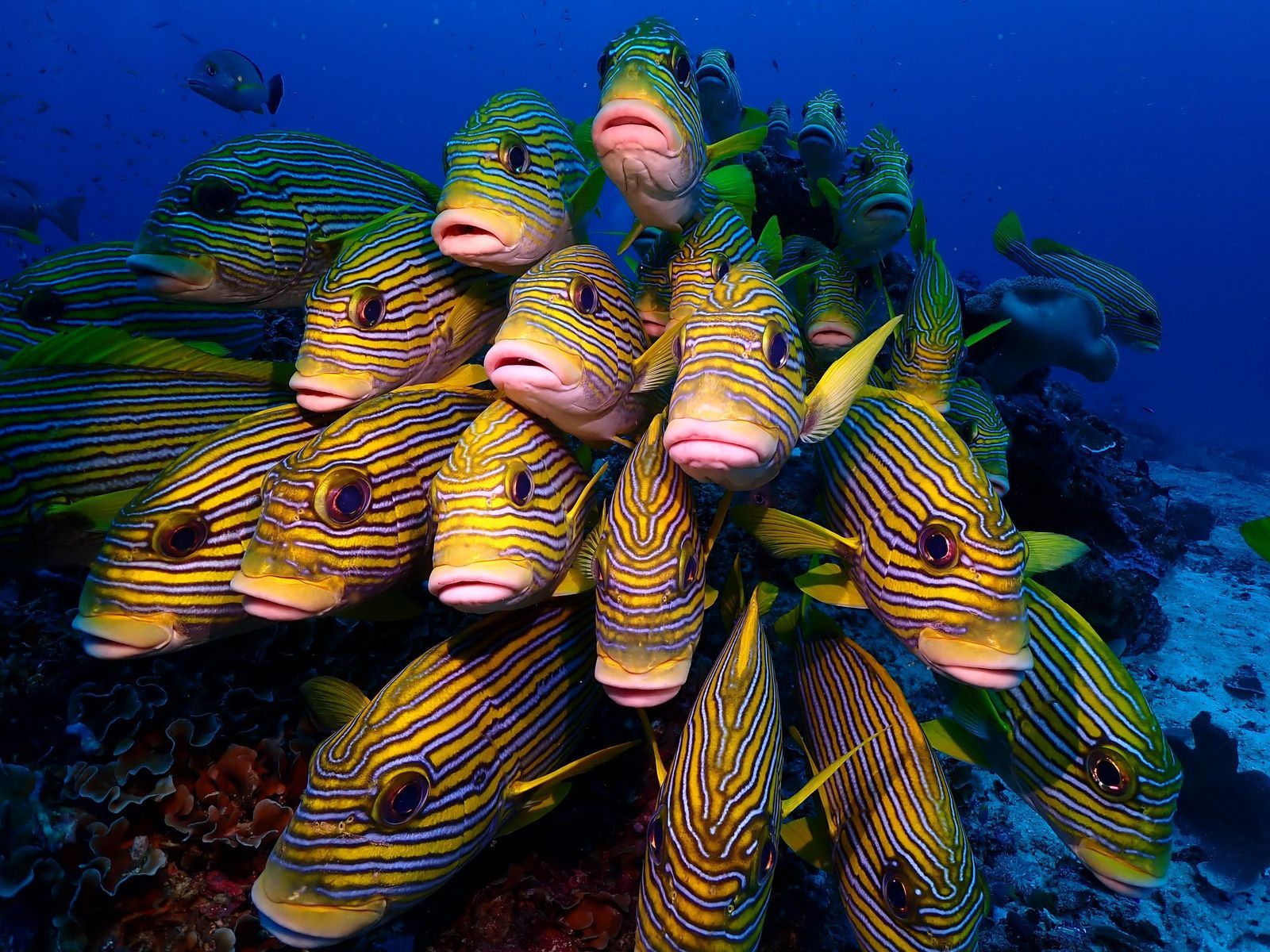
Raja Ampat sweetlips fish school Indonesia diving liveaboard West Papua marine life - Picture by Jürgen Mandl
Frequently Asked Questions
What certification do I need for an Indonesia liveaboard?
Open Water Diver is the standard minimum. Logged dive requirements vary by operator and trip type — some are relaxed with freshly certified divers, others prefer to see 20 or more logged dives. The more diving-intensive the route, the more experience operators typically want. Tell us your certification level and logged dives when enquiring and we'll match you with boats that are the right fit.
Do I need Advanced Open Water certification?
Not for most routes. Advanced Open Water opens access to deeper sites and gives you more tools for variable conditions, but it's not a requirement for the majority of Indonesian liveaboard itineraries. If you're planning a more technical route — Banda Sea seamounts, northern Raja Ampat in strong current season — Advanced Open Water is worth having.
What if I haven't dived in over a year?
Most operators require a refresher if you haven't dived in 12 months or more. We strongly recommend warm-up dives in Bali regardless — two or three dives before you board makes the first day offshore significantly more enjoyable.
Can I opt out of dives I'm not comfortable with?
Yes, always. You can sit out any dive on any day without explanation. Operators are used to mixed-ability groups and build flexibility into the programme. Nobody will pressure you to dive beyond your comfort level.
Is Indonesia safe for beginner divers?
Yes, although safe diving anywhere requires honest self-assessment and proper preparation. Operators who accept beginners know how to manage mixed groups, assess ability on the check dive, and adapt accordingly. Dive insurance with evacuation coverage is mandatory — Indonesia's remoteness makes it non-negotiable.
How do I know if a specific boat is right for me?
Talk to us. We know the boats and the operators, and we can tell you which ones are better suited to newer divers versus experienced groups. This is one of the more useful things we do — matching the right person to the right boat before money changes hands. Read more about how we work.
What should I do if I feel unwell underwater?
Signal your guide immediately using the agreed distress signal from your briefing. Every operator runs pre-dive briefings covering signals and emergency procedures. If you feel unwell at the surface, signal the boat and get out of the water. Don't push through discomfort underwater.
Do I need to tip the crew?
Tipping is appreciated but not compulsory. Ask at the start of the trip how tips are handled on that particular boat — some pool them, others separate dive crew and boat crew. The amount is at your discretion.
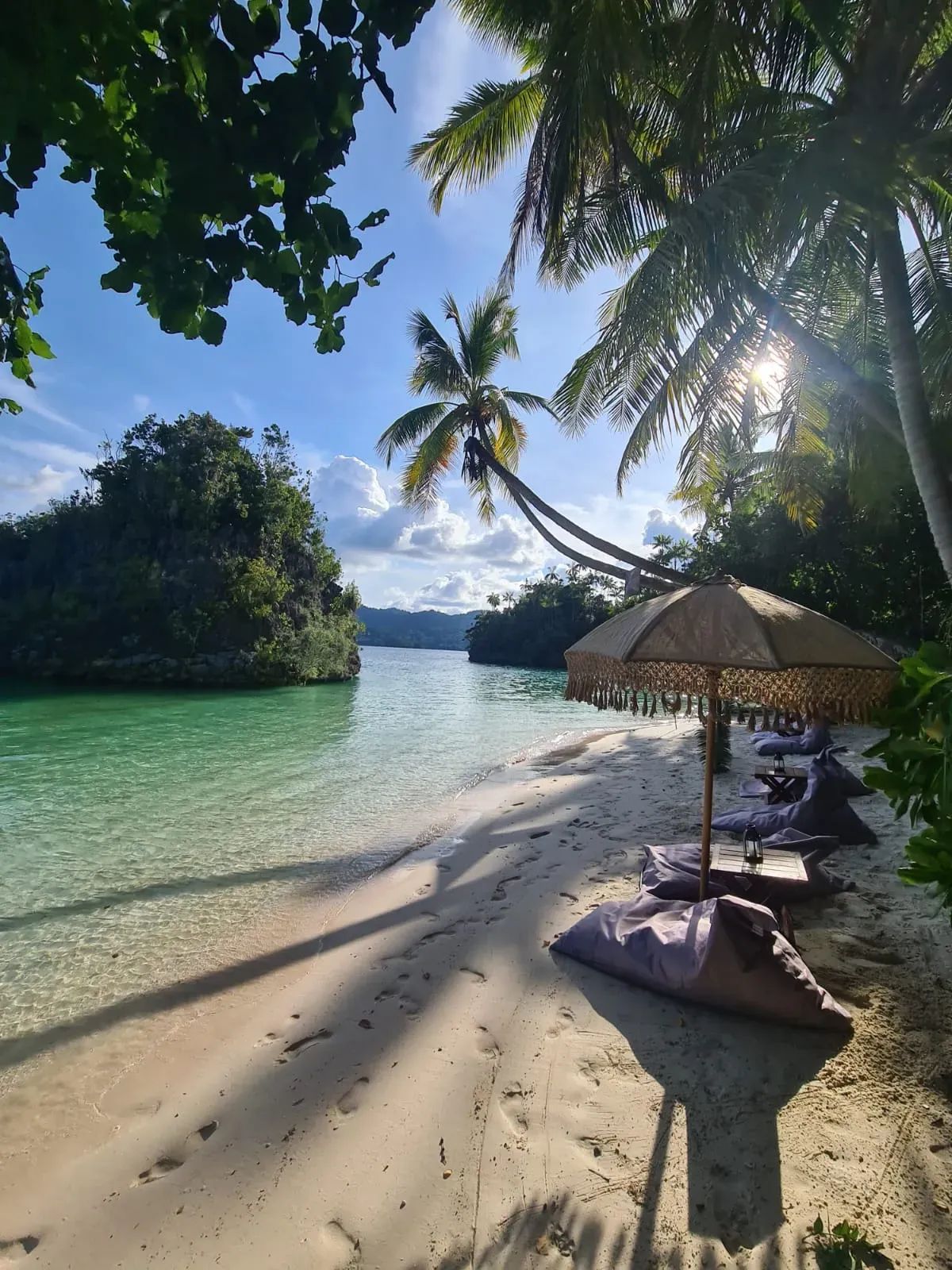
Tropical beach paradise with white sand, turquoise lagoon, coconut palms and traditional umbrella setup in secluded Raja Ampat bay - Picture by Calico Jack Cruises
Ready to Plan Your First Indonesia Liveaboard?
We're an Indonesia-based team and we enjoy helping first-timers get this right. Prices are the same as booking direct, and every booking includes the option of a complimentary hotel night. If you're not sure where to start, WhatsApp is the quickest way to reach us — we can usually point you in the right direction in a single conversation. You can also use our contact form or read more about how we work.