Bali is where most Indonesia diving trips begin and end — and it earns its place as a destination in its own right. The USAT Liberty at Tulamben is one of the most accessible WWII wrecks in the world. The Nusa Penida Marine Protected Area holds a year-round resident manta population and is globally significant for mola mola encounters each southern winter. A small number of operators use Bali as a departure point for Komodo and Sumbawa routes, meaning you can combine land-based diving with a liveaboard without a domestic flight.
This guide covers Bali's main dive sites, the liveaboard routes that depart from here, and what to expect above and below water. It's part of our complete Indonesia liveaboard guide — the central hub for Indonesian diving destinations.
Quick Facts About Bali Diving
- Best season: April–October (dry season, best visibility)
- Mola mola season: July–October at Nusa Penida (peak August–September)¹
- Manta rays: Year-round resident population at Nusa Penida MPA²
- Coral species: 296 species at Nusa Penida MPA⁵; 76% of all coral species in the Coral Triangle⁷
- Fish species: 576 species at Nusa Penida MPA⁵
- Water temperature: 26–29°C; drops to 13–17°C at Nusa Penida during upwelling¹
- Visibility: 15–30m; highly variable by site
- Experience level: All levels; site selection important
- Nearest airport: Denpasar (DPS) — Indonesia's main international gateway
- Key marine life: Reef mantas, mola mola, reef sharks, macro, USAT Liberty wreck
- Booking lead time: 2–4 weeks for day diving; 6–12 months for liveaboard peak season
Quick Answers
Is Bali a good diving destination?
Yes. The USAT Liberty is a world-class accessible wreck. Nusa Penida's resident manta population and seasonal mola mola make it one of the most significant big animal diving areas in Indonesia. Menjangan Island offers some of Bali's clearest and most photogenic reef diving. The conditions don't rival the wilderness character of Raja Ampat or Banda Sea, but the diving is genuinely strong — and Bali offers cultural depth no remote liveaboard destination can match.
When is the best time to dive Bali?
April through October gives the best overall conditions — dry season, calmer seas, and clearer water. Mola mola at Nusa Penida are tied to cold Indian Ocean upwelling: July through October, with August and September the most reliable months.¹ Manta rays are present year-round, with cleaning station activity peaking around May.² The Liberty and northeast coast sites dive year-round. For the full seasonal picture, see our Indonesia weather and diving seasons guide.
Do liveaboards depart from Bali?
Beberapa operator menggunakan pelabuhan Serangan atau Benoa sebagai titik keberangkatan untuk rute ke timur — biasanya mencakup terumbu Sumbawa, Taman Nasional Komodo, dan terkadang Kepulauan Nusa dalam perjalanan keluar. Ini bukan pusat keberangkatan utama, tetapi jika Anda sudah berada di Bali, logistiknya menjadi mudah. Lihat bagian liveaboard di bawah ini untuk detail rute.
Apa bangkai kapal USAT Liberty?
USAT Liberty adalah kapal kargo Amerika yang ditorpedo oleh kapal selam Jepang I-66 pada 11 Januari 1942 di Selat Lombok.³ Rusak parah, kapal ini terdam di Tulamben di pantai timur laut Bali. Pada tahun 1963, getaran dari letusan Gunung Agung mendorongnya dari pantai dan kapal ini tenggelam di perairan dangkal.⁴ Kini kapal ini berada di kedalaman 5–30m, hanya 40 meter dari pantai, dapat diakses oleh semua tingkat sertifikasi langsung dari pantai.
Bisakah pemula menyelam di Bali?
Ya, meskipun pemilihan lokasi penting. Bagian Liberty yang lebih dangkal, Teluk Jemeluk di Amed, dan taman yang tenang di Menjangan semuanya cocok untuk penyelam baru. Lokasi manta Nusa Penida dapat dikelola oleh sebagian besar penyelam — penyelaman arus umumnya satu arah dengan penjemputan perahu. Arus bisa kuat di beberapa lokasi Penida, terutama di sekitar Saluran Ceningan dan Teluk Kristal, tetapi pemandu membaca kondisi dan menyesuaikan. Mola mola di Teluk Kristal membutuhkan arus yang tenang — ikan membutuhkan air yang lembut agar ikan pembersih bekerja, sehingga lokasi biasanya dapat diselami saat mereka ada. Manta Point bisa berombak dan dingin selama musim dingin selatan.
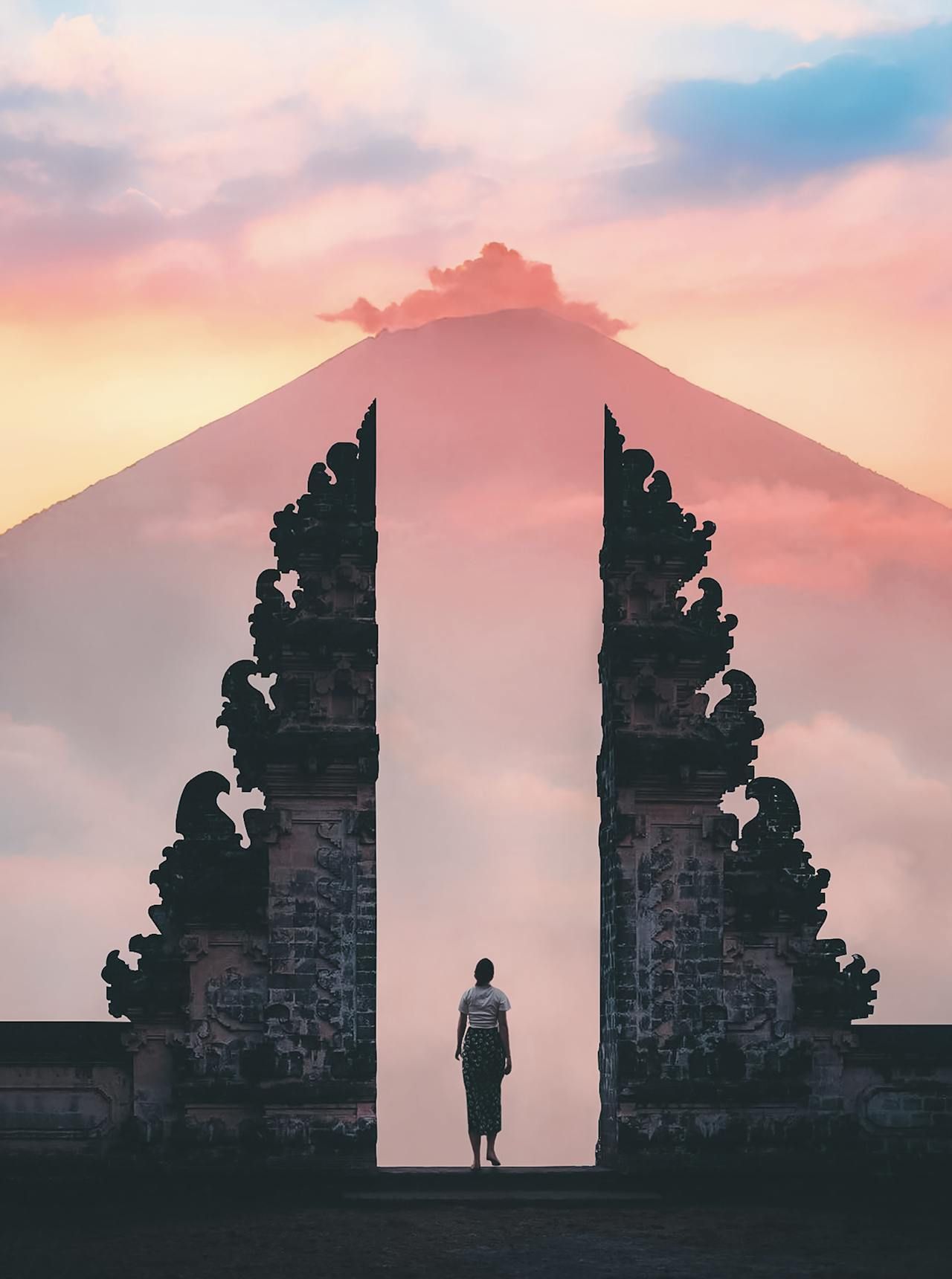
Lempuyang Gate of Heaven temple Bali sunrise Indonesia liveaboard cultural excursion
Wilayah Menyelam Bali
Tulamben dan Amed — Pantai Timur Laut
Pantai timur laut adalah tempat sebagian besar penyelam menghabiskan sebagian besar waktu mereka. USAT Liberty di Tulamben menjadi jangkar area ini — bangkai kapal sepanjang 120 meter yang berada di kedalaman 5–30m dengan akses masuk dari pantai kerikil hitam. Bagian atas yang lebih dangkal cocok untuk pemula; bagian yang lebih dalam dan penetrasi lambung cocok untuk penyelam Mahir. Kehidupan lautnya padat: ikan jack yang bergerombol, penyu yang beristirahat di dek, kuda laut kerdil di karang kipas, nudibranch di setiap celah. Fajar patut untuk bangun pagi — pagi hari membawa cahaya terbaik dan penyelam paling sedikit, dan ikan besar yang bergerombol paling aktif sebelum matahari tinggi. Taman karang dan tebing di sebelahnya menyediakan penyelaman tambahan yang kuat pada hari yang sama.³
Amed, berkendara singkat ke timur, menambah variasi di lingkungan terumbu, dinding, dan lumpur. Teluk Jemeluk tenang dan cocok untuk pemula, dengan penampakan penyu yang rutin di padang lamun. Lokasi Piramida menarik ikan yang bergerombol di sekitar struktur buatan. Makro yang kuat di seluruh area menjadikan Amed sebagai basis yang baik bagi fotografer. Desa penghasil garam tradisional dan perahu nelayan jukung yang berwarna-warni memberikan jeda permukaan yang lebih berkarakter daripada kebanyakan kota penyelaman.
Nusa Penida — Mantas, Mola Mola, and Big Water
Nusa Penida sits 18km southeast of the main island. It lies within the Coral Triangle — where 76% of the world's coral species are found⁷⁸ — and the Nusa Penida Marine Protected Area, declared in 2010, covers 20,057 hectares holding 576 fish species and 296 coral species.⁵
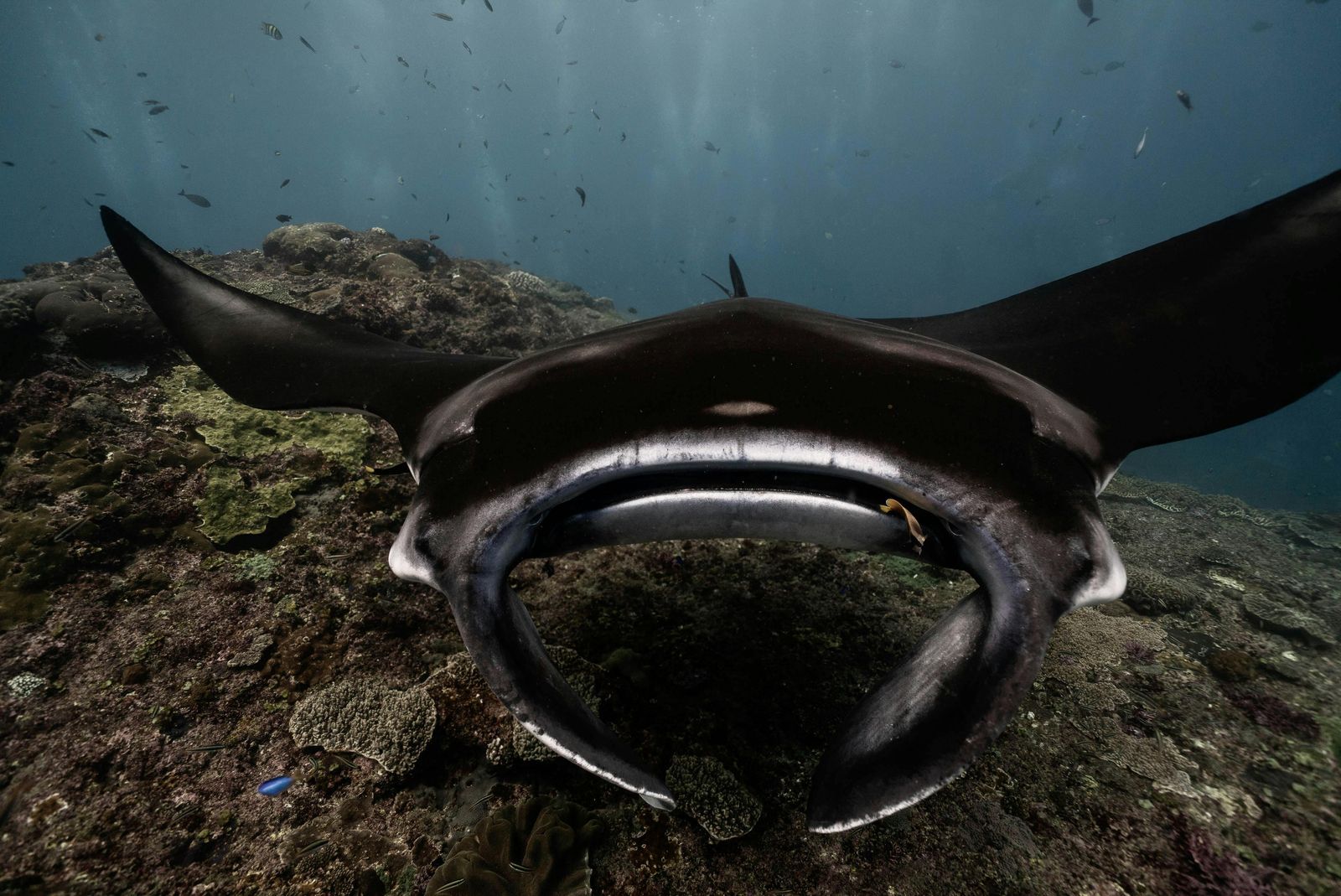
Reef manta rays (Mobula alfredi) are present year-round at the south coast cleaning stations. Research identified 624 individual reef mantas from 5,913 sightings over six years at Manta Bay and Manta Point.² These are primarily juveniles and sub-adults — a different character from the large mixed-age aggregations at Komodo or Raja Ampat. For diving with manta rays across Indonesia, see our Indonesia manta guide.
Mola mola (Mola alexandrini) appear July through October when cold Indian Ocean upwelling drops temperatures sharply around the south coast.¹ Crystal Bay is the primary site, with encounters at 18–40m. They only come up when conditions are right — the site needs gentle current for the cleaner fish to work, and strong upwelling is what brings the mola. Peak months are August and September. See our Indonesia big animal diving guide for context.
The north sides of Penida and Lembongan offer drift dives along current-swept walls with schooling trevally, fusiliers, and reef sharks. These are one-way dives with boat pickup — manageable for most divers when guides read conditions well.
Menjangan Island — Northwest Bali
Menjangan Island sits inside West Bali National Park in calm, clear water. Walls drop vertically through massive sea fans and barrel sponges with minimal current. Visibility regularly reaches 25–30m — the best in Bali. The shallow coral gardens in 5–15m suit snorkellers and beginners. An unhurried, photogenic dive that contrasts well with the stronger conditions at Nusa Penida. It's a full day trip from south or east Bali, so it works best if you're staying in the northwest.
Candidasa and Padang Bai — Eastern Bali
Candidasa has offshore island sites with strong hard coral diversity and occasional mola mola encounters during upwelling season. Currents can be significant and conditions suit experienced divers. Padang Bai has calmer sites with consistent turtle encounters and is a departure point for fast-boat transfers to Nusa Penida and Lombok.
Liveaboards Departing from Bali
Bali is not a dedicated liveaboard departure port — most Indonesia routes leave from Sorong, Labuan Bajo, or Ambon. But a small number of operators run routes east from Serangan or Benoa harbour, and for divers already in Bali the convenience is real: no domestic flight, no extra transfer day.
Most of these itineraries head east toward Komodo, covering Sumbawa's reefs along the way. Boats typically depart in the morning and reach Sumbawa waters by evening or early the following morning. Some stop at the Nusa Islands for a check dive or snorkel on the first day before crossing to Lombok and beyond. Standard sites along the route include Moyo Island, Satonda crater lake, Saleh Bay — which has a bagan whale shark encounter from August to September — and Sangeang volcano before reaching Komodo. The return route often mirrors this in reverse, ending back in Bali. Duration is typically 10–14 days covering the full loop.
This makes a Bali-departure liveaboard a natural fit for divers who want to add land-based diving on the Liberty or Nusa Penida before or after the trip, without needing to fly anywhere. Spaces on these Bali-departure routes are limited — fewer operators run them than Labuan Bajo departures for Komodo. See our Komodo guide for what the park offers.
Manta ray closeup facing camera during Indonesia liveaboard diving showing detailed manta ray features and markings
The USAT Liberty
On 11 January 1942, the Liberty was torpedoed in the Lombok Strait while carrying railway parts and rubber to the Philippines. Towed by USS Paul Jones and Dutch destroyer Van Ghent toward Singaraja, she took on too much water and was beached at Tulamben to save her cargo.³ She sat on the beach for 21 years until Mount Agung erupted in 1963 — tremors slid her off the sand and into the sea.⁴
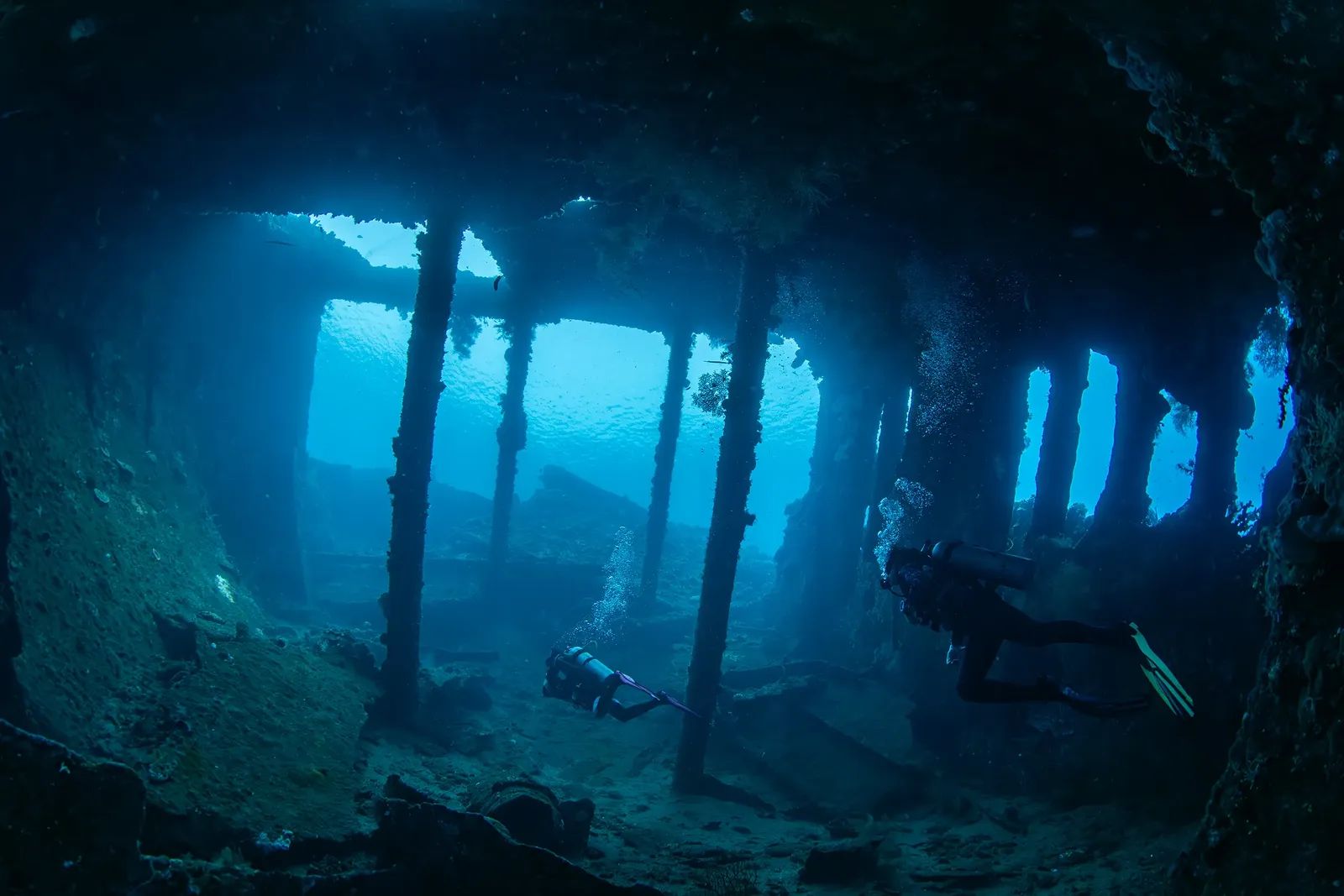
She now lies split in two on a black sand slope at 5–30m, forty metres from shore. Decades of coral growth have transformed the steel hull into a different kind of reef — hard corals blanketing the superstructure, soft corals on the deeper sections, nudibranchs and frogfish in the crevices. Shore entry means multiple dives per day are straightforward. Night dives reveal lionfish hunting, cuttlefish, and parrotfish in mucus cocoons. Arrive before 6am to get the wreck largely to yourself.
Picture of divers in cargo hold at the USAT Liberty in Tulamben Bali for land-based diving safari in Indonesia - Picture by Neptune Liveaboards
Culture Worth Staying For
Budaya Hindu Bali bukanlah latar belakang—ia adalah alasan untuk berada di sini secara mandiri. Lanskap terasering sawah dan tradisi kuil pulau ini terdaftar sebagai Situs Warisan Dunia UNESCO pada tahun 2012.⁶ Sistem irigasi Subak, yang dikembangkan selama seribu tahun, menciptakan lahan bertingkat yang menjadi ciri khas pedalaman. Upacara berlangsung di halaman desa dan di gerbang kuil sebagai bagian dari kehidupan sehari-hari, bukan pertunjukan.
Realitas praktis: jalanan Bali sempit, pulau ini bergunung-gunung, dan lalu lintas di selatan sekitar Seminyak, Kuta, dan Ubud bisa lambat. Perjalanan dari satu punggungan ke punggungan berikutnya melalui lembah-lembah kecil memakan waktu lebih lama dari yang ditunjukkan peta. Pendekatan terbaik adalah merencanakan akomodasi Anda berdasarkan apa yang ingin Anda lakukan—menginap di Amed atau Tulamben untuk menyelam di timur laut, jadikan diri Anda di Nusa Lembongan untuk akses ke Penida, atau pilih pantai barat laut untuk Menjangan—dan jelajahi situs budaya di dalam wilayah tersebut daripada mencoba mencakup seluruh pulau. Yang mengatakan, untuk kelompok di mana tidak semua orang menyelam, Bali masih merupakan tujuan Indonesia yang paling mudah untuk dikerjakan: non-penyelam selalu memiliki sesuatu yang berharga di dekatnya.
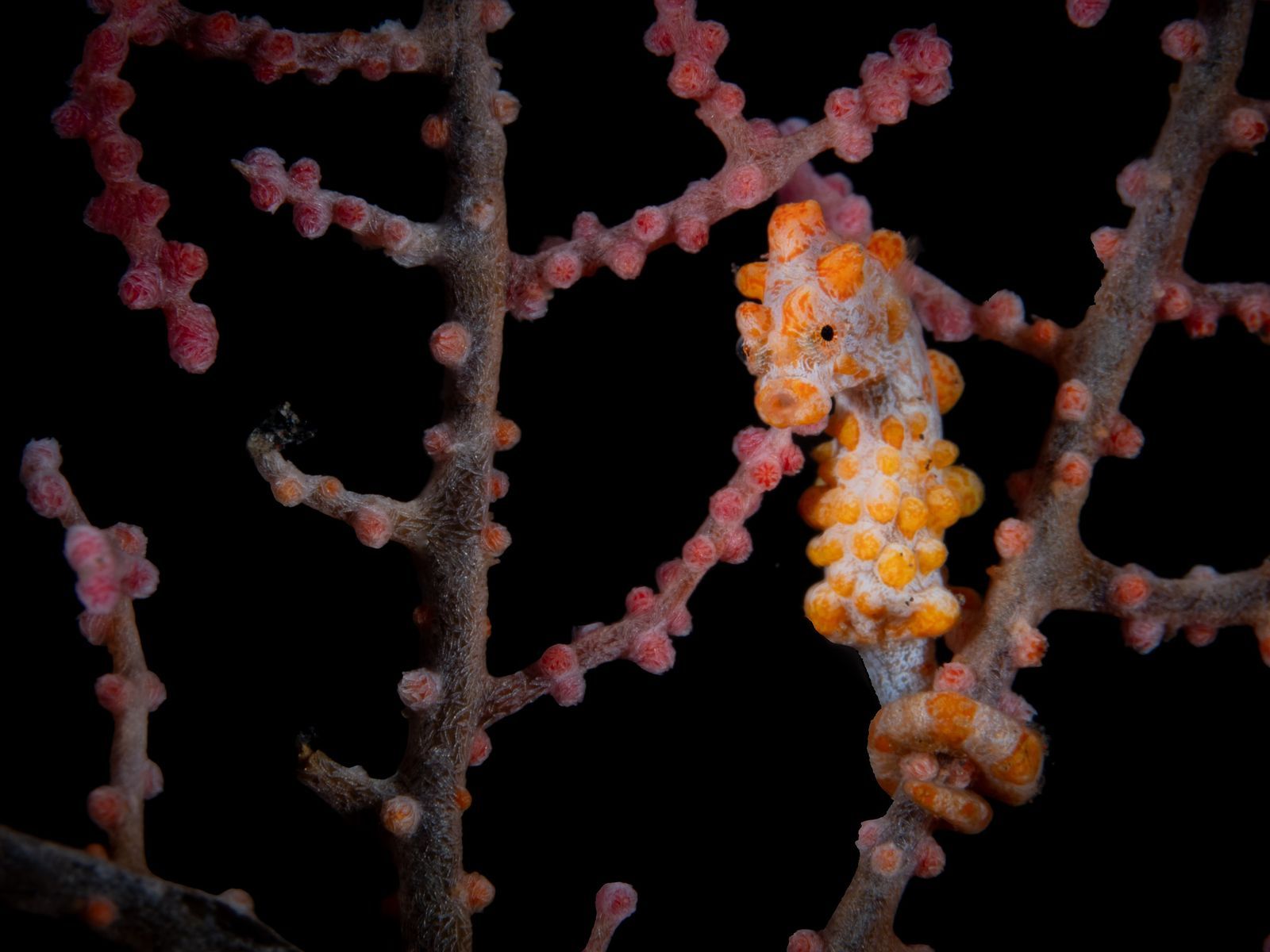
Rare Yellow Pigmy Seahorse sitting in a Coral Sea Fan - Liveaboard Indonesia - Picture by Leon Lemke
Mengelola Ekspektasi
Situs manta dan mola mola paling populer di Nusa Penida menjadi ramai—terutama Manta Point pada akhir pekan musim puncak, yang dapat melihat sejumlah besar perahu tur snorkel bersama para penyelam. Manta Point juga bisa berombak dan dingin selama bulan-bulan musim dingin selatan. Pesisir selatan Bali secara umum, dan Ubud, termasuk di antara area yang paling banyak dikunjungi di Bali. Perhitungkan waktu tempuh dalam rencana apa pun—jarak terlihat pendek di peta tetapi lalu lintas dan topografi pegunungan menambah waktu.
Visibilitas sangat bervariasi berdasarkan lokasi. Terumbu luar Menjangan dan Nusa Penida menawarkan kondisi paling jernih. Situs pesisir timur laut sering terpengaruh oleh limpasan sungai—10–20m adalah tipikal. Jangan berharap visibilitas perairan terbuka seperti Laut Banda atau Teluk Cenderawasih.
Mola mola membutuhkan kondisi upwelling yang dingin—ketika air menghangat, mereka tidak muncul. Juli hingga Oktober memberikan probabilitas terbaik tetapi tidak dapat diprediksi dari hari ke hari. Izinkan beberapa penyelaman di Nusa Penida selama beberapa hari jika mola mola adalah prioritas.
Pertemuan manta lebih konsisten sepanjang tahun, tetapi bervariasi dengan siklus pasang surut. Penyelaman pagi saat pasang naik di Manta Point memberikan hasil terbaik.
Liveaboard dari Bali ke Komodo melibatkan penyeberangan laut yang sebenarnya melalui Selat Lombok dan Sape. Kondisi tidak selalu tenang, terutama selama musim angin tenggara. Ini adalah bagian dari pengalaman—bukan masalah, tetapi patut diketahui sebelum Anda naik.
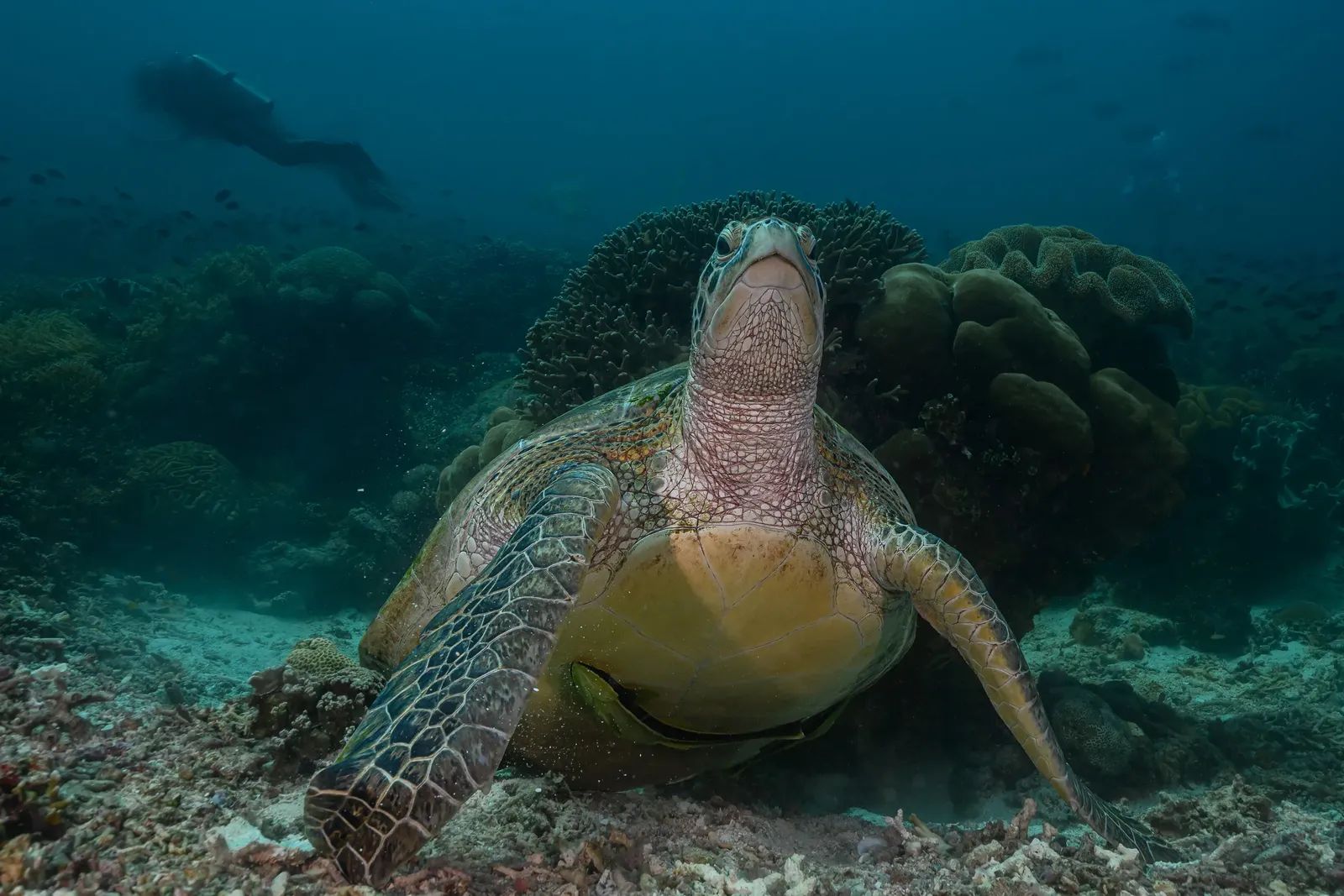
Green sea turtle facing camera with detailed shell and facial patterns on coral reef in Raja Ampat marine sanctuary - Picture by Neptune Liveaboards
FAQ
Is Bali suitable for beginner divers?
Yes, although site selection matters. The shallower Liberty sections, Jemeluk Bay in Amed, and Menjangan's calm gardens are all excellent for new divers. Most Nusa Penida dive sites are manageable — guides assess current before committing to a site and will adjust the plan if conditions don't suit the group. Crystal Bay for mola mola and some deeper wall dives suit Advanced divers best.
How do I get from Bali to other Indonesian liveaboard destinations?
Komodo routes can depart from Bali directly by liveaboard. Raja Ampat and Papua routes start from Sorong — reachable from Bali via Jakarta or Makassar. Banda Sea routes typically start from Ambon or Bali depending on operator. Coralbound works with VIFA Holiday, the leading DMC for Indonesia's diving industry, for domestic flight monitoring and rebooking on all connections.
What is the Nusa Penida Marine Protected Area?
Nusa Penida MPA was declared in 2010, covering 20,057 hectares around Nusa Penida, Nusa Lembongan, and Nusa Ceningan.⁵ It protects resident manta ray and mola mola habitat, 576 fish species, and 296 coral species. Destructive fishing methods are banned. The MPA is managed with the Coral Triangle Centre and local communities.
What's the difference between Bali diving and a Komodo liveaboard?
Different in character and scale. Bali offers accessible, well-serviced sites with comfortable infrastructure and cultural depth. Komodo is a national park environment — stronger currents, concentrated pelagic action, and a genuine protected wilderness character. Many divers combine both: a few days on the Liberty and Nusa Penida, then a Komodo liveaboard departing from Bali, returning to debrief at a Tulamben resort. See our Komodo guide for the full picture.
What should I pack for Bali diving?
A 3mm wetsuit is adequate for most Bali diving. Bring a 5mm or wear a hood for Nusa Penida during mola mola season — upwelling drops temperatures sharply at depth and Manta Point can be cold. Reef-safe sunscreen for boat days. Closed shoes for temple visits and volcano hikes. Most equipment can be rented from quality dive centres, but personal regulators and computers are recommended. For a full list, see our Indonesia liveaboard packing guide.
How does Bali fit into a broader Indonesia diving itinerary?
Most international divers fly through Denpasar (DPS), making Bali a natural start or end point. A common pattern: arrive in Bali, three or four days on the Liberty and Nusa Penida, fly to Sorong for a Raja Ampat liveaboard, return through Bali for a couple of days before the international flight home. Or: Komodo liveaboard departing from Bali, ending back in Bali for the northeast coast wind-down. It connects efficiently to everywhere in the archipelago.
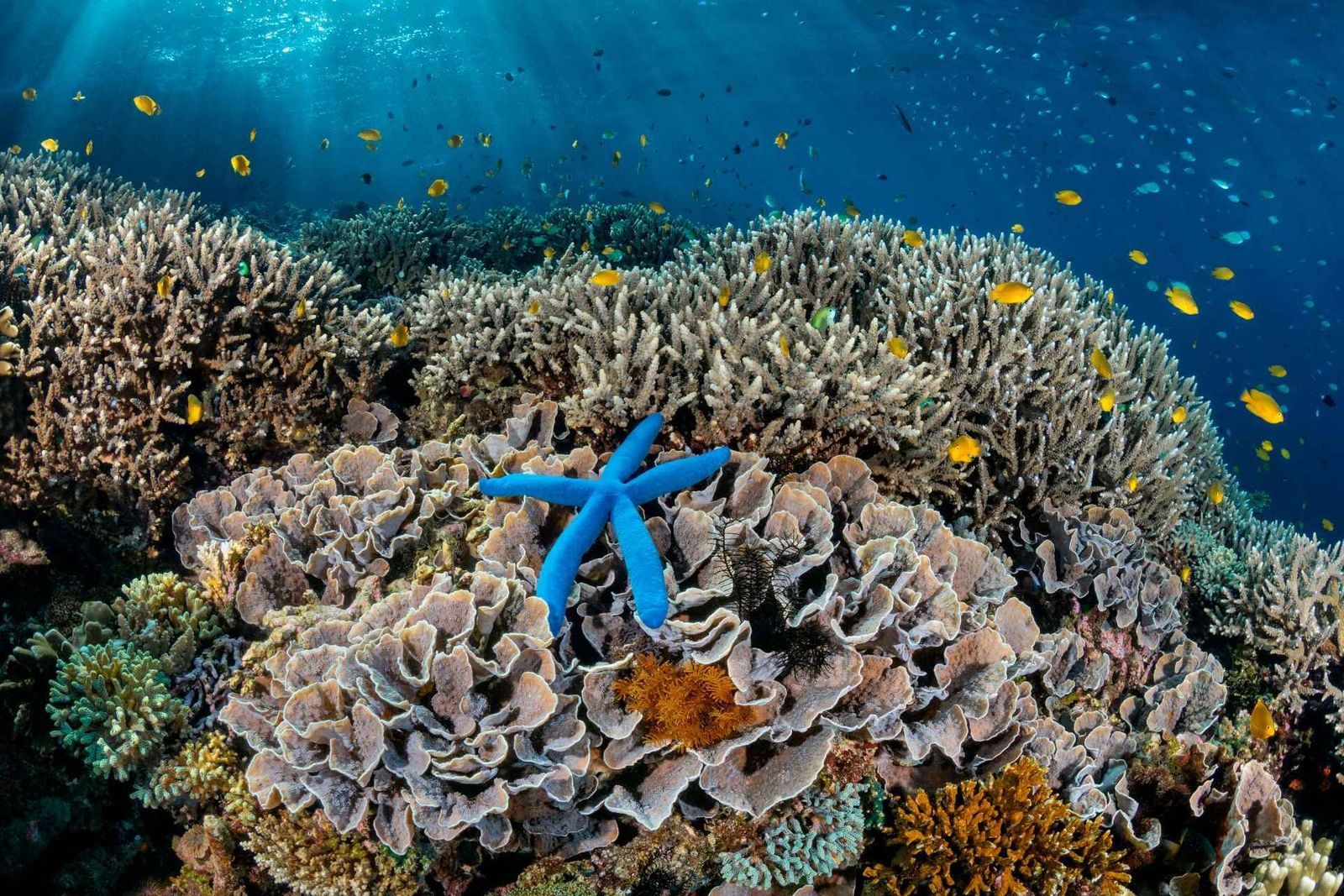
Diverse coral reef ecosystem with blue sea star and yellow fish in Indonesian waters, liveaboard diving - Picture by Majik Liveaboard
Book Your Bali Diving Trip
Whether you want day diving at the Liberty and Nusa Penida or a liveaboard departing from Bali for Komodo and Sumbawa, we can sort it. You'll pay the same price booking through us as booking direct — operators maintain price parity across all channels. Every liveaboard booking through Coralbound includes a booking gift — including the option of a complimentary hotel night — and domestic flight coordination through VIFA Holiday for any onward connections.
Questions? Message us on WhatsApp or reach us via our contact form. Want to know more about how we work? Read our why book with Coralbound page.