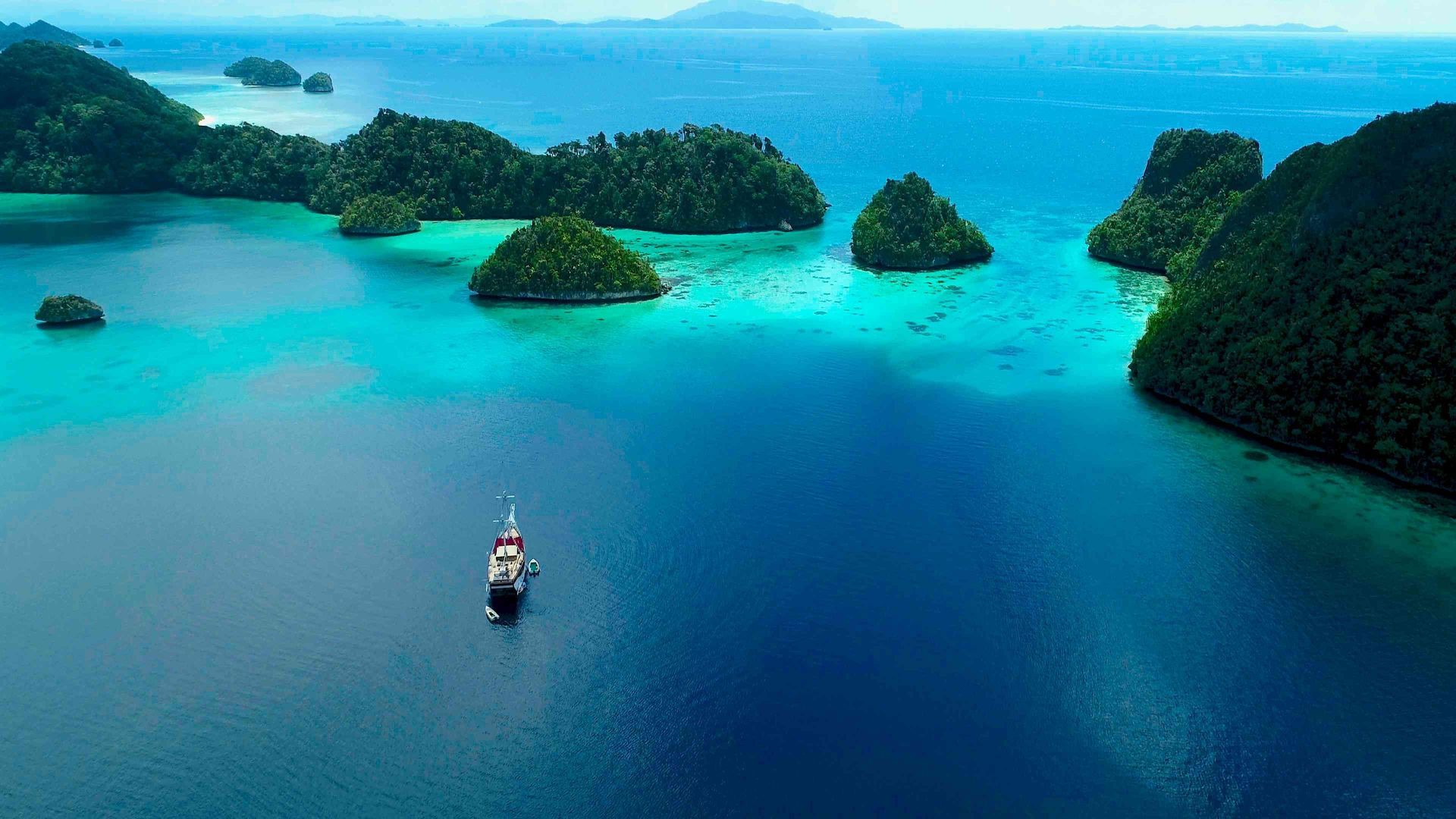
Alor liegt am äußersten östlichen Rand der Kleinen Sundainseln – abgelegen, selten überlaufen und Heimat einiger der markantesten Tauchgänge Indonesiens. Rhinopias-Skorpionfische, Kaltwasserauftriebe, die Hammerhaie an die Oberfläche bringen, Dugongs in geschützten Seegraswiesen und traditionelle Abui-Dörfer, die vom Massentourismus unberührt sind. So sieht Tauchen aus, wenn ein Reiseziel weitgehend abseits des Mainstream-Radars bleibt.
Dieser Leitfaden behandelt alles, was Sie für die Planung einer Liveaboard-Reise nach Alor benötigen: beste Jahreszeit, Anreise, was Sie unter Wasser erwartet und wie es sich in breitere indonesische Expeditionsrouten einfügt. Er ist Teil unseres vollständigen Liveaboard-Leitfaden für Indonesien – dem zentralen Knotenpunkt für alle indonesischen Tauchziele.
Schnelle Fakten über das Tauchen in Alor
- Beste Jahreszeit: März–Oktober für optimale Bedingungen; September–November für Hammerhai-Saison
- Korallenarten: Über 500 Arten in der Sunda-Banda-Seascape⁷⁸
- Fischarten: Über 2.100 Riffischarten in der Sunda-Banda-Seascape⁷⁸
- Wassertemperatur: Typisch 25–30°C; Thermoklinen können während kalter Auftriebe erheblich sinken
- Sichtweite: 25–30 m+ in der Trockenzeit; variiert mit Thermoklinen und Auftriebsbedingungen
- Tauchgänge pro Tag: 3–4 auf den meisten Routen
- Erfahrungslevel: Fortgeschrittener Open Water empfohlen; aktuelle Erfahrung unerlässlich
- Reiselänge: 7–14 Tage; oft kombiniert mit Komodo, Flores oder Banda-See-Überquerungen
- Kostenbereich: 250–600 $/Tag je nach Schiffskategorie
- Zielflughafen: Mali Airport (ARD), Kalabahi – über Kupang (KOE)
- Buchungszeitraum: 6–12 Monate für die Hauptsaison
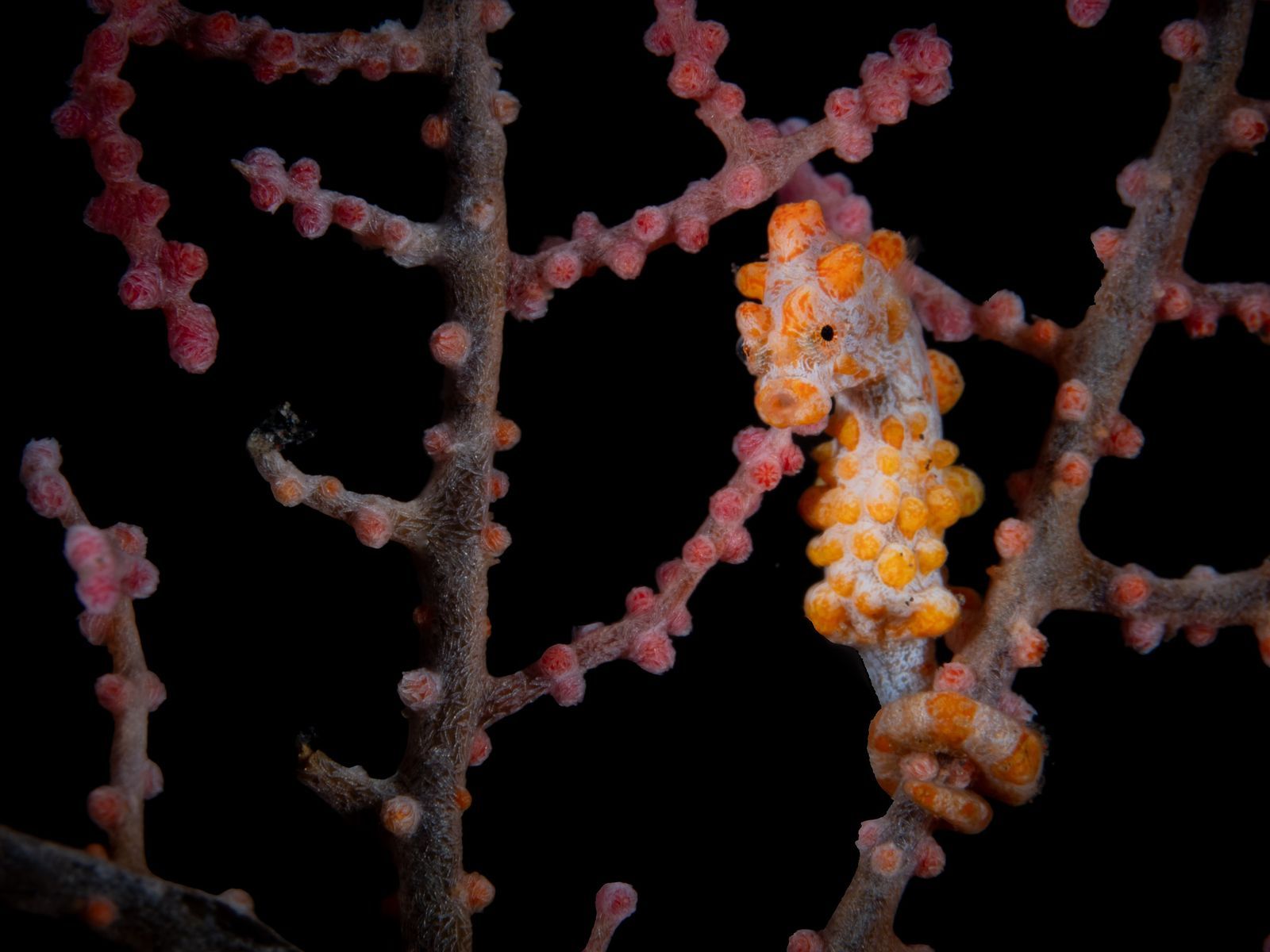
Rare Yellow Pigmy Seahorse sitting in a Coral Sea Fan - Liveaboard Indonesia - Picture by Leon Lemke
Schnelle Antworten
Wann ist die beste Zeit zum Tauchen in Alor?
März bis Oktober ist die Hauptsaison – trockene Bedingungen, ruhige See und die beste Sicht. September und Oktober sind besonders gut, um optimale Bedingungen mit dem Beginn der Hammerhai-Saison zu kombinieren. November bringt kalte Auftriebe, die Hammerhaie näher an die Oberfläche bringen, aber die Sicht beeinträchtigen können. Dezember bis Februar ist die Regenzeit mit raueren Bedingungen und die meisten Anbieter führen keine Touren durch. Eine vollständige Aufschlüsselung der saisonalen Muster Indonesiens finden Sie in unserem Leitfaden zu Wetter und Tauchsaisons in Indonesien.
Wie viel kostet eine Liveaboard-Reise nach Alor?
Die Schiffe beginnen bei etwa 250 $/Tag für einfachere Phinisi-Boote und reichen bis zu 600 $/Tag für Luxus-Anbieter. Zusätzliche Kosten umfassen Gebühren für Meeresparks, Inlandsflüge nach Kupang und Alor sowie Trinkgelder für die Crew. Alor wird oft als Teil längerer Ring of Fire- oder Komodo-Überquerungs-Reiserouten betaucht, was die Gesamtkosten und die Dauer der Reise beeinflusst. Eine vollständige Aufschlüsselung der Kategorien finden Sie in unserem Leitfaden zu den Liveaboard-Kategorien Indonesiens.
Benötige ich eine Advanced-Zertifizierung für Alor-Tauchen?
Advanced Open Water wird dringend empfohlen. Die Strömungen in der Straße von Pantar können stark und unvorhersehbar sein – an einigen Stellen gibt es auch in geringen Tiefen erhebliche Strömungen. Erfahrung im Drift-Tauchen und der Umgang mit Riffhaken sind hier wichtig. Einige Anbieter akzeptieren Open-Water-Taucher an ruhigeren Stellen, aber prüfen Sie die Anforderungen vor der Buchung. Wenn Sie Erfahrung für Alor sammeln, ist Komodo ein guter Sprungbrett für Strömungstauchgänge.
Wie komme ich nach Alor?
Fliegen Sie von Bali oder Jakarta nach Kupang (KOE) und steigen Sie dann mit Wings Air zum Mali Airport (ARD) in Kalabahi um – etwa 40 Minuten. Planen Sie eine Übernachtung in Kupang ein, da die Anschlusszeiten knapp sind und sich die Flugpläne für Inlandsflüge ändern. Bestätigen Sie Ihren Einschiffungshafen mit Ihrem Anbieter, bevor Sie buchen – einige Routen beginnen in Maumere oder Labuan Bajo, nicht in Kalabahi.
Welche Meereslebewesen werde ich in Alor sehen?
Rhinopias-Skorpionfische sind die charakteristischen Arten – selten anderswo zu sehen, aber an den Muck-Diving-Plätzen von Alor zuverlässig anzutreffen. Hammerhaie besuchen die Region während der Kaltaufwallungs-Saison (September–November). Dugongs sind das ganze Jahr über im Pantar Strait Marine Reserve anzutreffen, mit einer ansässigen Population in der Mali Bay. Saisonale Sichtungen umfassen Mola Mola, Fuchshaie und Walarten während der Migration. Für Großtier-Tauchen in ganz Indonesien siehe unseren Leitfaden für Großtier-Tauchen in Indonesien.
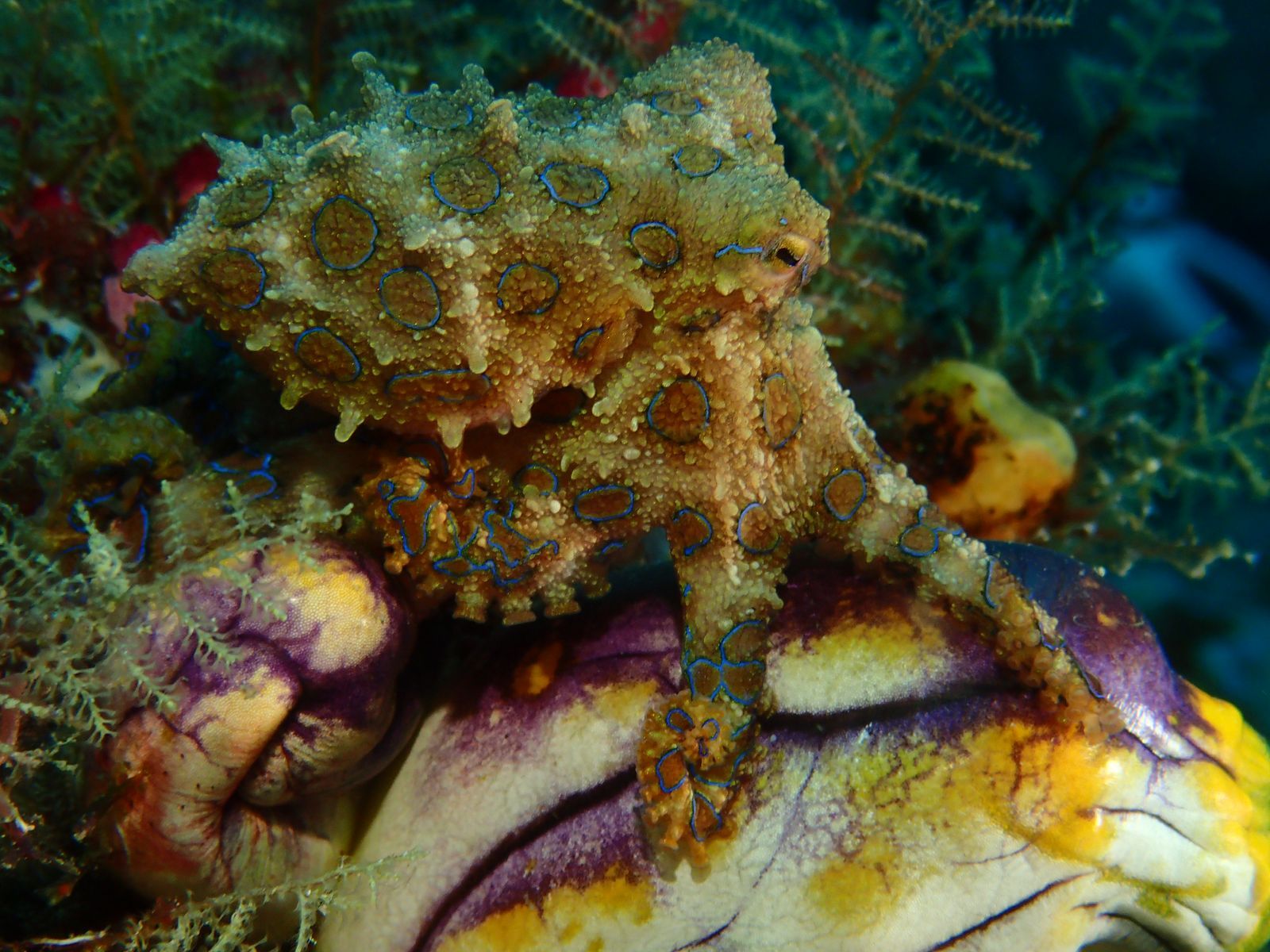
Blue-ringed octopus Hapalochlaena species Raja Ampat Indonesia macro diving liveaboard venomous marine life underwater photography - Picture by Tina Bogdanova
Warum Alor wählen
Der Alor-Archipel besteht aus etwa 20 Inseln in Ost-Nusa Tenggara – Alor Island ist die größte, aber das Tauchen erstreckt sich über die gesamte Gruppe, insbesondere durch die Straße von Pantar zwischen Alor und den Pantar-Inseln.⁹ Die kalten Aufwallungen, die die Straße kanalisiert, schaffen Bedingungen, die nirgendwo sonst in Indonesien zu finden sind. Das gleiche System, das einige Tauchgänge wirklich herausfordernd macht, ist verantwortlich für die außergewöhnliche Meeresfauna – Rhinopias, Hammerhaie, Mola Mola und eine Biodiversitätsdichte, die sich innerhalb des Korallendreiecks befindet, dem globalen Epizentrum der marinen Biodiversität,¹⁶ und der Sunda Banda Seascape, einer der wichtigsten Meeresschutzgebiete Indonesiens.⁷ ¹⁰
Was Alor auszeichnet, ist die Kombination. Weltklasse-Makro-Tauchen in der Kalabahi Bay, pelagische Begegnungen in der Straße, Dugong-Sichtungen in geschützten Seegraswiesen und traditionelle Stammesgemeinschaften mit unterschiedlichen Sprachen und Bräuchen auf den Inseln. Die meisten Liveaboard-Destinationen bieten eines oder zwei dieser Dinge. Alor bietet all dies ohne den Bootsverkehr von etablierteren Zielen.
Lokale Gemeinschaften haben aktiv zerstörerische Fischereipraktiken in weiten Teilen des Archipels verhindert — traditionelle Methoden sind die Norm, und die Riffe spiegeln dies wider. Im Jahr 2015 trugen diese von der Gemeinschaft geführten Arbeiten zur Einrichtung des Pantar Strait Marine Reserve bei, das sich über 277.000 Hektar erstreckt.⁴
Alor passt natürlich in die Routen des Pazifischen Feuerrings und des Banda-Meeres und eignet sich auch als eigenständiges Reiseziel mit eigenen speziellen Tauchsafaris. Sehen Sie sich unseren Banda-See-Leitfaden und Hammerhai-Leitfaden für den breiteren Expeditionskontext an.
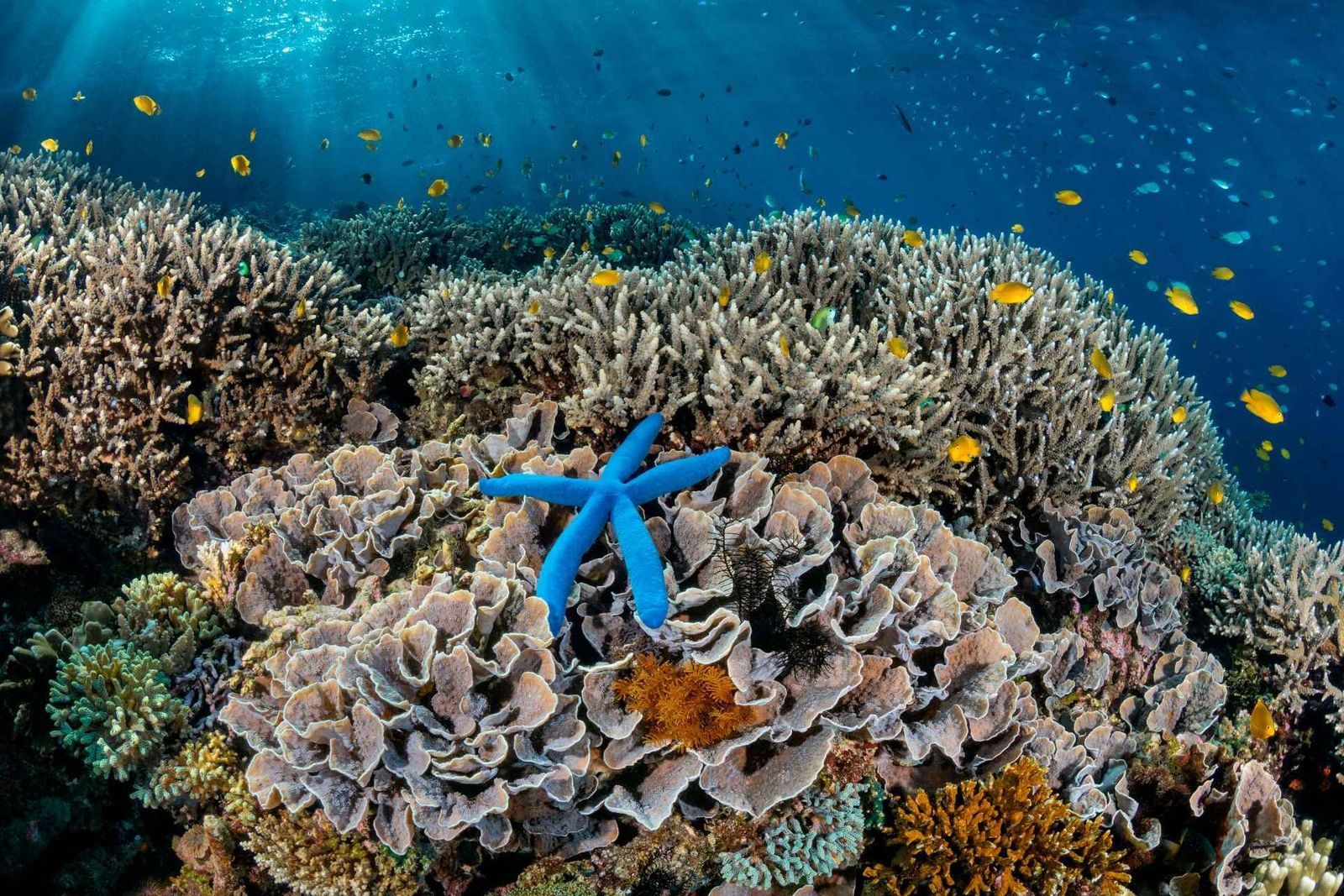
Diverse coral reef ecosystem with blue sea star and yellow fish in Indonesian waters, liveaboard diving - Picture by Majik Liveaboard
Beste Reisezeit für Alor
März bis Oktober ist die Hauptsaison. Trockene Bedingungen, Sichtweite konstant 25–30 m+, und stabile Oberflächenbedingungen in den meisten Teilen des Archipels. Die Temperaturen liegen an der Oberfläche bei etwa 25–30 °C. Dies ist das Zeitfenster, um das die meisten Betreiber ihre speziellen Alor-Routen planen, und wenn der Archipel am zugänglichsten ist.
September und Oktober liegen in einer produktiven Überschneidung — gute Sicht, verbesserte pelagische Aktivität und Beginn des Kaltauftriebszyklus. November bringt stärkere Auftriebe bei Neu- und Vollmond, die Hammerhaie in flacheres Wasser treiben. Die Sicht kann während dieser Auftriebsereignisse abnehmen, aber die gleichen nährstoffreichen Bedingungen ziehen die Haie genau an.
Dezember bis Februar ist die Monsunzeit. Die meisten Betreiber führen in diesem Zeitraum keine Alor-Reisen durch. Die Seebedingungen werden schwierig und die Sicht nimmt erheblich ab. Planen Sie um die Hauptsaison herum.
Alor kommt natürlich in der saisonalen Migration von Tauchsafari-Betreibern vor, die zwischen Komodo und dem Banda-Meer unterwegs sind — viele Überquerungen des Pazifischen Feuerrings führen im Oktober und November hierher, wenn Boote sich für die östliche Saison neu positionieren.
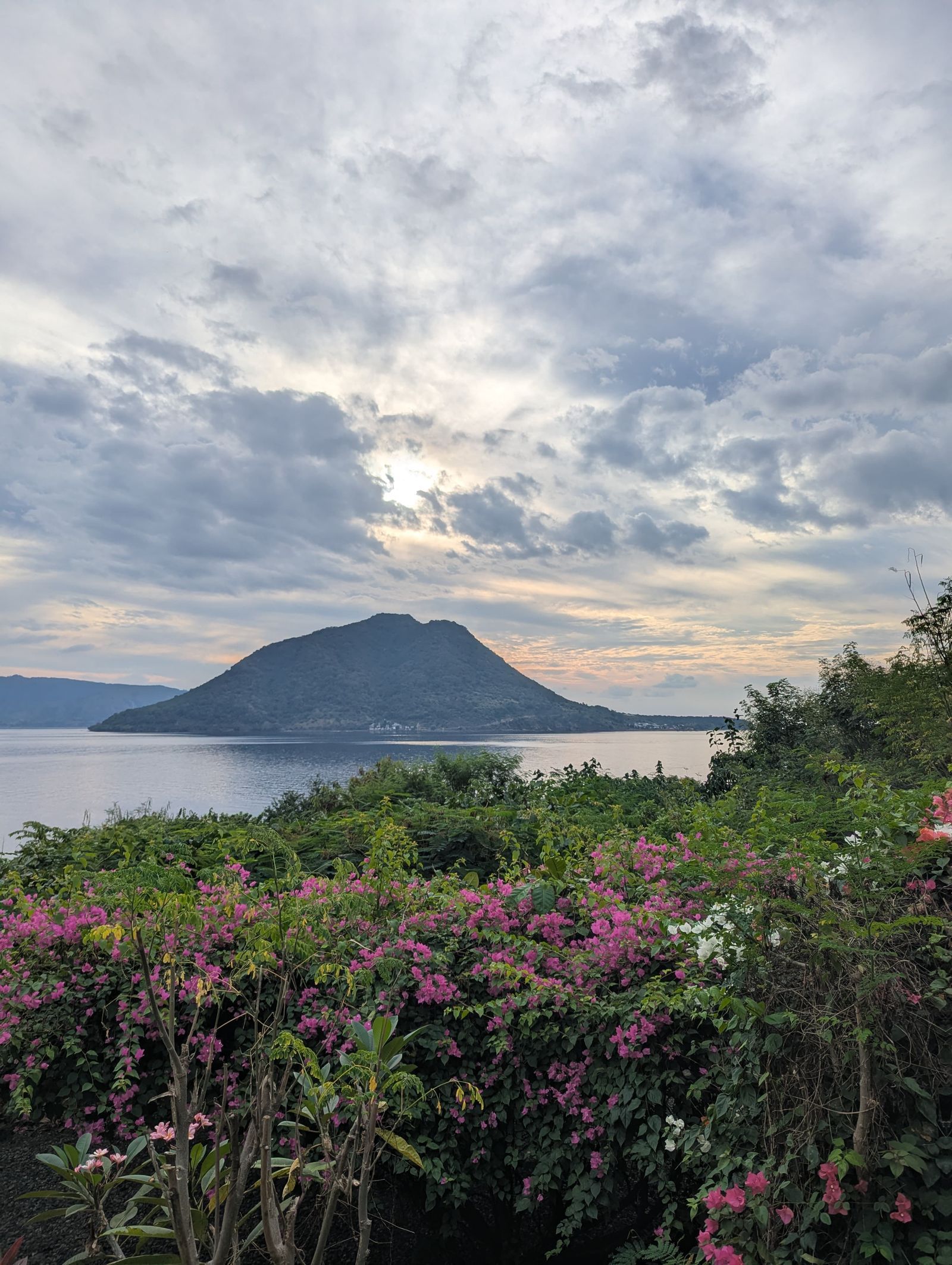
Alor Island sunset view with volcanic peaks and tropical waters - perfect for Indonesia liveaboard diving adventures - Picture by Tina Bogdanova
Anreise
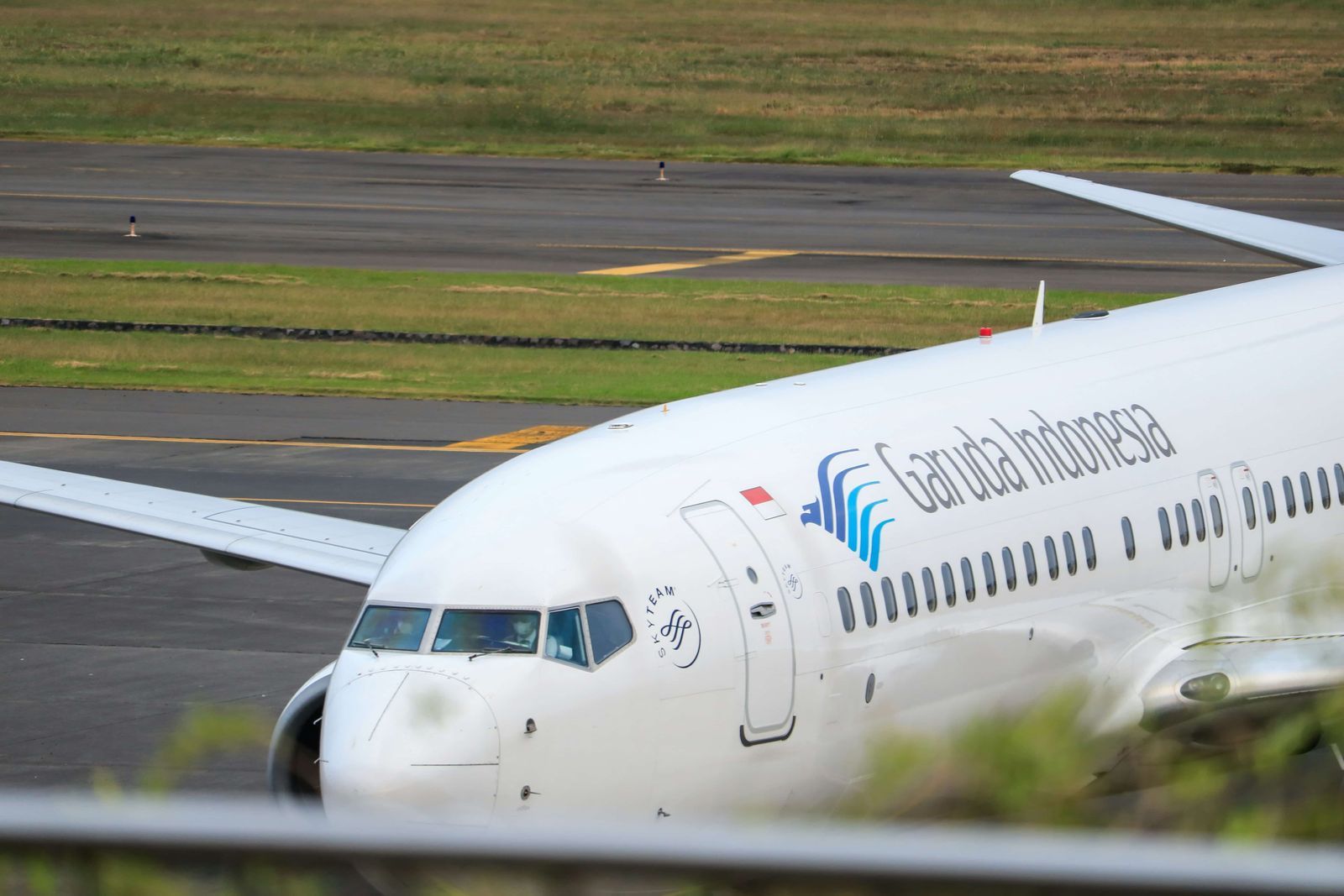
Fliegen Sie von Bali oder Jakarta nach Kupang (KOE) – mehrere tägliche Flüge, etwa 1,5 Stunden von Bali und etwa 3 Stunden von Jakarta. Von Kupang aus betreibt Wings Air tägliche Flüge zum Mali Airport (ARD) in Kalabahi, was etwa 40 Minuten dauert. Der Flughafen ist etwa 20 Minuten vom Hafen von Kalabahi entfernt. Übernachtung in Kupang vor dem Anschluss – Inlandsflugpläne ändern sich und der Anschluss ist zu knapp, um ihn am Reisetag zu riskieren.
Alor Liveaboard-Reiserouten starten oder enden je nach Route in verschiedenen Häfen. Kalabahi ist die typische Basis für spezielle Alor-Touren. Maumere (Flores) oder Labuan Bajo sind übliche Ausgangspunkte für Boote, die von Westen über Komodo kommen. Einige Überfahrten führen weiter nach Osten in Richtung Ambon und der Banda-See. Bestätigen Sie immer Ihre genauen Ein- und Ausschiffungshäfen, bevor Sie Flüge buchen.
Fluglogistik nach Alor ist komplex – Anschlüsse stimmen nicht immer überein und die Flugpläne von Wings Air können unzuverlässig sein. Dies ist eine Route, bei der es sich lohnt, jemanden Ihre Anschlüsse überwachen zu lassen. Coralbound arbeitet mit VIFA Holiday, dem führenden DMC für Indonesiens Tauchindustrie, zusammen, der die Überwachung und Umbuchung von Inlandsflügen während Ihrer Reise übernimmt.
Alor verfügt auch über erstklassige Tauchresorts – mehrere auf Pantar Island und entlang der Nordwestküste von Alor – für Taucher, die eine Liveaboard-Kreuzfahrt mit Landtauchgängen davor oder danach kombinieren möchten. Kontaktieren Sie uns über WhatsApp, wenn Sie Hilfe beim Aufbau dieser Kombination wünschen.
Garuda Indonesia aircraft runway Indonesian domestic flights liveaboard transfers
Meeresleben
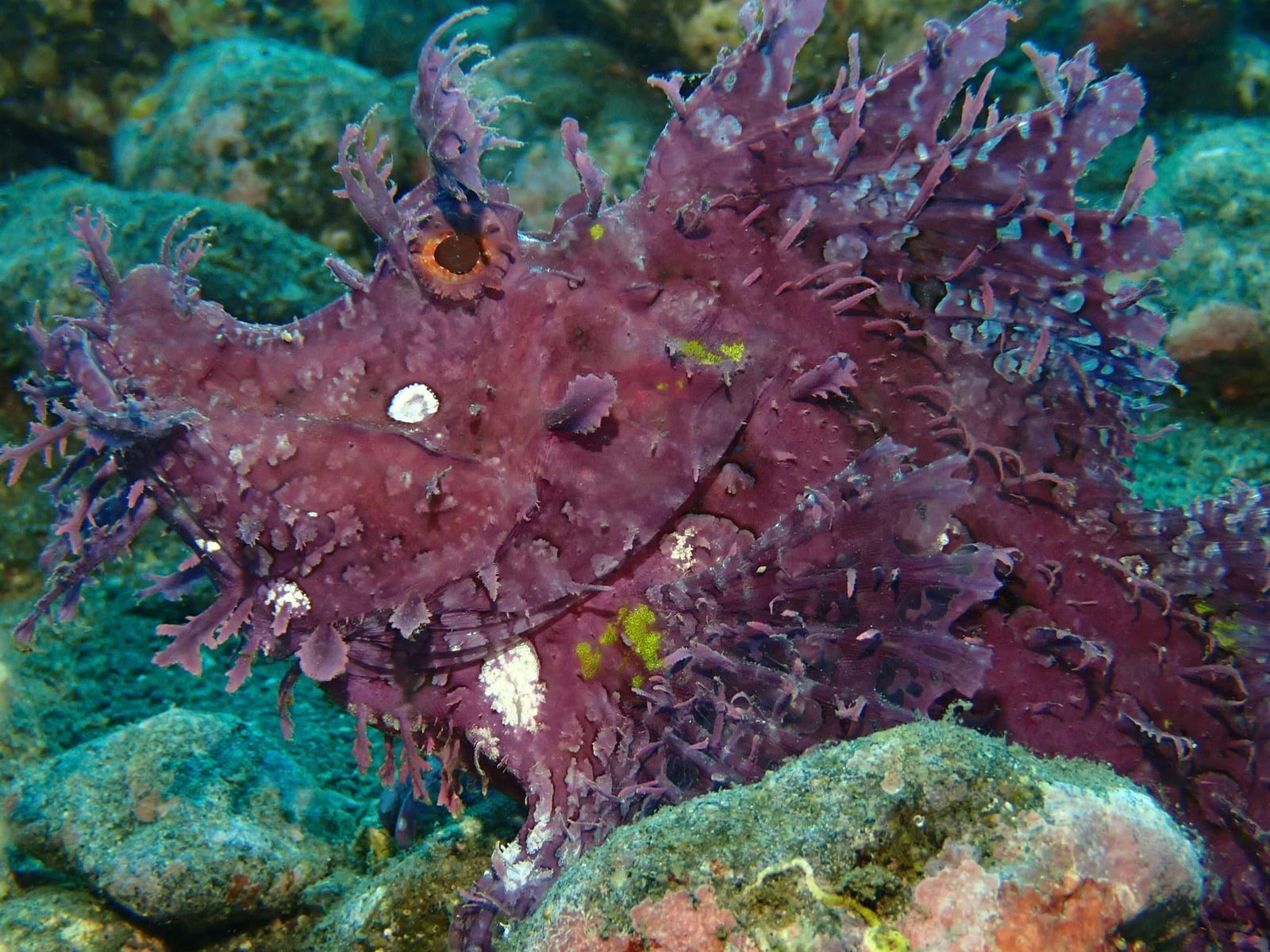
Rhinopias-Skorpionfische sind Alors gefeierteste Art – zwei Varianten werden regelmäßig in den Muck-Tauchplätzen der Bucht von Kalabahi angetroffen. Dramatisch, fotogen und in den meisten Teilen Indonesiens wirklich selten, haben sie Alor auf die internationale Makrofotografie-Karte gesetzt. Sie werden oft zusammen mit Wonderpus-Oktopussen, Blaugeringeltem Kraken, Geisterpfeifenfischen, Pygmäen-Seepferdchen und Nacktschnecken in außergewöhnlicher Vielfalt gefunden.
Hammerhaie sind das pelagische Highlight von September bis November und versammeln sich während Kaltwasseraufwallungsperioden an Schlüsselstellen in der Straße von Pantar. Mola mola werden in der gleichen Saison regelmäßig gesichtet. Fuchshaie erscheinen in tieferem Wasser. Walarten, darunter Blauwale und Grindwale, wurden während der Migrationsperioden dokumentiert – Sichtungen hängen von der Zeit und den Bedingungen ab.
Seekühe sind das ganze Jahr über in den geschützten Seegraswiesen um die Bucht von Mali präsent. Die dort ansässige Population ist der Mittelpunkt einer der überzeugendsten Naturschutzgeschichten Indonesiens – siehe den Abschnitt „Landaktivitäten“ für den Kontext.
Für das vollständige Bild von Makro- und Critter-Tauchgängen in ganz Indonesien siehe unseren Leitfaden für das Tauchen auf kleine Tiere in Indonesien.
Purple rhinopias frondosa rare scorpionfish Alor Indonesia macro diving liveaboard underwater photography holy grail species - Picture by Tina Bogdanova
Uferaktivitäten
Takpala Dorf
Takpala ist seit 1973 auf Alors Kulturkarte, als Fotos seines traditionellen Lebens durch einen Kalender eines niederländischen Besuchers europäische audiences erreichten.³ Das Dorf gewann 1980 den zweiten Platz für das traditionellste in Indonesien und ist nach wie vor die Heimat von Familien des Abui-Stammes – dem größten in Alor. Dreizehn pyramidenförmige Fala Foka-Häuser auf Stelzen, die Kolwat- und Kanuruat-Zeremonialgebäude und der Lego-Lego-Tanz in traditioneller Tracht. Es ist etwa 25–30 Minuten von Kalabahi entfernt und auf den meisten Liveaboard-Ausflugsplänen enthalten.
Mawar und die Dugong-Schutzgeschichte
Mali Bay beherbergt eine der am engsten beobachteten Dugong-Populationen Indonesiens – und die Geschichte dahinter ist es wert, bevor Sie hier tauchen.
Onesimus Laa (Pak One), ein ehemaliges Mitglied einer Gang aus Jakarta, das nach Alor zurückkehrte, begann, Mangroven entlang erodierender Küstenlinien zu pflanzen. Ein Dugong begann, seinem Boot zu folgen – er nannte es Mawar (Rose). In den folgenden Jahren baute Pak One ein Fischerforum auf, das die lokalen Naturschutzpraktiken veränderte und schließlich zur Einrichtung des Pantar Strait Marine Reserve im Jahr 2015 mit einer Fläche von 277.000 Hektar beitrug.⁴⁵
Mawar verbleibt in der Bucht. Im Jahr 2025 dokumentierte WWF Indonesien einen Baby-Dugong neben Mawar und einer weiblichen Dugong namens Melati – das erste aufgezeichnete Kalb in diesen Gewässern.² Die Seegraswiesen, die sie ernähren, werden nun von der WWF-Umfrage als gesund eingestuft.² Einige Betreiber bauen Dugong-Schnorchel-Begegnungen in Alor-Reiserouten ein. Nähern Sie sich leise und befolgen Sie alle Richtlinien des Ortes – dies sind Wildtiere in einem geschützten Reservat.
Erwartungen managen
Strömungen im Pantar-Straße können stark sein und ihre Richtung mit wenig Vorwarnung ändern. Dies ist kein Zwischenziel – Riffhaken sind Standardausrüstung und die Auftriebskontrolle ist in jeder Tiefe wichtig, einschließlich flacher Schlammtauchplätze, wo die Strömung immer noch stark sein kann. Guides timen Tauchgänge auf Gezeitenfenster und passen Pläne an die Bedingungen an. An manchen Tagen ist der geplante Tauchplatz einfach nicht sicher zu betauchen, und die Betreiber werden Alternativen haben.
Thermoclins während der Hammerhai-Saison können dramatisch sein – Oberflächenwasser kann 28°C warm sein und innerhalb desselben Tauchgangs auf 20°C oder kälter fallen. Ein 5–7 mm dicker Neoprenanzug mit Haube ist die richtige Wahl für September–November. Das gleiche kalte Wasser, das Sie zu thermischen Schichten greifen lässt, ist das, was die Hammerhaie anlockt.
Die abgelegene Lage bedeutet begrenzte medizinische Ressourcen. Die nächste Dekompressionskammer befindet sich in Bali. Eine Tauchversicherung mit Notfall-Evakuierung ist hier nicht optional – bestätigen Sie, dass Ihre Police Tauchgänge bis mindestens 40 m abdeckt. Eine Reiseversicherung wird ebenfalls dringend empfohlen: Anzahlungen sind nicht erstattungsfähig und die Restbeträge sind in der Regel 60–90 Tage vor Abreise fällig.
Rhinopias und andere Makro-Motive erfordern Geduld, guten Auftrieb und Zurückhaltung. Nicht berühren, nicht jagen und keinen Sand um die Motive aufwirbeln. Die Tauchguides hier wissen, wo die Tiere sind – folgen Sie ihrer Führung.
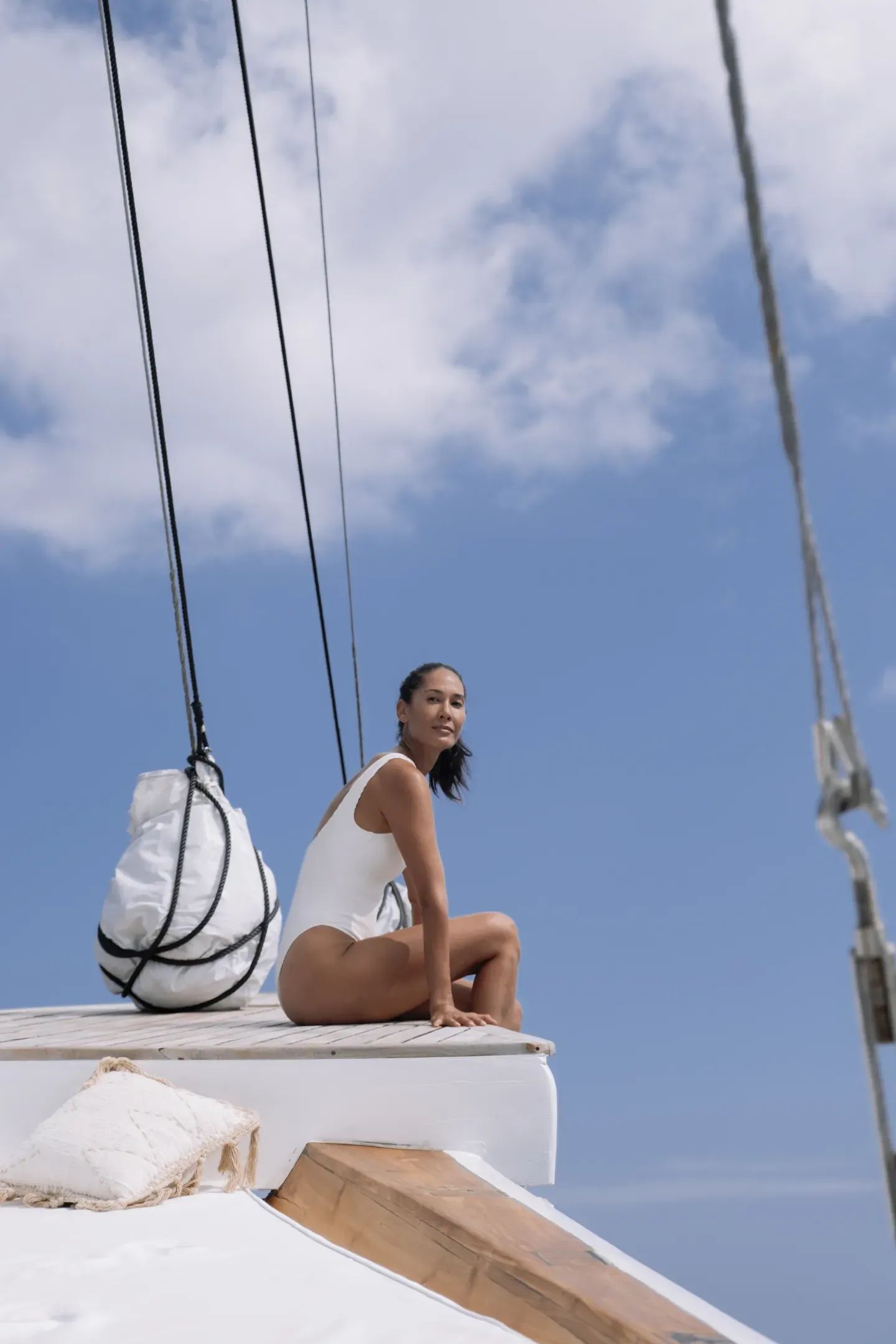
Woman in white swimsuit relaxing on luxury yacht deck with sailing rigging against blue sky and clouds - Picture by Aliikai Voyages
Häufig gestellte Fragen
Ist Alor für Anfänger geeignet?
Einige Luxus- und Freizeitschiffe akzeptieren Open Water Taucher an geeigneten Tauchplätzen. Dennoch bedeuten die Strömungen in der Pantar-Straße und die Tiefe vieler guter Tauchplätze, dass Advanced Open Water und echte Strömungserfahrung dringend empfohlen werden – besonders wenn Hammerhai- oder pelagische Begegnungen das Ziel sind. Prüfen Sie die individuellen Anforderungen der Betreiber in ihren Angeboten, bevor Sie buchen.
Was unterscheidet Alor von Komodo oder der Banda-See?
Alor gehört zu einer anderen Kategorie als beide. Komodo ist zugänglicher und auf Pelagik mit Mantarochen und Strömungstauchgängen ausgerichtet. Die Banda-See konzentriert sich auf Hammerhai-Ansammlungen auf Seamounts und lange Überwasserüberquerungen. Alor kombiniert erstklassiges Makro-Tauchen mit pelagischen Begegnungen in einer Umgebung mit tiefem kulturellem Zugang – traditionelle Stammesgemeinschaften, die die meisten anderen indonesischen Reiseziele nicht haben. Es wird auch häufig in Ring of Fire-Reiserouten mit der Banda-See kombiniert, sodass die beiden komplementäre und keine konkurrierenden Optionen sind.
Kann ich Alor mit anderen indonesischen Reisezielen kombinieren?
Ja – und die meisten Betreiber gestalten es so. Routen des "Ring of Fire", die Alor (oder Kalabahi) über die Banda-See-Inseln mit Ambon verbinden, sind die häufigste Kombination. Andere Betreiber fahren von Alor nach Flores (Maumere) oder verbinden es mit Komodo. Dies sind 10-14-tägige Reiserouten. Kontaktieren Sie uns über WhatsApp, um die Optionen zu besprechen.
Was ist das Pantar Strait Marine Reserve?
Das Pantar Strait Marine Reserve (Suaka Alam Perairan Selat Pantar) wurde 2015 gegründet und umfasst etwa 277.000 Hektar.⁴ Es schützt die Seegraswiesen, Korallenriffe und Mangrovensysteme des Alor-Archipels, einschließlich des Lebensraums für Dugongs in der Mali Bay. Es wurde durch die Zusammenarbeit lokaler Gemeinschaften, WWF Indonesien, der Alor Water Police und des Ministeriums für maritime Angelegenheiten – mit dem Kabola Fishermen Communication Forum (unter der Leitung von Pak One) als treibende Kraft – ins Leben gerufen.
Wann sind Hammerhaie am zuverlässigsten zu sehen?
September bis November, während der Kaltwasserauftriebsperioden bei Neu- und Vollmond. Tauchgänge am frühen Morgen zur richtigen Gezeitenphase bieten die beste Chance auf Begegnungen. Guides in Alor kennen diese Zeitfenster gut – vertrauen Sie ihrer Planung und Tauchzeit. Außerhalb dieser Saison sind Hammerhai-Sichtungen möglich, aber weniger vorhersehbar.
Benötige ich spezielle Ausrüstung für Tauchgänge in Alor?
Ein Riffhaken ist unerlässlich – betrachten Sie ihn als obligatorisch. Ein Oberflächenboje ist bei allen Tauchgängen erforderlich. Ein 5-7 mm dicker Neoprenanzug mit Haube für die Auftriebssaison von September bis November; 3-5 mm sind in den wärmeren Monaten ausreichend. Makroobjektiv für Rhinopias-Fotografie. Eine Nitrox-Zertifizierung ist für mehrtägige Tauchgänge in der Tiefe lohnenswert. Eine vollständige Ausrüstungsliste finden Sie in unserem Packratgeber für Liveaboards in Indonesien.
Gibt es gute Makro-Tauchplätze jenseits von Rhinopias?
Ausgezeichnet. Die Kalabahi-Bucht ist einer der besten Muck-Diving-Spots Indonesiens – Wonderpus-Oktopusse, Blaugeringelte Kraken, Anglerfische, Geisterpfeifenfische und Nacktschnecken in bemerkenswerter Vielfalt. Mandarinfische bei Sonnenuntergangstauchgängen an bestimmten Stellen. Die Makro-Tauchgänge hier können in Vielfalt und Qualität mit Lembeh und Ambon mithalten, obwohl sie weitaus weniger besucht sind.
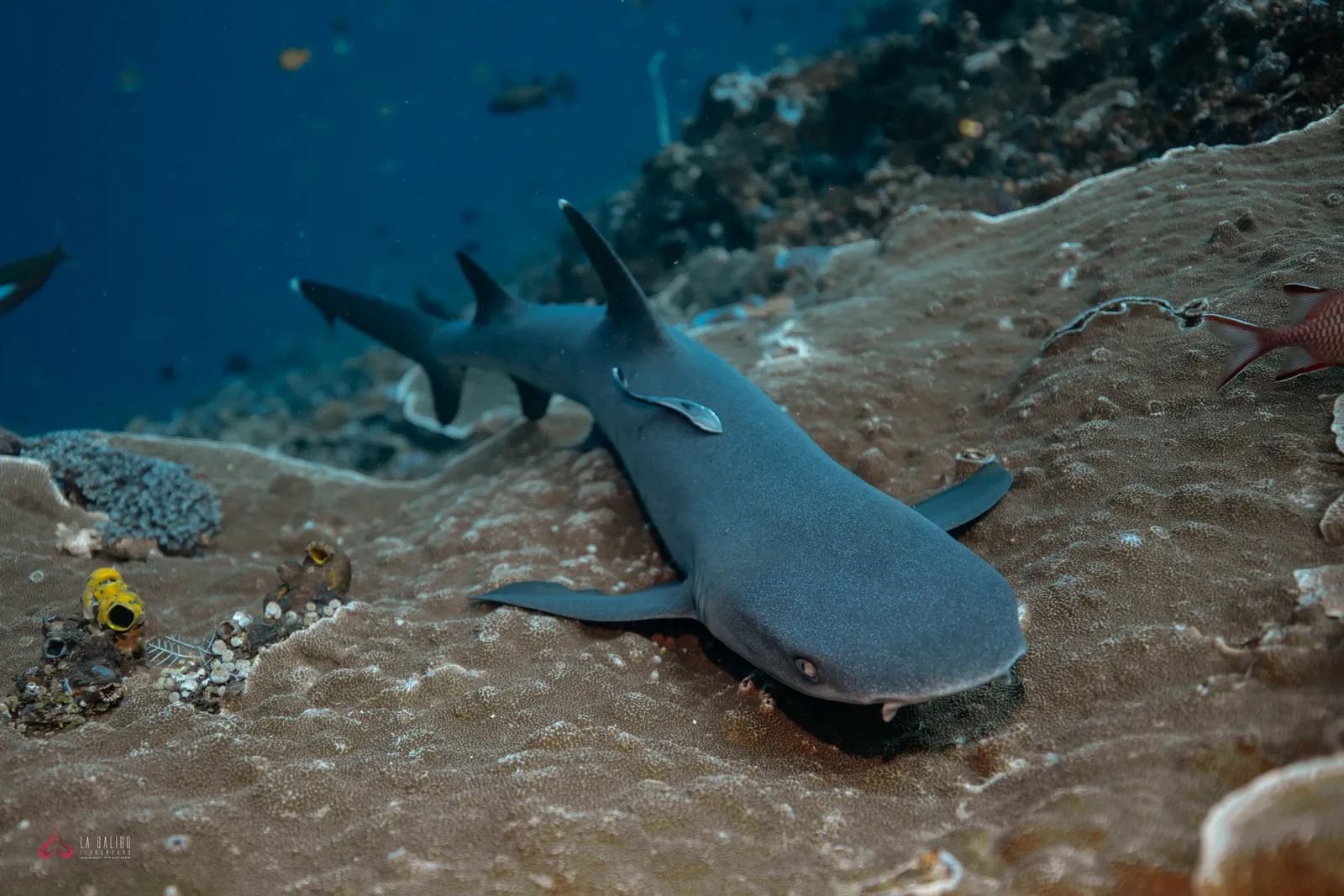
White tip reef shark resting on coral reef during Indonesia liveaboard diving expedition - Picture by La Galigo Liveaboard
Buchen Sie Ihre Alor-Reise
Wir sind eine in Bali ansässige Plattform, die von Tauchern betrieben wird, die Alor gut kennen. Sie zahlen den gleichen Preis, wenn Sie über uns buchen, wie wenn Sie direkt buchen – die Betreiber halten die Preise über alle Kanäle hinweg gleich. Jede Buchung über Coralbound beinhaltet ein Buchungsgeschenk – einschließlich der Option auf eine kostenlose Hotelnacht – und Sie erhalten echten Support: Koordination von Inlandsflügen über VIFA Holiday und ein Team, das versteht, was abgelegene indonesische Expeditionen tatsächlich bedeuten.
Fragen vor der Buchung? Schicken Sie uns eine Nachricht auf WhatsApp oder erreichen Sie uns über unser Kontaktformular. Möchten Sie mehr darüber erfahren, wie wir arbeiten? Lesen Sie unsere Seite Warum mit Coralbound buchen.