Halmahera liegt zwischen Raja Ampat und Nord-Sulawesi, in den nördlichen Ausläufern des Korallendreiecks. Der Geisterschiffhai (Hemiscyllium halmahera) ist hier endemisch – erstmals 2008 von einem Tauchguide fotografiert und 2013 wissenschaftlich beschrieben.¹² Zweiter Weltkrieg Wracks vor Morotai – Flugzeuge, Jeeps, Panzer – nun mit Korallen überkrustet und von Riffhaien patrouilliert. Unberührte Riffe in der Weda-Bucht, den Goraici-Inseln und der Patinti-Straße, die fast keinen Freizeittourismus sehen. Pulau Gurida (Tifure), auf halbem Weg zwischen Halmahera und Nord-Sulawesi, bietet einige der spektakulärsten Schwarmfischbegegnungen in Ost-Indonesien. Dies ist ein Reiseziel für Taucher, die Raja Ampat bereits besucht haben und weiter reisen möchten.
Dieser Leitfaden behandelt alles, was Sie zur Planung einer Liveaboard-Reise nach Halmahera benötigen: die wichtigsten Gebiete, was Sie unter Wasser erwartet, wie Sie dorthin gelangen und wie es in die breiteren Routen von Nord-Maluku und Indonesien passt. Er ist Teil unseres vollständigen Liveaboard-Leitfaden für Indonesien – dem zentralen Knotenpunkt für alle indonesischen Tauchziele.
Schnelle Fakten über das Tauchen in Halmahera
- Beste Jahreszeit: April–Oktober (Trockenzeit, Südostmonsun, ruhigere See)
- Korallenarten: 544 Arten in der Ökoregion Halmahera⁵¹⁰
- Fischarten: Drittgrößte Artenvielfalt der Korallen-Ökoregionen weltweit (141)⁵¹⁰
- Wassertemperatur: 27–30°C ganzjährig
- Sichtweite: Typisch 15–30 m; variiert je nach Standort
- Tauchgänge pro Tag: 3–4 auf den meisten Routen
- Erfahrungslevel: Mittelstufe bis Fortgeschrittene empfohlen
- Reiselänge: 10–14 Tage, meist als Überquerungsroute
- Kostenbereich: 400–800 $/Tag je nach Schiff
- Zielflughafen: Ternate (TTE) über Makassar oder Manado
- Buchungsvorlaufzeit: 6–12 Monate; begrenzte Abfahrten
Schnelle Antworten
Wann ist die beste Zeit, um Halmahera zu betauchen?
April bis Oktober ist die Hauptsaison, bedingt durch den Südostmonsun, der ruhigere See und bessere Sichtverhältnisse bringt.⁹ Dies steht ungefähr im Gegensatz zum Zeitraum Oktober-April von Raja Ampat, anstatt ihn zu ergänzen – es lohnt sich, dies direkt mit einem Betreiber zu überprüfen, wenn Sie eine kombinierte Überquerung planen, da die Routen auf den wichtigsten Teil der Strecke abgestimmt sind. Der Nordwestmonsun von November bis März bringt stärkere Winde und Wellen nach Halmahera, und die Abfahrten sind in dieser Zeit seltener, obwohl einige Betreiber immer noch Touren anbieten. Für die allgemeineren saisonalen Muster Indonesiens siehe unseren Leitfaden zu Wetter- und Tauchsaisons in Indonesien.
Was ist der Geisterschiffhai von Halmahera?
Hemiscyllium halmahera ist endemisch in den Gewässern um Ternate, Halmahera und den nahegelegenen Inseln Nord-Malukus.¹ Erstmals 2008 von einem lokalen Tauchguide fotografiert, wurde er 2013 von Allen, Erdmann und Dudgeon offiziell beschrieben.² Er läuft über das Riff, indem er seine Brustflossen benutzt – am aktivsten bei Nachttauchgängen – und ist nicht wandernd, sodass er das ganze Jahr über an den richtigen Stellen gefunden werden kann.
Wie komme ich nach Halmahera?
Fliegen Sie zum Flughafen Ternate (TTE) über Makassar oder Manado. Vom Hafen Ternate erreichen Sie Ihr Liveaboard mit einer kurzen Überfahrt. Viele Routen starten in Sorong und führen durch Halmahera als Überquerung, die in Ternate, Manado oder Bitung endet. Andere beginnen in Bitung in Nord-Sulawesi und fahren nach Osten durch Pulau Gurida (Tifure) nach Halmahera. Bestätigen Sie immer Ihre genauen Ein- und Ausschiffungshäfen, bevor Sie Inlandsflüge buchen.
Wie viele Betreiber betreiben Halmahera?
Mehr als Sie vielleicht für ein Grenzgebiet erwarten würden – nicht so viele wie Raja Ampat oder Komodo, aber mehr als an Orten wie der Cenderawasih-Bucht. Halmahera hat in letzter Zeit an Bedeutung gewonnen, da Nord-Halmahera und Morotai wachsende Aufmerksamkeit von Betreibern und erfahrenen Tauchern auf sich ziehen. Die meisten betreiben es als Teil einer Überquerung von Raja Ampat nach Nord-Sulawesi oder einer speziellen Nord-Maluku-Route. Kontaktieren Sie uns über WhatsApp, um zu besprechen, was derzeit geplant ist.
Was unterscheidet Halmahera von Raja Ampat?
Raja Ampat hat eine insgesamt höhere Artenvielfalt und viel mehr Betreiberoptionen. Halmahera hat seinen eigenen endemischen Laufhai, dramatische Wracktauchgänge aus dem Zweiten Weltkrieg bei Morotai, weniger Boote an jedem Ort und das Schwarm-Pelagik-Spektakel bei Pulau Gurida (Tifure). Für Taucher, die die etablierte Raja Ampat-Route hinter sich haben und etwas weniger Bekanntes suchen, ist Halmahera der natürliche nächste Schritt – und oft auf derselben Route.
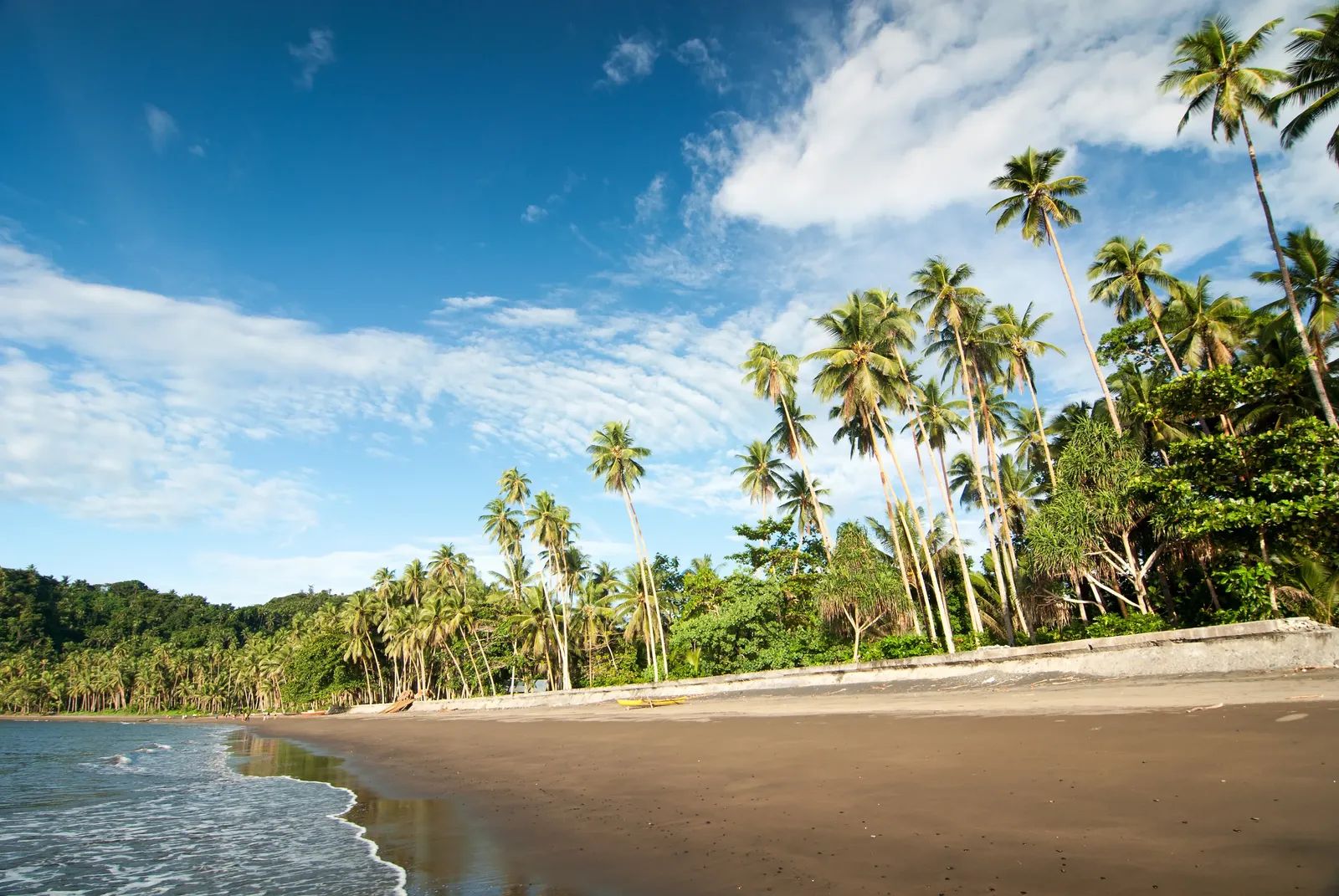
Untouched tropical beach with coconut palms along Halmahera coastline, representing the secluded paradise destinations accessible through Indonesian liveaboard expeditions - Picture by Jakare Liveaboard
Warum Halmahera
Halmahera ist die größte Insel der Provinz Nord-Maluku und Teil der ursprünglichen Gewürzinseln – Nelken und Muskatnuss machten diese Gewässer einst zu einigen der am heftigsten umkämpften der Erde. Heute beherbergen sie einige der am wenigsten betauchten Riffe Indonesiens.
Die Ecoregion Halmahera weist die dritthöchste Korallendiversität aller 141 Ecoregionen im Indo-Westpazifik auf, mit 544 aufgezeichneten Korallenarten.⁵¹⁰ Sie liegt innerhalb des breiteren Korallendreiecks,³⁴ und ihre Lage am Zusammenfluss des Halmahera-Meeres und des Molukka-Meeres erzeugt die nährstoffreichen Strömungen, die die Riffsysteme in der Weda-Bucht, den Goraici-Inseln, der Patinti-Straße, Bacan und Morotai speisen.
Der endemische Laufhai (H. halmahera) ist die Hauptart, aber das Verbreitungsgebiet ist breiter gefasst. Schwarzspitzen-, Weißspitzen- und Graue Riffhaie werden regelmäßig an mehreren Stellen angetroffen. Hammerhaie ziehen saisonal durch tiefe Kanäle. Mantarochen besuchen Putzstationen. Spinnerdelfine und Grindwale tauchen in den tieferen Kanälen auf. Pulau Gurida (Tifure), auf halbem Weg zwischen Halmahera und Nord-Sulawesi gelegen, produziert regelmäßig Schwärme von Barrakudas in einer Zahl, die ihn zu einem der spektakulärsten Fischbegegnungen im östlichen Indonesien macht.
Die Geschichte des Zweiten Weltkriegs fügt eine ganz neue Dimension hinzu. Morotai diente als Hauptoperationsbasis von General MacArthur im Pazifik, und die Wracks – Flugzeuge, Jeeps, Panzer – liegen nun in Freizeittiefen auf dem Riff, von Korallen überwachsen und von Riffhaien umgeben.⁷
Die meisten Taucher erleben Halmahera als Teil einer Überquerung von Sorong nach Ternate (oder Sorong nach Bitung), die die nördlichen Gebiete von Raja Ampat einschließt, bevor es weiter nach Nord-Maluku geht. Spezielle Routen für Nord-Halmahera und Morotai werden ebenfalls zunehmend verfügbar. Einige Anbieter betreiben eine Route von Nord-Sulawesi nach Halmahera, beginnend in Bitung und ostwärts. Die Plätze sind bei allen Formaten begrenzt – buchen Sie frühzeitig.
Beste Reisezeit
April bis Oktober ist die Hauptsaison. Laut dem Faktenblatt der IUCN Shark Specialist Group zu Halmahera bringt der Südostmonsun (Mai-Oktober) weniger Niederschlag und bessere Sicht, allerdings mit anhaltenden Winden und stärkeren Wellen; der Nordwestmonsun (November-März) bringt wärmeres Wasser, aber höhere Niederschläge und reduzierte Sicht.⁹ Die meisten unabhängigen Anbieter gestalten ihre Routen daher um das trockenere Zeitfenster des Südostmonsuns. Dies steht eher im Gegensatz zur Saison von Raja Ampat (Oktober-April), anstatt mit ihr übereinzustimmen – einige Überquerungsrouten werden immer noch von Oktober bis April durchgeführt, gerade weil sie auf die Routen von Raja Ampat abgestimmt sind, sodass beide Muster je nach Anbieter und Route existieren.
November bis März bringt den Nordwestmonsun und die damit verbundenen Niederschläge, und die Abfahrten sind seltener, obwohl einige Anbieter auch in diesem Zeitraum noch Touren anbieten. Der Laufhai ist nicht wandernd und das ganze Jahr über bei Nachttauchgängen unabhängig von der Saison verfügbar.
Buchen Sie 6–12 Monate im Voraus. Halmahera gewinnt an Bedeutung, aber die Frequenz der Anbieter bleibt im Vergleich zum Hauptcircuit Indonesiens begrenzt.
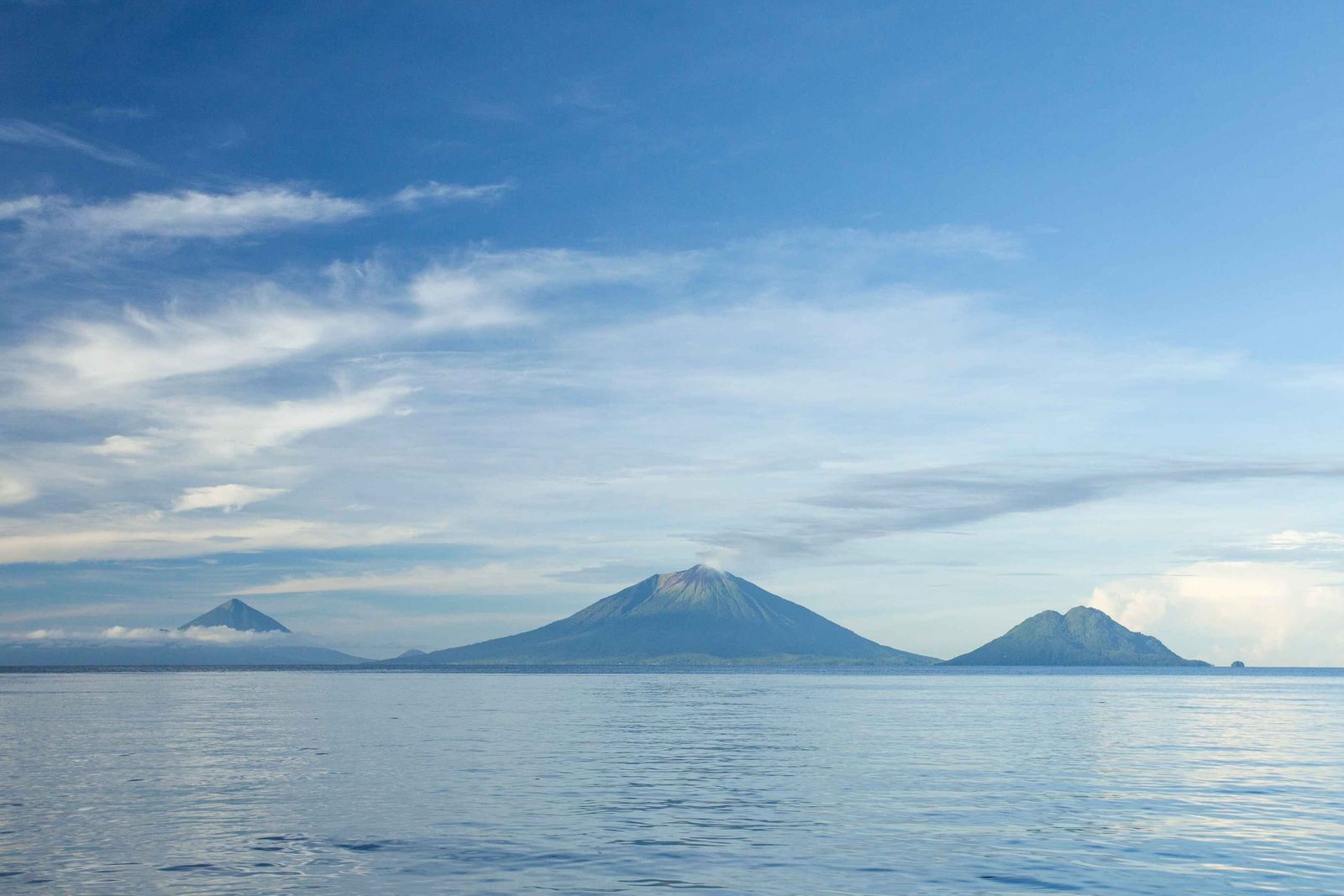
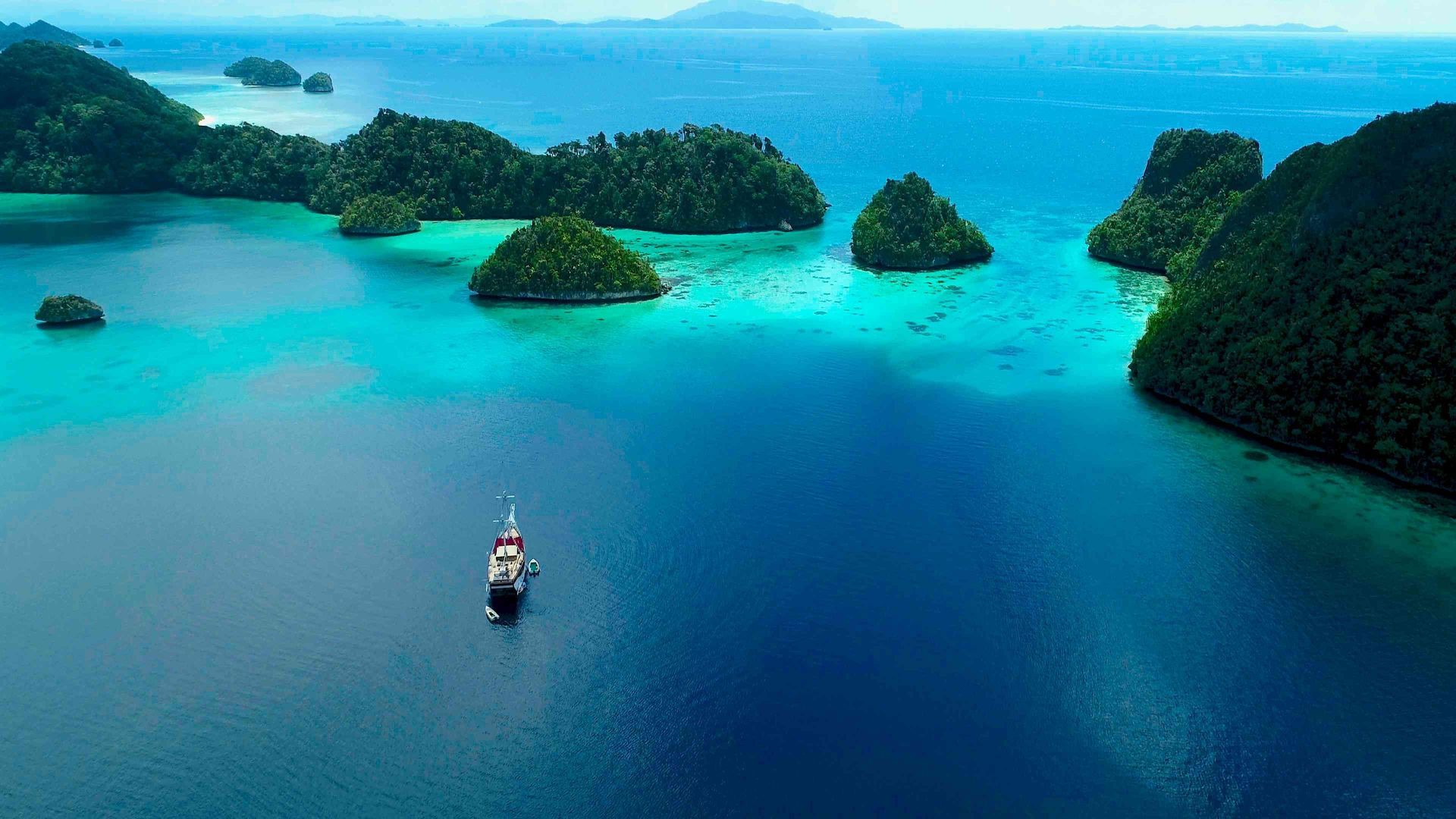
Volcanic islands and calm seas viewed from liveaboard boat in Indonesia, spectacular diving cruise scenery - Picture by Jakare Liveaboard
Anreise
Fliegen Sie zum Flughafen Ternate (TTE) über Makassar (UPG) oder Manado (MDC) von Jakarta (CGK) oder Bali (DPS). Ternate ist eine kurze Hafentransfer vom Flughafen entfernt. Die meisten Liveaboards ab Ternate gehen hier an oder von Bord.
Die Reiserouten variieren erheblich. Die Überfahrten von Sorong nach Ternate sind die häufigsten und decken die nördlichen Gebiete von Raja Ampat ab, bevor sie nach Nord-Maluku führen. Einige setzen die Reise über Pulau Gurida (Tifure) weiter nach Bitung (Nord-Sulawesi) fort. Betreiber fahren die Route auch in umgekehrter Richtung oder bieten spezielle Routen für Nord-Halmahera und Morotai an, die in Ternate beginnen und enden.
Inlandsflüge nach Ternate sind über Manado oder Makassar unkompliziert, aber die Flugpläne können sich ändern. Coralbound arbeitet mit VIFA Holiday, dem führenden DMC für Indonesiens Tauchindustrie, zusammen, der die Überwachung und Umbuchung von Inlandsflügen während Ihrer Reise übernimmt.
Garuda Indonesia aircraft runway Indonesian domestic flights liveaboard transfers
Meeresleben
Der Halmahera-Wanderhai
Hemiscyllium halmahera ist in den Gewässern von Nord-Maluku endemisch – die einzige Epaulettenhai-Art, die spezifisch für diese Region ist.¹⁹ Beschrieben im Jahr 2013 anhand von Exemplaren, die in der Nähe von Ternate gesammelt wurden, wandert er mit seinen Brustflossen über das Riff, auf der Suche nach kleinen Krebstieren und Fischen.² Nicht wandernd und nachtaktiv, wird er am zuverlässigsten bei Nachttauchgängen angetroffen. Standorte rund um die Weda-Bucht sind am konstantesten für Begegnungen. Gute Guides, die die Mikrohabitate kennen, machen einen erheblichen Unterschied.
Pulau Gurida (Tifure) – Das pelagische Spektakel
Pulau Gurida (Tifure) liegt im offenen Molukkensee, etwa auf halbem Weg zwischen Halmahera und Nord-Sulawesi, und ist auf fast jeder Überfahrtsroute zwischen den beiden zu finden. Der Ort zeichnet sich durch massive Schwärme von Barrakudas aus – Zahlen, die regelmäßig Hunderte erreichen – neben Großaugen-Stachelmakrelen, Füsiliers und grauen Riffhaien. Mandarinfische führen ihren Paarungsritual bei Einbruch der Dunkelheit auf. Die Kombination aus spektakulären Schwarmfischen und intimen Makro-Begegnungen macht Pulau Gurida (Tifure) zu einem konstanten Höhepunkt auf jeder Halmahera-Route.
WWII-Wracks bei Morotai
Die Insel Morotai diente General MacArthur als pazifische Operationsbasis während des Zweiten Weltkriegs.⁷ Die Gewässer beherbergen Bristol Beaufort-Flugzeugwracks, Jeeps, Lastwagen und Panzer in Freizeittiefen – nun von Korallen überkrustet und Heimat von Riffischen, Haien und Schildkröten. Begegnungen mit Riffhaien sind bei fast jedem Tauchgang bei Morotai möglich. Die Wracks liegen neben unberührten Riffsystemen und schaffen ein Reiseziel, das Geschichte mit natürlichem Tauchen auf eine Weise verbindet, wie es nur wenige Orte in Indonesien können.
Haie und Pelagische Fische
Schwarzspitzen-, Weißspitzen- und Graue Riffhaie sind regelmäßig in den Riffsystemen von Halmahera anzutreffen – insbesondere in der Patinti-Straße, bei Pulau Gurida (Tifure) und rund um Morotai.⁹ Hammerhaie ziehen saisonal durch tiefe Kanäle – siehe unseren Leitfaden für Hammerhaie in Indonesien für den vollständigen Kontext des Hammerhai-Tauchens in Indonesien. Mantarochen besuchen Reinigungsstationen rund um vulkanische Pinnacles. Spinnerdelfine und Grindwale tauchen in tieferen Kanälen auf, insbesondere rund um Morotai und Pulau Gurida (Tifure). Für das vollständige Bild des Tauchens mit großen Tieren in Indonesien siehe unseren Leitfaden für Tauchgänge mit großen Tieren in Indonesien.
Riffische und Makrofauna
Die Riffsysteme in der Weda-Bucht und den Goraici-Inseln weisen eine dichte Korallenbedeckung mit Schwärmen von Füsilierefischen, Schnappern, Doktorfischen und Buckelkopf-Papageienfischen auf. Das vulkanische Substrat und die geschützten Buchten schaffen starke Makro-Bedingungen – Pygmäen-Seepferdchen auf Gorgonienfächern, Geisterpfeifenfische, Nacktschnecken in großer Vielfalt und Anglerfische. Nachttauchgänge im gesamten Archipel offenbaren Oktopusse, Tintenfische und Krebstiere unter Bedingungen, die nur wenige andere Taucher erleben. Für das vollständige Bild des Tauchens mit kleinen Tieren in Indonesien siehe unseren Leitfaden für Tauchgänge mit kleinen Tieren in Indonesien.
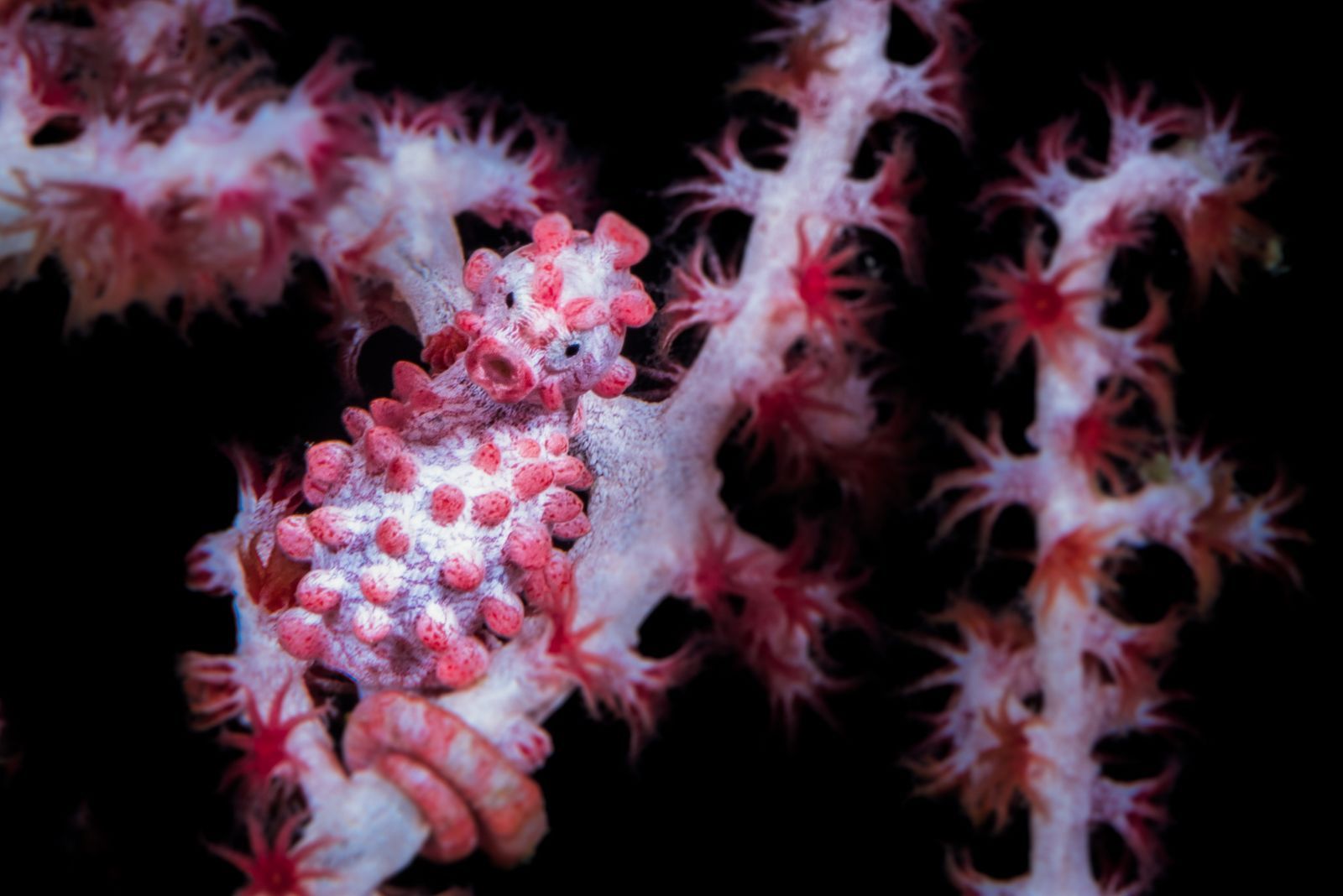
Pygmy seahorse camouflaged on soft coral in Indonesia - macro diving photography from liveaboard diving trip - Picture by Dewi Nusantara
Landaktivitäten
Das Erbe der Gewürzinseln ist zentral für Nord-Maluku. Ternate war jahrhundertelang das globale Zentrum des Gewürzhandels – Fort Oranje und der Sultanspalast sind gut erhalten und einen Besuch wert an Ihren Ein- oder Ausschiffungstagen. Der vulkanische Kegel des Gamalama erhebt sich direkt von der Insel Ternate und ist bei der Annäherung vom Wasser aus sichtbar.
Die Geschichte des Zweiten Weltkriegs auf Morotai ist über und unter Wasser gleichermaßen fesselnd. Die Insel diente als Hauptquartier des Pazifiks von MacArthur und birgt Überreste dieser Ära, darunter ein kleines Museum. Die Kombination aus Riff-Tauchen, Wrack-Tauchen und der Geschichte des Pazifikkriegs ist in Indonesien einzigartig.
Für Reiseverlängerungen siehe unseren Leitfaden für Liveaboard-Verlängerungen in Indonesien. Halmahera schließt sich natürlich an Nord-Sulawesi – Lembeh und Bunaken – an für eine breitere Nord-Indonesien-Route.
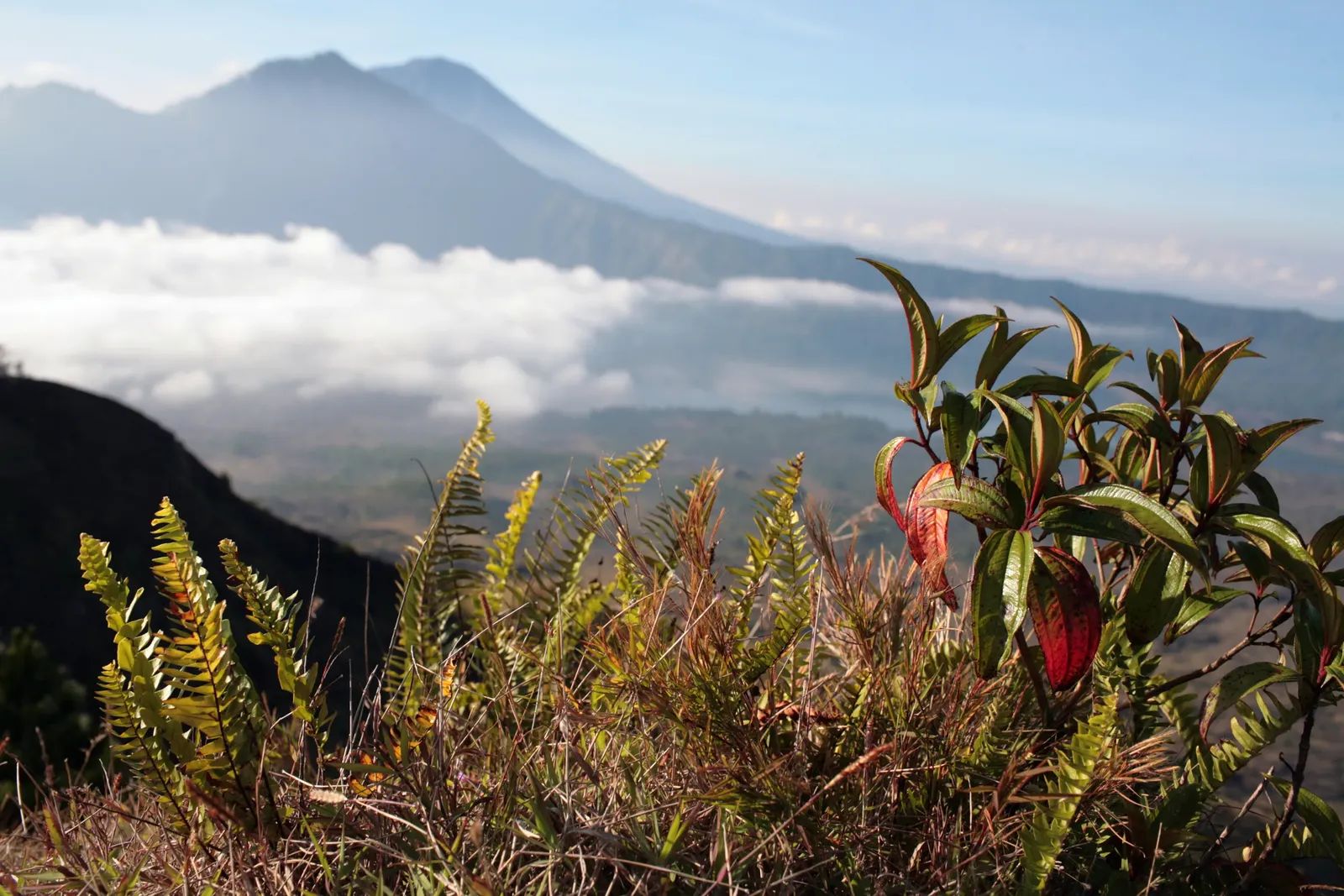
Lush tropical vegetation and volcanic mountains of Halmahera Island, Indonesia, showcasing the pristine natural landscape accessible on diving liveaboard expeditions - Picture by Jakare Liveaboard
Erwartungen managen
Halmahera ist ein Grenzgebiet. Einige Tauchplätze haben keine etablierten Namen. Nicht jedes Gebiet ist gut dokumentiert und das Tauchen unterscheidet sich im Charakter vom ausgereiften, polierten Raja Ampat-Kreislauf. Das ist Teil des Reizes – aber es bedeutet auch, dass die Bedingungen weniger vorhersehbar sind und die Erfahrung stärker vom Wissen des Betreibers über die jeweilige Region abhängt.
Strömungen variieren je nach Standort erheblich. Die Patinti-Straße erzeugt starke Strömungen, die Drift-Taucherfahrung erfordern. Die meisten Betreiber empfehlen mindestens Advanced Open Water, und echte Strömungserfahrung ist an den stärkeren Standorten wichtig.
Der Laufhai wird zuverlässig bei Nachttauchgängen von Betreibern angetroffen, die die richtigen Mikrohabitate kennen. Er ist scheu, langsam und belohnt geduldige Beobachtung aus respektvoller Entfernung. Planen Sie Zeit für mehrere Nachttauchgänge ein, anstatt eine einzige garantierte Begegnung zu erwarten.
Medizinische Ressourcen in Nord-Maluku sind begrenzt. Das nächstgelegene Krankenhaus mit nennenswerter Kapazität befindet sich in Ternate. Eine Tauchversicherung mit Notfallrettung ist keine Option. Eine Reiseversicherung wird dringend empfohlen – Halmahera-Reisen sind nicht billig und die Anzahlungen sind nicht erstattungsfähig.
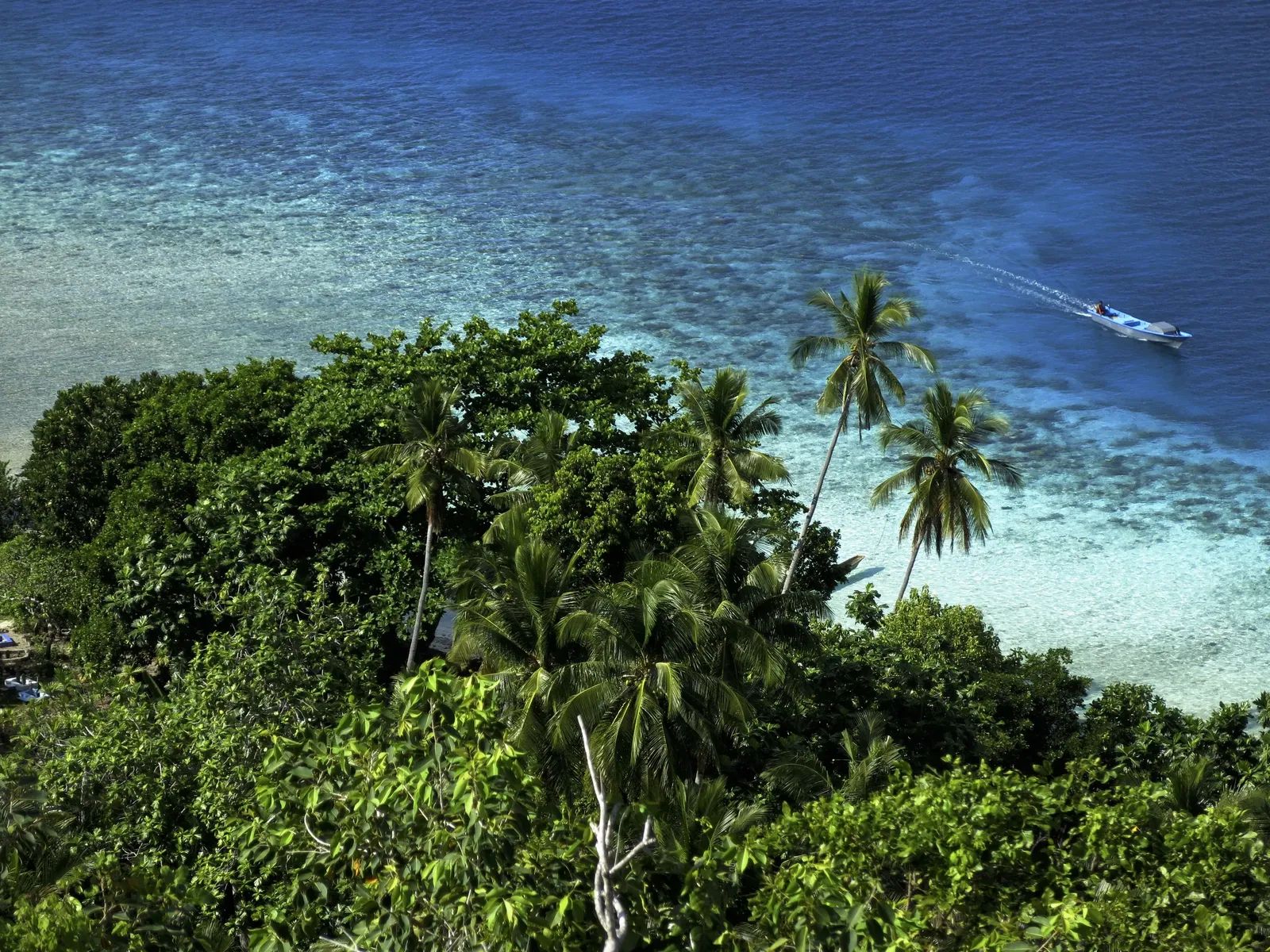
Aerial view of pristine tropical island with palm trees and coral reef shallows in Halmahera, showcasing remote diving destinations reached by liveaboard charters - Picture by Jakare Liveaboard
FAQ
Ist Halmahera für Anfänger geeignet?
Ja, obwohl die meisten Betreiber aus guten Gründen Advanced Open Water empfehlen – wechselnde Strömungen, abgelegene Lage und begrenzte Notfallunterstützung. Einige Tauchplätze rund um die Weda Bay und Ternate sind ruhiger und gut für selbstbewusste Open Water-Taucher geeignet. Überprüfen Sie die Anforderungen des Betreibers vor der Buchung.
Wie verhält sich Halmahera im Vergleich zur Banda-See oder Raja Ampat?
Anders in Charakter als beide. Raja Ampat hat die höchste dokumentierte Artenvielfalt und die meisten Betreiber. Die Banda-See ist definiert durch Hammerhaie und Überquerungen im offenen Wasser. Halmahera bietet den endemischen Laufhai, die Geschichte des Zweiten Weltkriegs bei Morotai, das schulbildende Spektakel bei Pulau Gurida (Tifure) und ein Grenzgefühl, das die etablierten Reiseziele nicht mehr bieten. Sehen Sie unseren Banda-See-Leitfaden und Raja Ampat-Leitfaden zum Vergleich.
Kann ich Halmahera mit anderen Zielen kombinieren?
Ja – die meisten Taucher erleben es als Kombination. Die gängigsten Routen sind Raja Ampat nach Halmahera (Sorong nach Ternate) und Nordsulawesi nach Halmahera (Bitung nach Ternate oder umgekehrt), wobei Pulau Gurida (Tifure) auf beiden vorkommt. Dedizierte Routen für Nord-Halmahera und Morotai sind ebenfalls verfügbar. Kontaktieren Sie uns über WhatsApp, um aktuelle Abfahrten und Routenoptionen zu besprechen.
Was ist Pulau Gurida (Tifure) und warum erwähnen es alle?
Pulau Gurida (Tifure) ist eine kleine Insel im offenen Molukkensee zwischen Halmahera und Nordsulawesi. Sie ist auf fast jeder Überquerungsroute zwischen den beiden wegen der außergewöhnlichen Begegnungen mit Schwarmfischen – Barrakudaschwärme von außergewöhnlicher Größe, Riffhaie, Große Augen-Trevallys und Mandarin-Fische in der Dämmerung – vertreten. Sie ist ein konstanter Höhepunkt, selbst auf Reisen, bei denen das Tauchen im weiteren Sinne in Halmahera variabel ist.
Benötige ich spezielle Ausrüstung für Halmahera?
Ein Riffhaken für Strömungsstellen wie die Patinti-Straße. Eine Oberflächenmarkierungsboje ist obligatorisch. Ein 3-mm-Neoprenanzug ist ausreichend. Unterwasserlampe für Nachttauchgänge – unerlässlich, wenn der Laufhai Priorität hat. Makrofotografie-Ausrüstung wird aufgrund der Vielfalt der Kleintiere empfohlen. Eine vollständige Ausrüstungsliste finden Sie in unserem Packleitfaden für Liveaboards in Indonesien.
Sind die Wracks aus dem Zweiten Weltkrieg für Sporttaucher zugänglich?
Die Hauptflugzeugwracks von Morotai liegen in unterschiedlichen Tiefen – einige sind für Advanced-Taucher zugänglich, andere erfordern mehr Erfahrung oder liegen tiefer. Korallenbewuchs auf den Wracks macht sie lohnenswert, auch wenn das historische Interesse nicht Ihre Hauptmotivation ist. Ihr Betreiber wird Sie über spezifische Standortanforderungen informieren.
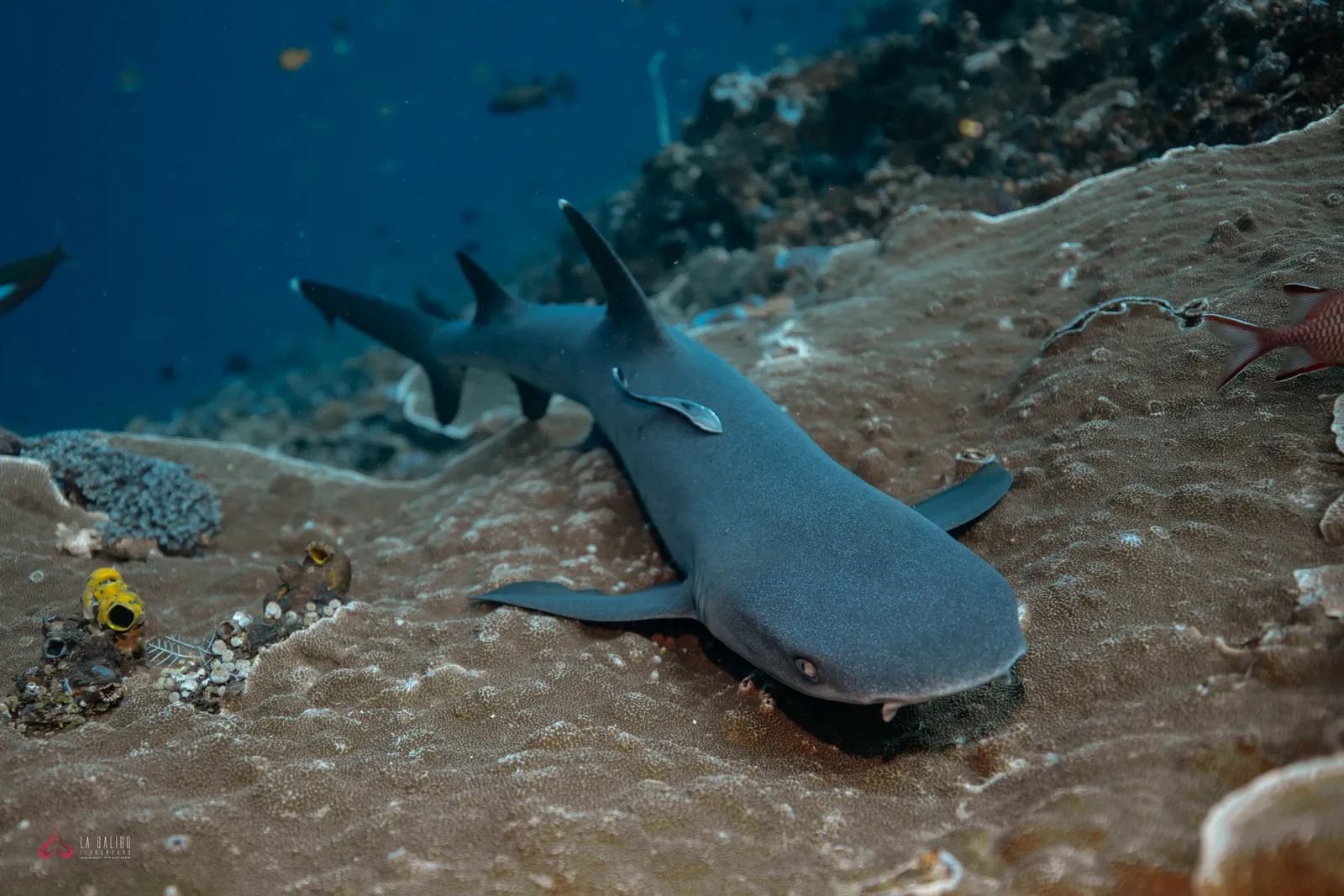
White tip reef shark resting on coral reef during Indonesia liveaboard diving expedition - Picture by La Galigo Liveaboard
Buchen Sie Ihre Halmahera-Reise
Wir sind eine in Bali ansässige Plattform, die von Tauchern betrieben wird, die Nord-Maluku gut kennen. Sie zahlen den gleichen Preis, wenn Sie über uns buchen, wie bei einer Direktbuchung – die Betreiber halten die Preise über alle Kanäle hinweg einheitlich. Jede Buchung über Coralbound beinhaltet ein Buchungsgeschenk – einschließlich der Option auf eine kostenlose Hotelnacht – und Sie erhalten echten Support: Koordination von Inlandsflügen über VIFA Holiday und ein Team, das versteht, was abgelegene Expeditionen in Ostindonesien tatsächlich bedeuten.
Fragen vor der Buchung? Schicken Sie uns eine Nachricht auf WhatsApp oder kontaktieren Sie uns über unser Kontaktformular. Möchten Sie mehr darüber erfahren, wie wir arbeiten? Lesen Sie unsere Seite Warum mit Coralbound buchen.