Der Komodo-Nationalpark ist der Ort, an dem Sie morgens zwischen Komodowaranen spazieren gehen und nachmittags mit Mantarochen tauchen können. Diese Kombination – eine der stärksten Mantapopulationen der Welt und der einzige natürliche Lebensraum der größten Eidechse der Welt – macht ihn zu einem einzigartigen Ort in Indonesien.
Dieser Leitfaden behandelt alles, was Sie für die Planung einer Komodo-Liveaboard-Reise benötigen: beste Jahreszeiten, Tauchregionen, Anreise, was Sie erwartet und wie Sie buchen. Er ist Teil unseres vollständigen Leitfadens für Liveaboard-Touren in Indonesien – der zentrale Knotenpunkt für alle Tauchziele in Indonesien. Möchten Sie zuerst einen schnellen Überblick? Sehen Sie sich unsere Komodo-Zielseite.
Schnelle Fakten über das Tauchen in Komodo
- Beste Jahreszeit: April–November für Tauchgänge in der Trockenzeit; Dezember–März für die Hauptzeit der Mantarochen im Süden
- Korallenarten: 260 Arten²
- Fischarten: 1.000+ Arten²
- Wassertemperatur: 20–30°C je nach Region und Jahreszeit
- Sichtweite: 20–30 m+ typisch im Norden; 15–25 m im Süden während der Manta-Saison
- Tauchgänge pro Tag: 3–4 inklusive optionaler Nachttauchgänge bei den meisten Reiserouten
- Wer kann teilnehmen: Die meisten Boote begrüßen auch Nicht-Taucher; auf Luxusyachten sind Freizeit- und Tauchausflüge verfügbar
- Erfahrungsstufe: Mindestens Open Water; aktuelle Erfahrung für die nördlichen Tauchplätze empfohlen
- Reiselänge: Typischerweise 6–8 Tage; einige Betreiber bieten 4-Nächte- oder 10-Tages-Reiserouten an
- Kostenbereich: 150–1.000+ $ pro Tag, je nach Schiffskategorie
- Zielflughafen: Komodo Airport (LBJ), Labuan Bajo – etwa eine Stunde Direktflug von Bali (DPS)
- Buchungsvorlaufzeit: Buchen Sie 6+ Monate im Voraus; der Park hat ab April 2026 eine tägliche Besucherquote⁹
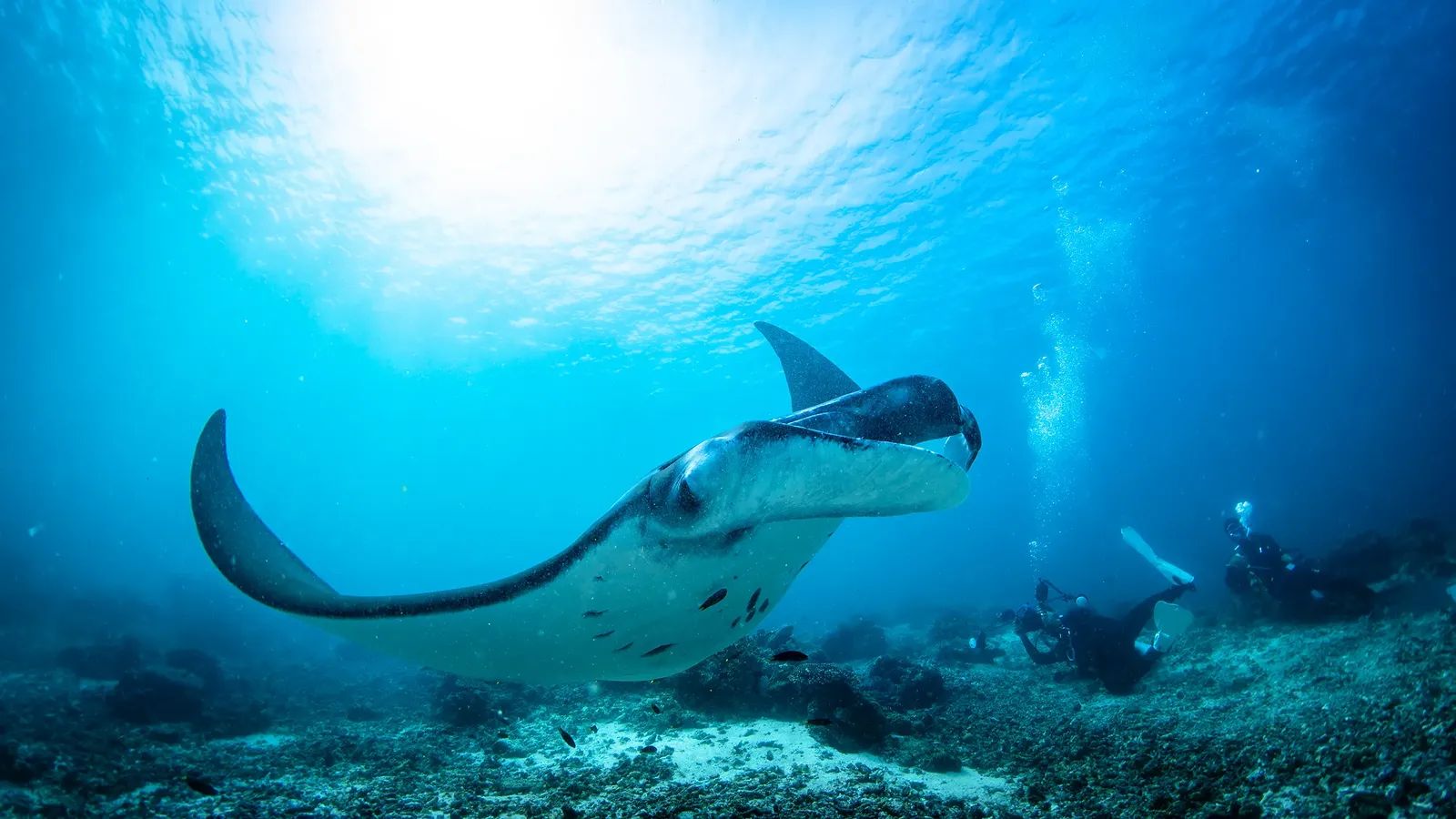
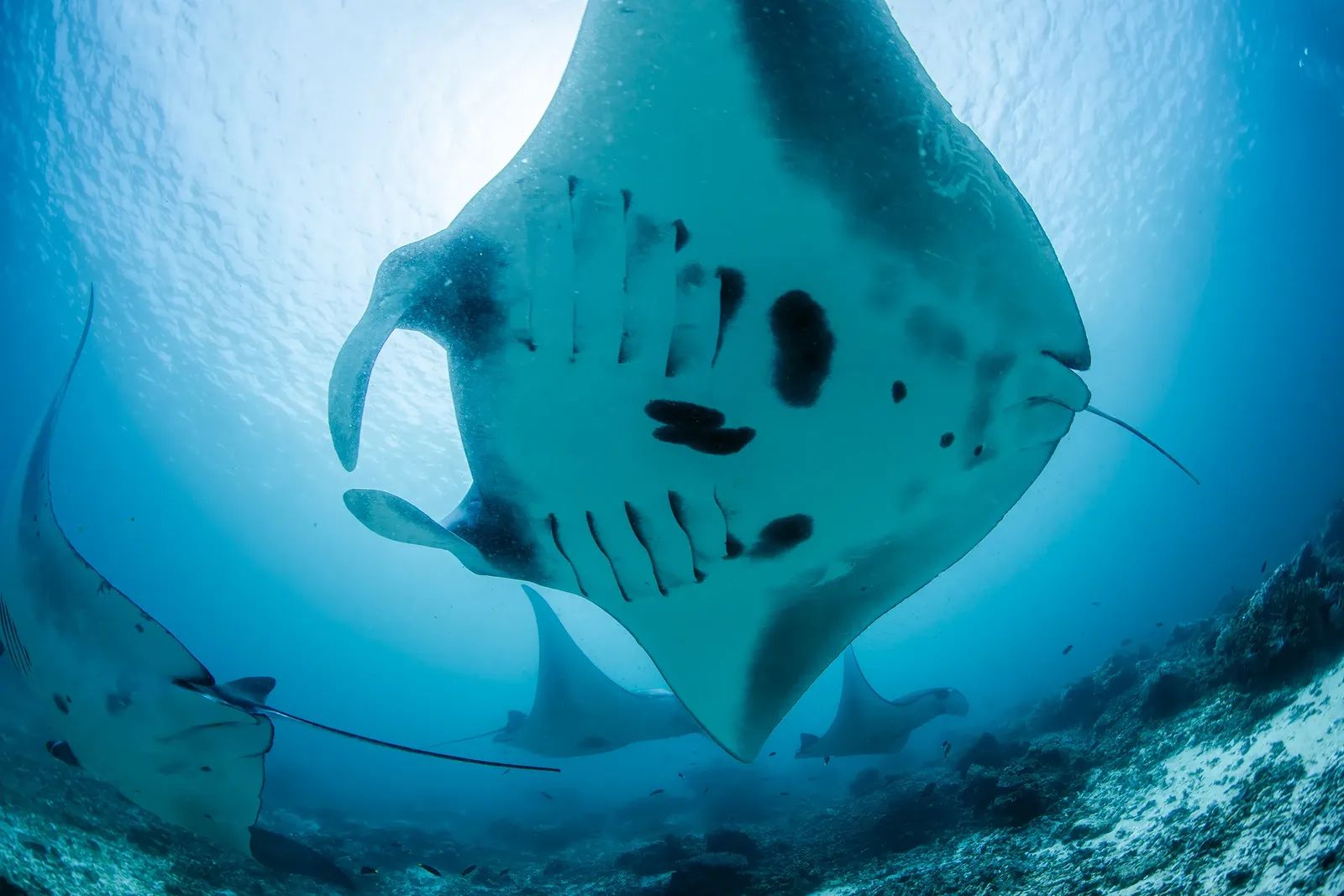
Manta ray diving Komodo National Park Indonesia liveaboard expedition underwater photography - Picture by Neptune Liveaboards
Schnelle Antworten: Ihre Top-Fragen zum Tauchen in Komodo
Wann ist die beste Zeit, um Mantarochen in Komodo zu sehen?
Zwei Zonen, eine verlängerte Saison. Süd-Komodo – insbesondere Manta Alley – hat seinen Höhepunkt im Januar–Februar mit den größten Ansammlungen. Zentral-Komodo beherbergt Mantarochen durchgehend während der Trockenzeit, etwa von November bis Juni. November ist oft die beste Zeit: Beide Zonen sind aktiv und der Bootsverkehr ist deutlich geringer als in den Spitzenmonaten des Sommers.
Wie viel kostet eine Komodo-Liveaboard-Reise?
Budget-Boote kosten 150–300 $/Tag, Mittelklasse 300–600 $/Tag und Luxusboote 600–1.000+ $/Tag. Zusätzliche Kosten umfassen Gebühren für den Nationalpark, Trinkgelder für die Crew und Ausrüstungsmiete, falls Sie Ihre eigene Ausrüstung nicht mitbringen. Eine vollständige Aufschlüsselung dessen, was jede Kategorie abdeckt, finden Sie in unserem Leitfaden für Indonesien-Liveaboard-Kategorien.
Brauche ich Advanced Open Water für Tauchgänge in Komodo?
Für die meisten Gebiete des Parks nicht. Open Water Taucher können Zentral-Komodo problemlos erreichen – die meisten Routen beinhalten Tauchplätze, die für alle Zertifizierungsstufen geeignet sind. Für die nördlichen Tauchplätze wie Batu Bolong und Castle Rock, wo die Strömungen stark sein können, wird die Advanced-Zertifizierung empfohlen. In der Praxis führen die Betreiber zu Beginn jeder Reise einen Check-Tauchgang durch und passen die Reiseroute an die Gruppe an – die meisten Liveaboards können die Tauchgänge unabhängig vom Zertifizierungsgrad zu optimalen Bedingungen planen.
Wie komme ich für einen Liveaboard nach Komodo?
Die meisten Liveaboards starten von Labuan Bajo – fliegen Sie in etwa einer Stunde von Bali dorthin. Die meisten mittelpreisigen und luxuriösen Anbieter beinhalten Flughafentransfers, und der Flughafen ist nur 10–15 Minuten vom Hafen entfernt. Einige Touren starten von Bali, Sumbawa oder Maumere auf Umzugs- oder Kombinationsrouten. Überprüfen Sie bei der Buchung den Abfahrtsort Ihres spezifischen Bootes.
Welche Meereslebewesen werde ich in Komodo sehen?
Der Park beherbergt über 1.000 Fischarten und 260 Korallenarten, wobei Riffmantas das ganzjährige Hauptattraktion sind.² Eine Studie der Marine Megafauna Foundation aus dem Jahr 2022 identifizierte 1.085 einzelne Riffmantas im Park.³ Weißspitzen- und Graue Riffhaie sind an den meisten Tauchplätzen häufig anzutreffen, Meeresschildkröten sind bei Siaba Besar zuverlässig zu finden, und die südlichen und zentralen Zonen bieten starke Makro-Tauchmöglichkeiten, einschließlich Zwergseepferdchen, Blaugeringelte Kraken und Nacktschnecken. August–September ist die Hauptsaison für Mola Mola in den kühleren südlichen Gewässern.
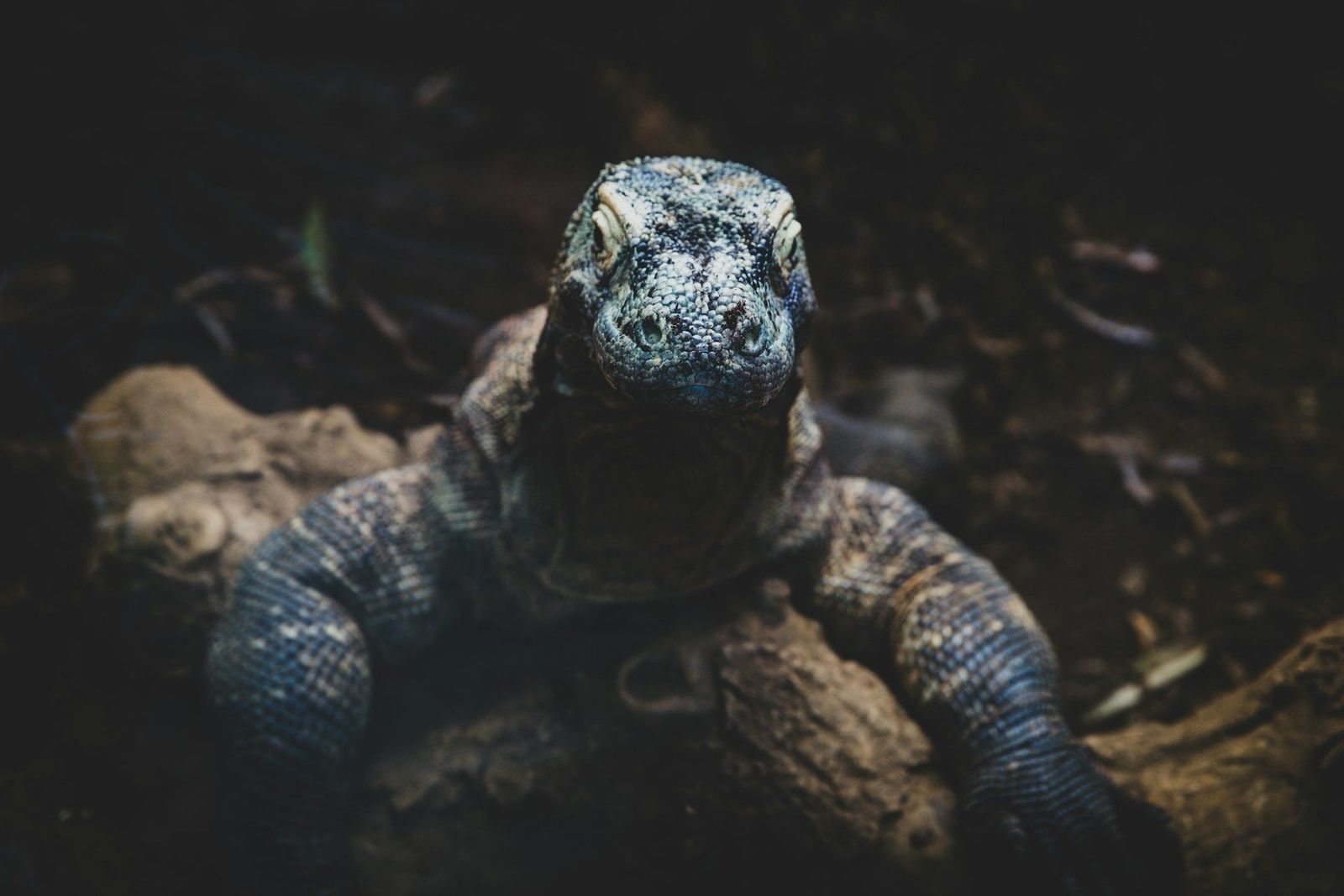
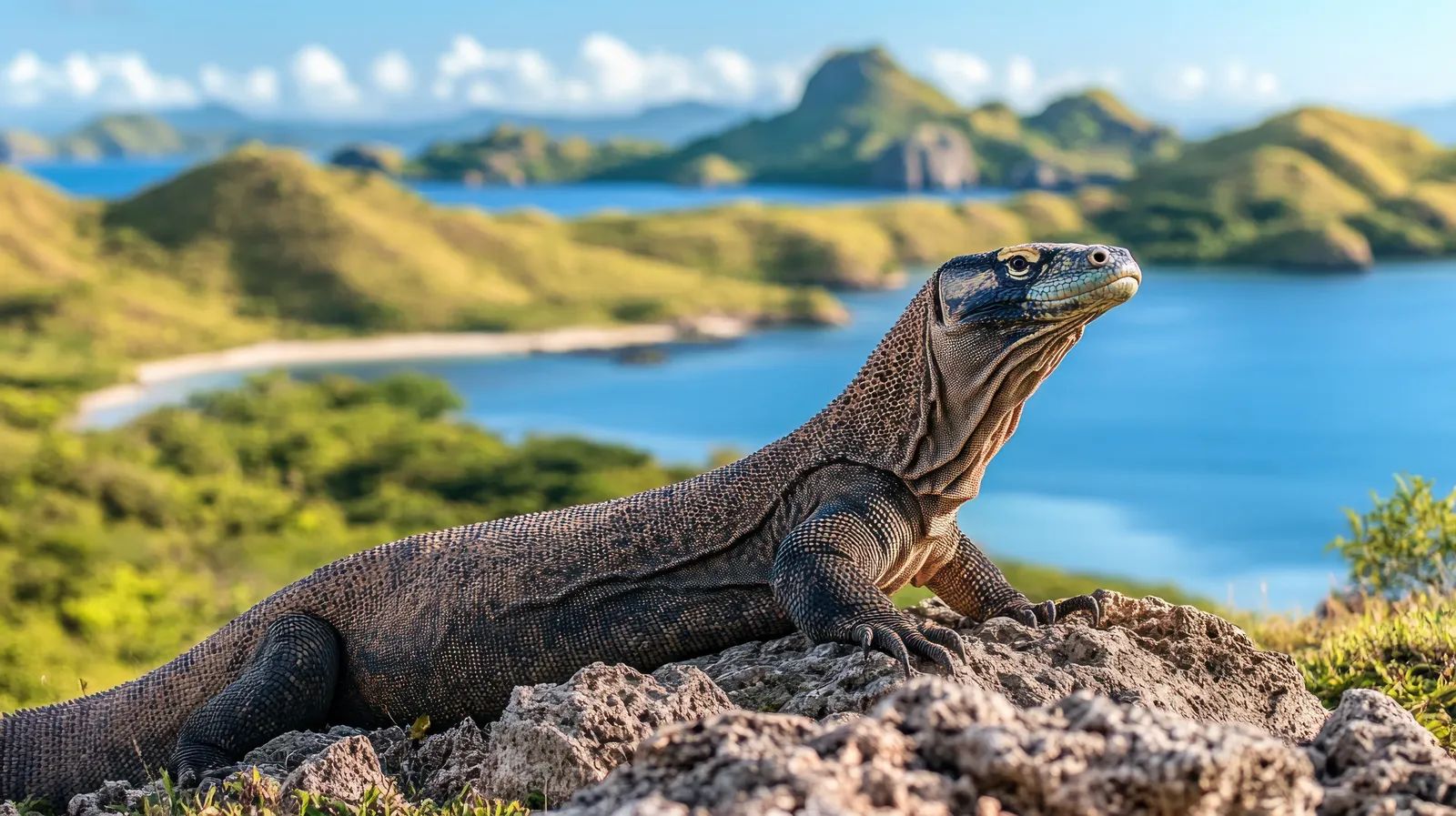
Komodo dragon close-up Indonesia liveaboard Komodo National Park wildlife tour
Warum Komodo
Komodo liegt zwischen dem Indischen und dem Pazifischen Ozean, und der Gezeitenstrom zwischen ihnen treibt alles an, was Sie unter Wasser sehen. Nährstoffe, die aus der Tiefe aufsteigen, unterstützen große Planktonblüten, die die für den Park bekannten Mantapopulationen ernähren. Dasselbe Strömungssystem verleiht den nördlichen Tauchplätzen ihre Dichte an Fischleben – Tauchplätze wie Batu Bolong sind wirklich einzigartig. Der Park liegt im Korallendreieck, dem globalen Zentrum der marinen Biodiversität.⁷⁸
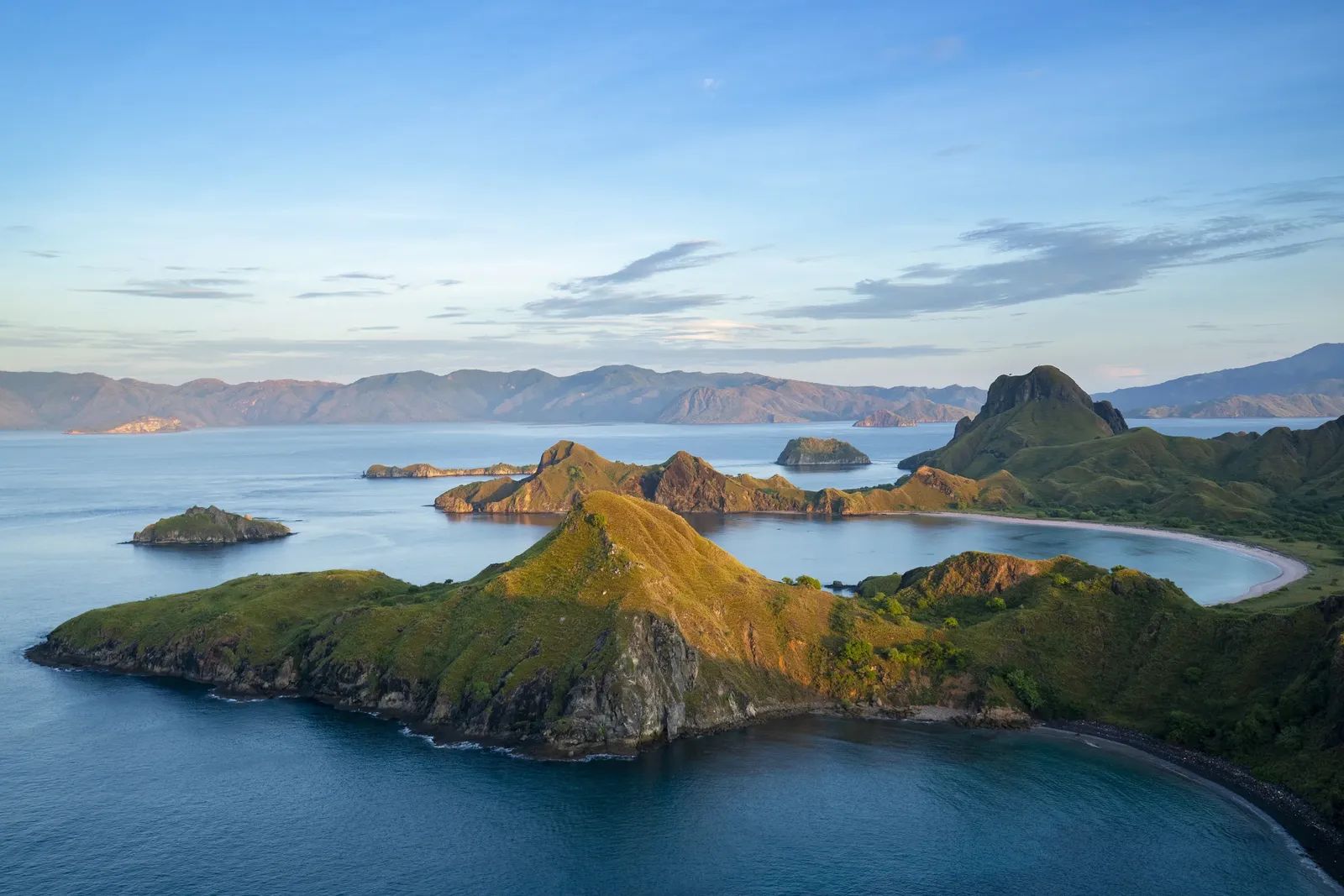
Über Wasser ist die vulkanische Landschaft des Parks eine eigene Attraktion. Die drei Hauptinseln sind trocken und zerklüftet – ockerfarbene Hügel, trockene Savanne, nichts von den grünen Tropen West-Indonesiens. Der Komodowaran, die größte lebende Echse der Welt, ist nur hier und auf einer Handvoll nahegelegener Inseln zu finden.⁴ Der Park ist seit 1991¹ UNESCO-Weltkulturerbe – eine Anerkennung sowohl seiner terrestrischen als auch seiner marinen Ökosysteme.
Komodo ist auch das am besten zugängliche große indonesische Liveaboard-Reiseziel. Labuan Bajo Liveaboards starten von einem gut ausgebauten Hafen mit häufigen Direktflügen von Bali – Sie haben keine mehrstufigen Routen, Inlandsstopps oder lange Transitzeiten. Die Reisedauer ist kürzer, typischerweise 6–8 Tage, da der Park geografisch kompakt ist. Das macht es zur richtigen Wahl für Taucher mit begrenzter Zeit und zu einer einfachen Kombination mit einem Bali-Urlaub für alle, die eine Mischung aus Tauchen und Kultur auf derselben Reise wünschen. Möchten Sie einen schnellen Überblick über das Reiseziel? Sehen Sie sich unsere Komodo-Reisezielseite. Für vollständige Planungsdetails sind Sie hier bereits richtig.
Im Vergleich zu Raja Ampat oder der Banda-See ist das Tauchen hier für diejenigen zugänglicher, die noch am Anfang ihrer Liveaboard-Reise stehen. Einige Tauchplätze haben starke Strömungen, aber die meisten Betreiber sind geschickt darin, Tauchgänge optimal zu timen, und Zentral-Komodo hat viel für neuere Taucher zu bieten. Wenn Sie darüber nachdenken, Komodo mit Zeit auf Bali zu kombinieren – Kulturreisen, Tempel, Reisterrassen, Zeit in einer Villa – inVINCible Tours kann beide Seiten zu einer einzigen Reiseroute ohne logistische Kopfschmerzen koordinieren.
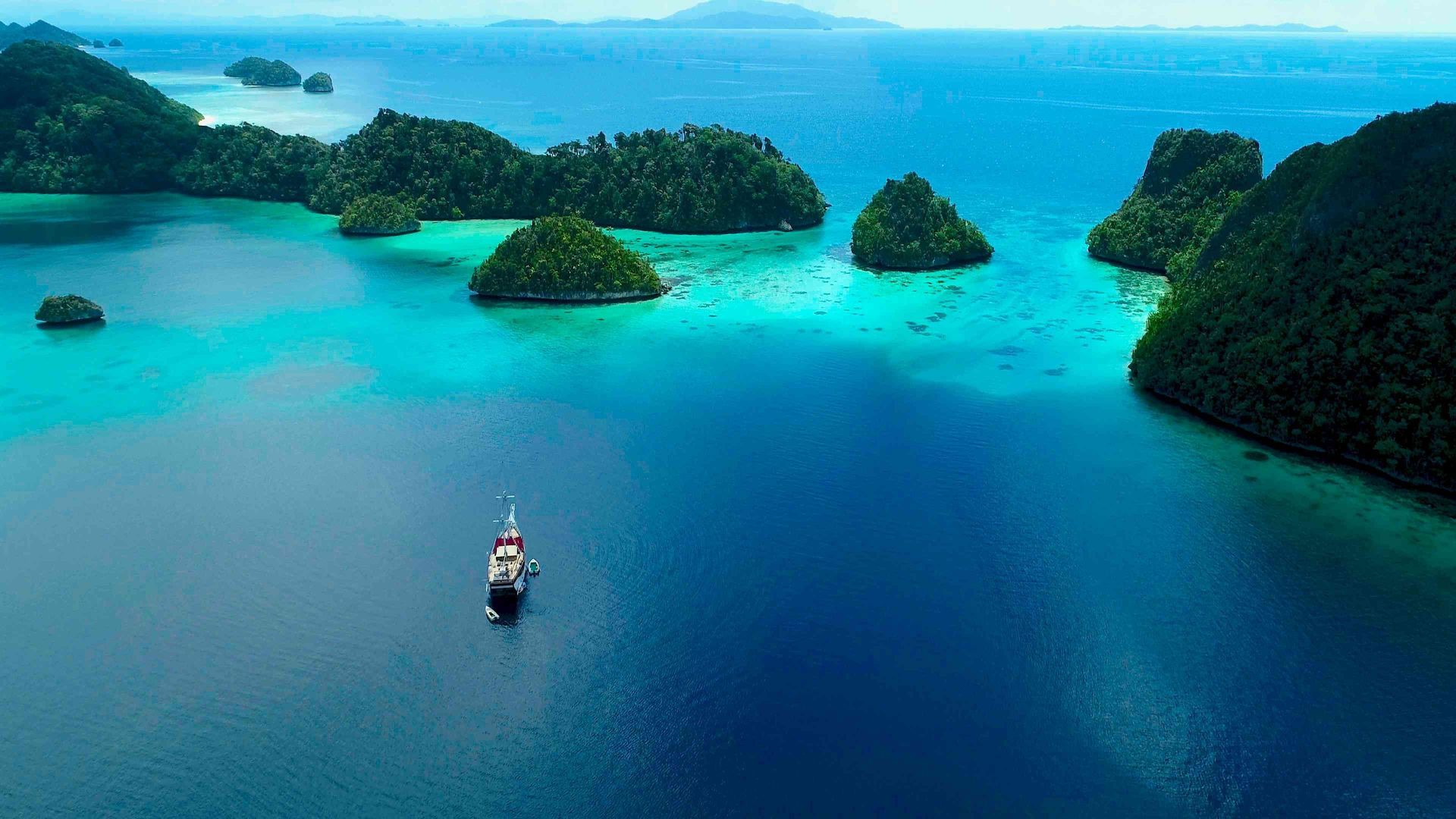
Komodo National Park aerial view pristine beaches Indonesia liveaboard diving destination - Picture by Neptune Liveaboards
Liveaboard vs. Tagesausflüge
Tagesausflüge nach Komodo starten von Labuan Bajo und sind eine kostengünstigere Möglichkeit, den Park zu sehen. Die Boote reichen von Schnellbooten bis zu größeren Phinisi-Schiffen, und die meisten beinhalten eine Mischung aus Tauchen, Schnorcheln und Landausflügen wie Padar Island und Pink Beach. Für Reisende, die Komodo erleben möchten, ohne sich auf ein mehrtägiges Boot zu festlegen, ist ein Tagesausflug sinnvoll.
Liveaboards bieten ein anderes Erlebnis. Sie schlafen im Park verankert, was bedeutet, dass Sie bei Tagesanbruch vor Ankunft der Tagesboote tauchen, Tauchgänge zu optimalen Gezeitenbedingungen timen und drei bis vier Tauchgänge pro Tag statt ein oder zwei absolvieren. An beliebten Orten wie Batu Bolong macht es einen echten Unterschied, vor der Masse der Tagesausflügler anzukommen. Sie verbringen auch nicht einen Teil Ihres Tages mit dem Rücktransport nach Labuan Bajo.
Für Taucher, die die Unterwasserzeit optimal nutzen möchten, ist ein Liveaboard die bessere Wahl. Tagesausflüge eignen sich für diejenigen, die Komodo mit einem Landaufenthalt in Labuan Bajo kombinieren.
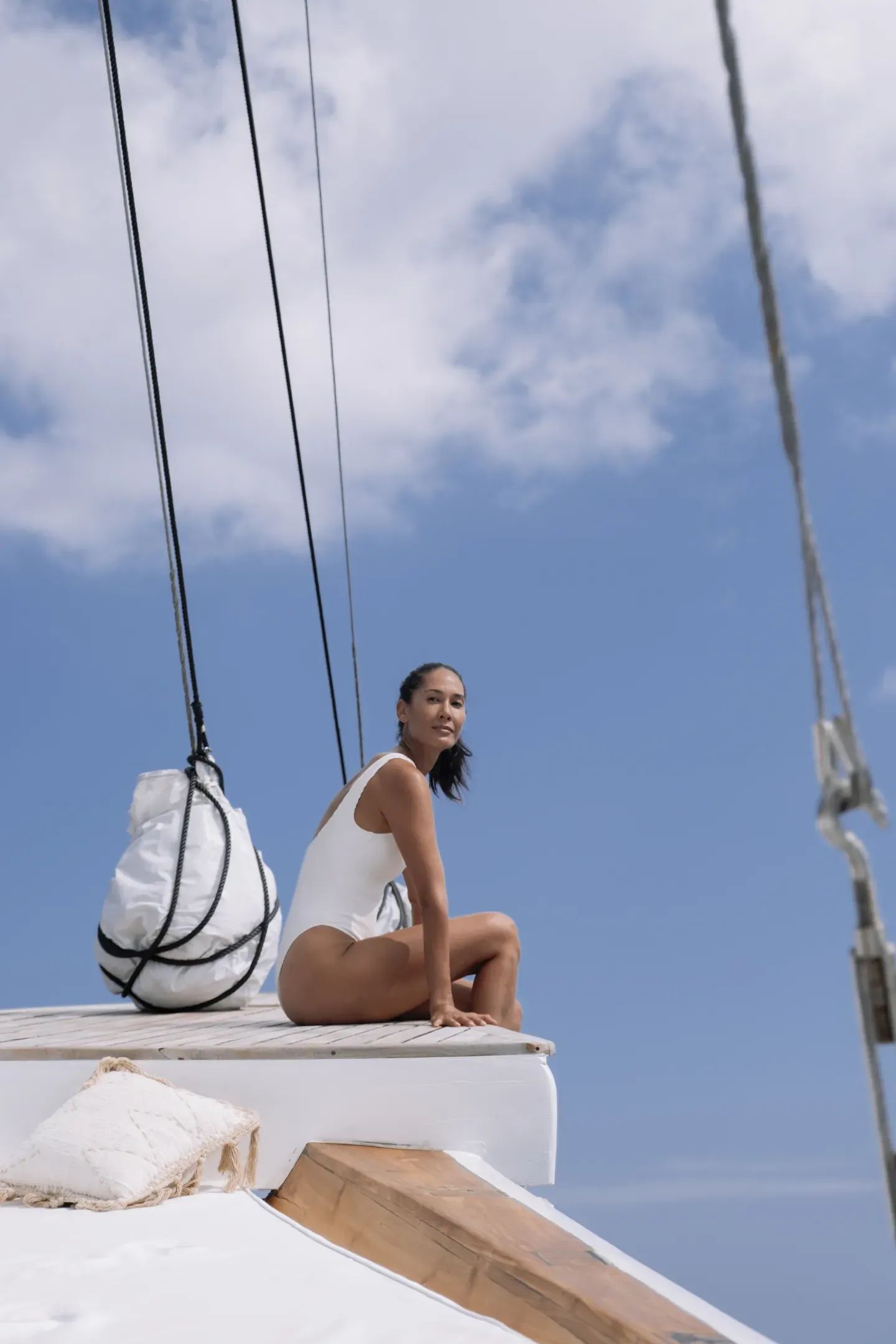
Woman in white swimsuit relaxing on luxury yacht deck with sailing rigging against blue sky and clouds - Picture by Aliikai Voyages
Beste Jahreszeit
April bis November ist die Hauptsaison. Trockene Bedingungen, ruhige See und Sichtweiten von 20–30 m+ im Norden. August und September bringen das kühlste Wasser im Süden, und dann sind die Mola Mola an den südlichen Reinigungsstationen am zuverlässigsten zu sehen. Für eine vollständige Aufschlüsselung der saisonalen Muster Indonesiens über alle Reiseziele hinweg, siehe unseren Leitfaden zu Wetter- und Tauchsaisons in Indonesien.
Dezember bis März ist Regenzeit und die beste Zeit für Mantas. Süd-Komodo – insbesondere Manta Alley und Manta Point – verzeichnet die höchsten Aggregationszahlen. Die Oberflächenbedingungen können rau sein, und der Hafenmeister kann bei schlechtem Wetter Überfahrten zwischen den Inseln sperren, was bedeutet, dass sich Reisepläne ändern und gelegentlich Touren als höhere Gewalt abgesagt werden. Weniger Betreiber sind in diesem Zeitraum aktiv. Wenn ein Boot nicht fährt oder die Bedingungen es nicht zulassen, wird es nicht aufgeführt – aber eine Reiserücktrittsversicherung lohnt sich für diese Saison trotzdem.
April und November sind Übergangsmonate, die eine Überlegung wert sind. Mantas sind aktiv und die Bedingungen verbessern sich, aber der Bootsverkehr hat noch nicht seinen Höhepunkt erreicht. Einige der besten Preis-Leistungs-Angebote für Komodo-Touren finden in diesen Zeitfenstern statt.
Die Nebensaison läuft von September bis Oktober. Die Bedingungen im Norden und Zentrum von Komodo bleiben gut. Die Preise sind im Allgemeinen das ganze Jahr über konstant – erwarten Sie keine signifikanten Rabatte außerhalb echter Last-Minute-Verfügbarkeiten.
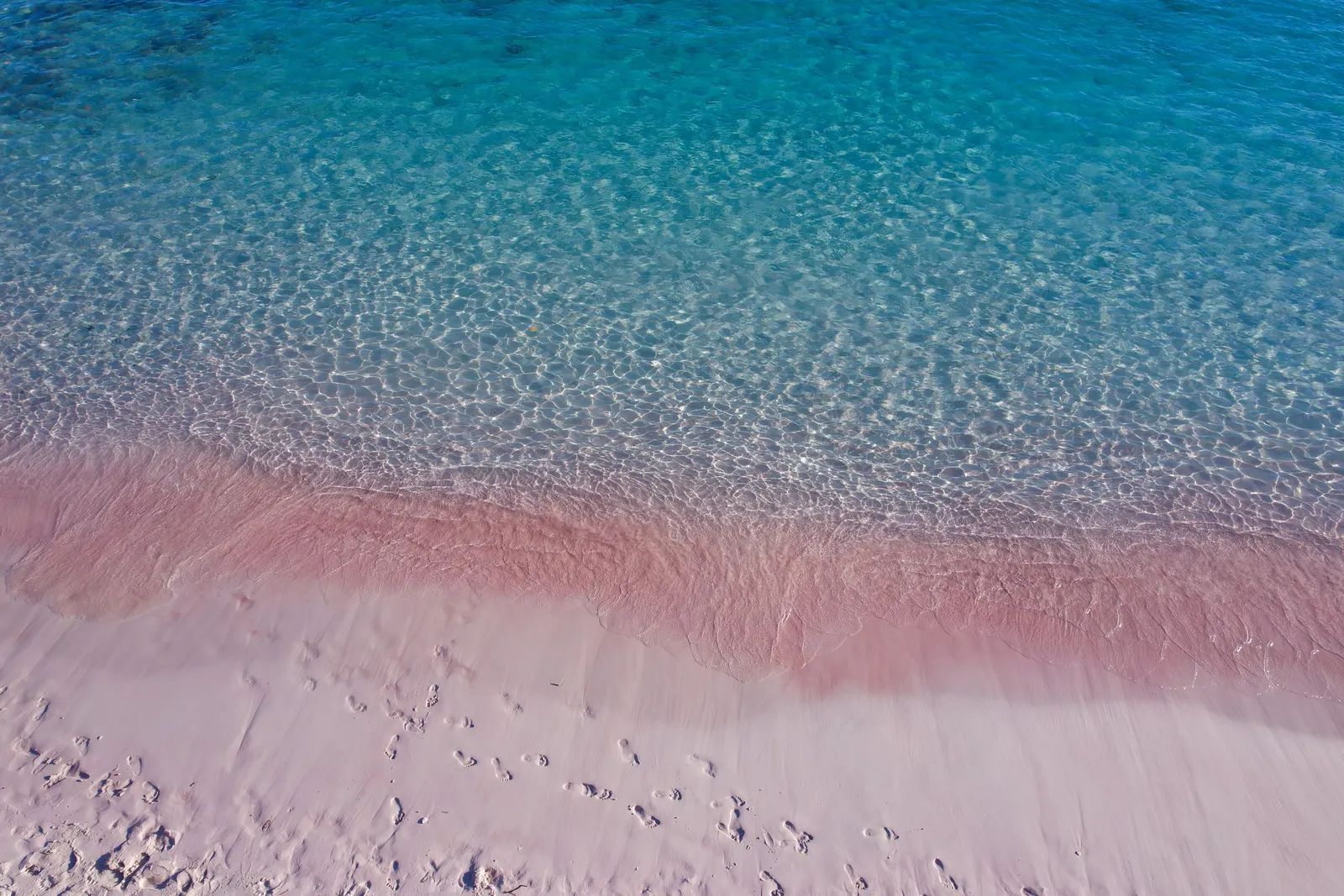
Aerial view of Pink Beach with turquoise waters, unique beach stop during Komodo liveaboard diving trips Indonesia
Anreise
Die überwiegende Mehrheit der Komodo-Liveaboards startet von Labuan Bajo. Die Stadt ist praktisch – Hotels, Restaurants, Geldautomaten und Apotheken sind leicht zu finden, falls Sie eine Nacht vor oder nach Ihrer Reise benötigen.
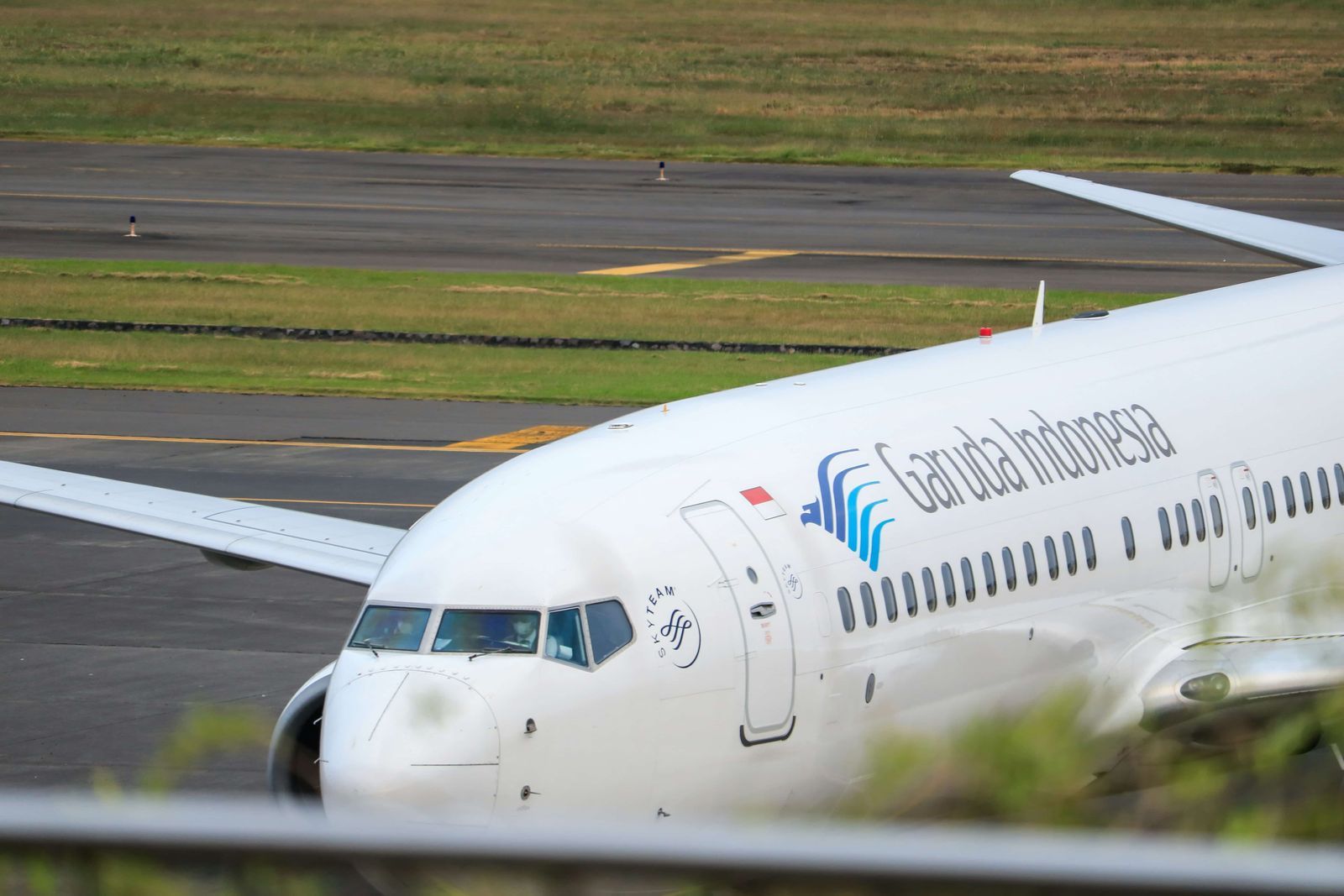
Fliegen Sie von Bali (DPS) zum Komodo Airport (LBJ) – etwa eine Stunde Flugzeit, mit mehreren täglichen Abflügen von Garuda Indonesia, Batik Air, Indonesia AirAsia und Citilink. Der Flughafen ist 10–15 Minuten vom Hafen entfernt, und die meisten mittelpreisigen und Luxus-Anbieter beinhalten Transfers. Wenn Sie auf einem Boot sind, das am Nachmittag ablegt, ist ein Flug am selben Tag oft in Ordnung – bestätigen Sie die Check-in-Zeit Ihres Bootes.
Einige Boote fahren Routen von oder nach Bali, Sumbawa oder Maumere auf Kombinations- oder Repositionierungsrouten. Bestätigen Sie immer die spezifischen Ein- und Ausschiffungshäfen mit Ihrem Betreiber.
Buchen Sie Inlandsflüge frühzeitig und kommen Sie immer einen Tag früher an, wenn Ihr Boot morgens ablegt. Für Flugüberwachung und Umbuchungsunterstützung arbeitet Coralbound mit VIFA Holiday, dem führenden DMC für Indonesiens Tauchindustrie, zusammen.
Garuda Indonesia aircraft runway Indonesian domestic flights liveaboard transfers
Das neue Besucherkontingent
Ab April 2026 gilt im Komodo-Nationalpark ein tägliches Besucherlimit von 1.000 Personen, basierend auf einer Kapazitätsstudie der Parkbehörden.⁹ Das Kontingent umfasst die Insel Komodo, die Insel Rinca, die Insel Padar und 23 umliegende Tauchplätze. Genehmigungen werden über das digitale Buchungssystem des Parks verwaltet und über lizenzierte Betreiber vergeben.
Wenn Sie über Coralbound buchen, kümmert sich Ihr Betreiber im Rahmen der Reise um die Zuteilung von Kontingenten und die Genehmigungen für den Nationalpark. Dies ist ein weiterer Grund, für Spitzenzeiten, insbesondere Juli–August und die Mantarochen-Hochsaison von Dezember bis Februar, frühzeitig zu buchen.
Manta ray diving Komodo National Park Indonesia liveaboard expedition underwater photography - Picture by Neptune Liveaboards
Tauchregionen
Je nach Reisedauer und Bedingungen bieten die Betreiber in der Regel eine von drei Routenstrukturen an: Nord + Zentral, Süd + Zentral oder eine vollständige Parkroute. Die besuchten Orte variieren je nach Betreiber, Wetter und dem, was die Gruppe sehen möchte.
Nord-Komodo
Im Norden liegt der Ursprung von Komodos Ruf für Drift-Diving mit hoher Energie. Batu Bolong, Castle Rock und Crystal Rock sind allesamt Riff- oder Seamount-Tauchgänge mit starken Strömungen, hoher Fischdichte und außergewöhnlicher Sicht. Schwärme von Barrakudas und Makrelen sind häufig anzutreffen; Napoleon-Lippfische und Graue Riffhaie sind regelmäßige Sichtungen. Am besten zugänglich von April bis November, wenn sich die Bedingungen beruhigen. Einige Betreiber fahren weiter nach Norden, um den Vulkan Sangeang und Gili Banta einzuschließen – dramatische vulkanische Landschaften über und unter Wasser.
Zentral-Komodo
Zentral Komodo ist der abwechslungsreichste und zugänglichste Teil des Parks. Makassar Reef (Manta Point) bietet ganzjährig zuverlässige Sichtungen von Mantarochen an einer Putzerstation. Siaba Besar ist durchweg gut für Meeresschildkröten. Die Sebayur-Inseln haben geschützte Korallengärten, die sich gut für Open-Water-Taucher oder diejenigen eignen, die noch am Anfang ihrer Liveaboard-Erfahrung stehen. Zentral Komodo ist unabhängig von der Jahreszeit fast auf jeder Reiseroute enthalten.
Süd-Komodo
Der Süden ist kühler, produktiver und auf Mantarochen ausgerichtet. Manta Alley an der Südspitze der Insel Komodo ist der Hauptspot – ein felsiger Kanal, in dem sich Mantarochen zum Fressen und zur Reinigung versammeln. Cannibal Rock ist einer der besten Makro-Spots im Park. Die Sichtweite ist hier aufgrund der Planktondichte geringer (15–25 m), aber genau dieses Plankton zieht die Mantarochen an. Einige Anbieter besuchen auf südlichen Routen auch Horseshoe Bay, Gili Kode und Nusa Kode. Die Hauptaktivität der Mantarochen findet etwa von Dezember bis März statt, obwohl Mantarochen das ganze Jahr über präsent sind.
Komodo-Warane und Landaktivitäten
Die meisten Liveaboard-Routen beinhalten mindestens eine von Rangern geführte Waran-Wanderung. Rinca Island hat tendenziell eine höhere Waran-Dichte und kürzere Wanderungen; Komodo Island bietet längere Routenoptionen. Warane sind am aktivsten am frühen Morgen, bevor die Hitze einsetzt. Erwachsene können über 3 Meter lang werden und sind wirklich gefährlich – bleiben Sie nah bei Ihrem Führer und befolgen Sie die Anweisungen. Aktive Rangerpatrouillen sind im gesamten Park unterwegs und decken Land- und Meereszonen ab.⁵ ⁶
Padar Island ist zu einem der meistfotografierten Aussichtspunkte Indonesiens geworden. Die Wanderung zum Gipfel dauert etwa 45 Minuten und bietet einen Blick über drei Buchten mit unterschiedlich gefärbtem Sand. Gili Lawa Darat und Gili Lawa Laut bieten eine zweite Reihe von Aussichtspunkten mit einem anderen Blickwinkel auf den Archipel – einige Anbieter nehmen diese in ihre Routen auf.
In der Dämmerung nahe Rinca beherbergt Pulau Kalong große Kolonien von riesigen Flughunden, die in dramatischen Zahlen auftauchen, wenn die Sonne untergeht. Pink Beach auf Komodo Island ist ein zuverlässiger Ort für eine Oberflächenpause – Schnorcheln über den Korallengärten dort ist wirklich gut.
Was abgedeckt wird, hängt von Ihrer Reiseroute und Ihrem Anbieter ab. Längere Reisen und Routen, die den gesamten Park abdecken, haben die besten Chancen, mehrere Aktivitäten einzuschließen. Für eine Komodo-Reise in Kombination mit kulturellen Erlebnissen auf Flores oder Bali kann inVINCible Tours die Landseite um Ihre Bootsdaten herum aufbauen.
Komodo dragon in natural habitat at Komodo National Park, land excursion during liveaboard diving trip Indonesia
Erwartungen managen
Strömungen an nördlichen Standorten können stark sein. Betreiber umgehen dies, indem sie Tauchgänge zu optimalen Gezeitenfenstern timen – Ihr Guide wird die Bedingungen am Tag einschätzen und entsprechend anpassen. Wenn ein Standort nicht sicher betauchbar ist, werden Sie nicht dorthin fahren. Das ist normal und Teil der Funktionsweise guter Liveaboard-Operationen.
Manta-Begegnungen sind an Reinigungsstationen sehr zuverlässig, aber es handelt sich immer noch um Wildtiere. Ganzjährige Sichtungen im zentralen und südlichen Komodo sind gut dokumentiert,³ aber bei jedem Tauchgang zählen Timing und Positionierung. Folgen Sie der Führung Ihres Guides, halten Sie Abstand und drängen oder jagen Sie nicht.
In der Regenzeit (Dezember–März) kann der Hafenmeister Fährverbindungen zwischen den Inseln wegen des Wetters sperren. Dies betrifft hauptsächlich Tagesausflüge, aber auch größere Schiffe können festgehalten werden. Wenn die Bedingungen eine Fährverbindung sperren, passen die Betreiber die Reiseroute an das Zugängliche an – das ist nicht ungewöhnlich und erfahrene Crews gehen gut damit um. Buchen Sie bei einem Betreiber, der den Park kennt und über alternative Routen verfügt.
Die Sichtweite variiert stark je nach Region und Jahreszeit. Im Norden erreicht sie in der Trockenzeit über 30 m; im Süden liegt sie während der Mantasaison aufgrund von Plankton bei 15–25 m. Beide bieten ausgezeichnete Tauchmöglichkeiten – aber sie sehen im Wasser unterschiedlich aus.
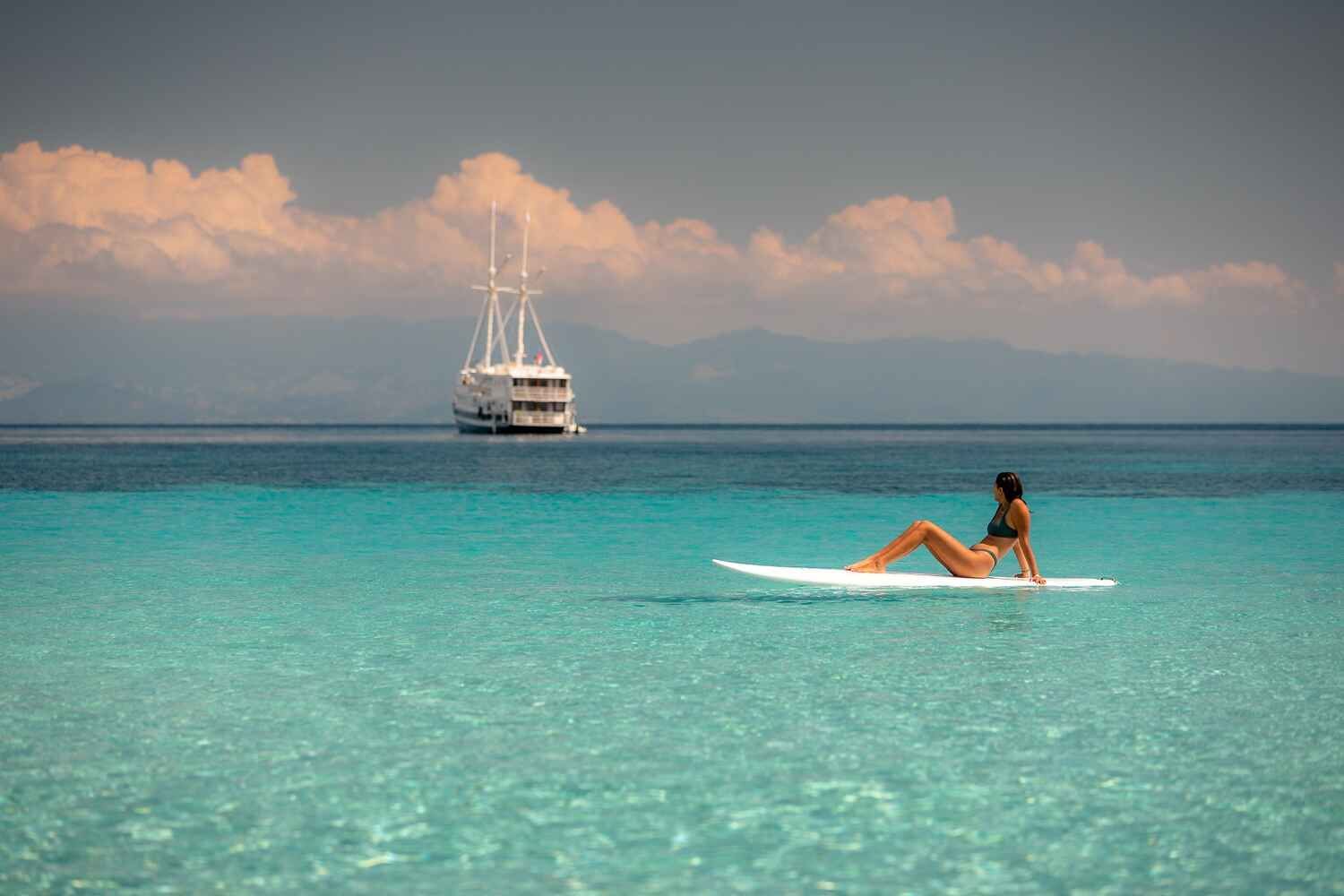
Stand-up paddleboarding in crystal clear waters with luxury liveaboard boat in Indonesia tropical paradise - Picture by Aliikai Voyages
Häufig gestellte Fragen zu Komodo-Trips
Wie weit im Voraus sollte ich ein Komodo-Liveaboard buchen?
Buchen Sie 6 Monate oder mehr im Voraus, insbesondere da der Park ab April 2026 ein tägliches Besucherlimit hat.⁹ Komodo hat mehr Boote und häufigere Fahrten als die meisten anderen indonesischen Reiseziele, daher ist die Verfügbarkeit im Allgemeinen besser als in Raja Ampat – aber das Quoten-System verändert die Planung. Verlassen Sie sich während der Hauptsaison nicht auf Last-Minute-Flexibilität.
Ist Komodo für Anfänger geeignet?
Ja, natürlich – Zentral-Komodo ist wirklich gut für unerfahrenere Taucher geeignet. Tauchplätze wie Siaba Besar, Makassar Reef und die Sebayur-Inseln sind geschützt und gut zu bewältigen, und die meisten Anbieter führen zu Beginn jeder Tour einen Check-Dive durch, um die Gruppe einzuschätzen und die Reiseroute entsprechend anzupassen. Jeder Anbieter legt seine eigenen Mindestanforderungen fest, die Sie vor der Buchung direkt auf den jeweiligen Angeboten auf unserer Plattform einsehen können.
Können Nicht-Taucher an einer Komodo Liveaboard teilnehmen?
Ja. Schnorcheln an den zentralen Komodo-Tauchplätzen ist ausgezeichnet, und Nicht-Taucher können voll an den Drachenwanderungen, der Wanderung auf Padar Island, den Aussichtspunkten von Gili Lawa, Pink Beach und kulturellen Aktivitäten in Labuan Bajo teilnehmen. Luxus-Anbieter bieten auch Freizeit- und Tauchausflüge an, die speziell für gemischte Gruppen konzipiert sind – diese beinhalten Wassersport, Strandaufenthalte und geführte Ausflüge neben dem Tauchen. Klären Sie mit dem Anbieter ab, welche Aktivitäten für Nicht-Taucher angeboten werden.
Was ist der Unterschied zwischen einem Komodo und einem Raja Ampat Liveaboard?
Komodo ist leichter zu erreichen, besser für kürzere Reisen geeignet und besser für Taucher, die Tauchen mit einem Bali-Urlaub kombinieren möchten. Das Tauchen ist stark bei Großfischen und Strömungstauchgängen. Raja Ampat hat eine größere natürliche Artenvielfalt, insbesondere bei Riff- und Korallenfischen, und eignet sich für Taucher, die eine längere, abgelegenere Expedition wünschen. Für alle, die bereits Zeit auf Bali planen, ist ein Komodo Liveaboard eine einfache Ergänzung – Bali bietet auch ausgezeichnete Tauchmöglichkeiten, wenn Sie die Unterwasserzeit verlängern möchten. Der Indonesien Liveaboard Reiseführer vergleicht die Reiseziele ausführlich.
Kann ich Komodo mit anderen indonesischen Reisezielen kombinieren?
Ja. Mehrere Anbieter bieten längere Routen an, die mehr als nur Komodo abdecken – Komodo nach Alor, Komodo nach Sumbawa (Abfahrt oder Ankunft in Labuan Bajo, Sumbawa oder Bali) und aufeinanderfolgende Kombinationen mit der Banda-See im Oktober/November. Routenoptionen hängen vom Anbieter und der Saison ab. Kontaktieren Sie uns über WhatsApp, wenn Sie eine Reiseroute mit mehreren Zielen planen möchten.
Was ist die neue Besucherquote für den Komodo-Nationalpark?
Ab dem 1. April 2026 begrenzt der Park die Eintritte auf 1.000 Besucher pro Tag für Komodo, Rinca und Padar Islands sowie 23 umliegende Tauchplätze.⁹ Genehmigungen werden über das SiOra-Buchungssystem des Parks über lizenzierte Anbieter vergeben. Ihr Anbieter kümmert sich im Rahmen der Reise um die Nationalparktickets – das müssen Sie nicht separat verwalten.
Welches Makroleben kann ich in Komodo finden?
Trotz seines pelagischen Rufs bietet Komodo solides Makrotauchen – besonders in Zentral- und Süd-Komodo. Zwerg-Seepferdchen sind an mehreren Tauchplätzen auf Seefächern zu finden, Blaugeringelte Oktopusse tauchen in flacheren Schlickzonen auf, und Nacktschnecken sind überall reichlich vorhanden. Cannibal Rock im Süden ist einer der besten einzelnen Makro-Tauchplätze im Park. Für einen umfassenderen Blick auf das Makrotauchen in ganz Indonesien, siehe unseren Indonesien-Leitfaden für Kleintiertauchen.
Kann man in Komodo Mola Mola sehen?
August und September bieten die konstantesten Mola-Mola-Sichtungen. Kälteres Auftriebswasser im Süden während dieser Monate bringt sie an flachere Reinigungsstationen. Wie bei allen Wildtierbegegnungen sind sie bei einem einzelnen Tauchgang nicht garantiert – aber dies ist das Zeitfenster, das die meisten Guides empfehlen, wenn Mola Mola Priorität haben. Für mehr über das Großtiertauchen in ganz Indonesien, siehe unseren Großtier-Leitfaden.
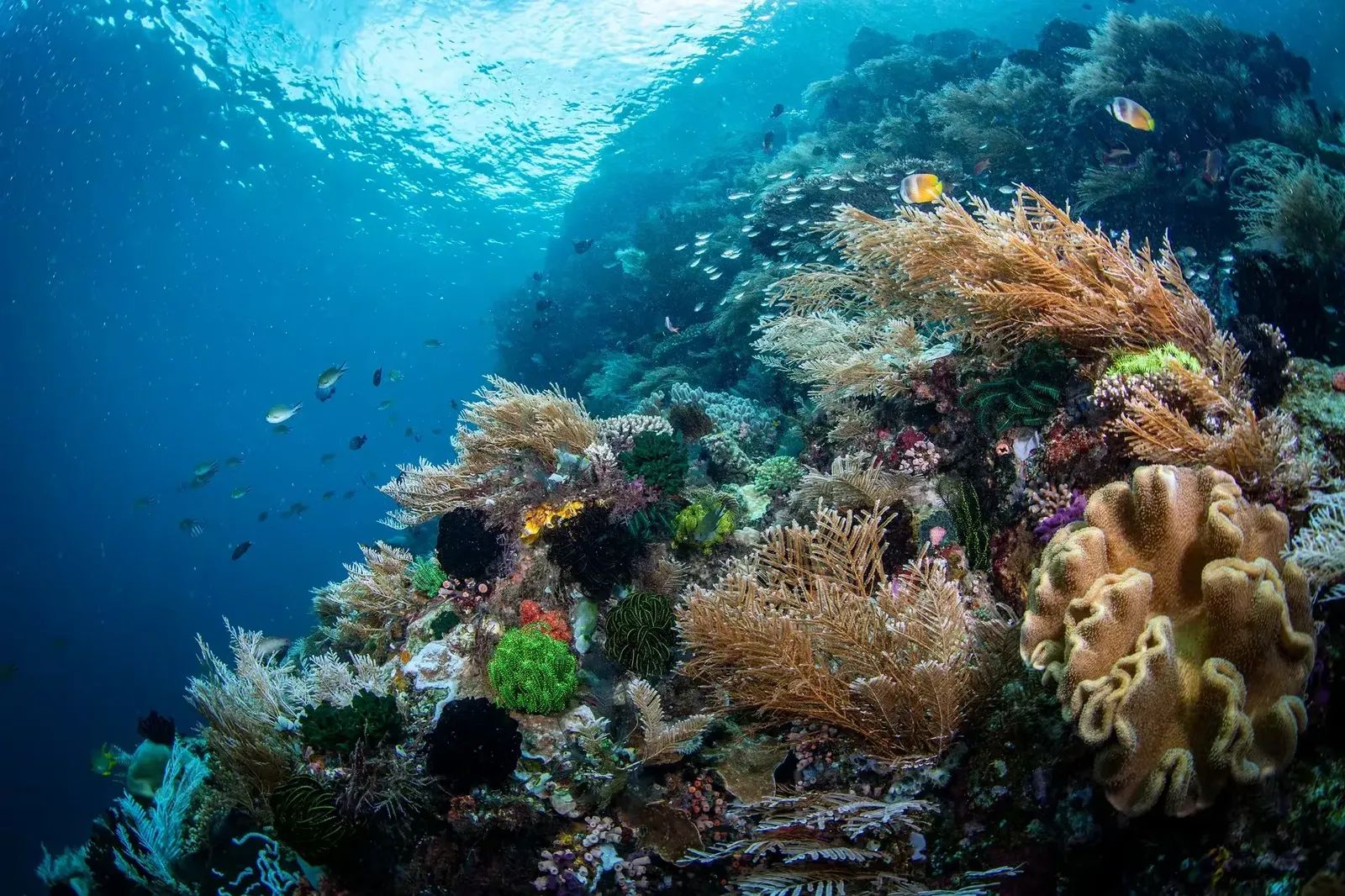
Vibrant coral reef with hard corals and reef fish, pristine dive site in Komodo National Park liveaboard itinerary Indonesia
Buche deine Komodo-Reise
Wir sind eine auf Bali ansässige Plattform, die von Tauchern betrieben wird, die Komodo gut kennen. Du zahlst bei einer Buchung über uns denselben Preis wie bei einer Direktbuchung – die Anbieter halten die Preisparität über alle Kanäle aufrecht. Jede Buchung über Coralbound beinhaltet ein Buchungsgeschenk, darunter eine kostenlose Hotelübernachtung, und du erhältst echten Support obendrauf: Koordination von Inlandsflügen über VIFA Holiday und ein Team, dem es wirklich wichtig ist, dass deine Reise gut verläuft.
Fragen vor der Buchung? Schreib uns auf WhatsApp oder kontaktiere uns über unser Kontaktformular. Möchtest du mehr darüber erfahren, wie wir arbeiten? Lies unsere Warum mit Coralbound buchen Seite.