Indonesien beherbergt die weltweit größten dokumentierten Mantarochen-Populationen – und anders als an den meisten Reisezielen basieren die Begegnungen hier auf ansässigen Populationen, nicht auf saisonalen Wanderungen.
Dieser Leitfaden beschreibt, wo und wann man in Indonesien Mantarochen findet, was jeden Tauchplatz besonders macht und was man auf dem Wasser erwarten kann. Er ist Teil von Coralbound's Indonesien-Liveaboard-Leitfaden; unser Leitfaden zum Tauchen mit Großtieren gibt einen vollständigen Überblick über die Megafauna und warum Taucher Indonesien wählen behandelt die allgemeinen Argumente für das Land. Für einen schnellen Überblick über das Reiseziel, siehe die Komodo-Zielseite oder die Raja-Ampat-Zielseite.
Indonesien beherbergt sowohl Riff-Mantarochen (Mobula alfredi) als auch ozeanische Mantarochen (Mobula birostris). Riff-Mantas – mit einer Spannweite von drei bis fünf Metern – bilden die ansässigen Populationen an Reinigungsstationen im gesamten Archipel. Ozeanische Mantas, mit fünf bis sieben Metern größer, sind pelagisch und weniger vorhersehbar, werden aber in der richtigen Saison zuverlässig an bestimmten Tauchplätzen in Raja Ampat und Komodo angetroffen. Riff-Mantas sind auf der Roten Liste der IUCN als gefährdet eingestuft²; ozeanische Mantas wurden auf stark gefährdet hochgestuft⁹.
Kurzübersicht
- Beste Reisezeit: ganzjährig in Komodo und Nusa Penida; Oktober–April Hochsaison in Raja Ampat; März–Juni in Sangalaki
- Wassertemperatur: 26–29°C an den wichtigsten Manta-Tauchplätzen; kann bei Auftrieb an Nusa Penida und im südlichen Komodo stark abfallen
- Sichtweite: 15–30 m an Reinigungsstationen; reduziert an planktonreichen Futterstellen
- Erfahrungsniveau: Open Water als Minimum; die meisten Reinigungsstationen geeignet für Anfänger und Schnorchler
- Reisedauer: 7–10 Tage mit Schwerpunkt Komodo; 8–14 Tage Raja Ampat; Tagesausflüge von Bali nach Nusa Penida; 7–12 Tage für Sangalaki/Derawan
- Wer kann teilnehmen: Taucher und Schnorchler; Reinigungsstationen typischerweise 8–15 m tief, Oberflächenfütterung von oben zugänglich
- Kostenrahmen: $300–600/Tag Mittelklasse; $600–1.000+/Tag Luxus
- Wichtigste Arten: Riff-Manta (Mobula alfredi, IUCN gefährdet); ozeanischer Manta (Mobula birostris, IUCN stark gefährdet)
- Einreiseflughäfen: Labuan Bajo (LBJ) für Komodo; Sorong (SOQ) für Raja Ampat; Ngurah Rai (DPS) für Nusa Penida; Berau/Kalimarau (BEJ) für Sangalaki
- Buchungsvorlaufzeit: 3–6 Monate; 6–12 Monate für die Hochsaison in Raja Ampat (Dezember–März)
Schnelle Antworten
Wo ist der beste Ort, um Mantarochen in Indonesien zu sehen?
Der Komodo-Nationalpark ist Indonesiens zuverlässigstes Mantarochen-Reiseziel. Eine fünfjährige Studie identifizierte 1.085 individuelle Riff-Mantas, die die Reinigungsstationen des Parks nutzen, wobei Mantas das ganze Jahr über präsent sind¹. Raja Ampat ist das Ziel für ozeanische Mantas – Blue Magic in der Dampier-Straße ist der wichtigste Tauchplatz, am besten von Oktober bis April, wenn planktonreiche Strömungen beide Arten konzentrieren. Nusa Penida bei Bali bietet ganzjährige Begegnungen mit dem geringsten logistischen Aufwand, und Sangalaki auf den Derawan-Inseln hat 155 dokumentierte individuelle Riff-Mantas an seinen Reinigungsstationen⁵.
Was ist der Unterschied zwischen Riff- und ozeanischen Mantarochen?
Riff-Mantas (Mobula alfredi) haben eine Spannweite von drei bis fünf Metern und bilden ansässige Populationen an Reinigungsstationen in ganz Indonesien – das sind die Mantas in Komodo, Nusa Penida und Sangalaki. Ozeanische Mantas (Mobula birostris) erreichen fünf bis sieben Meter und sind pelagisch; sie erscheinen saisonal an Tauchplätzen wie Blue Magic in Raja Ampat und Manta Alley in Komodo. Beide sind als bedrohte Arten auf der IUCN-Roten Liste eingestuft – Riff-Mantas als gefährdet², ozeanische Mantas als stark gefährdet⁹. Trotz des gebräuchlichen Namens sind Mantarochen keine Stachelrochen – sie haben sich aus Stachelrochen-Vorfahren entwickelt und den Stachel durch die Evolution weitgehend verloren; Riff-Mantas haben gar keinen, während ozeanische Mantas nur einen rudimentären, harmlosen Stachel behalten haben⁸.
Können Anfänger und Schnorchler Mantarochen in Indonesien sehen?
Ja, obwohl einige Tauchplätze stärkere Tarierungskontrolle bei Strömung erfordern. Die meisten Manta-Reinigungsstationen sind acht bis fünfzehn Meter tief und für Open-Water-Taucher zugänglich. Schnorchler erleben ebenso gute Begegnungen, wenn Mantas an der Oberfläche fressen — Manta Sandy in Raja Ampat und die Reinigungsstationen in Komodo bieten beide zuverlässige Oberflächenfütterung. Nusa Penida ist besonders gut erreichbar und bildet eine natürliche Bali-Erweiterung, ohne dass ein Liveaboard benötigt wird.
Wann ist die beste Zeit, um Mantarochen in Indonesien zu sehen?
Komodo und Nusa Penida bieten ganzjährige Begegnungen; April–November wird generell für Oberflächenbedingungen in Komodo bevorzugt. Die Hauptsaison für Mantarochen in Raja Ampat dauert von Oktober bis April, wobei Dezember bis März die produktivsten Monate in der Dampier Strait und Misool sind. Sangalaki hat seinen Höhepunkt von März bis Juni. Unser Wetterführer für Indonesien deckt saisonale Bedingungen über alle Reiseziele hinweg ab.
Kann ich auf derselben Reise Mantarochen und Walhaie sehen?
Ja. Die Liveaboard-Route von Komodo nach Sumbawa kombiniert Mantarochen in Komodo mit Walhaien in der Saleh-Bucht (Mai–September). Raja Ampat in Kombination mit Triton Bay bietet beide Arten (Oktober–April). Für einen speziellen Fokus auf Walhaie, unser Walhai-Leitfaden deckt das Gesamtbild ab.
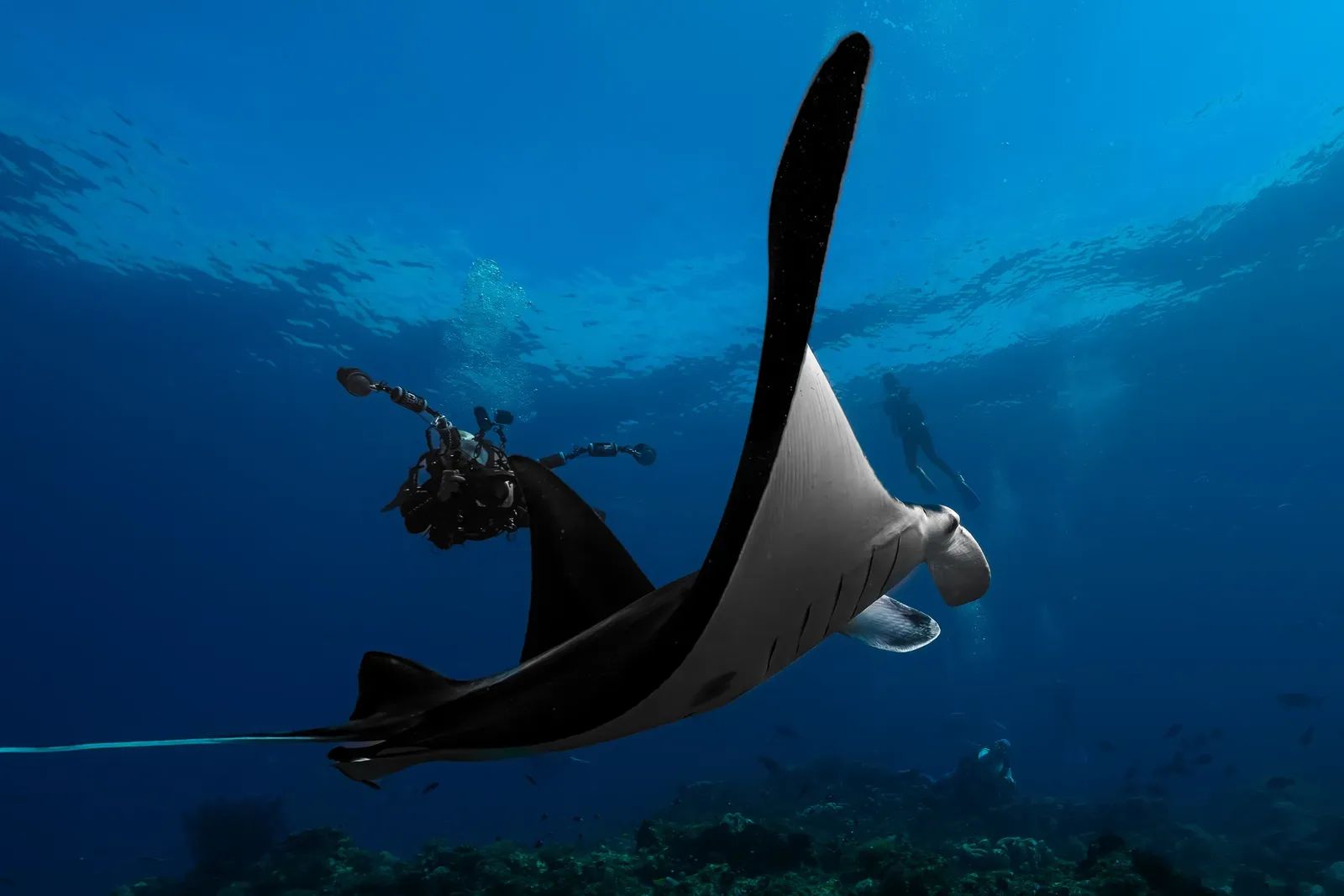
Elegant manta ray with distinctive black and white coloration gliding through blue water with scuba diver - Picture by Neptune Liveaboards
Wo man Mantarochen in Indonesien findet
Komodo-Nationalpark
Komodo ist eines der weltweit zuverlässigsten Reiseziele für Mantarochen. Eine fünfjährige Gemeinschaftsstudie zwischen der Marine Megafauna Foundation und der Murdoch University identifizierte 1.085 einzelne Riffmantas an vier Schlüsselstandorten im Park — und die Forscher weisen darauf hin, dass die tatsächliche Population wahrscheinlich höher ist¹. Mantas sind das ganze Jahr über vorhanden, wobei April–November die konstantesten Oberflächenbedingungen an den Hauptstandorten bietet.
Die vier Standorte sind Manta Point (Karang Makassar) und Mawan im zentralen Bereich, Manta Alley im abgelegenen Süden und Cauldron im Norden¹. Jeder zieht unterschiedliche demografische Gruppen an – Manta Alley hat die höchsten Wiederersichtungsraten, was auf die am stärksten ansässigen Individuen hindeutet; Cauldron sieht mehr unreife Mantas. Die meisten Liveaboard-Routen besuchen mehrere Standorte.
Begegnungen an Reinigungsstationen in acht bis fünfzehn Metern Tiefe sind das Kernerlebnis. Mantas schweben über Korallenstrukturen, während Putzerfische Parasiten entfernen, wiederholt kreisen und oft bis auf wenige Meter an Taucher heran kommen. Schnorchler sehen dasselbe Verhalten von der Oberfläche während der Planktonfütterung. Die Intelligenz dieser Tiere ist ein Teil dessen, was die Begegnung so besonders macht – Mantarochen haben das höchste Gehirn-zu-Körper-Massenverhältnis aller Fische⁸, und ihre Neugier gegenüber Tauchern ist ein echtes Verhaltensmerkmal, keine Gewöhnung.
Abfahrten von Komodo starten von Labuan Bajo; einige Betreiber starten von Bali auf längeren Routen. Für vollständige Destinationsdetails lesen Sie unseren Komodo Reiseführer oder sehen Sie sich die Komodo Destinationsseite.
Raja Ampat
Raja Ampat bietet die besten ozeanischen Manta-Begegnungen in Indonesien und einige der produktivsten Riff-Manta-Reinigungsstationen in der Region. Die beiden Arten besetzen unterschiedliche Nischen: Riff-Mantas bei Manta Sandy und Manta Ridge in der Dampierstraße, ozeanische Mantas bei Blue Magic und Magic Mountain in Misool.
Blue Magic ist eine untergetauchte Spitze in der zentralen Dampierstraße, wo starke Strömungen pelagische Lebewesen konzentrieren. Ozeanische Manta-Begegnungen sind hier saisonal – am besten von Oktober bis April, mit Spitzenwerten von Dezember bis März, wenn die Planktonblüte am reichsten ist. Dies ist ein mittelschwerer bis fortgeschrittener Tauchplatz aufgrund der Strömung; eine solide Tarierungskontrolle ist erforderlich. Manta Sandy ist eine flachere Reinigungsstation, die für Open-Water-Taucher und Schnorchler zugänglich ist, mit Begegnungen, die im selben Oktober-April-Fenster am zuverlässigsten sind, aber das ganze Jahr über möglich sind.
Die Region Misool fügt die Naturschutzgeschichte hinzu, die Raja Ampat auszeichnet. Ein ehemaliges Haifischflossen-Camp wurde von der Misool Foundation in ein 300.000 Hektar großes Meeresschutzgebiet ohne Fischerei umgewandelt; seit Beginn des Schutzes hat sich die Unterpopulation der Riff-Mantas innerhalb des Schutzgebiets verdoppelt, und die Sichtungen von ozeanischen Mantas innerhalb des Schutzgebiets stiegen zwischen 2010 und 2016 um das 25-fache³. Dies ist eine dokumentierte Erholung innerhalb einer menschlichen Zeitskala, sichtbar bei jedem Tauchgang in der Dichte und dem Vertrauen der Tiere.
Für vollständige Destinationsdetails einschließlich Naturschutzgebühren und Logistik sehen Sie unseren Raja Ampat Reiseführer oder die Raja Ampat Destinationsseite.
Nusa Penida (Bali)
Nusa Penida ist Indonesiens am besten zugängliches Ziel für Mantarochen. Das MPA Nusa Penida, das 2010 auf 20.057 Hektar ausgewiesen wurde, hat 624 einzelne Riff-Mantas mit 5.913 dokumentierten Sichtungen⁴. Begegnungen sind das ganze Jahr über möglich, angetrieben durch konstante Auftriebsströmungen im Indischen Ozean und nicht durch strenge Saisonalität.
Die wichtigsten Tauchplätze liegen entlang der südlichen und südwestlichen Küste, wo die Strömung am stärksten ist. Beide sind starker Brandung und kaltem Auftriebswasser ausgesetzt, besonders von Juli bis September, wenn der südliche Winter die Wellen des Indischen Ozeans verstärkt. Die Wassertemperaturen können in der Thermokline stark abfallen – ein Fünf-Millimeter-Neoprenanzug ist für diesen Zeitraum ratsam.
Nusa Penida erfordert kein Liveaboard. Tagesausflüge von Bali oder Sanur sind unkompliziert und machen es zu einer natürlichen Ergänzung für jede Bali-Reise oder als Verlängerung nach einem Liveaboard. Unser Bali-Reiseführer deckt die Logistik ab, und unser Leitfaden für Liveaboard-Erweiterungen erklärt, wie man sie in eine umfassendere Indonesienreise integriert.
Sangalaki (Derawan-Inseln)
Die Insel Sangalaki in Ost-Kalimantan (Borneo) beherbergt eine gut dokumentierte, ansässige Riffmanta-Population. Die Marine Megafauna Foundation identifizierte 155 einzelne Riffmantas aus 846 Begegnungen bei Sangalaki⁵, was die hohe Standorttreue bestätigt, die diese Tiere zu bestimmten Putzerstationen zeigen. Die Hauptsaison ist März–Juni; Begegnungen sind das ganze Jahr über möglich.
Sangalaki lässt sich gut mit dem gesamten Erlebnis der Derawan-Inseln kombinieren – Niststrände für grüne Meeresschildkröten, der Quallen-See von Kakaban und Walhaie bei den Bagans von Talisayan. Die Derawan-Inseln sind noch nicht Teil der üblichen Liveaboard-Routen; nur eine Handvoll Anbieter fährt dorthin, aber sie sind schnell ausgebucht. Detaillierte Informationen finden Sie in unserem Leitfaden für die Derawan-Inseln.
Andere Manta-Populationen
Indonesien ist riesig, abgelegen und wird noch erforscht – regelmäßig werden neue Manta-Populationen dokumentiert. Liveaboard-Routen durch die Banda-See stoßen regelmäßig auf Riffmantas an Putzerstationen, insbesondere in den Abschnitten der Banda-Inseln und der Vergessenen Inseln. Alor und Halmahera beherbergen beide Manta-Populationen, die natürlich mit den Tauchplätzen dieser Routen zusammenfallen. Die Gewässer zwischen Lombok und Sumbawa sind ein Gebiet, in dem in den letzten Jahren neue Ansammlungen beobachtet wurden, und die Marine Megafauna Foundation erforscht diesen Korridor. Diese Begegnungen sind authentisch, aber zufällig – man würde keine spezielle Manta-Reise um eines dieser Gebiete planen, aber sie tragen zum Gesamtbild bei, warum Indonesien pro Reise mehr Manta-Begegnungen hervorbringt als jeder andere Ort auf der Erde.
Kontext des Naturschutzes
Beide Manta-Arten sind bedroht – Riffmantas als „gefährdet“ (Vulnerable²), Ozeanmantas als „stark gefährdet“ (Endangered⁹) – und Indonesien verbot 2014 das Fischen von Mantarochen landesweit, als eines der ersten Länder überhaupt⁶. Wichtige Standorte liegen innerhalb von Meeresschutzgebieten – der Komodo-Nationalpark hat seit 1984 Fischereibeschränkungen, die dem nationalen Verbot vorausgingen⁶.
Forschungen zur Verfolgung von Mantarochenbewegungen in Indonesien ergaben, dass Individuen zwischen Schutzgebieten wie Nusa Penida, den Gili-Inseln und Komodo bis zu 450 km wandern – und dabei stark befischte und von Schiffen befahrene Gewässer durchqueren⁷. Trotzdem fand die MMF Komodo-Studie heraus, dass 5 % der Individuen dauerhafte Verletzungen durch Fischereigerät aufweisen, und der Tauchbootverkehr bei Karang Makassar und Mawan stieg im Studienzeitraum um 34 %¹. Bootsbeschränkungen wurden 2019 als direkte Reaktion an diesen Standorten eingeführt. Verantwortungsbewusste Betreiber halten ihre Position am Riff, ohne Mantas zu jagen, halten Gruppen klein und befolgen No-Touch-, No-Flash-Protokolle.
Die Intelligenz von Mantarochen ist auch für Taucher praktisch relevant. Mit dem höchsten Gehirn-zu-Körper-Massenverhältnis aller Fische⁸ wandern Mantas, die eine von Tauchern gestörte Reinigungsstation finden, nicht ab – sie ziehen weiter. Eine Reinigungsstation, die regelmäßig überfallen wird, verliert ihre ansässige Population. Die Regeln für verantwortungsbewusste Begegnungen existieren, weil diese Tiere in der Lage sind, genau diese Entscheidung zu treffen.
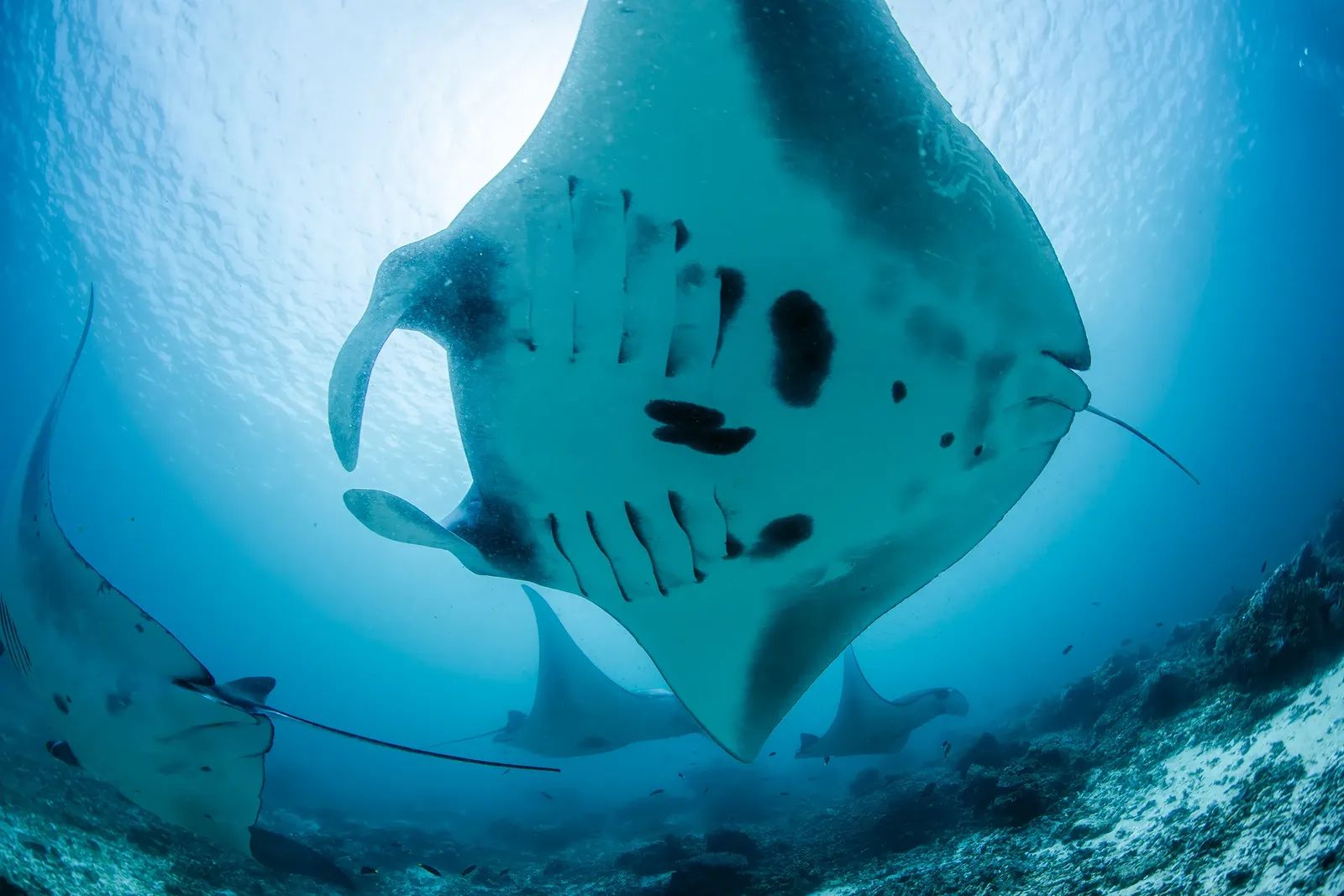
Manta ray diving Komodo National Park Indonesia liveaboard expedition underwater photography - Picture by Neptune Liveaboards
Erwartungen managen
Manta-Rochen-Begegnungen an Reinigungsstationen gehören zu den zuverlässigsten im Wildtier-Tauchen, aber zuverlässig ist nicht dasselbe wie garantiert. Mantas lesen die Bedingungen – Strömungsstärke, Planktondichte, Wassertemperatur – und bewegen sich entsprechend. Ein Riff voller Mantas am Montag kann am Dienstag leer sein. Betreiber mit starkem Lokalwissen passen die Standortwahl täglich an, und ein guter Guide ist wichtiger als eine gute Reiseroute auf dem Papier.
Manta Point in Nusa Penida und die südlichen Komodo-Standorte können während des südlichen Winters (Juli–September) kalt und aufgewühlt sein. Auftrieb im Indischen Ozean bringt Thermoklinen mit sich, die die Wassertemperatur auf wenigen Metern um mehrere Grad senken können. Ein Fünf-Millimeter-Neoprenanzug ist für diese Zeitfenster an beiden Zielen empfehlenswert.
Blue Magic in Raja Ampat ist strömungsgetrieben und am besten für Taucher geeignet, die sich in bewegtem Wasser wohlfühlen. Wenn Sie ein Anfänger sind, der speziell ozeanische Mantas anvisiert, bieten Manta Alley in Komodo oder Magic Mountain in Misool verzeihendere Bedingungen für dieselbe Art.
Schnorchler an Oberflächenfutterplätzen haben oft die besten Begegnungen des Tages. Wenn Mantas an der Wasseroberfläche nach Plankton fressen, sieht ein richtig positionierter Schnorchler mehr als ein Taucher darunter. Behandeln Sie den Zugang zur Oberfläche nicht als zweitbeste Option.
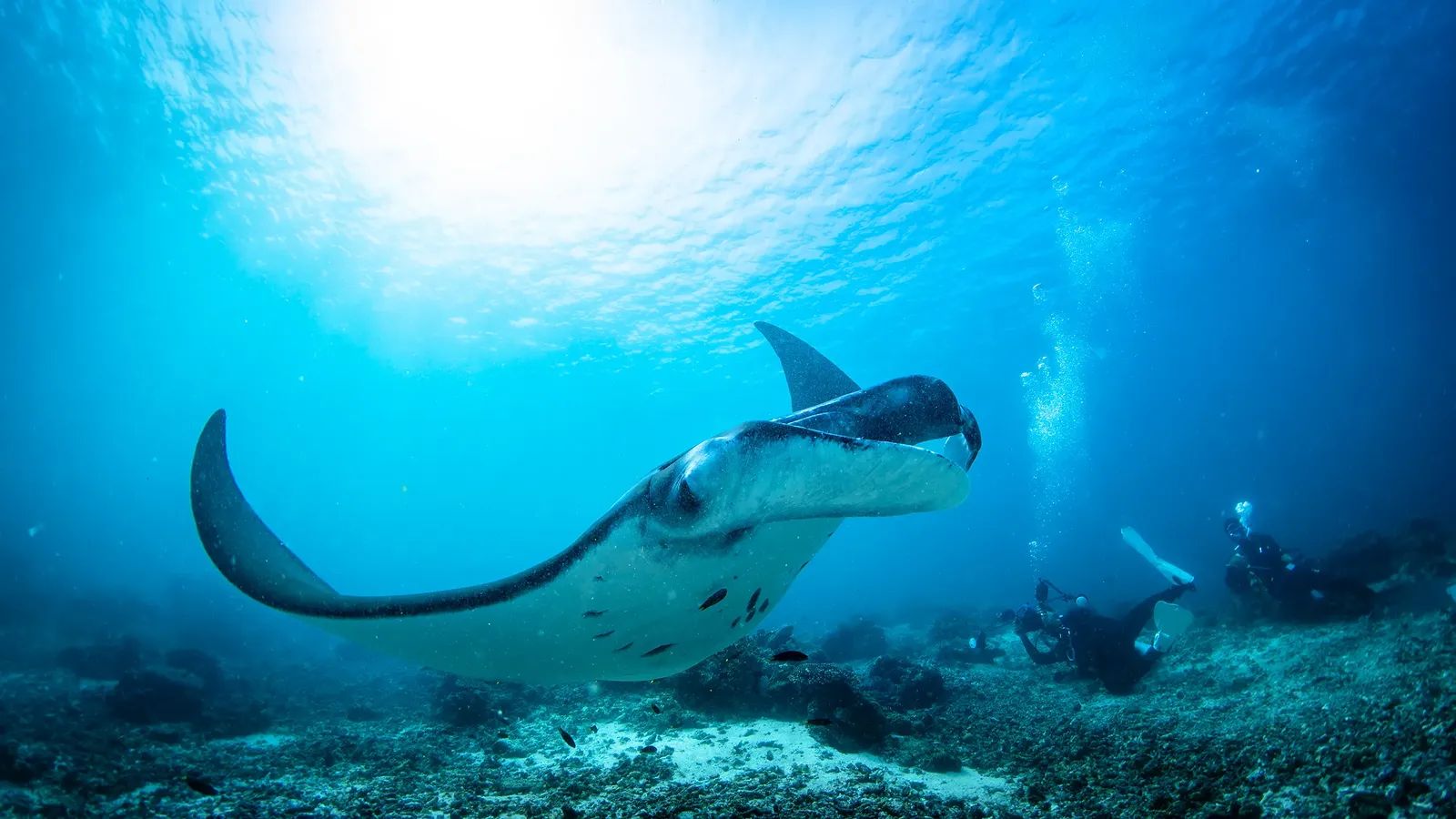
Manta ray diving Komodo National Park Indonesia liveaboard expedition underwater photography - Picture by Neptune Liveaboards
Häufig gestellte Fragen
Wie viele Mantarochen werde ich an den Putzstationen von Komodo sehen?
Betreiber berichten unter normalen Bedingungen durchweg von drei bis acht Individuen gleichzeitig, mit größeren Ansammlungen während der Hauptfresszeiten. Die MMF-Studie dokumentierte signifikante tägliche Schwankungen zwischen den Standorten¹ — Manta Alley produziert aufgrund seiner Abgelegenheit tendenziell die konstantesten Zahlen, während Karang Makassar mit dem Bootsverkehr variieren kann. Bei Manta Sandy in Raja Ampat sind ein bis vier Individuen typisch; die Begegnungen am Blue Magic sind variabler und stromabhängig.
Benötige ich eine Tauchversicherung für Liveaboard-Tauchfahrten in Indonesien?
Ja. Eine Tauchversicherung mit medizinischer Evakuierungsdeckung ist nach indonesischem Recht zwingend erforderlich und für abgelegene Expeditions-Tauchgänge nicht verhandelbar. Eine Standard-Reiseversicherung schließt häufig eine Evakuierung aus abgelegenen Gebieten aus — überprüfen Sie, ob Ihre Police Indonesien ausdrücklich abdeckt und eine Bergung aus abgelegenen Gebieten einschließt. Unser Packleitfaden für Liveaboards behandelt Versicherung und Vorbereitung auf die Reise im Detail.
Benötige ich Advanced Open Water, um Mantarochen zu sehen?
Nein, für die meisten Standorte. Die Hauptputzstationen von Komodo, Manta Sandy in Raja Ampat, Sangalaki und Nusa Penida sind alle für Open Water Taucher zugänglich. Blue Magic in Raja Ampat und Manta Alley in Komodo beinhalten stärkere Strömungen und sind besser für Advanced Open Water oder erfahrene Open Water Taucher mit guter Tarierung geeignet. Prüfen Sie, welche Standorte Ihre spezifische Reiseroute beinhaltet. Unser Einsteiger-Liveaboard-Leitfaden behandelt die Zertifizierungsanforderungen für indonesische Reiseziele.
Was kann ich noch mit einer Mantarochen-Reise kombinieren?
Ja. Hammerhaie in der Banda-See und Meeresschildkröten erscheinen auf denselben Reiserouten wie Mantas in mehreren Zielen. Komodo lässt sich gut mit Sumbawa (Walhaie, Mai–September) kombinieren; Raja Ampat lässt sich mit Triton Bay für Walhaie (Oktober–April) kombinieren. Für Kombinationsideen, unser Leitfaden für Liveaboard-Erweiterungen behandelt die Optionen.
Ist Nitrox auf Liveaboards in Indonesien verfügbar?
Die Verfügbarkeit variiert je nach Schiff. Luxus- und tauchspezifische Boote beinhalten in der Regel Nitrox oder bieten es gegen Aufpreis an. An Putzstationen im Bereich von acht bis fünfzehn Metern ist der Nutzen begrenzt — er wird relevanter für die tieferen Riff- und pelagischen Standorte auf derselben Reiseroute. Unser Kategorien-Leitfaden für Liveaboards behandelt, was jede Schiffsklasse beinhaltet.
Sind Mantarochen mit Stachelrochen verwandt? Sind sie gefährlich?
Mantarochen entwickelten sich aus Vorfahren von Stachelrochen, verloren aber durch evolutionäre Anpassung⁸ den giftigen Stachel. Riffmantas (M. alfredi) haben keine Schwanzflosse; ozeanische Mantas (M. birostris) behalten einen rudimentären, nicht funktionsfähigen Überrest⁸. Sie sind Filtrierer und völlig harmlos. Das No-Touch-Protokoll dient dem Schutz der Schleimschicht des Mantas, die Teil seines Immunsystems ist – und weil ein Tier mit dem höchsten Gehirn-zu-Körper-Massenverhältnis aller Fische⁸ eine Reinigungsstation einfach verlässt, wenn Taucher es unbehaglich machen.
Was sind die Regeln für verantwortungsvolle Begegnungen beim Tauchen mit Mantarochen?
Halten Sie mindestens drei Meter Abstand zum Körper und mehr zum Schwanz. Betreten Sie nicht die Reinigungsstation – das Schweben über dem Korallenriff stört die Putzerfische und veranlasst die Mantas zum Verlassen. Vermeiden Sie Blitzlichtfotografie direkt in die Augen. Kontrollieren Sie Ihre Flossenschläge über Korallen, um zu verhindern, dass Sedimente den Reinigungsbereich stören. Dieselben Mantas kehren jahrelang zu denselben Orten zurück; ein Ort, der regelmäßig gestört wird, verliert seine Bewohner dauerhaft.
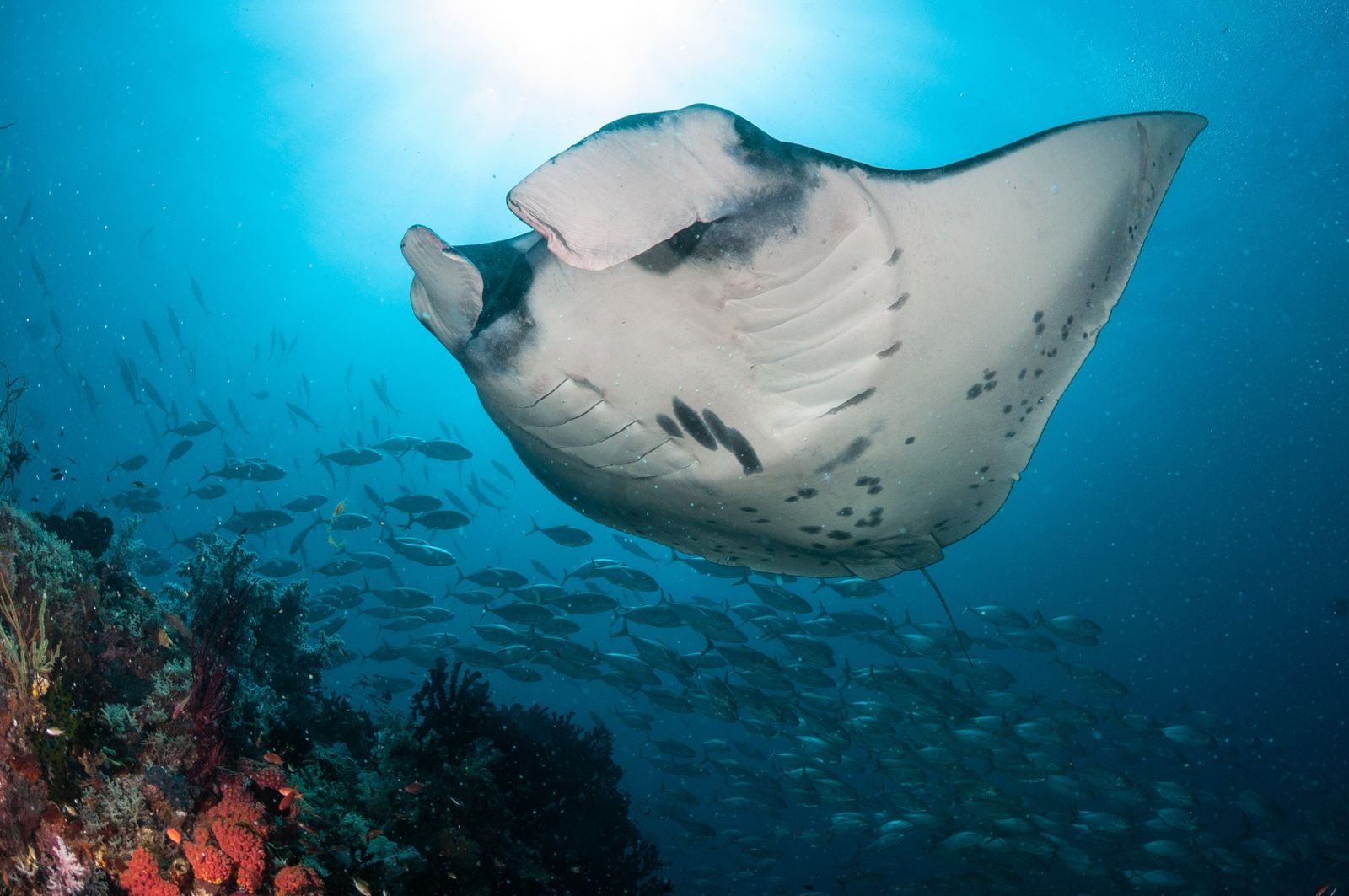
Giant manta ray close-up underwater photograph Raja Ampat diving Indonesia liveaboard destination - Picture by Dewi Nusantara
Planen Sie Ihre Reise
Coralbound bucht Mantarochen-Liveaboards in allen indonesischen Destinationen zum gleichen Preis wie bei direkter Buchung, einschließlich der Option auf eine kostenlose Hotelnacht. Wir wissen, welche Komodo-Routen Manta Alley sowie die zentralen Orte abdecken, welche Raja Ampat-Schiffe Blue Magic-Tauchgänge zum richtigen Gezeitenfenster planen und wie Sangalaki in eine Derawan-Inselroute passt. Kontaktieren Sie uns über WhatsApp oder über das Kontaktformular – oder lesen Sie mehr darüber, wie wir arbeiten, bevor Sie sich melden.