Triton Bay liegt an der Südküste von West Papua, eingebettet in das Kaimana Meeresschutzgebiet – eine der am wenigsten betauchten und artenreichsten Regionen Indonesiens. Die charakteristischen Begegnungen sind Geisterhaie, Walhaie an Fischplattformen und Weichkorallengärten von außergewöhnlicher Dichte. Die Bucht wurde erstmals 2006 richtig vermessen und wird immer noch erforscht, wobei bei neueren Expeditionen neue Tauchplätze entdeckt wurden.¹
Dieser Leitfaden behandelt alles, was Sie für die Planung einer Triton Bay Liveaboard-Reise benötigen: die richtige Jahreszeit, die Anreise, was Sie unter Wasser erwartet und wie sie in die breiteren Routen von West Papua und dem Bird's Head Seascape passt. Er ist Teil unseres vollständigen Liveaboard-Leitfaden für Indonesien. Möchten Sie zuerst einen schnellen Überblick? Sehen Sie sich unsere Triton Bay Reisezielseite.
Schnelle Fakten: Triton Bay Liveaboard Tauchen
Schnelle Fakten über das Tauchen in Triton Bay
- Beste Jahreszeit: Oktober–April
- Korallenarten: 471 Arten verzeichnet¹
- Fischarten: 1.000+ Arten¹
- Wassertemperatur: 27–30°C ganzjährig
- Sichtweite: 10–15 m in der Bucht; 25 m+ an den äußeren Riffen und der Bomberai-Halbinsel
- Tauchgänge pro Tag: 3–4 auf den meisten Reiserouten
- Erfahrungsstufe: Für alle Niveaus geeignet
- Reiselänge: 8–14 Tage
- Kostenbereich: 400–600 $/Tag je nach Schiffskategorie
- Zielflughafen: Kaimana Flughafen (KNG) über Sorong (SOQ) oder Makassar (UPG); einige Reiserouten starten in Sorong
- Buchungsvorlaufzeit: 6–12 Monate für die Hauptsaison
Schnelle Antworten
Wann ist die beste Zeit, um Triton Bay zu betauchen?
Oktober bis April ist das Hauptfenster – ruhige See, gute Sicht an den äußeren Riffen und die zuverlässigsten Walhai-Begegnungen an den Bagans. Die meisten Triton Bay Liveaboards laufen in Verbindung mit der Raja Ampat Saison, die von Oktober bis März ihren Höhepunkt erreicht. Der Südostmonsun von Mai bis September bringt schwierige Bedingungen mit sich und die meisten Betreiber planen in dieser Zeit keine Reisen. Für die allgemeineren saisonalen Muster Indonesiens siehe unseren Leitfaden zu Wetter und Tauchsaisons in Indonesien.
Kann ich in Triton Bay Walhaie sehen?
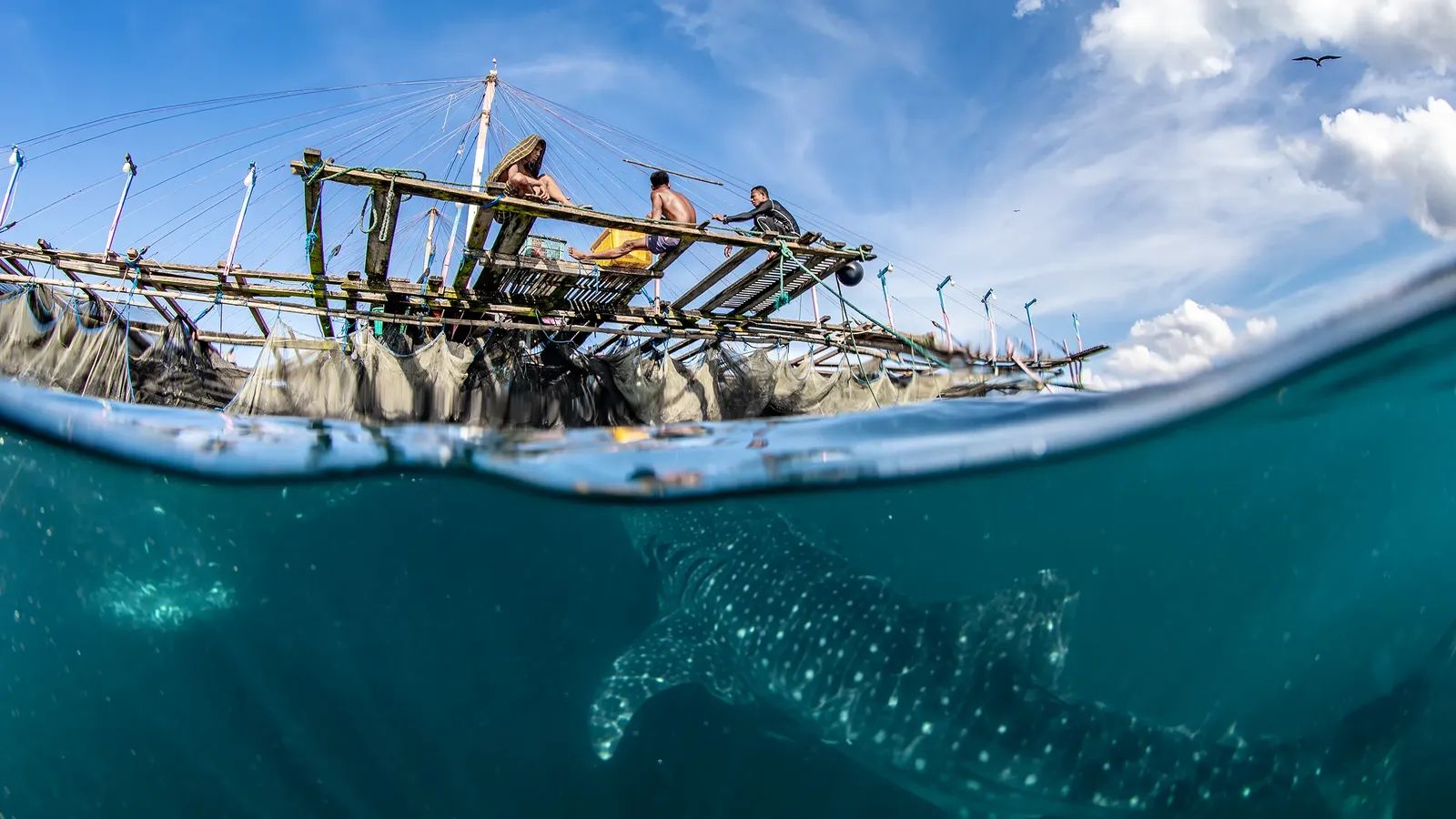
Ja – Walhaie versammeln sich das ganze Jahr über an traditionellen Fischplattformen, den sogenannten Bagans, im Gebiet Ost-Kaimana und Namatota.²³ Die Fütterungsdynamik der Bagan ist dieselbe wie in der Cenderawasih-Bucht: Fischer locken nachts mit Lichtern kleine Fische an, und die Walhaie versammeln sich an der Oberfläche, um zu fressen. Delfine werden ebenfalls häufig in der Nähe der Bagans angetroffen. Die Begegnungen sind am zuverlässigsten von Oktober bis April. Für Walhai-Tauchgänge in ganz Indonesien siehe unseren Leitfaden zu Walhaien in Indonesien.
Was ist der laufende Hai?
Der Epaulettenhai von Triton Bay (Hemiscyllium henryi) ist in diesen Gewässern endemisch – wissenschaftlich erst 2008 beschrieben.⁷ Er benutzt seine Brustflossen, um über Korallenköpfe und durch flache Riffbereiche zu laufen, anstatt kontinuierlich zu schwimmen. Nachtaktiv und langsam bewegend, ist er eine der ungewöhnlichsten Begegnungen beim Tauchen in Indonesien. Mehrere andere endemische Riffischarten wurden hier seit den ersten Erhebungen dokumentiert.¹
Wie komme ich nach Triton Bay?
Die meisten Triton Bay-Routen starten in Sorong (SOQ) und führen nach Süden durch Misool und entlang der Bomberai-Halbinsel, um Triton Bay zu erreichen. Einige Boote starten direkt von Kaimana (KNG). Eine kleine Anzahl von Betreibern führt Überfahrten von Ambon über die Banda-See durch. Bestätigen Sie immer Ihre genauen Ein- und Ausschiffungshäfen, bevor Sie Inlandsflüge buchen – diese variieren je nach Reiseroute erheblich.
Wie viel kostet eine Triton Bay Liveaboard-Reise?
Die Schiffe beginnen bei etwa 400 $/Tag für Phinisi-Schiffe im Expeditionsstil und reichen bis zu 600 $/Tag für Luxusbetreiber. Die Gesamtkosten für Reisen liegen zwischen 3.200 und 10.000 $+ für 8-14-tägige Routen vor Flügen und zusätzlichen Gebühren. Eine vollständige Aufschlüsselung der Kategorien finden Sie in unserem Leitfaden für Liveaboard-Kategorien in Indonesien.
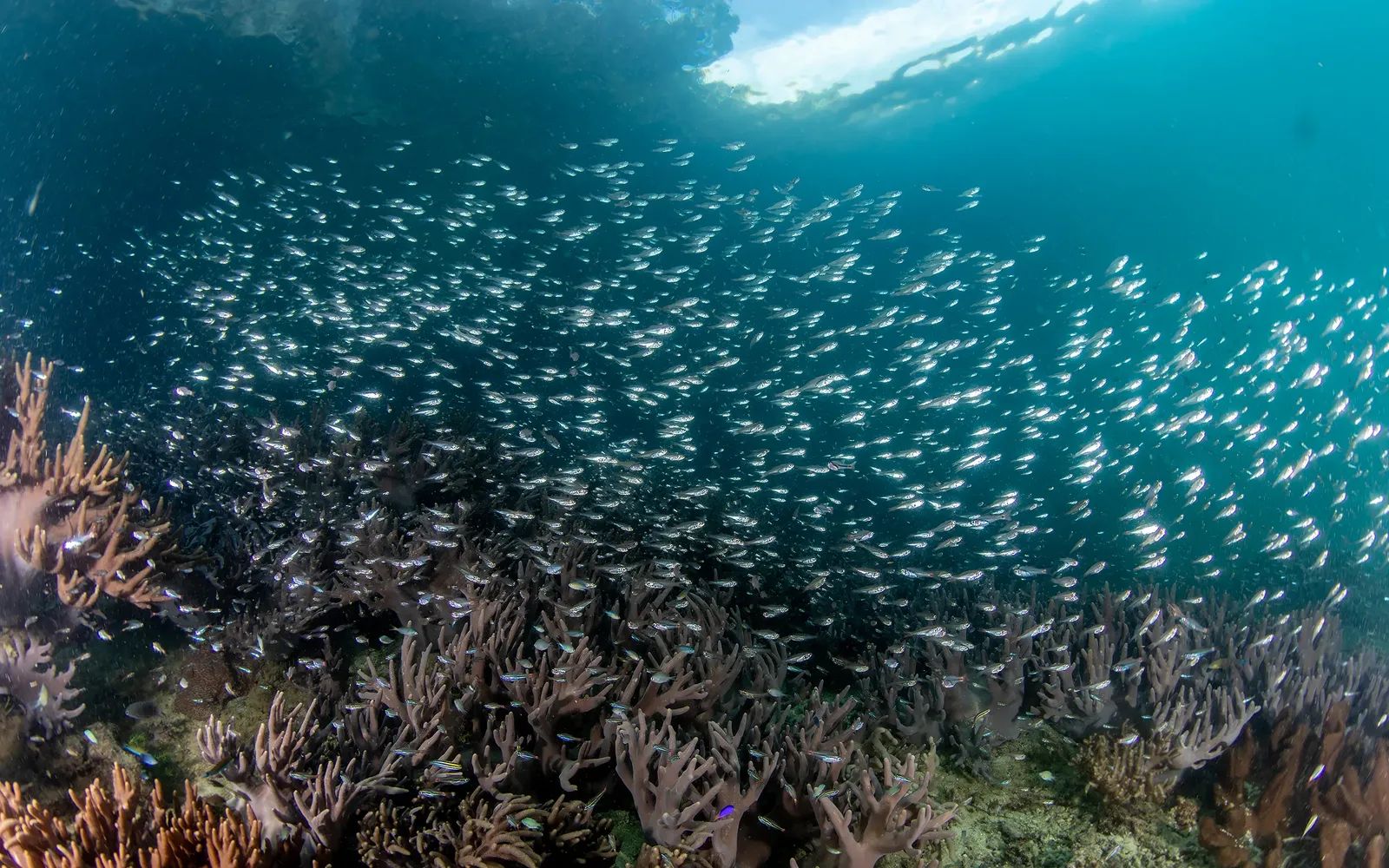
Massive baitfish tornado school over coral reef, signature dive encounter at Triton Bay liveaboard sites West Papua Indonesia
Warum Triton Bay
Triton Bay ist Teil des Bird's Head Seascape⁹ – des global bedeutsamen Meereskorridors in Westpapua, der Raja Ampat, die Cenderawasih-Bucht und Kaimana umfasst. Es liegt innerhalb des 6.000 km² großen Meeresschutzgebiets Kaimana, das 2008 nach den ersten wissenschaftlichen Erhebungen des Ichthyologen Dr. Gerald Allen von Conservation International eingerichtet wurde.¹ Während dieser Erhebung im Jahr 2006 stellte Allen einen Weltrekord für Fischvielfalt auf – 330 Arten, die an einem einzigen Tauchplatz gezählt wurden.¹ Der Kontext des Korallendreiecks verleiht ihm eine der höchsten dokumentierten marinen Biodiversitätsdichten weltweit.⁴⁵
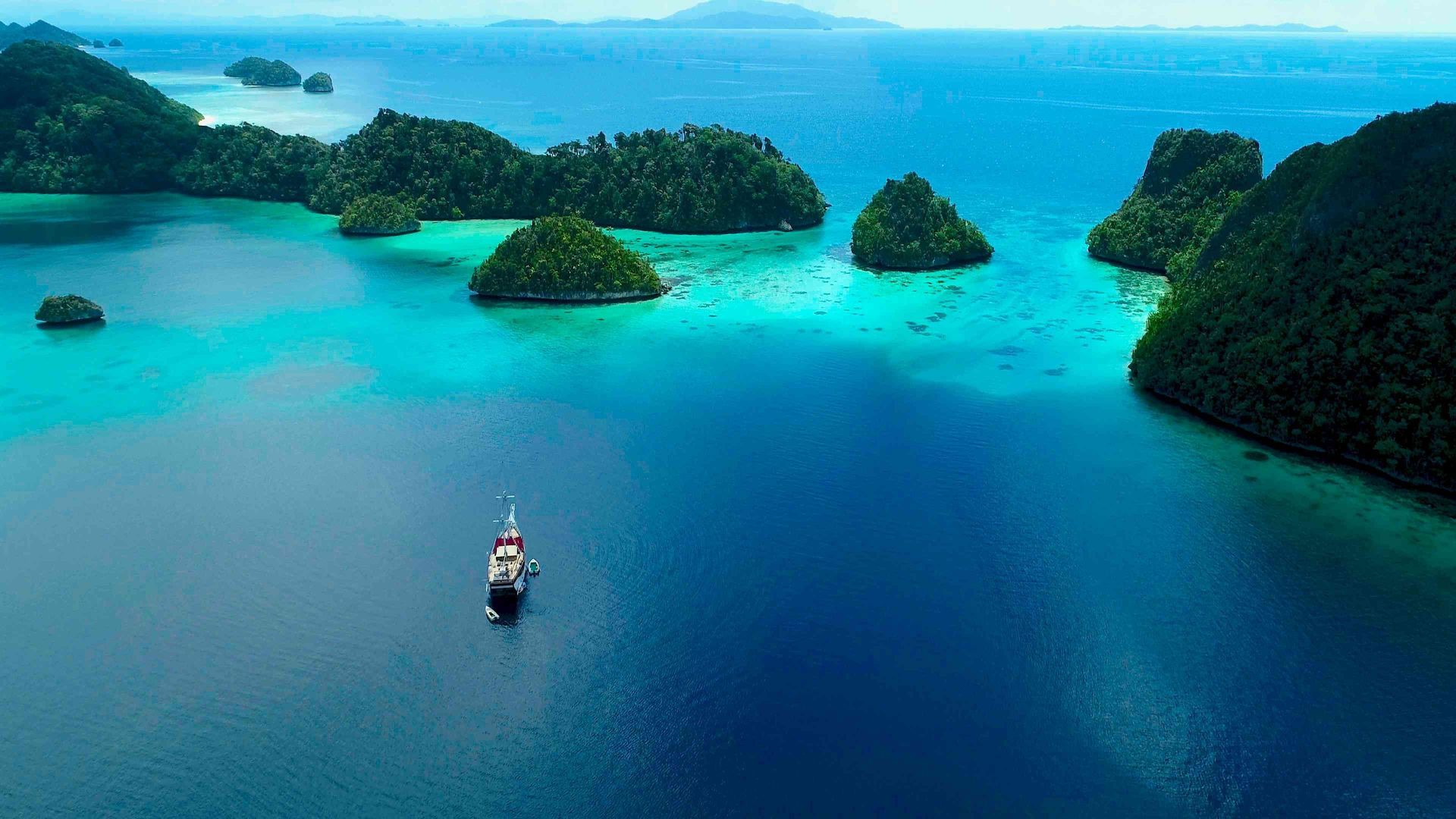
Der Hauptanziehungspunkt für die meisten Liveaboard-Taucher ist die Kombination: Triton Bay vereint Misool – das artenreichste südliche Gebiet von Raja Ampat – mit einem Reiseziel, das nur sehr wenige Taucher je besucht haben. Eine typische Reiseroute beginnt in Sorong, deckt Misool und die Pisang-Inseln ab, führt entlang der Bomberai-Halbinsel und erreicht Triton Bay. Sie erhalten das Beste aus dem etablierten Tauchen in Raja Ampat kombiniert mit echter Erkundung im Grenzland.
Was Triton Bay selbst auszeichnet, sind die Weichkorallen. Wo Raja Ampat für seine Hartkorallenbedeckung und Fischvielfalt bekannt ist, wird Triton Bay durch dichte Dendronephthya-Gärten, Schwarzkorallenwälder und Gorgonienfächer, die über Felsbrocken und Wände wachsen, definiert. Das nährstoffreiche Wasser, das die Sichtweite in der Bucht auf 10–15 m reduziert, ist dasselbe Wasser, das diese außergewöhnlichen Gärten speist. Die äußeren Riffe und die Bomberai-Halbinsel – wo die Sichtweite auf über 25 m ansteigt – bieten auf derselben Reise einen völlig anderen Tauchcharakter.
Der Geisterhai (H. henryi) ist hier endemisch und nirgendwo sonst zu finden.⁷ Walhaie versammeln sich das ganze Jahr über an Bagans.² Delfine sind regelmäßige Begleiter rund um die Fischplattformen. Die Felsmalereien von Namatota wurden auf die epipaläolithische Periode datiert – 12.000 bis 5.000 v. Chr.⁸ Dies ist ein Reiseziel mit vielen Schichten, und die meisten Taucher reisen mit dem Wunsch nach mehr ab.
Für eine spezielle Walhai-Reise siehe unseren Cenderawasih Bay Reiseführer – die Bucht im Norden mit der größten dokumentierten residenten Population in Indonesien.
Beste Jahreszeit
Oktober bis April ist die Hauptsaison. Die meisten Routen für Triton Bay sind auf die Raja Ampat-Saison abgestimmt, was bedeutet, dass die Boote bereits in der Region sind und im Laufe der Saison nach Süden in Richtung Kaimana fahren. Oktober–April ist die Kernzeit, wobei die meisten Betreiber nach April in Richtung Komodo und der Banda-See umziehen.
Walhai-Begegnungen an den Bagans sind am zuverlässigsten während der Neumondphasen, wenn die Aktivität der Köderfische ihren Höhepunkt erreicht.² Es lohnt sich, die Reisezeit um den Mondzyklus herum mit Ihrem Betreiber zu besprechen.
Der Südostmonsun von Mai bis September bringt raue Bedingungen mit sich, und die meisten Betreiber führen in dieser Zeit keine Reisen nach Triton Bay durch.
Buchen Sie 6–12 Monate im Voraus. Die Frequenz der Betreiber nach Triton Bay ist niedriger als in jedem anderen Reiseziel im Vogelkop-Meeresgebiet – einige Betreiber führen nur eine oder zwei Routen pro Jahr durch.
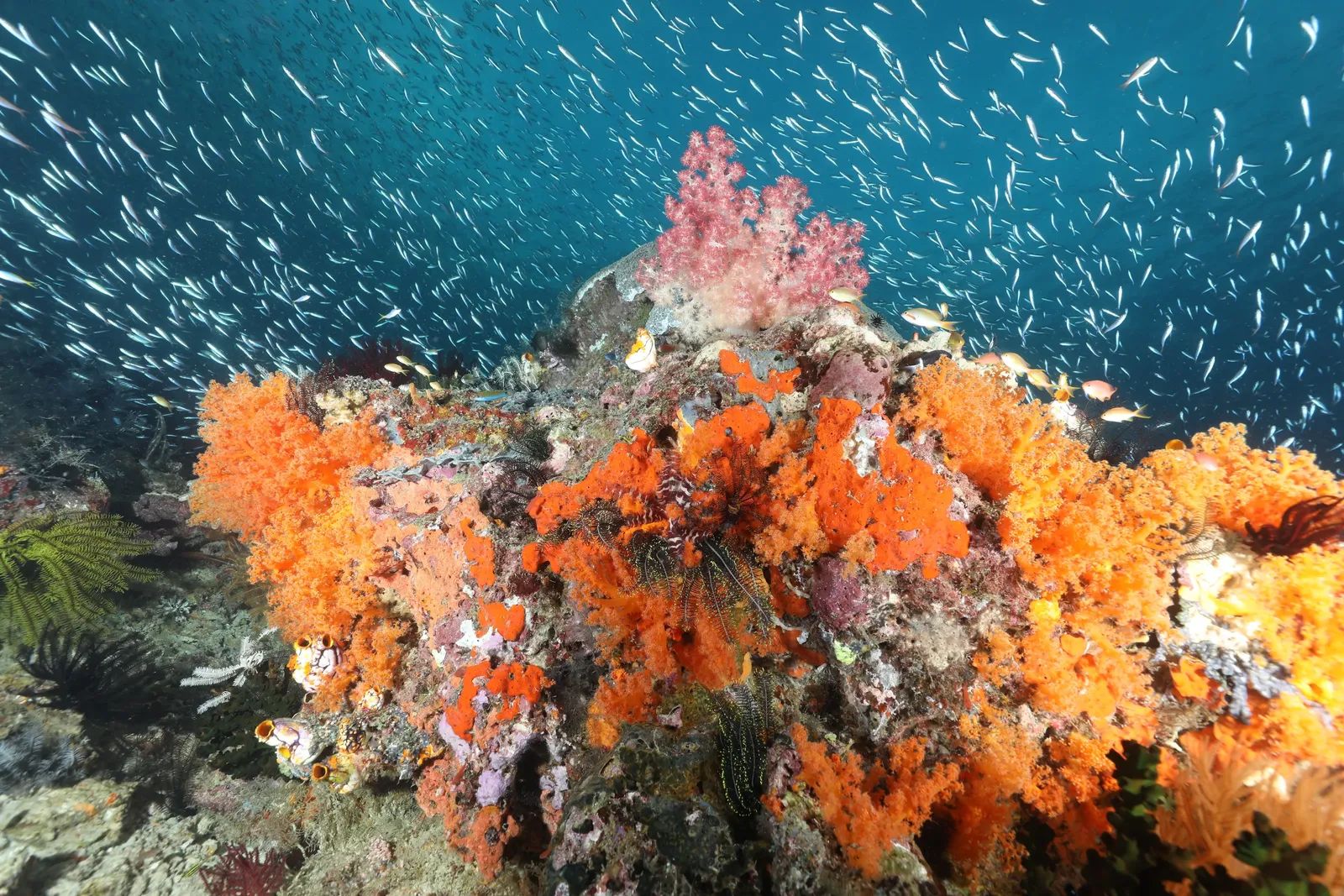
Colorful soft coral bommie surrounded by baitfish school, pristine dive site on Triton Bay liveaboard itinerary West Papua Indonesia
Anreise
Die meisten Triton Bay Liveaboards starten in Sorong (SOQ) – fliegen Sie über Jakarta (CGK) oder Bali (DPS), mit Umstieg in Makassar, wenn Sie aus Bali kommen. Sorong ist das Standardtor zu Raja Ampat und der unkomplizierteste Einstiegspunkt für Routen, die südlich durch Misool nach Triton Bay führen.
Einige Betreiber starten direkt von Kaimana (KNG), das über Sorong oder Makassar erreichbar ist. Flüge nach Kaimana sind begrenzt – bestätigen Sie die Flugpläne weit im Voraus und planen Sie eine Übernachtung in Kaimana ein, bevor Sie an Bord gehen. Eine kleine Anzahl von Betreibern führt Banda-See-Überquerungen durch, die in Ambon starten und in Kaimana oder Sorong enden.
Bestätigen Sie immer Ihre genauen Ein- und Ausschiffungshäfen, bevor Sie Inlandsflüge buchen. Wenn Sie dies bei einer Expedition im abgelegenen West-Papua falsch machen, ist die Korrektur teuer.
Coralbound arbeitet mit VIFA Holiday, dem führenden DMC für Indonesiens Tauchindustrie, zusammen, der Ihre Verbindungen überwacht und bei Planänderungen neu bucht.
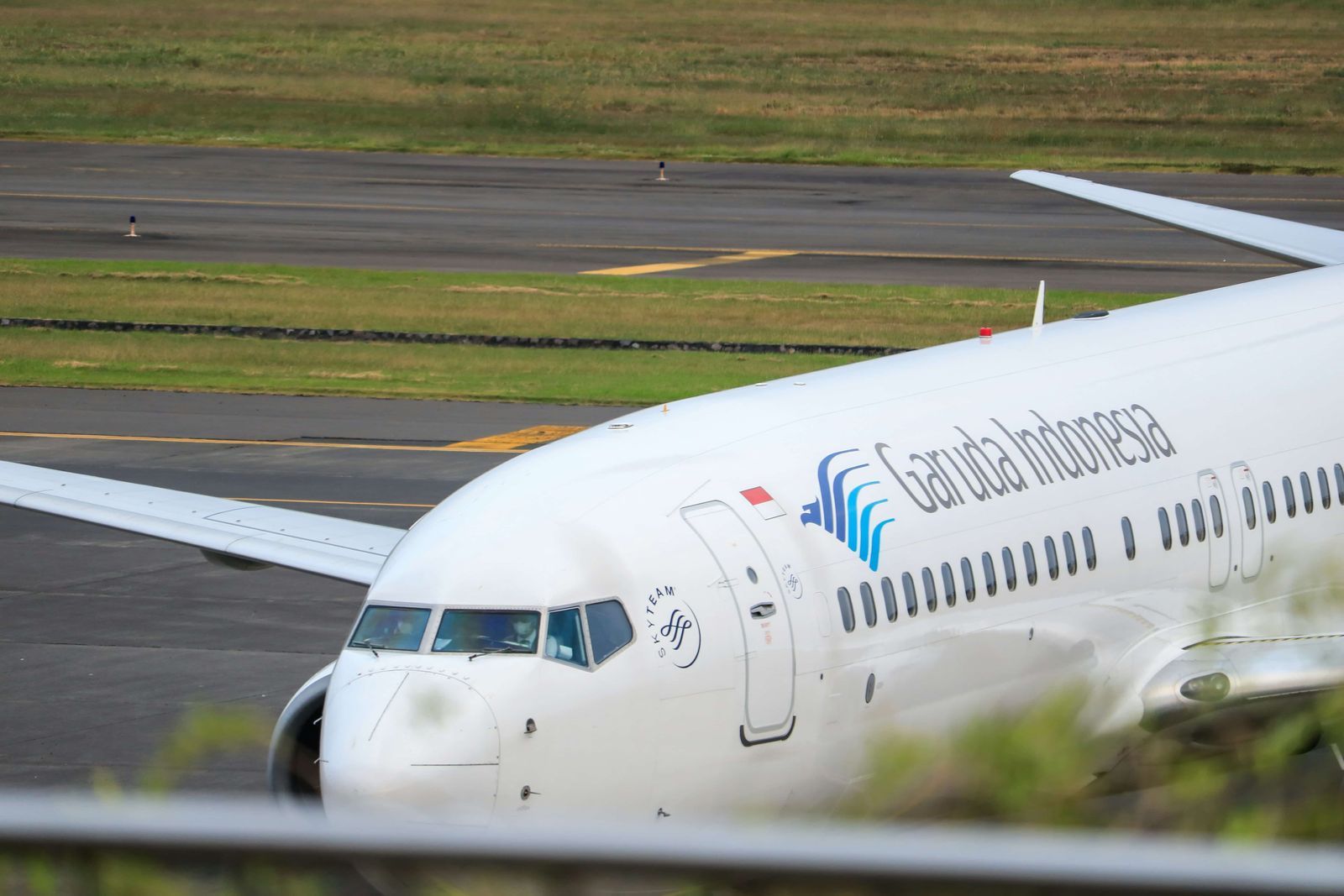
Garuda Indonesia aircraft runway Indonesian domestic flights liveaboard transfers
Meeresleben
Wanderhaie
Der Epaulettenhai von Triton Bay (Hemiscyllium henryi) – endemisch in den Küstengewässern von Kaimana, 2008 wissenschaftlich beschrieben und nirgendwo sonst zu finden.⁷ Er wandert mit seinen muskulösen Brustflossen über Korallenköpfe, ist nach Einbruch der Dunkelheit am aktivsten und versteckt sich tagsüber typischerweise unter Tischkorallen. Geduldig und langsam – er belohnt Taucher, die langsam tauchen und sorgfältig suchen. Nachttauchgänge sind die beste Gelegenheit, aber tagsüber sind Sichtungen an den richtigen Stellen üblich.
Walhaie und Delfine
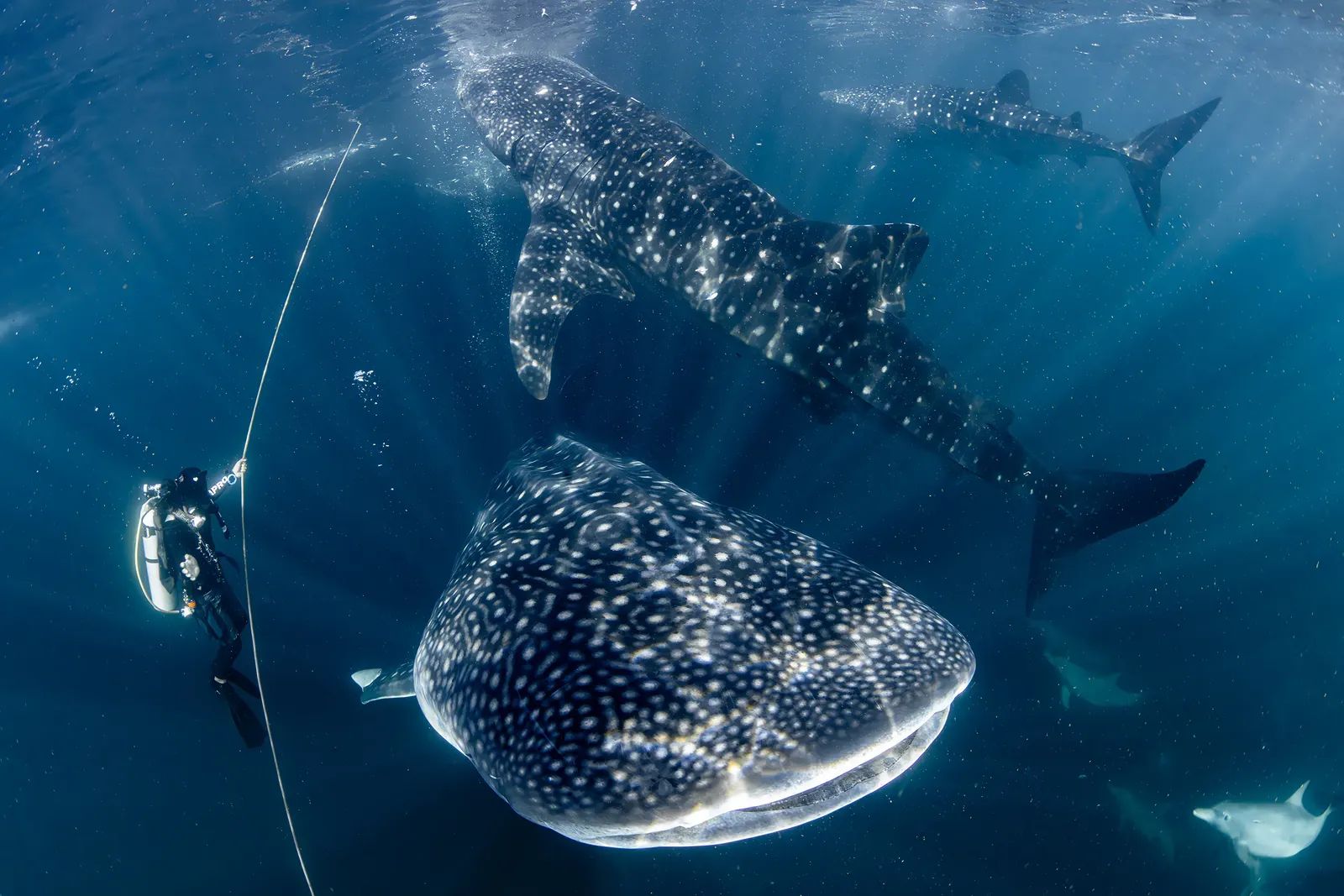
Walhaie versammeln sich an den Baganen in Ost-Kaimana und Namatota, angezogen von den Köderfischen, die von den Fischplattformen angelockt werden.⁶ Walhaie sind auf der Roten Liste der IUCN als stark gefährdet eingestuft,¹⁰ was die geschützte Population von Triton Bay weit über die Taucherlebnisse hinaus bedeutsam macht. Gruppen von drei bis vier Individuen, die gleichzeitig an der Oberfläche fressen, werden regelmäßig gemeldet. Delfine sind häufige Begleiter an den Bagan-Standorten – eine zusätzliche Begegnung, die nicht viele Walhai-Destinationen bieten können. Die Begegnungen konzentrieren sich auf die Oberfläche und sind für Schnorchler zugänglich. Für das vollständige Bild des Walhai-Tauchens in Indonesien siehe unseren Leitfaden für Walhaie in Indonesien und unseren Leitfaden für Großtiertauchen in Indonesien.
Weiche Korallengärten
Triton Bays definierender Unterwassercharakter. Dichte Dendronephthya in Rosa-, Orange- und Violetttönen über Felsbrocken und Wänden. Schwarze Korallenwälder und Gorgonienfächer in den tieferen Abschnitten. Die Dichte der Weichkorallen ist mit nichts anderem in Indonesien vergleichbar und sieht den Hartkorallenriffen von Raja Ampat überhaupt nicht ähnlich – die beiden Destinationen ergänzen sich, sind aber nicht redundant.
Makro-Leben
Zwergseepferdchen auf Gorgonienfächern, Geisterpfeifenfische, Froschfische in mehreren Farbvarianten, Bobtail-Squids, Candy Crabs und Nacktschneckenarten in großer Vielfalt. Der endemische Triton Bay Flasher Wrasse (Paracheilinus sp.) ist ein Highlight für Fischfotografen. Nachttauchgänge bieten Bobbitwürmer, Mandarin-Fische und Krebstiere. Für das vollständige Makro-Bild Indonesiens siehe unseren Leitfaden für Kleintiertauchen in Indonesien.
Anderes Meeresleben
Große Zackenbarsche, Napoleon-Lippfische und Riesen-Trevallys in Zahlen, die den effektiven MPA-Schutz seit 2008 widerspiegeln. Schwärme von Chevron-Barrakudas, Adlerrochen und Makrelen an strömungsreichen Stellen und unterseeischen Bergen. Brydewale und Dugongs wurden in der weiteren Region Kaimana dokumentiert. Die äußeren Riffe der Bomberai-Halbinsel bieten einen völlig anderen Tauchcharakter – pelagisch exponierte Wände mit starkem Fischleben und besserer Sicht als die inneren Buchten.
Multiple whale sharks swimming together with diver, seasonal encounter on Triton Bay liveaboard diving trips West Papua Indonesia
Landaktivitäten
Die Felsmalereien von Namatota sind einer der überzeugendsten Landstopps in West-Papua. Handabdrücke in rotem Ocker, Fische, Schildkröten und menschliche Figuren, die auf Kalksteinfelswänden über der Wasserlinie gemalt sind – erstmals vom niederländischen Kaufmann Johannes Keyts im Jahr 1678 aufgezeichnet und später auf die Epipalaolithikum-Periode datiert, etwa 12.000–5.000 v. Chr.⁸ Die Malereien sind über mehrere Inseln in den Gewässern von Kaimana verteilt, darunter Namatota und Triton Bay selbst.
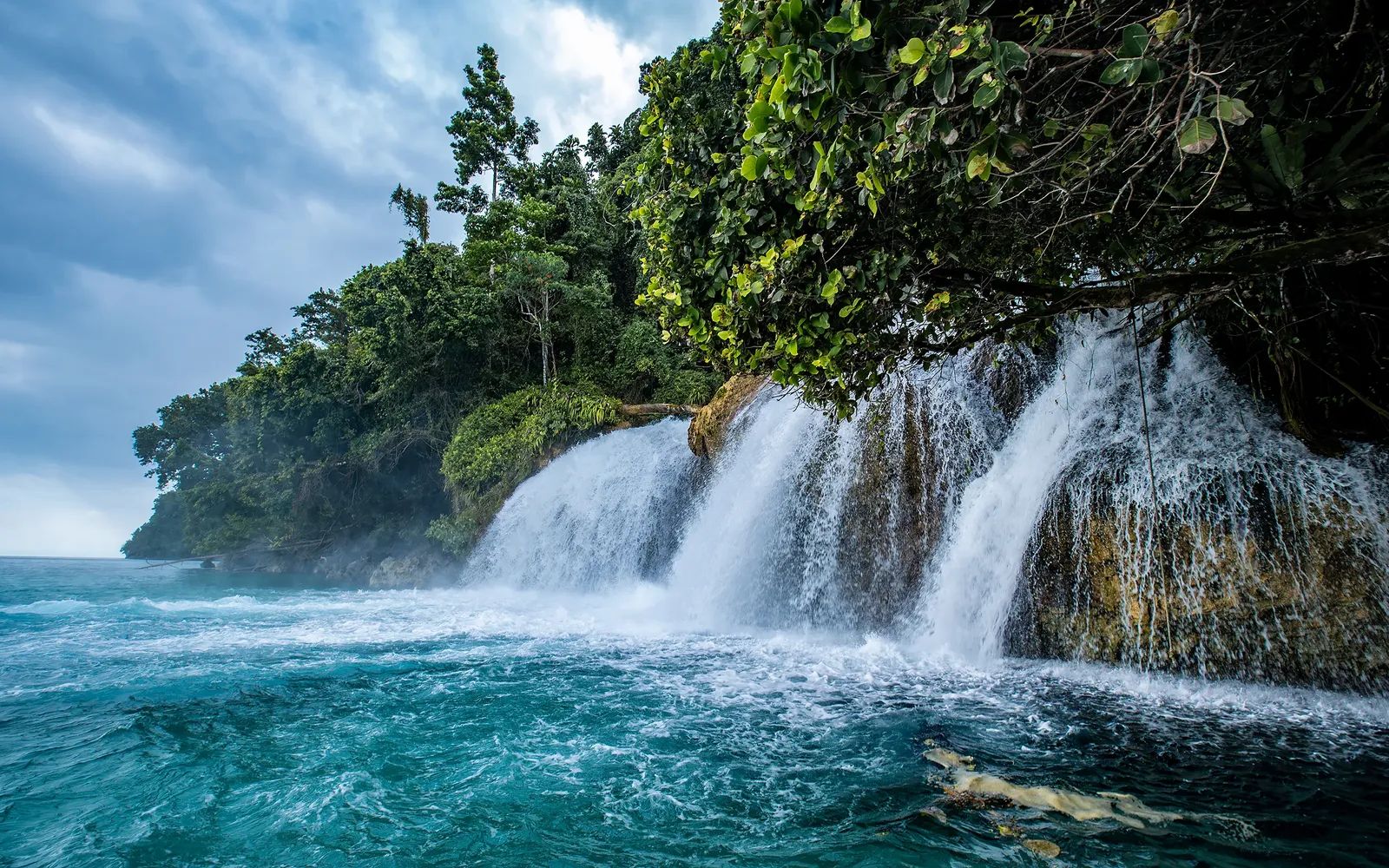
Der Kiti-Kiti Wasserfall auf der Bomberai-Halbinsel ist ein herausragender Stopp – Süßwasser stürzt direkt ins Meer am Fuße der Kumawa-Berge. Boote ankern vor der Küste und Gäste schwimmen oder schnorcheln direkt im Wasserfall, wo er auf den Ozean trifft. Dschungeltouren zur Basis des Wasserfalls werden von einigen Anbietern angeboten.
Besuche von Dörfern lokaler Papuagemeinschaften geben Kontext zur Naturschutzarbeit, die das MPA untermauert – die gleichen Adat-Systeme traditioneller Ressourcenbewirtschaftung, die in der gesamten Vogelkop-Meereslandschaft zu finden sind.
Für Reiseverlängerungen oder die Planung von Unterkünften vor/nach der Reise siehe unseren Leitfaden für Liveaboard-Verlängerungen in Indonesien.
Waterfall cascading directly into turquoise ocean, scenic natural attraction visited during Triton Bay liveaboard trips West Papua Indonesia
Erwartungen managen
Die Sichtweite in der Triton Bay beträgt 10–15 m – geringer als bei den meisten indonesischen Liveaboard-Zielen. Dies ist eine direkte Folge des nährstoffreichen Wassers, das die außergewöhnliche Fischbiomasse und die Dichte der Weichkorallen hervorbringt. Die meisten Taucher finden dies einen völlig akzeptablen Kompromiss. Die äußeren Riffe und die Bomberai-Halbinsel bieten auf derselben Route eine Sichtweite von über 25 m, sodass Sie nicht die gesamte Reise über schlechte Sichtverhältnisse ertragen müssen.
Walhai-Begegnungen sind während der Saison zuverlässig, aber nicht bei jedem Tauchgang garantiert. Guides stimmen die Besuche auf Gezeiten- und Mondzyklen ab, und die Betreiber wissen, welche Bagan am aktivsten sind. Folgen Sie der Führung Ihres Guides und lassen Sie die Haie zu Ihnen kommen.
Der Gehenhai erfordert Geduld. Ein Taucher, der sich langsam bewegt und dem Tier Raum gibt, wird immer mehr sehen als einer, der sich schnell nähert. Nachttauchgänge erhöhen die Chancen auf Begegnungen erheblich – sie lohnen sich auch für Taucher, die normalerweise nicht damit belästigt würden.
Die Routen der Triton Bay sind abgelegen. Medizinische Ressourcen in Kaimana sind begrenzt; das nächste Krankenhaus mit nennenswerter Kapazität befindet sich in Sorong oder Ambon. Eine Tauchversicherung mit Notfall evakuierung ist obligatorisch. Eine Reiseversicherung wird dringend empfohlen – Anzahlungen sind nicht erstattungsfähig und die Reisen kosten 3.200–10.000+ US-Dollar.
Whale shark feeding under traditional fishing platform bagan, unique encounter on Triton Bay liveaboard trips West Papua Indonesia
Häufig gestellte Fragen
Ist Triton Bay für Anfänger geeignet?
Ja – viele Tauchplätze sind ruhig, flach und gut für alle Zertifizierungsstufen geeignet. Die Walhai-Begegnungen an den Bagans sind Oberflächenereignisse, die auch für Schnorchler zugänglich sind. Die Weichkorallengärten und das Critter-Diving finden in Freizeittiefen mit leichter Strömung statt. Einige äußere Riffwände und strömungsreiche Seamounts eignen sich am besten für fortgeschrittene Taucher. Prüfen Sie die Anforderungen der einzelnen Anbieter vor der Buchung.
Wie verhält sich Triton Bay im Vergleich zu Raja Ampat?
Es sind unterschiedliche Reiseziele im selben Bird's Head Seascape. Raja Ampat hat eine größere allgemeine Fischvielfalt, mehr Anbieteroptionen und eine etabliertere Infrastruktur. Triton Bay hat dichtere Weichkorallen, Gehwale, die nirgendwo in Raja Ampat vorkommen, Walhaie an Bagans und fast keinen Bootsverkehr. Die meisten Routen für Triton Bay kombinieren beides – beginnend in Sorong über Misool (das Beste von Raja Ampat) und weiter südlich nach Triton Bay. Diese Kombination ist der Standard und gilt weithin als die umfassendste Einzelreise im Bird's Head Seascape.
Was ist Misool und wie verhält es sich zu Triton Bay?
Misool ist die südlichste Hauptinselgruppe in Raja Ampat, berühmt für seine labyrinthischen Karstinseln, seine außergewöhnliche Artenvielfalt und die Naturschutzgeschichte der Misool Foundation – ein ehemaliges Haifischflossen-Camp, das in ein 300.000 Hektar großes Schutzgebiet umgewandelt wurde. Die meisten Tauchsafaris in Triton Bay passieren Misool auf dem Weg nach Süden, was es zu einem Standardteil der Reiseroute macht und nicht zu einem separaten Zusatz. Sehen Sie sich unseren Raja Ampat Reiseführer für den vollständigen Kontext von Misool an.
Was ist das Kaimana Meeresschutzgebiet?
Das Kaimana MPA umfasst 6.000 km² Küstenlinie von West-Papua, einschließlich Triton Bay, und wurde 2008 nach Erhebungen von Conservation International eingerichtet.¹ Es wird in Zusammenarbeit zwischen lokalen Gemeinschaften, der Regierung und Naturschutzorganisationen verwaltet. Papuanische Gemeinschaften nutzen traditionelle Adat-Systeme zur Regulierung der Ressourcennutzung neben den formellen MPA-Vorschriften. Die Fischbiomasse und die Gesundheit der Riffe spiegeln über 15 Jahre effektiven Schutz wider.
Benötige ich spezielle Ausrüstung für Tauchgänge in Triton Bay?
Eine Oberflächenmarkierungsboje ist Pflicht. Riffhaken für strömungsreiche Außenriffsites. Ein 3-mm-Neoprenanzug ist ausreichend. Makrofotografie-Ausrüstung wird dringend empfohlen — ein dediziertes Makroobjektiv hält den Laufhai und das Verhalten des endemischen Flasher-Lippfisches fest, für die Triton Bay bekannt ist. Eine Taschenlampe für Nachttauchgänge ist sinnvoll. Eine vollständige Ausrüstungsliste findest du in unserem Indonesien-Liveaboard-Packguide.
Kann ich Triton Bay mit anderen indonesischen Reisezielen kombinieren?
Die Standardkombination ist eine Route von Sorong nach Kaimana, die Misool, die Pisang-Inseln, die Bomberai-Halbinsel und Triton Bay umfasst. Einige Anbieter verlängern die Route von Kaimana aus in die Banda-See — siehe unseren Banda-See-Guide für diese Route. Andere führen die Reise in umgekehrter Richtung von Kaimana nach Sorong durch. Melde dich über WhatsApp um die Optionen je nach Zeitplan und Verfügbarkeit zu besprechen.
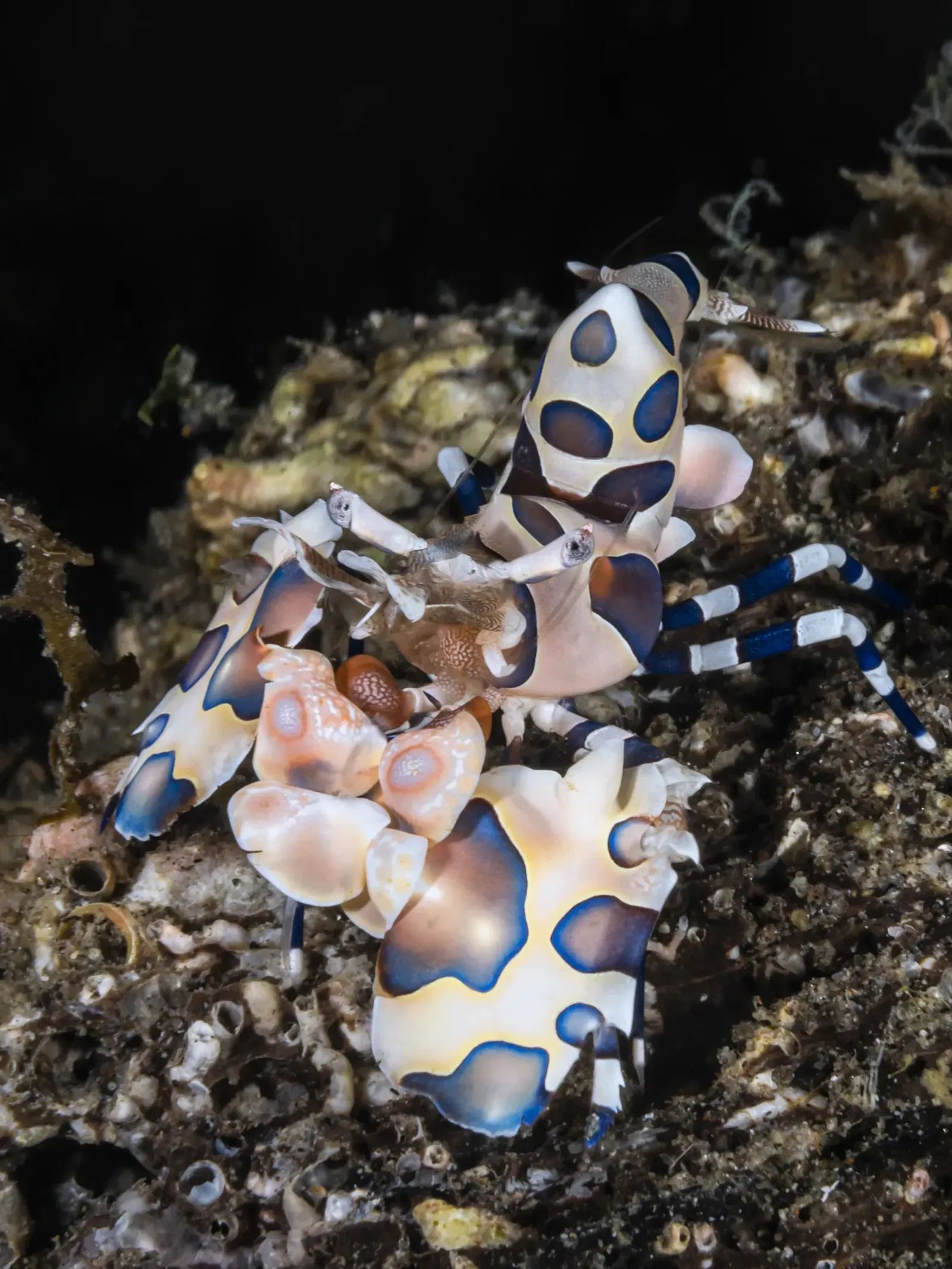
Harlequin shrimp Hymenocera picta Indonesia macro diving liveaboard underwater photography rare species - Picture by Majik Liveaboard
Buche deine Triton-Bay-Reise
Wir sind eine auf Bali ansässige Plattform, die von Tauchern betrieben wird, die Triton Bay gut kennen. Du zahlst bei einer Buchung über uns denselben Preis wie bei einer Direktbuchung — die Anbieter halten die Preisparität über alle Kanäle aufrecht. Jede Buchung über Coralbound beinhaltet ein Buchungsgeschenk — einschließlich der Option einer kostenlosen Hotelübernachtung — und du erhältst echten Support obendrauf: Koordination von Inlandsflügen über VIFA Holiday und ein Team, das versteht, was abgelegene Expeditionen in West-Papua wirklich bedeuten.
Fragen vor der Buchung? Schreib uns auf WhatsApp oder kontaktiere uns über unser Kontaktformular. Möchtest du mehr darüber erfahren, wie wir arbeiten? Lies unsere Warum bei Coralbound buchen Seite.