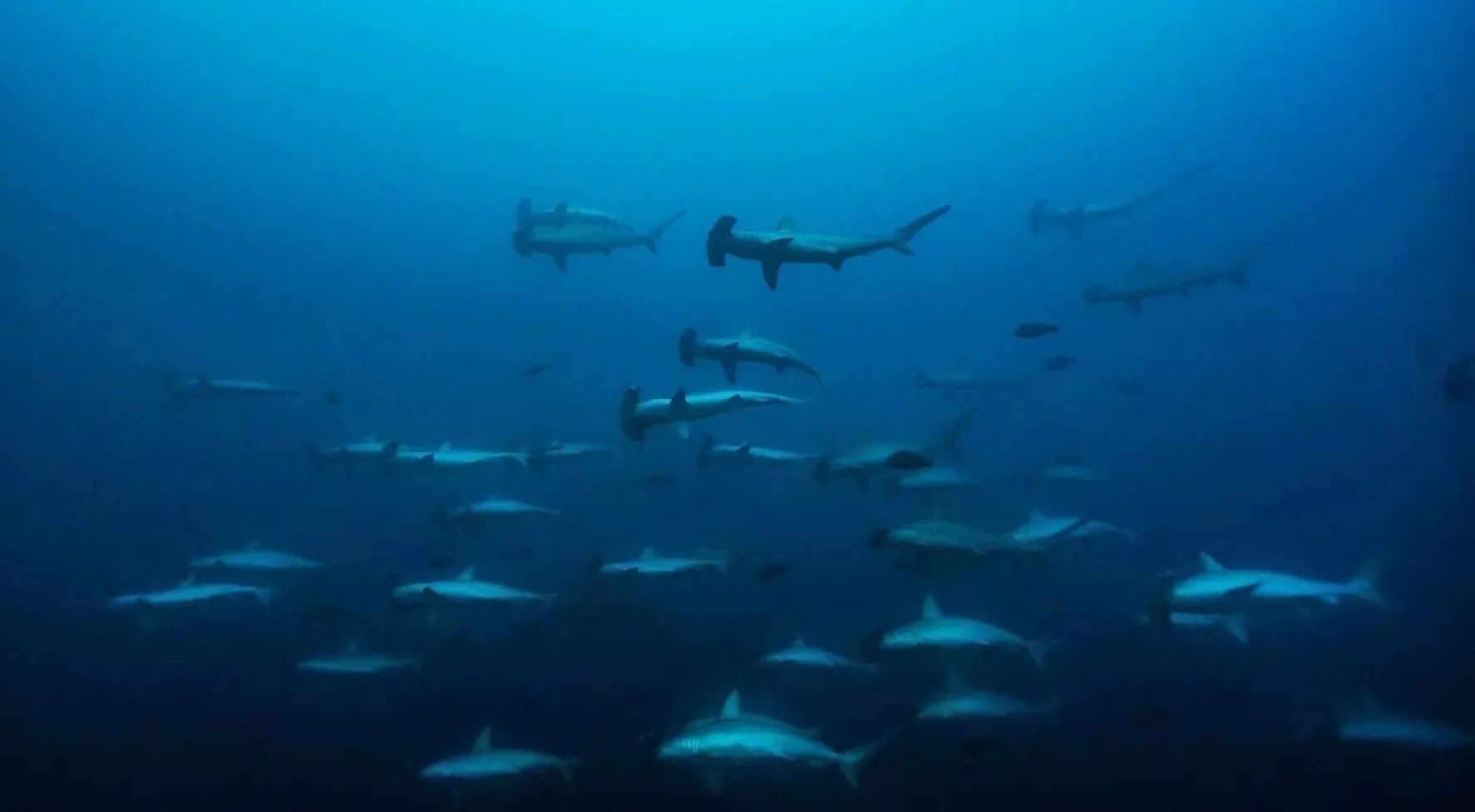
Laut Banda adalah salah satu dari sedikit tempat di Bumi di mana hiu martil bergerigi masih berkumpul dalam kawanan besar — dan salah satu yang paling jarang dikunjungi.
Panduan ini mencakup tempat dan waktu untuk menyelam dengan hiu martil di Indonesia, apa yang diharapkan di situs Laut Banda, dan cara merencanakan jendela musiman. Ini adalah bagian dari panduan liveaboard Indonesia; panduan menyelam hewan besar mencakup gambaran lengkap megafauna, dan mengapa penyelam memilih Indonesia mencakup kasus yang lebih luas untuk negara ini. Untuk gambaran umum tujuan singkat, lihat halaman tujuan Laut Banda.
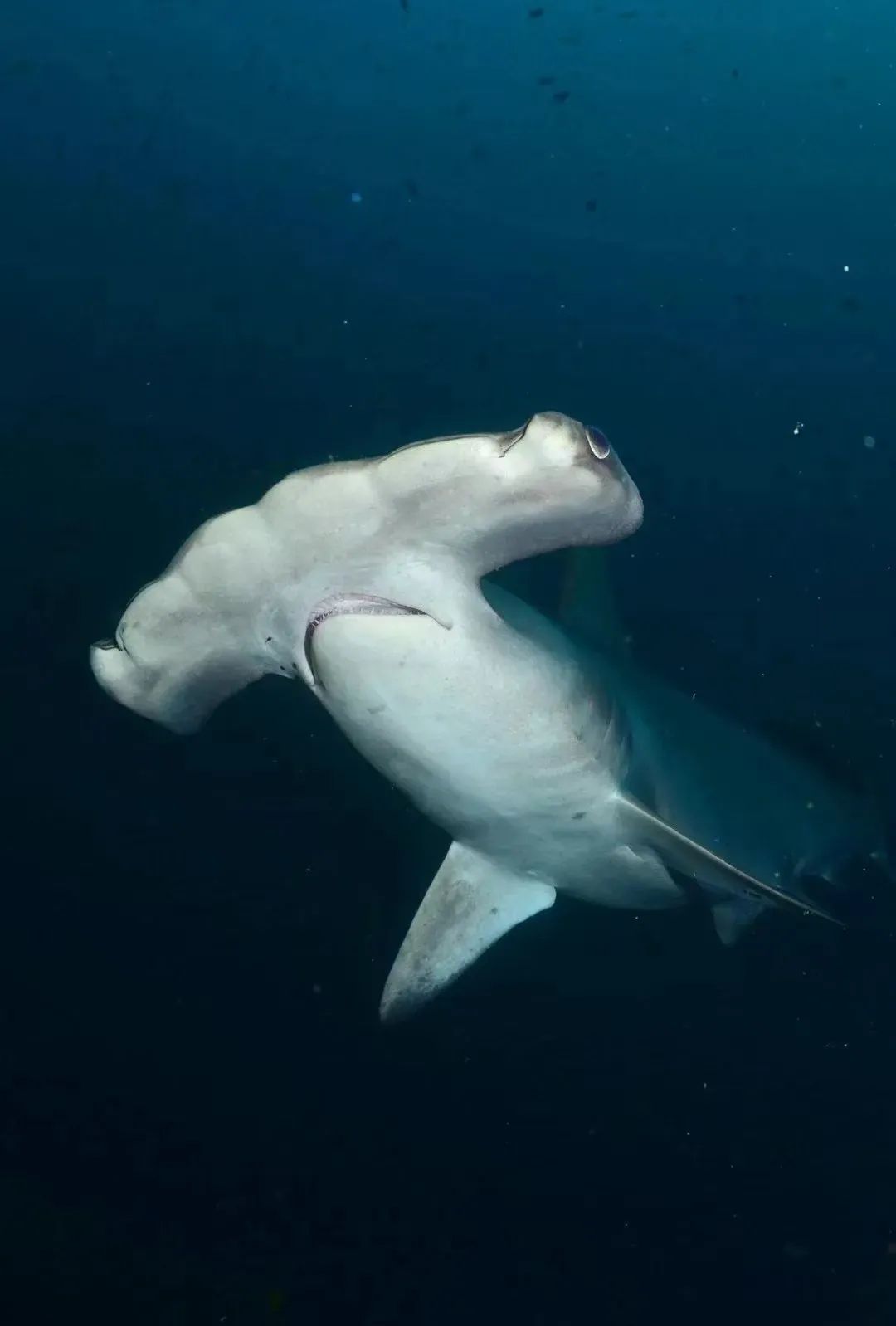
Hiu martil bergerigi (Sphyrna lewini) adalah spesies di balik pertemuan hiu martil di Indonesia — bukan hiu martil besar, yang hampir selalu soliter. Hiu martil bergerigi adalah hewan yang secara fakultatif berkelompok yang membentuk agregasi siang hari musiman di seamount dan struktur bawah laut, perilaku yang terdokumentasi dengan baik di seluruh Indo-Pasifik¹²⁵⁸. Penelitian menunjukkan agregasi ini melayani berbagai tujuan: interaksi sosial, penggunaan stasiun pembersihan, dan perkawinan — dengan pengamatan perkawinan langsung yang tercatat di situs agregasi seamount secara global¹⁰. Mereka Terancam Punah Kritis dalam Daftar Merah IUCN⁹ — penangkapan ikan berlebihan telah menghilangkan situs agregasi di sebagian besar wilayah historis mereka, membuat populasi yang utuh di Laut Banda semakin signifikan.
Fakta Singkat
- Musim terbaik: Oktober–November jendela utama hiu martil; Maret–April jendela sekunder
- Suhu air: 26–29°C; seringkali lebih dingin September–Oktober saat upwelling mencapai puncaknya — operator secara konsisten melaporkan agregasi yang lebih besar di air yang lebih dingin
- Visibilitas: 20–35m di situs utama
- Tingkat pengalaman: Sangat direkomendasikan Advanced Open Water; pengalaman menyelam dalam dan drift sangat penting
- Durasi perjalanan: 7–8 hari fokus Kepulauan Banda; 10–14 hari rute Banda + Kepulauan Terlupakan atau Cincin Api; lebih lama untuk penyeberangan ke Alor atau Papua Barat
- Siapa yang bisa bergabung: penyelam berpengalaman; tidak cocok untuk mereka yang tidak memiliki pengalaman menyelam saat ini
- Rentang biaya: $400–600/hari kelas menengah; $600–1.000+/hari mewah
- Spesies utama: hiu martil bergerigi (Sphyrna lewini, IUCN Terancam Punah Kritis)⁹
- Bandara tujuan: Ambon (AMQ) untuk rute Laut Banda; Kupang (KOE) → Bandara Mali (ARD) untuk Alor
- Waktu pemesanan: 6–12 bulan untuk musim puncak Oktober–November
Jawaban Singkat
Di mana tempat terbaik untuk menyelam dengan hiu martil di Indonesia?
Laut Banda adalah satu-satunya tujuan di Indonesia untuk pertemuan hiu martil yang dapat diandalkan. Situs di sekitar pulau Suanggi dan Serua serta di Nil Desperandum — sebuah atol bawah laut — adalah titik agregasi utama, dengan hiu martil bergerigi berkumpul selama puncak Oktober–November dan pada tingkat yang lebih rendah Maret–April. Alor menawarkan kesempatan sekunder September–November ketika arus upwelling dingin menguat.
Kapan musim hiu martil di Indonesia?
Laut Banda memiliki dua jendela. Oktober–November adalah musim utama — operator secara konsisten melaporkan agregasi terbesar dan kondisi paling stabil. Maret–April adalah jendela sekunder dengan kawanan yang lebih kecil dan kurang dapat diprediksi. Jendela hiu martil Alor berjalan September–November, tumpang tindih dengan puncak Laut Banda. Operator umumnya melaporkan bahwa air yang lebih dingin berkorelasi dengan kepadatan hiu yang lebih tinggi — September dan awal Oktober bisa sangat produktif karena upwelling mencapai puncaknya. panduan cuaca Indonesia mencakup kondisi musiman secara rinci.
What experience do I need to dive with hammerhead sharks in Indonesia?
Hammerhead diving at Banda Sea sites is one of Indonesia's more technically demanding experiences. Encounters typically occur at 25–40 metres at exposed sites with strong currents — conditions requiring solid buoyancy control, comfort at depth, and experience in moving water. Advanced Open Water certification is strongly recommended, and deep diving and drift diving experience make a significant difference to both safety and encounter quality. If you're building toward this kind of diving, our beginner liveaboard guide covers how to develop the right experience base first.
Can I see hammerhead sharks outside the Banda Sea?
Hammerhead sharks appear opportunistically at other Indonesian destinations — Komodo, Raja Ampat, deep channel sites in Alor, and Belongas Bay in Lombok, which is known for both hammerhead and thresher encounters. These are genuine but incidental. If hammerheads are your primary goal, the Banda Sea in October–November is where to focus.
Close-up of hammerhead shark in deep blue waters of Banda Sea during Indonesia liveaboard diving expedition - Picture by Neptune Liveaboards
Where to Find Hammerhead Sharks in Indonesia
Banda Sea
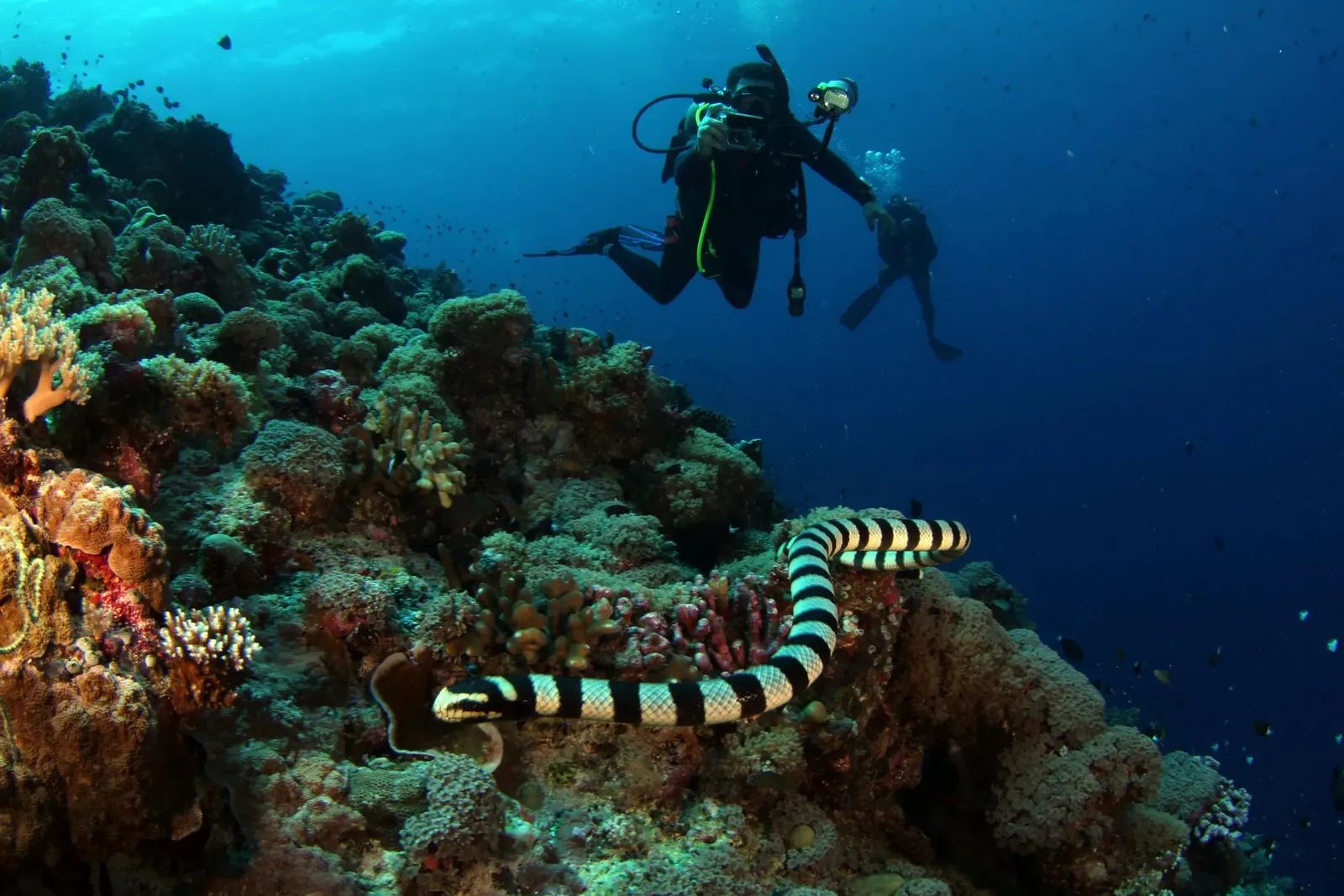
The Banda Sea is the centrepiece of hammerhead diving in Indonesia. The key sites are clustered around volcanic islands and submerged structures in the central and southern Banda Sea: the waters around Suanggi and Serua islands, and Nil Desperandum — a submerged atoll rising from deep water — are where operators consistently find hammerhead aggregations. Manuk Island, best known for its sea snake populations, also produces hammerhead encounters. The deep basin surrounding these features drops to over 4,000 metres, and the upwelling currents generated around islands and seamounts concentrate prey and create the conditions that draw aggregating sharks.
Scalloped hammerheads are daytime aggregators at these structures¹² — gathering during daylight hours, then dispersing offshore at night to feed. Research across multiple Indo-Pacific sites confirms that these aggregations facilitate social interaction, use of cleaning stations, and mating, with the latter directly observed at comparable aggregation sites¹⁰. Encounters involve descending quickly to 25–40 metres, positioning in a current shadow, and waiting while schools circle at depth. Operators consistently report that colder water — particularly September and October as upwelling peaks — correlates with larger aggregations.
Beyond hammerheads, the Banda Sea delivers comprehensive expedition diving: pristine coral walls, schooling tuna and barracuda, WWII wrecks, macro diving at Laha Bay and Banda Neira, Manuk Island sea snakes, and some of the most species-rich reefs in eastern Indonesia¹¹. For full destination detail, read our Banda Sea guide or browse the Banda Sea destination page.
Alor
Alor is Indonesia's secondary hammerhead destination. September–November, cold upwelling strengthens in the Pantar Strait, bringing nutrient-rich water that attracts hammerheads to Alor's walls and pinnacles. Encounters here are shallower and less exposed than the Banda Sea sites — typically 20–35 metres — but still require solid current diving experience. Operators report schools of varying size during peak upwelling; consistency is lower than the Banda Sea peak but the destination adds genuine hammerhead probability to an East Nusa Tenggara itinerary that also includes Alor's macro diving, reef sharks, and the 277,000-hectare Pantar Strait Marine Reserve. For full destination detail, read our Alor guide.
Opportunistic Sightings Elsewhere
Hammerhead sharks appear at other Indonesian destinations without the predictability of a seasonal aggregation. Komodo and Raja Ampat both produce occasional sightings at deeper reef sections and channel edges. Belongas Bay in Lombok is a well-known shore-accessible site for both hammerhead and thresher encounters — not a liveaboard destination but a practical addition for divers already in the region. These encounters are genuine but incidental; for dedicated hammerhead diving the Banda Sea remains the only itinerary worth building a trip around.
Conservation Context
Scalloped hammerheads are Critically Endangered⁹. Aggregation sites across much of their global range have been severely depleted — a 97% decline in school size was documented at seamounts in the Gulf of California between the 1970s and 2010s³. Research tracking scalloped hammerhead populations across the Pacific and Indian Oceans confirms ongoing population fragmentation and decline⁴. The Banda Sea's remoteness has been its most effective protection — limited access keeps both fishing pressure and dive tourism to a small number of operators per season.
Indonesia banned shark finning in 2013 and has listed scalloped hammerheads as a protected species⁶⁷. The same characteristic that makes the Banda Sea expedition demanding is what keeps the population intact. Responsible encounter practice at these sites follows standard pelagic shark protocol — no sudden movement, no chasing, no bubbles directed toward the school. An agitated aggregation doesn't return.
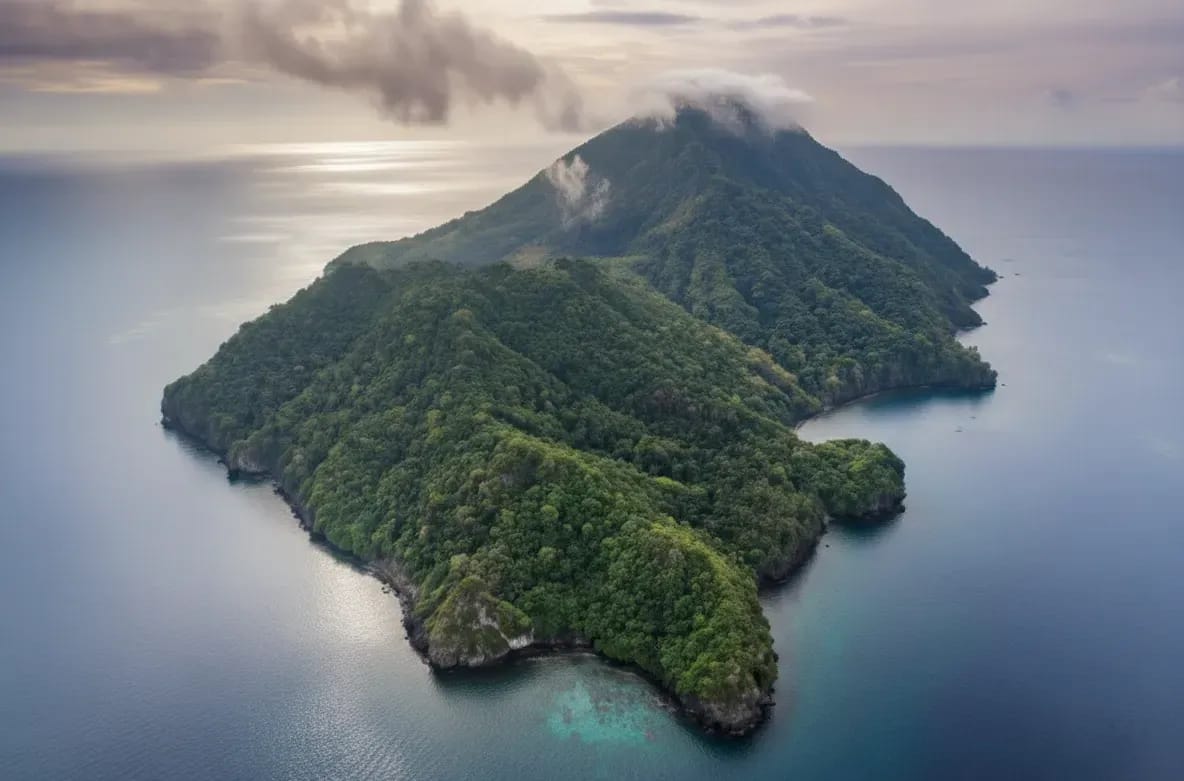
Aerial view of pristine Serua Island, a tropical island with lush green jungle, white sand beaches and crystal clear turquoise waters under dramatic cloudy sky in the Banda Sea and part of the Ring of Fire liveaboard itineraries
Managing Expectations
Hammerhead encounters at Banda Sea sites are seasonal, weather-dependent, and not guaranteed. The October–November window gives the best probability, but hammerheads respond to oceanographic conditions rather than a fixed schedule. Operators consistently report encounters during peak season, but an unproductive day is possible on any expedition.
Strong currents at these sites are the norm. Some of the best encounters happen in the strongest water — the current concentrates the school. Divers who haven't dived in moving water before will find the conditions harder to manage than those who have. Buoyancy discipline and the ability to hold position without constant finning determine both safety and encounter quality.
The Banda Sea is genuinely remote. Ambon is the gateway, requiring domestic connections from Bali or Jakarta. Factor medical evacuation distance into your planning and insurance. March–April is a valid hammerhead window but produces more variable results than October–November.
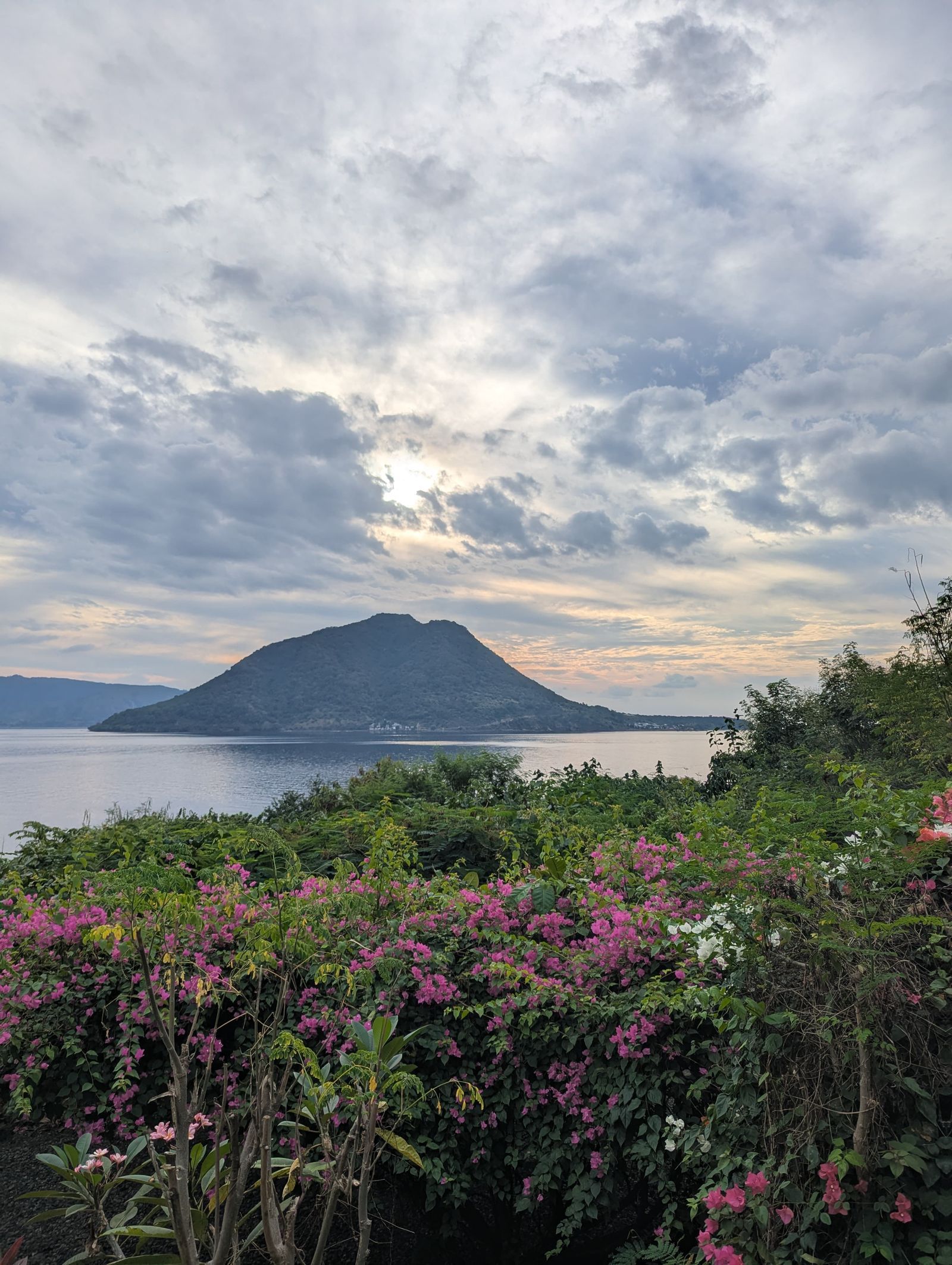
Alor Island sunset view with volcanic peaks and tropical waters - perfect for Indonesia liveaboard diving adventures - Picture by Tina Bogdanova
Frequently Asked Questions
Why is October–November better than March–April for hammerheads?
Both windows produce hammerhead encounters at Banda Sea sites, but October–November aligns with the stronger seasonal upwelling that concentrates prey and drives larger aggregations. Operators consistently report bigger schools and more reliable daily encounters during this window. The colder water in September–October as upwelling peaks can also correlate with higher density. March–April hammerheads are present but less predictable — a secondary opportunity rather than the primary event.
Do I need special certification beyond Open Water?
Advanced Open Water is strongly recommended and required by some operators for Banda Sea trips. Deep diving specialty and drift diving certification are worth having before attempting these sites. The encounters sit within recreational depth limits (25–40 metres), but the current and depth combined at exposed sites are not conditions to encounter for the first time on a remote expedition. Our liveaboard packing guide covers how to prepare.
Do I need dive insurance for liveaboard diving trips in Indonesia?
Ya. Asuransi selam dengan cakupan evakuasi medis wajib berdasarkan hukum Indonesia dan penting khususnya untuk Laut Banda — Ambon adalah fasilitas medis terdekat yang memadai. Verifikasi polis Anda mencakup Indonesia dan termasuk ekstraksi area terpencil. Untuk ekspedisi ke lokasi terpencil ini, cakupan gangguan perjalanan yang komprehensif juga sangat direkomendasikan.
Apa lagi yang akan saya lihat dalam ekspedisi Laut Banda?
Laut Banda menawarkan beberapa penyelaman ekspedisi terkaya di Indonesia. Kawanan tuna, tuna dogtooth, barracuda, dan berbagai spesies hiu karang di seluruh area. Bangkai kapal Perang Dunia II di dekat Ambon dan di Kepulauan Banda. Penyelaman makro di Teluk Laha dan Banda Neira. Agregasi ular laut di Pulau Manuk. Dinding karang dengan cakupan luar biasa. Hiu martil adalah puncak musiman; sisa jadwal berlangsung dari April hingga November terlepas dari jendela hiu martil.
Berapa lama seharusnya perjalanan Laut Banda?
Jadwal yang berfokus pada Kepulauan Banda berlangsung 7–8 hari dan mencakup situs hiu martil utama. Rute yang diperpanjang yang menggabungkan Kepulauan Banda dengan Kepulauan Terlupakan atau Cincin Api — menuju Alor — berlangsung 10–14 hari. Perjalanan menuju Raja Ampat atau Papua Barat lebih lama lagi. Untuk ide pasangan, panduan perpanjangan liveaboard kami mencakup pilihan yang ada. Pari manta, penyu laut, dan hiu paus semuanya muncul secara insidental pada jadwal Laut Banda.
Apakah nitrox tersedia di liveaboard di Indonesia?
Ketersediaan bervariasi berdasarkan kapal. Di kapal mewah dan berfokus pada penyelaman, nitrox sering kali disertakan atau tersedia dengan biaya tambahan. Pada kedalaman situs Laut Banda 25–40 meter, nitrox memberikan perpanjangan waktu dasar yang berarti dan mengurangi beban nitrogen — lebih relevan secara praktis di sini daripada di situs pari manta atau penyu yang lebih dangkal. panduan kategori liveaboard kami mencakup apa yang disertakan di setiap tingkatan kapal.
Berapa lama sebelumnya saya harus memesan?
6–12 bulan untuk keberangkatan Oktober–November. Jendela musiman yang sempit dan jumlah operator terbatas yang menjalankan jadwal hiu martil khusus Laut Banda berarti perjalanan puncak musim terisi dengan cepat. Maret–April memerlukan perencanaan 3–6 bulan sebelumnya.
Banded sea snake on coral reef with diver, Banda Sea liveaboard diving encounter Indonesia
Plan Your Trip
Coralbound books Banda Sea expeditions at the same price you'd pay booking direct, including the option of a complimentary hotel night. The October–November window books out well in advance — if this is your target season, early contact makes a real difference. Reach us on WhatsApp or via the contact form — or read more about how we work before getting in touch.