Indonesien ist einer der wenigen Orte auf der Erde, an denen Meeresschildkröten einfach Teil jedes Tauchgangs sind – keine seltene Sichtung, kein Highlight-Moment, einfach da.
Dieser Leitfaden behandelt, wo und wann man Meeresschildkröten in ganz Indonesien findet, welchen Arten man begegnet und was Derawan als einziges Reiseziel auszeichnet, bei dem Schildkröten der Hauptgrund für die Reise sind. Er ist Teil von Coralbounds Indonesien Liveaboard Guide; unser Leitfaden für Großtier-Tauchen deckt das gesamte Bild der Megafauna ab, und warum Taucher Indonesien wählen deckt den breiteren Fall für das Land ab.
Indonesien beherbergt sechs der sieben Meeresschildkrötenarten der Welt¹. Grüne Meeresschildkröten und Echte Karettschildkröten sind die beiden Arten, denen Sie bei Tauchgängen auf dem gesamten Archipel zuverlässig begegnen werden. Lederschildkröten, Unechte Karettschildkröten, Oliv-Bastardschildkröten und Flachrückenschildkröten sind alle in indonesischen Gewässern vorhanden, aber man begegnet ihnen opportunistisch – man hat vielleicht Glück, aber man plant keine Tauchreise um sie herum. Die Derawan-Inseln in Ost-Kalimantan (Borneo) sind das einzige Reiseziel, bei dem ein Liveaboard wirklich um Schildkrötenbegegnungen als Mittelpunkt aufgebaut ist; überall sonst sind Meeresschildkröten ein fast sicherer Bonus auf Reiserouten, die um Riffe, Pelagische oder andere Arten aufgebaut sind.
Schnelle Fakten
- Beste Jahreszeit: ganzjährig an allen wichtigen Schildkröten-Spots
- Wassertemperatur: 27–30°C an den wichtigsten Spots
- Sichtweite: 15–30m am Riff; Seegraswiesen können flacher und weniger klar sein
- Erfahrungsstufe: Mindestens Open Water; Begegnungen mit Meeresschildkröten für alle Niveaus geeignet
- Reiselänge: 7–10 Tage Derawan-Fokus; Meeresschildkröten auf jedem indonesischen Liveaboard jeder Länge
- Wer kann teilnehmen: Taucher und Schnorchler; Grüne Meeresschildkröten sind häufig von der Oberfläche aus sichtbar
- Preisspanne: 300–600 $/Tag Mittelklasse; 600–1.000 $/Tag Luxus
- Schlüsselarten: Grüne Meeresschildkröte (Chelonia mydas, gefährdet); Echte Karettschildkröte (Eretmochelys imbricata, vom Aussterben bedroht⁸)
- Zielflughäfen: Berau/Kalimarau (BEJ) für Derawan; Manado (MDC) für Bunaken und Bangka; Ngurah Rai (DPS) für Bali/Gilis
- Buchungsvorlaufzeit: mindestens 6 Monate für Derawan – sehr wenige Betreiber, schnell ausgebucht
Schnelle Antworten
Wo ist der beste Ort, um Meeresschildkröten in Indonesien zu sehen?
Die Derawan-Inseln in Ost-Kalimantan (Borneo) sind Indonesiens führendes Reiseziel für Meeresschildkröten. Sangalaki Island beherbergt die größte Nistpopulation von grünen Meeresschildkröten in Südostasien – etwa 15.000 Gelege jährlich² – und die umliegenden Riffe und Seegraswiesen beherbergen ganzjährig dichte Konzentrationen von grünen Meeresschildkröten. Betreiber berichten durchweg von mehreren Individuen pro Tauchgang, oft zusammen mit Echten Karettschildkröten auf denselben Riffabschnitten.
Welchen Meeresschildkrötenarten werde ich in Indonesien begegnen?
Grüne Meeresschildkröten sind auf dem gesamten Archipel am häufigsten anzutreffen – ruhig, groß und normalerweise unbeeindruckt von Tauchern auf Seegraswiesen und Riffen. Echte Karettschildkröten werden an den meisten korallenreichen Stellen in ganz Indonesien gesichtet; sie sind kleiner und schneller, typischerweise in der Nähe von schwammbedeckten Strukturen zu finden, wo sie sich ernähren. Lederschildkröten, Unechte Karettschildkröten und Oliv-Bastardschildkröten kommen in indonesischen Gewässern vor, aber man begegnet ihnen opportunistisch – es lohnt sich zu wissen, dass sie hier vorkommen, aber nichts, worauf man sich verlassen kann.
Können Anfänger und Schnorchler Meeresschildkröten in Indonesien sehen?
Ja, obwohl einige Tauchplätze Strömungen aufweisen, die für erfahrenere Taucher geeignet sind. Die Begegnungen mit Meeresschildkröten selbst sind flach und ruhig – grüne Meeresschildkröten grasen in flachen Seegraswiesen und ruhen auf Riffvorsprüngen in Reichweite von Open-Water-Tauchern und Schnorchlern. Bei Derawan sind grüne Meeresschildkröten beim Schnorcheln direkt vom Strand aus sichtbar. Die meisten Betreiber befolgen verantwortungsvolle Distanzprotokolle, die Begegnungen unabhängig vom Erfahrungsstand gleichermaßen zugänglich machen.
Wann ist die beste Jahreszeit, um Meeresschildkröten in Indonesien zu sehen?
Ganzjährig an allen Hauptstandorten – Meeresschildkröten sind ortsansässige Populationen, keine saisonalen Besucher. Bei Derawan sind nistende Weibchen das ganze Jahr über in Sangalaki anzutreffen. März–Juni bietet die ruhigsten Seebedingungen für die gesamte Derawan-Region. Bei Bunaken, Raja Ampat, und Komodo, sind Begegnungen mit Meeresschildkröten unabhängig von der Saison konstant und folgen der Tauchsaison des Reiseziels und nicht einem schildkrötenspezifischen Zeitfenster.
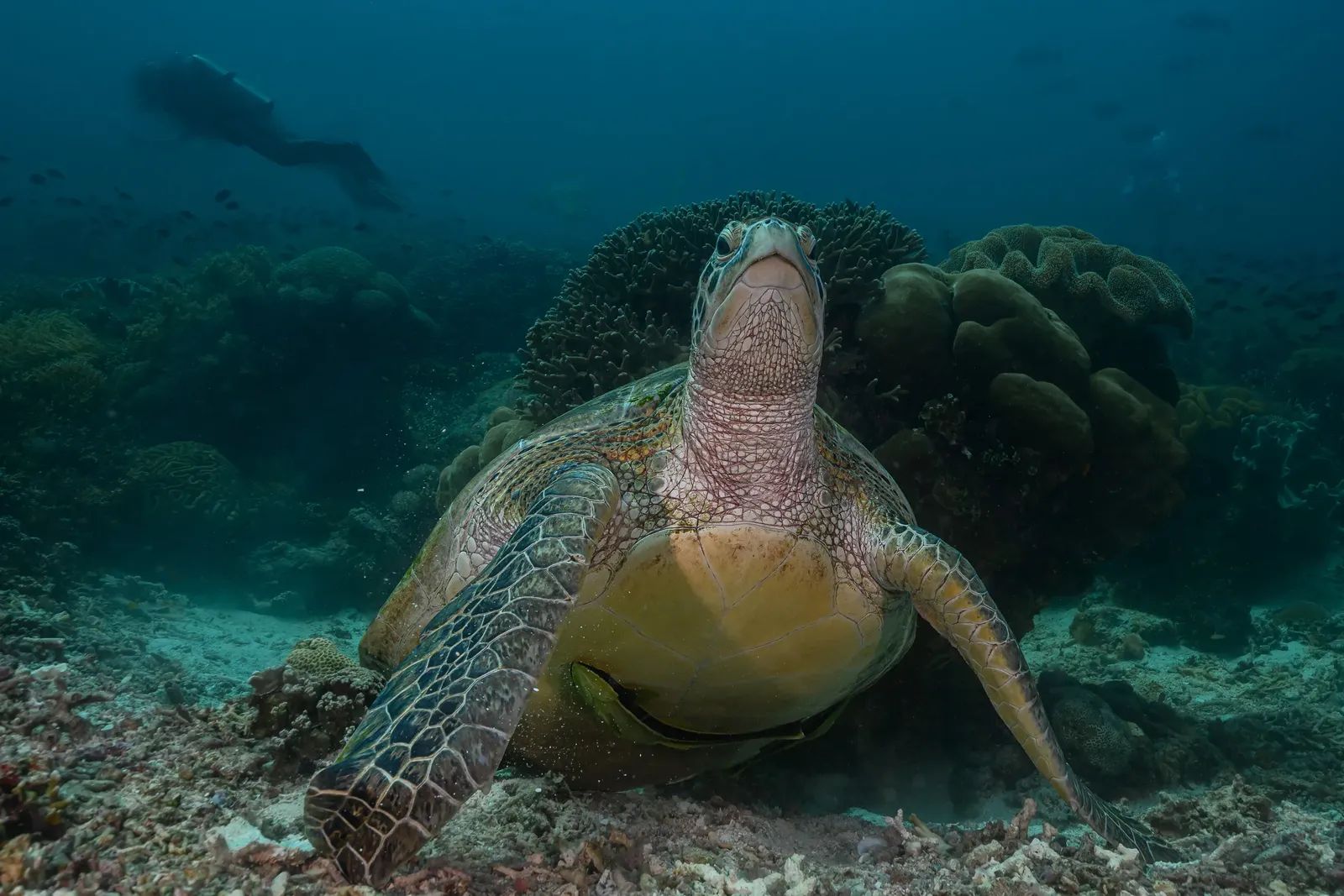
Green sea turtle facing camera with detailed shell and facial patterns on coral reef in Raja Ampat marine sanctuary - Picture by Neptune Liveaboards
Indonesische Meeresschildkrötenarten
Grüne Meeresschildkröte (Chelonia mydas) — IUCN gefährdet³
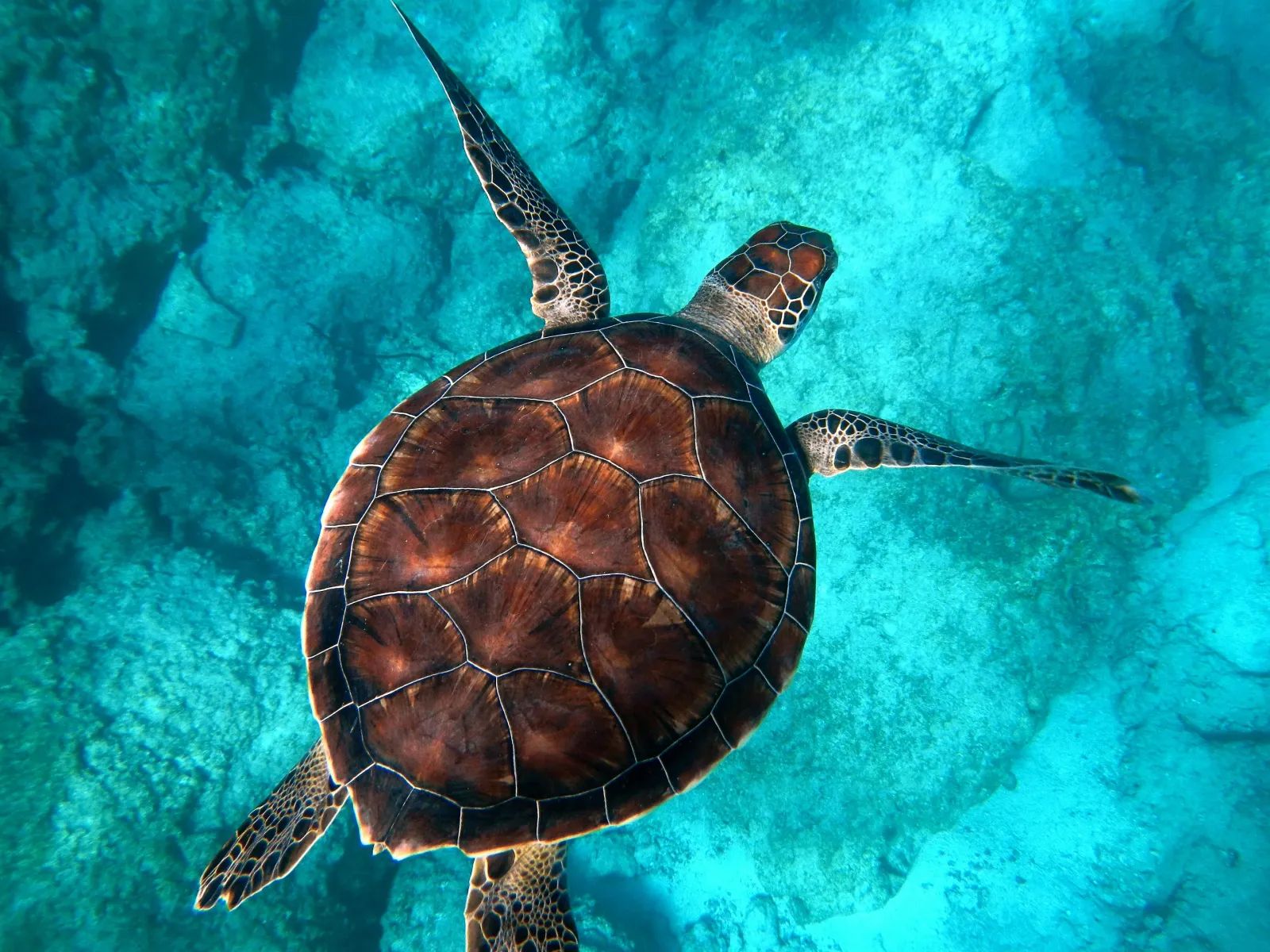
Die größte der in Indonesien häufig vorkommenden Meeresschildkröten, Erwachsene erreichen 1,5 Meter und über 200 kg. Grüne Meeresschildkröten sind Pflanzenfresser, die Seegraswiesen und Riffalgen grasen – überall dort, wo flache Seegraswiesen mit guter Lichtdurchdringung vorhanden sind, fressen grüne Meeresschildkröten fast sicher dort. Sie bevorzugen junge, nährstoffreiche Triebe anstelle von reifem Gras. Ihr ruhiges Temperament und ihr offenes Futterhabitat machen sie zur zuverlässigsten aller Meeresschildkrötenarten. An den meisten indonesischen Tauchplätzen – Raja Ampat, Komodo, Alor, die Banda-See – Sie werden bei einem typischen Riff-Tauchgang mindestens eine sehen.
Tigerhaie sind die Hauptfeinde erwachsener grüner Meeresschildkröten in freier Wildbahn – sie haben sich möglicherweise speziell zur Jagd auf Schildkröten entwickelt, mit einer Kieferstruktur, die zum Durchschneiden von Panzerpanzern angepasst ist⁹. In indonesischen Tauchgewässern werden Tigerhaie selten angetroffen, was ein Grund dafür ist, warum die Populationen der grünen Meeresschildkröten hier so robust sind.
Echte Karettschildkröte (Eretmochelys imbricata) — IUCN vom Aussterben bedroht⁸
Benannt nach ihrem schmalen, spitzen Schnabel, ernähren sich Echte Karettschildkröten hauptsächlich von Schwämmen und kommen in den Korallenriffen Indonesiens vor. Sie sind aktiver als Grüne Meeresschildkröten und bewegen sich eher über das Riff, anstatt sich auszuruhen – kleiner, schneller und typischerweise weniger tolerant gegenüber Annäherung. Indonesien beherbergt einige der wichtigsten Populationen von Echten Karettschildkröten im Indo-Pazifik, wobei die geschützten Riffe von Raja Ampat, Komodo, und das Banda-See bieten alle wichtige Nahrungslebensräume.
Andere Arten
Lederschildkröten (Dermochelys coriacea, Gefährdet) nisten in geringer Zahl an Stränden in Papua und werden gelegentlich auf pelagischen Wanderungen gesichtet. Oliv-Bastardschildkröten (Lepidochelys olivacea, Gefährdet) und Karettschildkröten (Caretta caretta, Gefährdet) kommen in indonesischen Gewässern vor und tauchen auf Offshore-Passagen auf. Flachrückenschildkröten (Natator depressus, Daten defizitär auf der IUCN-Liste) sind hauptsächlich endemisch in den Gewässern des australischen Festlandsockels und erreichen nur die südlichen Ränder des indonesischen Territoriums.
Green Sea Turtle swimming in crystal clear water in Indonesia, a perfect spot for Liveaboard Diving Vacations
Wo man Meeresschildkröten in Indonesien findet
Derawan-Inseln
Die Derawan-Inseln sind das einzige Reiseziel in Indonesien, bei dem eine Liveaboard-Route auf Meeresschildkröten als primäre Art ausgerichtet ist. Die Insel Sangalaki beherbergt die größte Nistpopulation von Grünen Meeresschildkröten in Südostasien², wobei Weibchen das ganze Jahr über nisten – nicht in einem einzigen saisonalen Höhepunkt. Die Seegraswiesen um Sangalaki beherbergen dichte Konzentrationen von Futter suchenden Grünen Meeresschildkröten; Betreiber berichten durchweg von mehreren Individuen pro Tauchgang, und Echte Karettschildkröten sind auf den Korallenabschnitten derselben Stellen zuverlässig anzutreffen.
Neben Meeresschildkröten umfasst die Reise zu den Derawan-Inseln auch die von MMF dokumentierte Riffmantapopulation bei Sangalaki, den Kakaban-Quallen-See und Walhaie bei den Talisayan Bay Bagans. Für das vollständige Bild siehe unseren Derawan-Inseln-Reiseführer, und unseren Manta-Rochen-Reiseführer und Walhai-Reiseführer für die anderen Arten im Detail.
Ein praktischer Hinweis zum Zugang: Die Derawan-Inseln sind noch nicht Teil des Haupt-Liveaboard-Kreises. Nur eine Handvoll Betreiber fahren dorthin und sie buchen schnell. Planen Sie mindestens sechs Monate im Voraus.
Bunaken und Bangka (Nord-Sulawesi)
Der Bunaken Marine Park, gegründet 1991⁴, ist eines der ältesten Schutzgebiete Indonesiens. Es ist hauptsächlich ein Ziel für Land- und Resorttaucher – eine Handvoll Liveaboards nehmen es in ihre Routen für Nordsulawesi auf, aber es ist kein eigenständiges Liveaboard-Ziel, wie es Derawan ist. Begegnungen mit grünen Meeresschildkröten an Orten wie Lekuan I, II und III sind bemerkenswert konstant – die Wände haben resident Populationen von großen Erwachsenen, die sich auf Felsvorsprüngen ausruhen und tagsüber das Riff entlangfahren. Die Insel Bangka, eine kurze Entfernung nordöstlich, bietet ähnliche Begegnungen in einer weniger besuchten Umgebung und ist auf vielen Liveaboard-Routen für Nordsulawesi enthalten. Beide lassen sich gut mit Lembeh Strait für Makrotauchen auf derselben Reiseroute kombinieren.
Gili-Inseln (Lombok)
Die Gili-Inseln – Trawangan, Meno und Air – sind kein Liveaboard-Ziel, aber gehören zu den am leichtesten zugänglichen Meeresschildkröten-Hotspots Indonesiens. Die flachen Seegraswiesen rund um alle drei Inseln ziehen das ganze Jahr über grüne Meeresschildkröten an, und Echte Karettschildkröten sind im umliegenden Riff häufig anzutreffen. Beide Arten sind gut an Taucher gewöhnt. Tagesausflüge und Ufertauchgänge machen dies zur logistisch einfachsten Begegnung mit Meeresschildkröten in Indonesien – eine natürliche Ergänzung zu jeder Bali-Reise. Unser Leitfaden für Liveaboard-Erweiterungen behandelt, wie man sie mit einer größeren Reise kombinieren kann, und unser Bali-Leitfaden behandelt die Logistik.
Meeresschildkröten in ganz Indonesien
Abgesehen von Derawan, Bunaken und den Gili-Inseln sind Meeresschildkröten auf indonesischen Liveaboard-Routen fast allgegenwärtig. Raja Ampat liefert durchweg Begegnungen mit grünen Meeresschildkröten und Echten Karettschildkröten bei Riff-Tauchgängen in allen Subregionen. Komodo hat resident Populationen von grünen Meeresschildkröten, die bei den meisten Tauchgängen sichtbar sind. Die Banda-See und Alor liefern beide regelmäßige Sichtungen von Echten Karettschildkröten an korallenreichen Standorten; Halmahera und die Riffe Nord-Malukus unterstützen Echte Karettschildkröten-Populationen an vielen Tauchplätzen.
Der Unterschied zu Derawan liegt in der Vorhersehbarkeit und Dichte – Sie werden an all diesen Zielen Meeresschildkröten sehen, aber als Teil eines breiteren Tauchgangs und nicht als Mittelpunkt. Für die meisten Liveaboard-Taucher ist dies die natürlichere Art, ihnen zu begegnen: ungestört, ungerichtet, als Teil eines gesunden Riff-Ökosystems.
Schutzkontext
Alle Meeresschildkrötenarten in indonesischen Gewässern sind nach nationalem Recht geschützt, und Indonesien ist Unterzeichner wichtiger internationaler Rahmenwerke für den Naturschutz⁵. Wichtige Nist- und Futtergebiete liegen innerhalb von Meeresschutzgebieten – die Gewässer um Sangalaki liegen innerhalb einer Schutzzone, gerade wegen der nistenden Population, die von SWOT als global bedeutsamer Standort überwacht wird².
Trotz gesetzlichen Schutzes sind Meeresschildkröten in Indonesien weiterhin auf vielfältige Weise unter Druck. Eiersammlung und Tötung nistender Weibchen ist seit Jahrhunderten eine traditionelle Praxis in vielen Küstengemeinden des Archipels⁶ – die Eier gelten als Delikatesse und Proteinquelle. Obwohl jetzt illegal, wird die Praxis in Teilen Indonesiens fortgesetzt, einschließlich Kalimantan, wo Eier historisch auf malaysische Märkte exportiert wurden⁷. Fischerei-Beifang, Plastikkonsum und der Handel mit Echten Karettschildkröten-Panzern sind zusätzliche fortlaufende Bedrohungen. An Orten, an denen verantwortungsvoller Tauchtourismus direkten wirtschaftlichen Wert für lokale Gemeinschaften rund um lebende Schildkröten schafft, verschiebt sich die Anreizstruktur – Derawan ist ein funktionierendes Beispiel dafür.
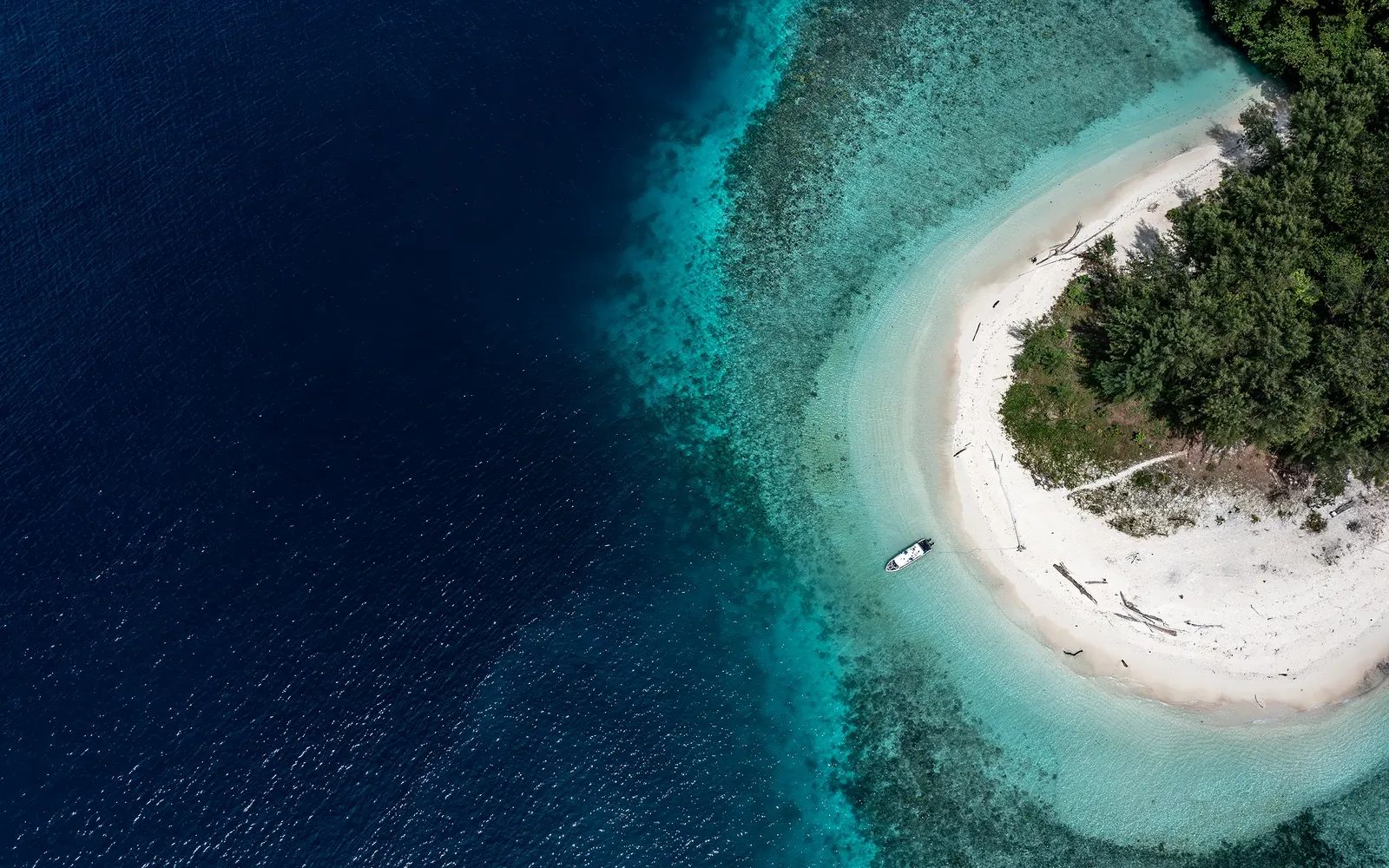
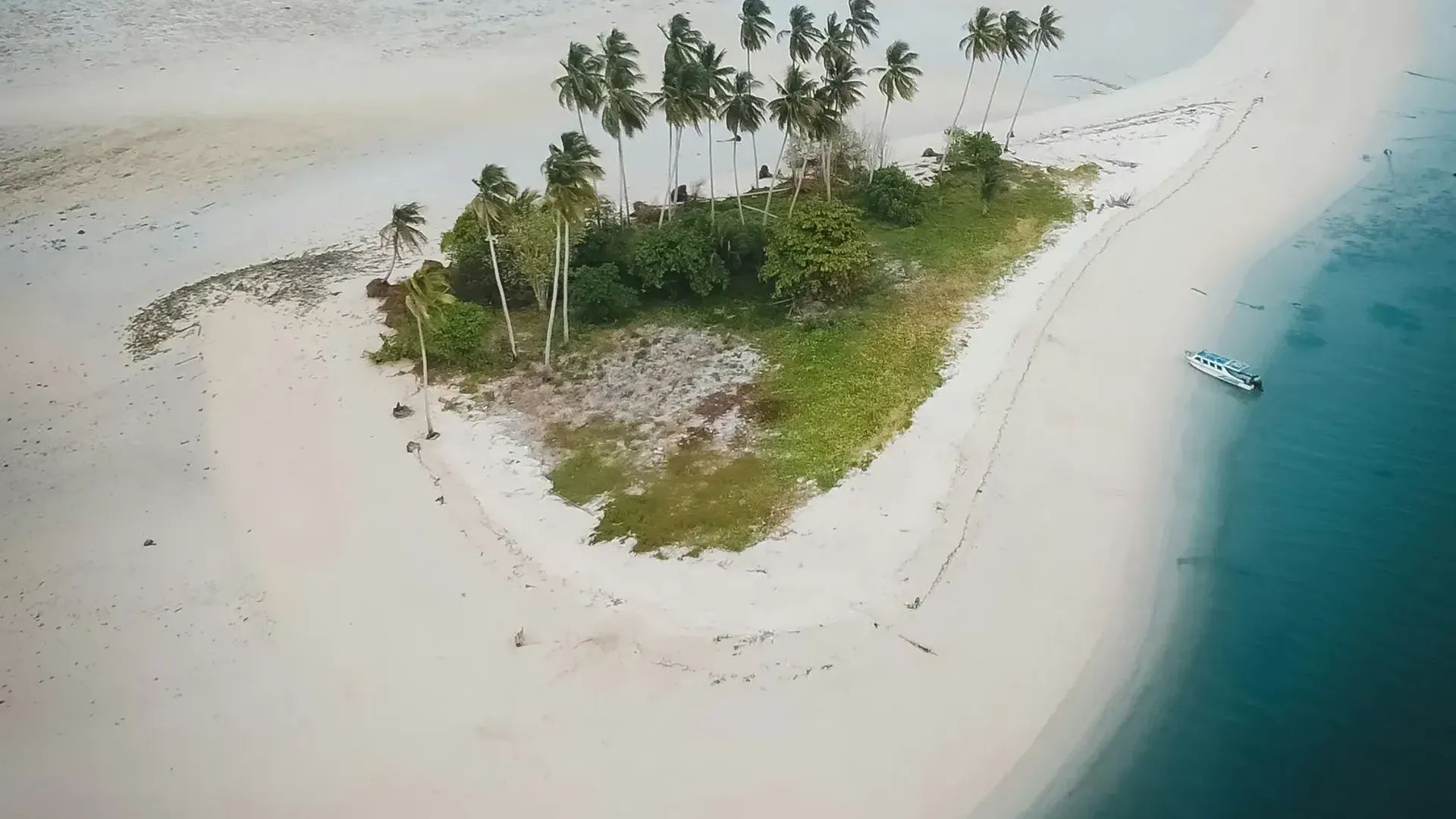
Aerial view of pristine white sand beach with crystal-clear turquoise lagoon and coral gardens surrounded by tropical jungle in Indonesia - Picture by Neptune Liveaboards
Erwartungen managen
Meeresschildkröten sind die am zuverlässigsten anzutreffenden großen Meerestiere in Indonesien – mehr als Mantarochen, Walhaie oder Hammerhaie. Außerhalb von Derawan sind Sichtungen an den meisten Riff-Tauchplätzen üblich, aber nicht kontrolliert: Sie können eine ruhig ruhende oder mehrere über das Riff ziehende Schildkröten sehen. Die Qualität der Begegnung hängt erheblich vom Verhalten der Taucher ab. Fressende oder ruhende grüne Meeresschildkröten behalten ihre Position für längere Beobachtungen bei, wenn man sich langsam von der Seite nähert; gejagte oder bedrängte Schildkröten verschwinden schnell.
Echte Karettschildkröten sind schneller und reaktionsfreudiger. Die besten Begegnungen ergeben sich, wenn man sich vor ihre Bewegungsrichtung positioniert und sie auf sich zukommen lässt, anstatt sie über das Riff zu verfolgen.
Ein Hinweis zur Nistzeit: Die Nistaktivität in Sangalaki erreicht nachts ihren Höhepunkt. Einige Betreiber arrangieren Nachtbesuche am Strand, was ein außergewöhnliches Erlebnis abseits des Tauchens ist. Fragen Sie Ihren Betreiber, ob dies inbegriffen oder als optionaler Ausflug verfügbar ist.
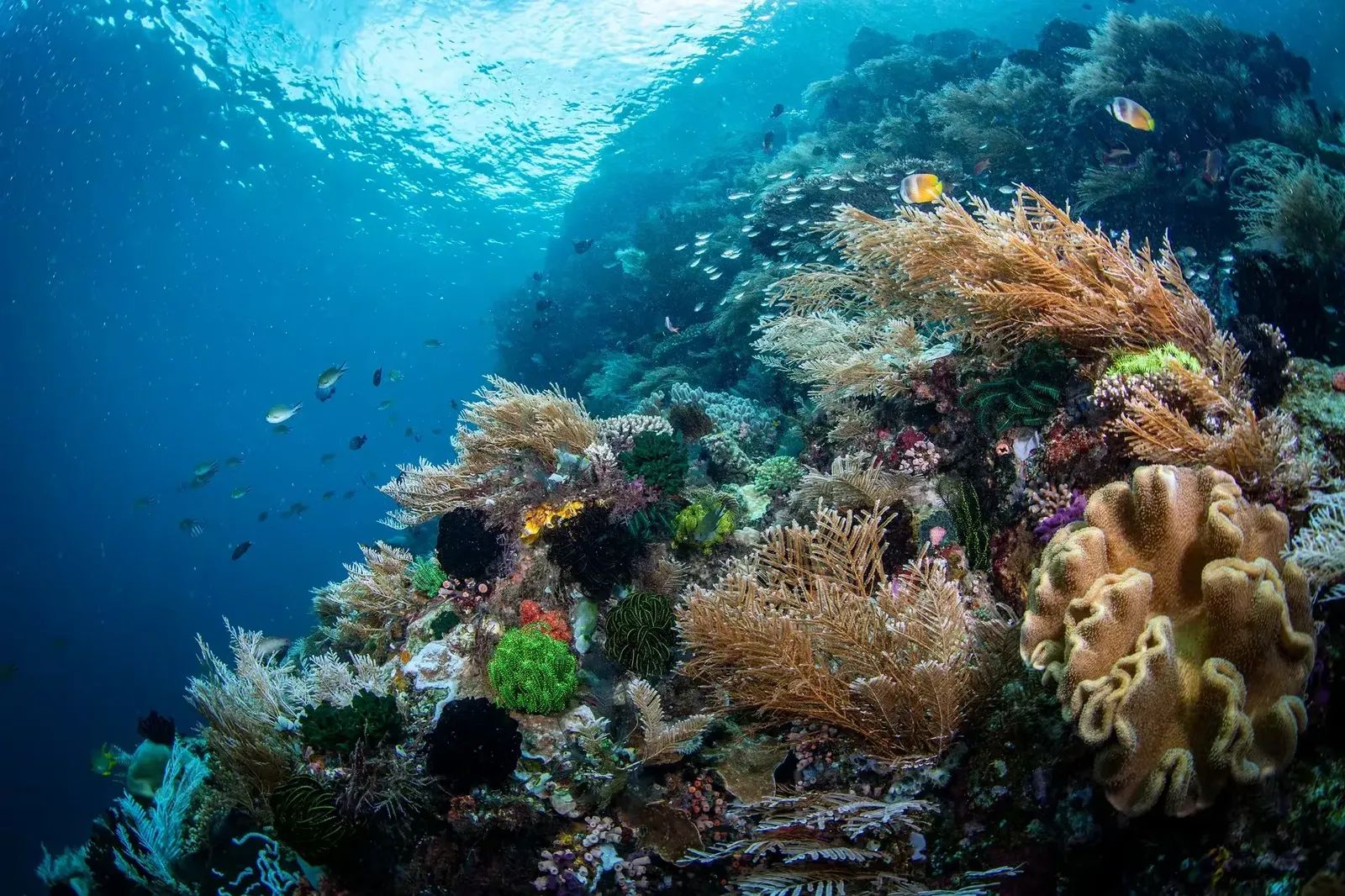
Vibrant coral reef with hard corals and reef fish, pristine dive site in Komodo National Park liveaboard itinerary Indonesia
Häufig gestellte Fragen
Wie viele Meeresschildkröten werde ich bei einem Tauchgang in Derawan sehen?
Betreiber in Sangalaki und den umliegenden Riffen von Derawan berichten durchweg von mehreren grünen Meeresschildkröten pro Tauchgang. Die Seegraswiesen beherbergen die höchste Dichte – geduldige Taucher, die Zeit im Gras verbringen, anstatt über das Riff zu ziehen, haben tendenziell die längsten Begegnungen. Die Zahlen variieren je nach Gezeitenstand und Tageszeit; Tauchgänge am frühen Morgen im Seegras sind tendenziell am produktivsten.
Benötige ich eine Tauchversicherung für Liveaboard-Tauchreisen in Indonesien?
Ja. Tauchversicherung mit medizinischer Evakuierungsdeckung ist nach indonesischem Recht obligatorisch und für abgelegene Ziele wie Derawan unerlässlich, da diese weit von Krankenhäusern entfernt sind. Überprüfen Sie, ob Ihre Police Indonesien ausdrücklich abdeckt und eine Bergung aus abgelegenen Gebieten einschließt. Unser Packleitfaden für Liveaboards behandelt Versicherung und Vorbereitung vor der Reise im Detail.
Kann ich das Tauchen mit Meeresschildkröten mit anderen Arten kombinieren?
Ja – Meeresschildkröten kommen bei fast jeder anderen Art auf indonesischen Reiserouten vor. Derawan kombiniert speziell grüne Meeresschildkröten mit Riff-Mantarochen bei Sangalaki, Walhaie bei Talisayan und der Kakaban-Quallen-See. Raja Ampat und Komodo kombinieren Meeresschildkröten mit Mantarochen und außergewöhnlicher Riff-Biodiversität. Das Banda-See kombiniert Begegnungen mit Echten Karettschildkröten mit Hammerhaien an den Tiefseebänken. Für Kombinationsideen, unser Leitfaden für Liveaboard-Erweiterungen behandelt die Optionen.
Ist Nitrox auf Liveaboards in Indonesien verfügbar?
Die Verfügbarkeit variiert je nach Schiff. Auf Luxus- und tauchspezifischen Booten ist Nitrox oft inklusive oder gegen Aufpreis erhältlich. An Meeresschildkröten-Spots sind die Tauchgänge in der Regel flach genug, dass Nitrox nur einen begrenzten praktischen Nutzen hat – es wird relevanter für die tieferen Riff-Spots auf derselben Route. Unser Kategorienführer für Liveaboards behandelt, was jede Schiffskategorie beinhaltet.
Sind Meeresschildkröten sicher zum Anfassen?
Fassen Sie keine Meeresschildkröten an. Nicht, weil sie gefährlich sind – das sind sie nicht –, sondern weil der Schaden ganz andersherum liegt. Der Panzer einer Meeresschildkröte ist keine inerte Rüstung. Es ist lebendes Gewebe, innerviert und empfindlich; Schildkröten spüren Druck und Berührung durch ihn, genauso wie Sie durch einen Fingernagel spüren. Die dünne Haut, die den Panzer und den Körper bedeckt, beherbergt kommensale Organismen, die für die Immunfunktion des Tieres entscheidend sind. Menschliche Hände führen Fremdbakterien ein, gegen die Meeresschildkröten keine Abwehr haben, und wiederholtes Anfassen durch Taucher an beliebten Stellen verursacht messbare Stressreaktionen und langfristige Verhaltensänderungen. Eine Schildkröte, die ruhig aussieht, wenn sie angefasst wird, ist nicht ruhig – sie ist ein Wildtier, das eine Stressreaktion unterdrückt, der es nicht entkommen kann.
Das No-Touch-Protokoll ist keine Richtlinie oder Präferenz. Es ist der Mindeststandard für verantwortungsvolles Tauchen mit jeder Meeresfauna. Wenn Sie einen anderen Taucher sehen, der eine Schildkröte anfasst, bitten Sie Ihren Tauchguide, dies zu unterbinden.
Wohin sollte ich in Indonesien reisen, wenn Meeresschildkröten meine Hauptpriorität sind?
Ein Liveaboard auf den Derawan-Inseln ist die einzige spezielle Meeresschildkröten-Route in Indonesien – die einzige Route, bei der Schildkröten im Vordergrund stehen und nicht nur eine Bonusbegegnung. Diese Routen dauern in der Regel sieben bis zehn Tage und kombinieren Sangalaki mit Kakaban, Maratua und Talisayan für Walhaie. Nur sehr wenige Anbieter betreiben diese Route, und die Plätze sind schnell vergeben. Für Begegnungen mit Meeresschildkröten in Nord-Sulawesi, kombiniert mit erstklassigem Makro-Tauchen, ist eine Rundreise durch Bunaken und Lembeh die natürliche Alternative – Meeresschildkröten bei Bunaken und Bangka, dann Nacktschnecken, Froschfische und Zwergseepferdchen bei Lembeh. Unser Kategorienführer für Liveaboards enthält die Aufschlüsselung der Schiffe.
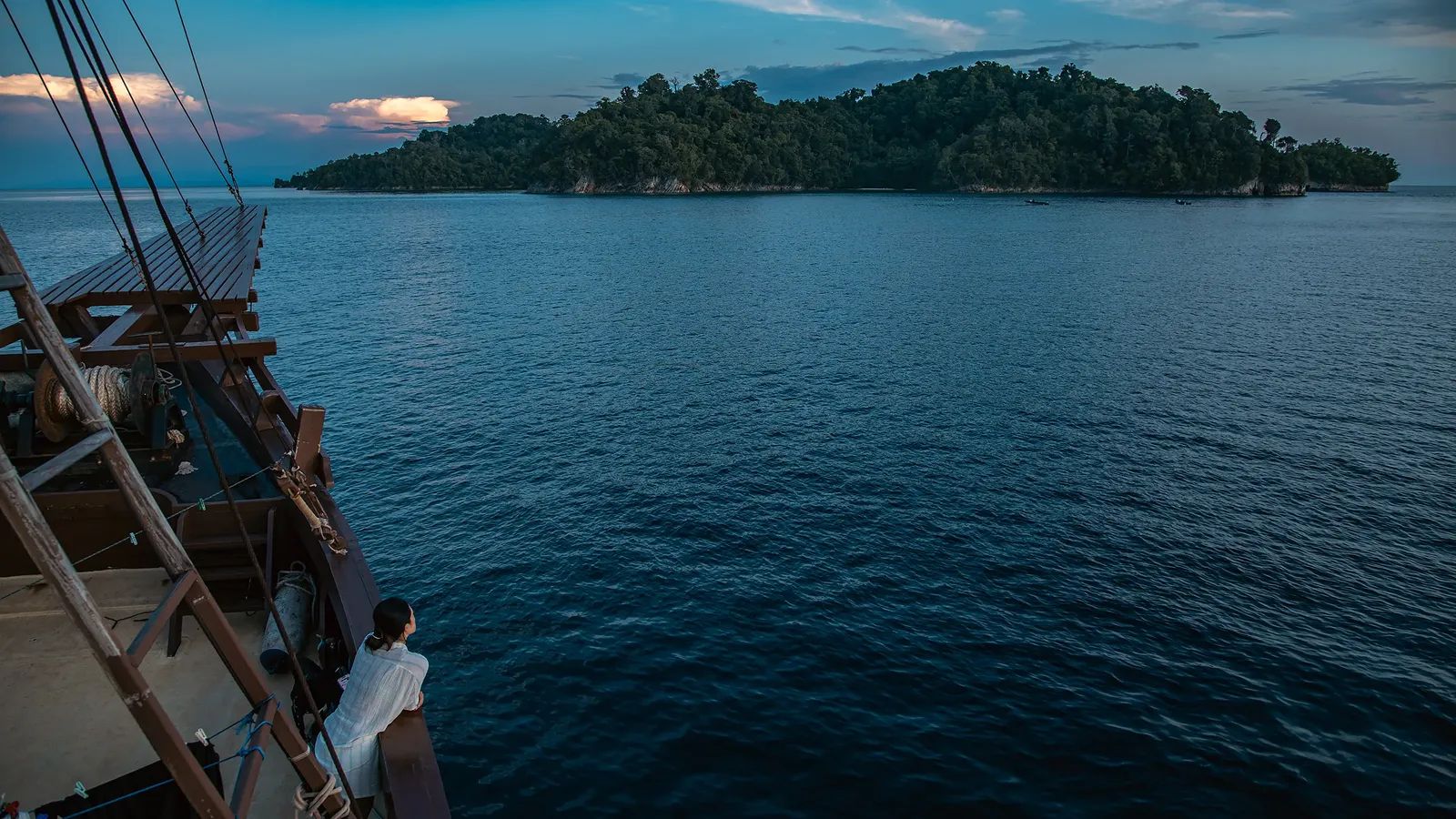
Traditional wooden liveaboard boat at sunset anchored near jungle-covered limestone island in calm Raja Ampat waters - Picture by Neptune Liveaboards
Plan Your Trip
Coralbound bucht Liveaboards in allen indonesischen Destinationen zum gleichen Preis, wie Sie ihn bei direkter Buchung zahlen würden, einschließlich der Option einer kostenlosen Hotelnacht. Für Derawan – wo der Zugang begrenzt ist und die Anbieter lange im Voraus ausgebucht sind – macht eine frühzeitige Kontaktaufnahme einen echten Unterschied. Erreichen Sie uns auf WhatsApp oder über das Kontaktformular – oder lesen Sie mehr darüber, wie wir arbeiten bevor Sie sich melden.