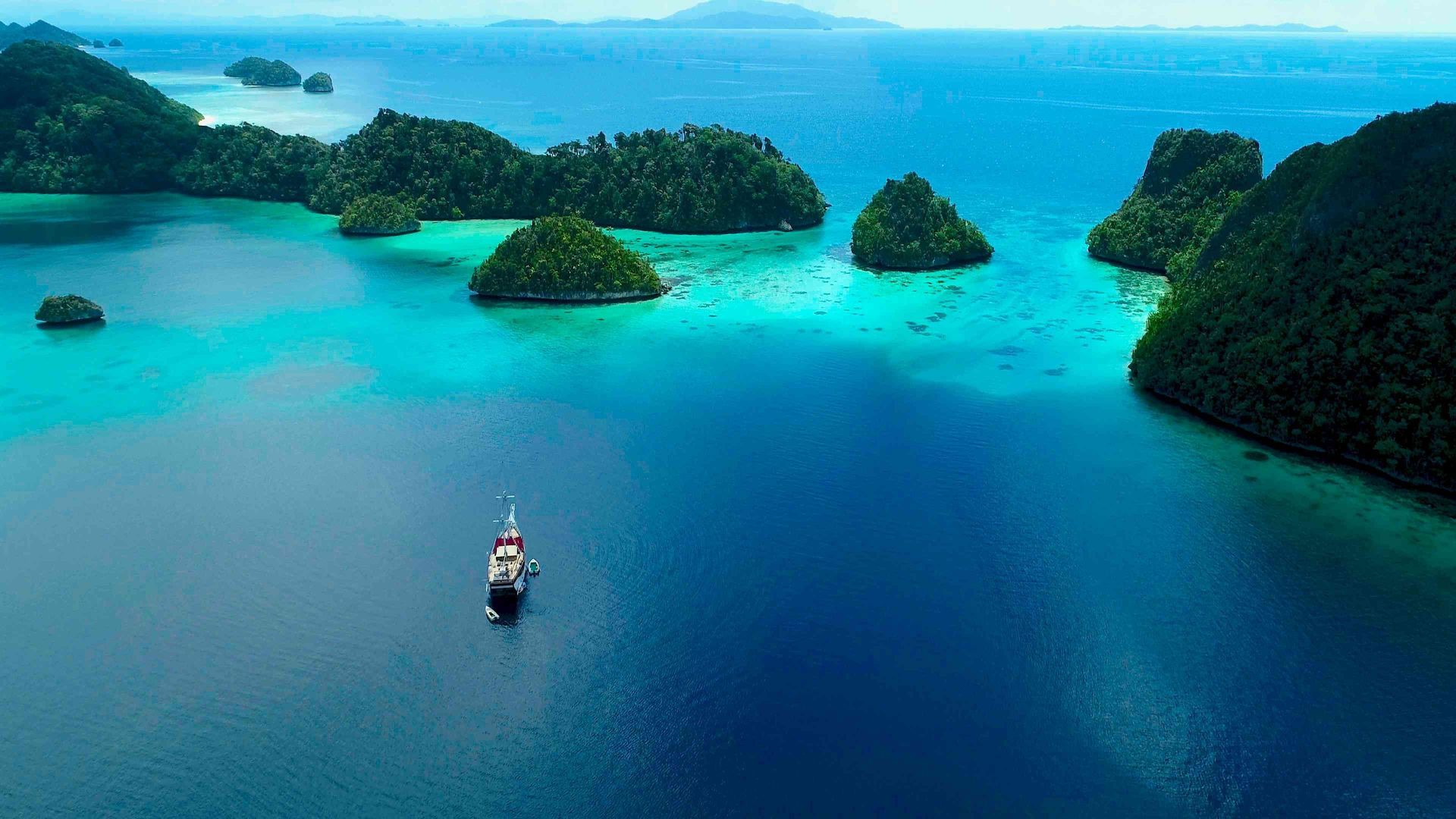
Indonesien hat mehr zuverlässige Begegnungen mit Walhaien als jeder andere Ort auf der Erde – und der Grund dafür sind die Bagan.
Walhaie im gesamten indonesischen Archipel werden in diesem Leitfaden behandelt – wo man sie findet, wann man reisen sollte und was man erwarten kann. Er ist Teil des Coralbound Liveaboard-Leitfadens für Indonesien; unser Leitfaden für Tauchgänge mit großen Tieren behandelt das breitere Bild der Megafauna, und warum Taucher Indonesien wählen behandelt den Fall für das Land insgesamt. Wenn Sie bereit sind, sich Boote anzusehen, bieten die Zielseiten für die Cenderawasih-Bucht und Triton Bay einen schnellen Überblick über die beiden wichtigsten Walhai-Reiseziele.
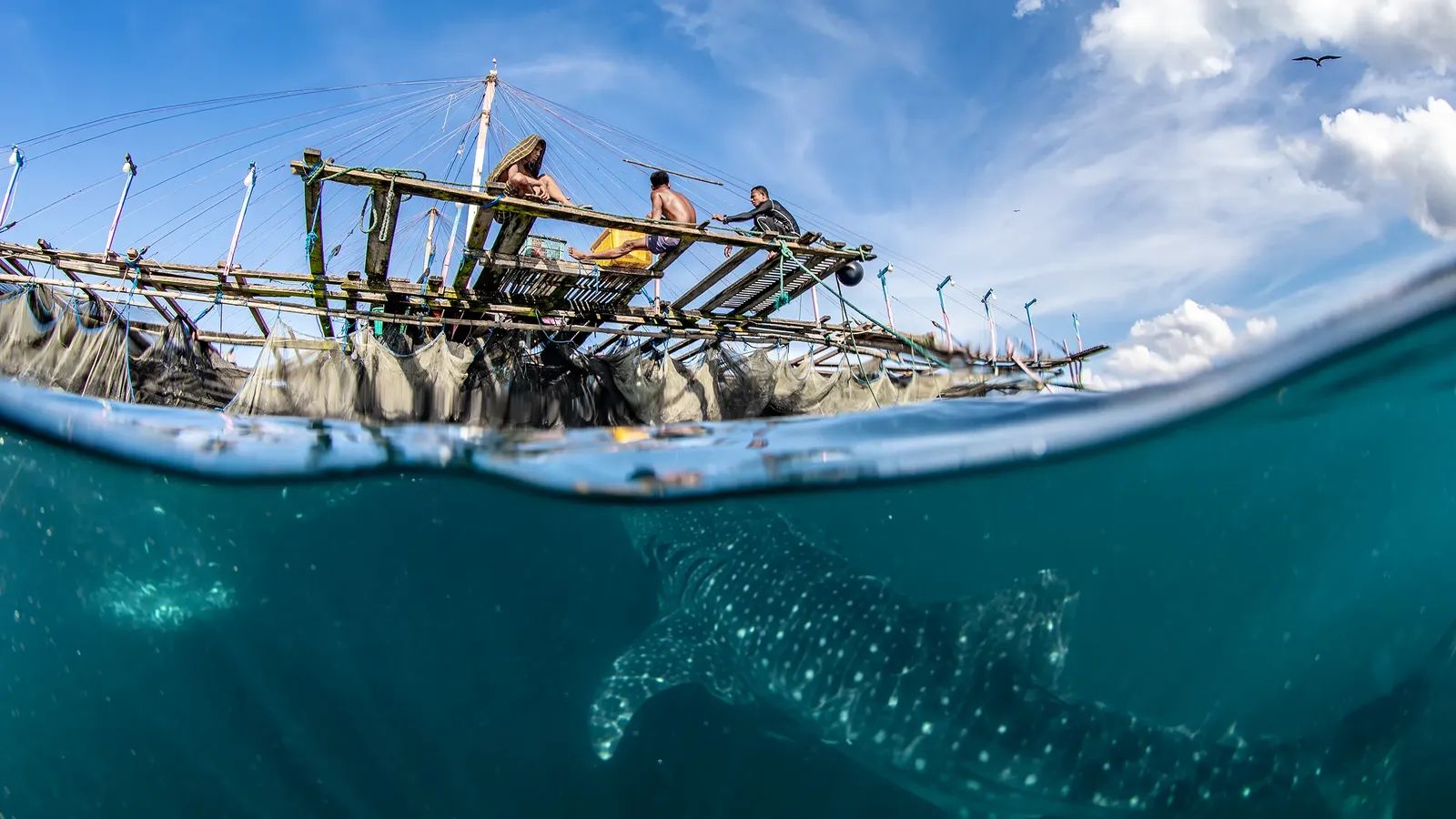
Indonesien beherbergt das ganze Jahr über mehrere ortsansässige Populationen, die meist an traditionelle Fischplattformen namens Bagan gebunden sind. Diese Holzplattformen fangen über Nacht mit Lichtern kleine Fische; Walhaie haben gelernt, sich von den entkommenden Köderfischen zu ernähren. Forschungen in der Bird's Head Seascape dokumentierten zwischen 2010 und 2023 268 einzelne Tiere – 159 in der Cenderawasih-Bucht, 95 in der Region Kaimana (zu der auch die Triton Bay gehört) und kleinere Zahlen in Raja Ampat und Fakfak¹. Diese Teilregionen weisen wenig Populationsüberschneidung auf, sodass jede Zahl eine eigene lokale Gruppe mit hoher Ansässigkeit und Wiederfindungsrate widerspiegelt.
Schnelle Fakten
- Beste Jahreszeit: ganzjährig an Bagan-Standorten; Juli–Oktober optimal in der Cenderawasih-Bucht; Oktober–April in der Triton Bay; Mai–September in der Saleh Bay
- Wassertemperatur: 27–30°C an den meisten Bagan-Standorten
- Sichtweite: 15–30 m je nach Standort und Jahreszeit
- Erfahrungsstufe: Open Water Minimum für Tauchgänge; keine Zertifizierung für Schnorcheln erforderlich
- Reiselänge: 8–14 Tage für Westpapua-Ziele; 7–12 Tage für Komodo/Sumbawa-Routen
- Wer kann teilnehmen: Taucher und Schnorchler; Begegnungen finden in 5–10 m Tiefe statt, vollständig von der Oberfläche zugänglich
- Kostenbereich: 300–600 $/Tag Mittelklasse; 600–1.000 $/Tag Luxus
- Wichtige Meereslebewesen: Walhai (Rhincodon typus), IUCN gefährdet²
- Zielflughäfen: Manokwari (MKW) oder Nabire (NBX) für die Cenderawasih-Bucht; Sorong (SOQ) oder Kaimana (KNG) für Triton Bay-Routen; Labuan Bajo (LBJ) oder Ngurah Rai (DPS) für Saleh Bay und Komodo-Routen
- Buchungsvorlaufzeit: 3–6 Monate für Spitzenabflüge; 6–12 Monate für spezialisierte Cenderawasih-Bucht-Schiffe
Schnelle Antworten
Wo ist der beste Ort, um in Indonesien mit Walhaien zu tauchen?
Die Cenderawasih-Bucht in Westpapua ist Indonesiens am besten untersuchter Walhai-Standort. Forschungen, die sich über 2010 bis 2023 erstreckten, identifizierten allein in der Cenderawasih-Bucht 159 einzelne Walhaie mit einer hohen Langzeitansässigkeit – ein Individuum wurde über drei Jahre 34 Mal wiedergesehen¹. Walhaie sind das ganze Jahr über an den Bagan-Plattformen anzutreffen, wobei Juli–Oktober die ruhigsten Oberflächenbedingungen für Liveaboard-Operationen bietet. Die Triton Bay (Kaimana) ist eine starke Zweitplatzierte mit 95 identifizierten Individuen und ebenso zuverlässigen Bagan-Begegnungen¹.
Ist Walhai-Tauchen in Indonesien ethisch?
Die Beziehung zu den Bagan ist es wert, ehrlich verstanden zu werden. Walhaie assoziieren sich mit Fischereiplattformen, weil Fische den Netzen entkommen – dies ist opportunistische Fütterung auf einer echten Nahrungsquelle, keine Fütterung. Dieselbe Forschung, die diese Populationen dokumentierte, fand heraus, dass 80 % der Individuen vom Menschen verursachte Narben trugen, hauptsächlich von Bagan-Strukturen und Bootskontakt¹. Wählen Sie Betreiber mit dokumentierten verantwortungsvollen Begegnungsprotokollen und halten Sie den empfohlenen Mindestabstand von drei Metern ein.
Können Anfänger und Schnorchler Walhaie in Indonesien sehen?
Ja, obwohl einige Boote auf diesen Routen andere Tauchplätze anfahren, die Advanced Open Water erfordern. Walhai-Begegnungen an Bagan-Plattformen finden in fünf bis zehn Metern Tiefe statt, was sie für Open Water-Taucher vollständig zugänglich macht. Schnorchler haben ebenso gute Begegnungen von der Oberfläche aus – viele Tauchsafaris begrüßen heute nicht-tauchende Gäste speziell für das Walhai-Schnorcheln, und die vertikale Fresshaltung, die die Haie an Bagans einnehmen, bedeutet, dass die Aktion direkt an der Wasseroberfläche stattfindet.
Wann ist die beste Zeit, um Walhaie in Indonesien zu sehen?
Das hängt vom Reiseziel ab. Die Cenderawasih-Bucht hat das ganze Jahr über ansässige Walhaie; Juli–Oktober wird für Tauchsafari-Betriebe wegen ruhigerer Bedingungen bevorzugt. Triton Bay operiert von Oktober bis April. Die Saleh-Bucht auf Sumbawa hat ihren Höhepunkt von Mai bis September und fällt mit der Bali–Komodo Tauchsafari-Saison zusammen. Unser Indonesien-Wetterführer behandelt saisonale Bedingungen für alle Reiseziele im Detail.
Whale shark feeding under traditional fishing platform bagan, unique encounter on Triton Bay liveaboard trips West Papua Indonesia
Wo man Walhaie in Indonesien findet
Cenderawasih-Bucht
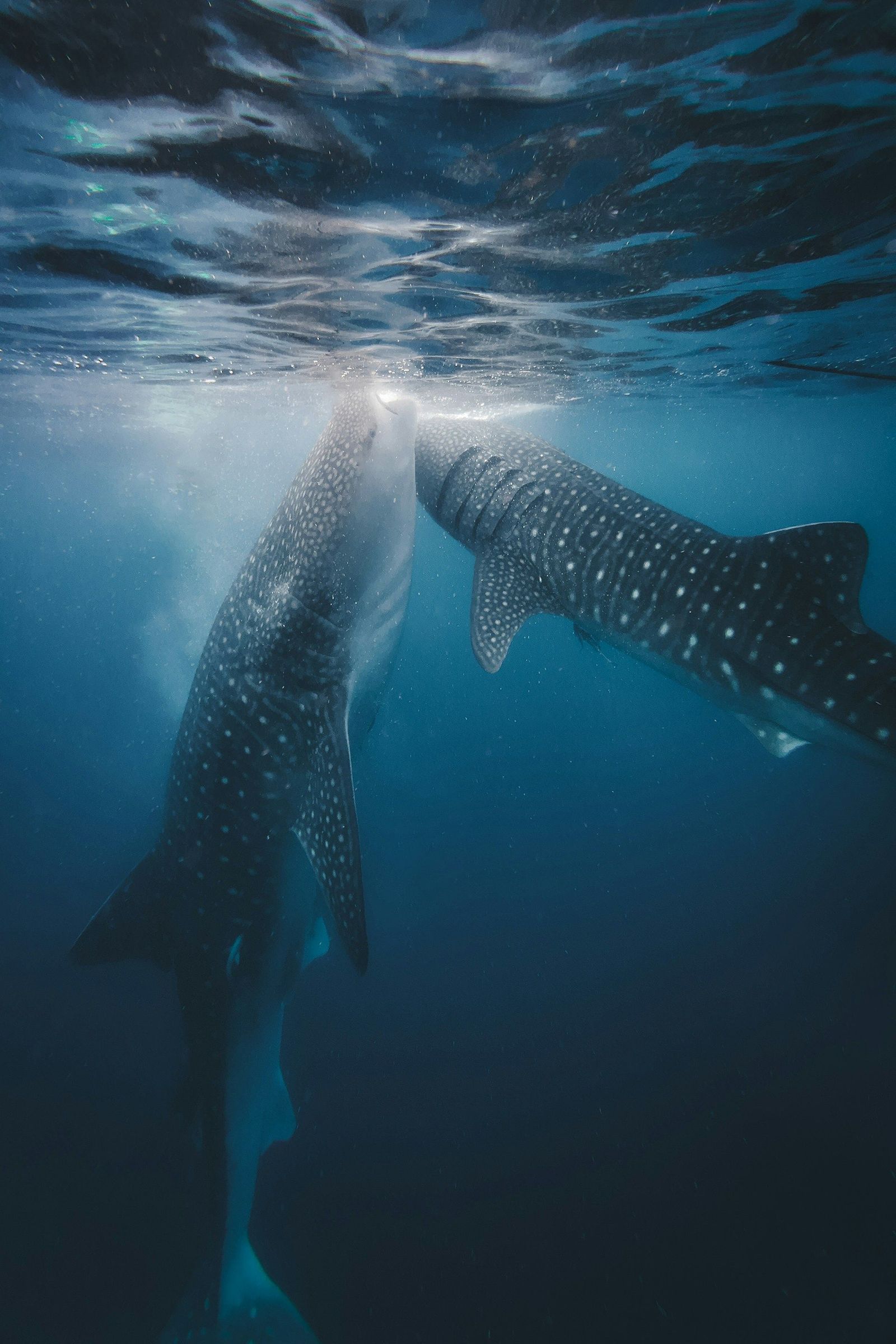
Die Cenderawasih-Bucht ist Indonesiens erstklassiges Walhai-Reiseziel. Das Kwatisore-Gebiet in der südlichen Bucht hat zu jeder Zeit mindestens 30 aktive Bagans¹, und die Walhaie kehren über Jahre hinweg zu ihnen zurück. Forschungen dokumentierten Fütterungen sowohl in horizontaler Haltung als auch in einer charakteristischen vertikalen Kopf-nach-oben-Haltung an der Oberfläche¹ – das Bild, das am häufigsten mit diesem Reiseziel assoziiert wird. In der Praxis nähert man sich mit einem Beiboot in der Dunkelheit vor Sonnenaufgang, die Bagan-Plattform ragt über einem auf, und Flossen brechen die Oberfläche, noch bevor man im Wasser ist.
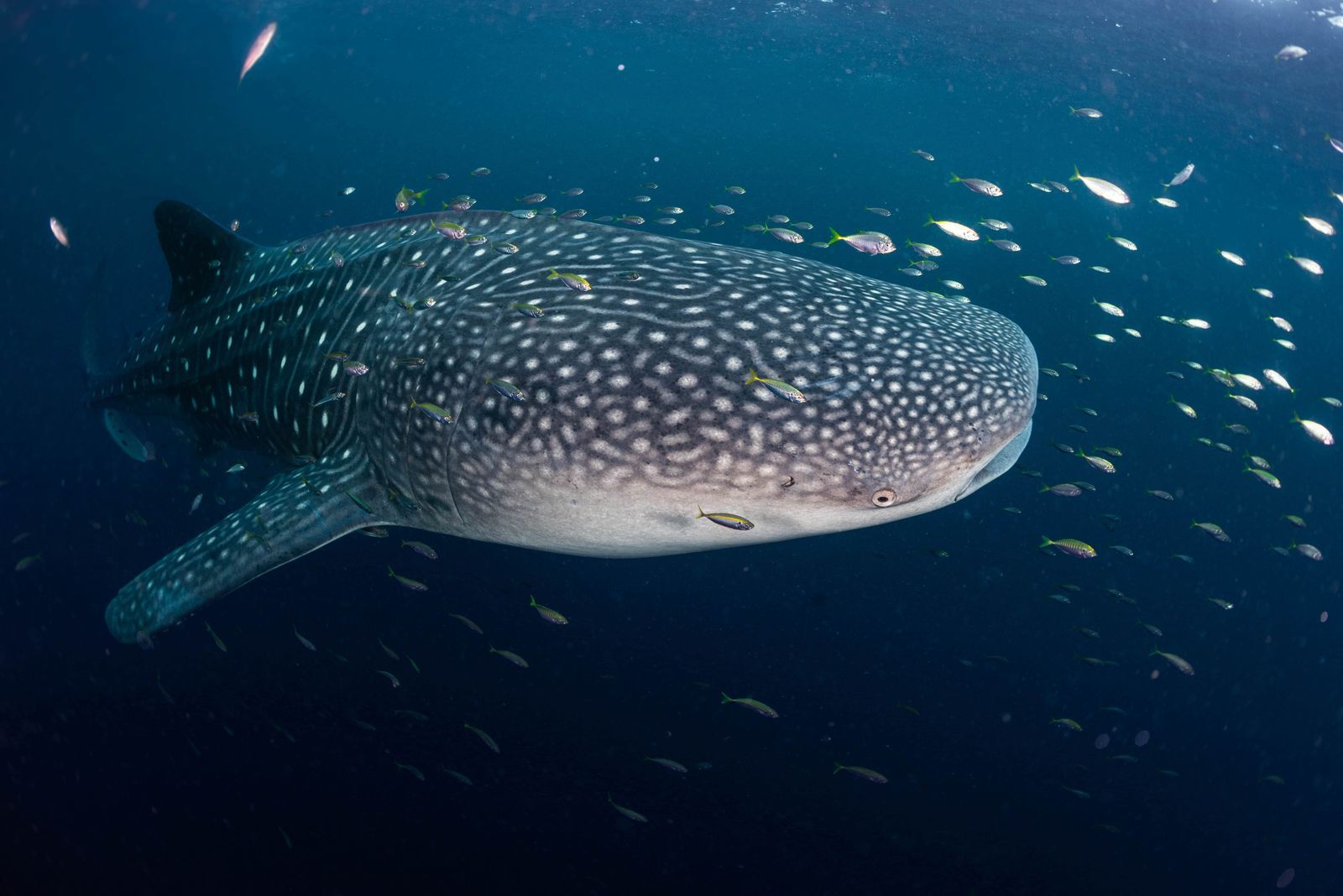
Die Walhaie hier sind überwiegend junge Männchen, typischerweise vier bis fünf Meter lang, die sich von Sardellen, Heringen und Sprotten ernähren. Die Abfahrten der Betreiber konzentrieren sich auf Juli–August, wenn die Oberflächenbedingungen am besten sind, obwohl Walhaie das ganze Jahr über vorhanden sind. Für vollständige Reiseziel-Details, einschließlich Tauchplätzen, endemischen Arten und Logistik, lesen Sie unseren Cenderawasih-Bucht-Führer oder durchsuchen Sie die Cenderawasih-Bucht-Reisezielseite.
Triton Bay (Kaimana)
Die Frontiers 2025-Forschung identifizierte 95 einzelne Walhaie in der Region Kaimana, zu der auch die Triton Bay gehört, was auf eine eigenständige lokale Population mit eigenen hohen Aufenthaltsmustern hinweist¹. Die Triton Bay wird als Touristenziel weniger besucht und dokumentiert, aber die Begegnungsgrundlage ist stark. Die Saison dauert von Oktober bis April; der Südostmonsun schließt die Bucht von Mai bis September. Die meisten Routen kombinieren die Triton Bay mit dem südlichen Raja Ampat, wodurch sie ohne eigenständige Verpflichtung zugänglich ist.
Neben Walhaien beherbergt die Bucht Geisterhaie (Hemiscyllium henryi), Teppichhaie und dichte Weichkorallenbedeckung. Wenn Mantarochen auch auf Ihrer Liste stehen, finden Sie in unserem Leitfaden zum Tauchen mit Mantarochen in Indonesien die besten Orte und Jahreszeiten. Detaillierte Planungsinformationen finden Sie in unserem Triton Bay Guide und Triton Bay-Zielseite.
Saleh Bay (Sumbawa)
Die Saleh Bay liegt auf der Liveaboard-Route Bali–Komodo und bietet während der Trockenzeit von Mai bis September Begegnungen von Bagans aus. Die Walhaie sind das ganze Jahr über bei den Bagans ansässig, aber Liveaboard-Zugänge konzentrieren sich in diesem Zeitfenster, wenn die See mitspielt. Satellitenverfolgung hat bestätigt, dass die Saleh Bay als einer von wenigen unersetzlichen ganzjährigen Nahrungslebensräumen für Walhaie im Indopazifik fungiert⁶.
Die Saleh Bay ist das am leichtesten zugängliche Walhai-Reiseziel in Indonesien und folglich das meistbesuchte. In der Hochsaison operieren gleichzeitig Tagesausflüge, Freizeittörns und Tauch-Liveaboards. Liveaboards bieten eine bessere Bagans-Positionierung – weniger Boote, mehr Flexibilität, um zwischen den Plattformen zu wechseln. Die meisten Routen kombinieren die Saleh Bay mit dem Komodo-Nationalpark; einige starten direkt von Bali und arbeiten die Route von Süden nach Norden ab.
Es gab kürzlich Berichte über sehr große Menschenmengen, bei denen Fischer die Walhaie gezielt fütterten, um sie für Touristen anzulocken, anstatt als Teil der natürlichen Bagan-Aktivität. Dies stört das natürliche Verhalten und die Migrationsmuster. Das Naturschutzbild ist wirklich kompliziert: In Gebieten, in denen die Alternative historisch die kommerzielle Ernte war, hat die Verlagerung zum Tourismus – selbst zu unvollkommenem Tourismus – in vielen Fällen verhindert, dass Gemeinschaften dazu zurückkehren. Es ist ein Kompromiss, mit dem die Branche weiterhin ringt. Wenn Ihnen dies wichtig ist, fragen Sie die Betreiber vor der Buchung direkt nach ihren Begegnungsprotokollen – und fordern Sie ehrliche Antworten.
Talisayan Bay (Derawan Region)
Talisayan, in der Nähe der Derawan-Inseln an der Küste von Ostkalimantan, beherbergt das ganze Jahr über Walhaie in Bagans. Die WWF-Forschung in Indonesien dokumentierte bis 2018 93 Individuen in den breiteren Berau-Gewässern, wobei Talisayan als ganzjähriger Standort bestätigt wurde³. Die Begegnungsdynamik verschiebt sich saisonal: Die meiste Zeit des Jahres fressen Walhaie in der Nähe von Bagans in der Nähe der Insel Derawan selbst; wenn die Südwindwinde Mitte Juni bis Mitte September eintreffen, werden die Bagans in das geschütztere Talisayan-Gebiet verlegt, etwa zwei Stunden von Derawan entfernt.
Die Derawan-Inseln sind noch nicht auf der Haupt-Liveaboard-Route – nur eine Handvoll Betreiber fahren dorthin –, daher gibt es in Talisayan sehr wenig Bootsverkehr. Für diejenigen, die es schaffen, berichten Betreiber von mehreren gleichzeitig an einer einzigen Plattform vorhandenen Walhaien.
Ein Hinweis zu Gorontalo
Das Dorf Botubarani außerhalb von Gorontalo in Nord-Sulawesi bietet Walhai-Begegnungen und ist bei indonesischen Tauchern gut bekannt. Es ist eine andere Dynamik als die Bagan-Stätten darüber – Begegnungen hier sind providiert, wobei Garnelen gefüttert werden, um die Haie anzulocken, anstatt opportunistisches Bagan-Füttern. Die Saison wird grob von März bis Juni angegeben, variiert aber. Einige Liveaboards, die Routen durch Nord-Sulawesi anbieten – die Bunaken, Lembeh und die Togianischen Inseln kombinieren – schließen einen Walhai-Stopp in Gorontalo als Teil der Route ein. Wenn diese Kombination reizt, ist dies eine praktische Möglichkeit, beides abzuhaken, ohne eine spezielle Expedition.
Kontext zum Naturschutz
Walhaie sind auf der Roten Liste der IUCN als stark gefährdet eingestuft² und seit 2013 durch indonesisches Recht geschützt⁷. Wichtige Begegnungsstätten liegen innerhalb von Meeresschutzgebieten – der Cenderawasih Bay National Park umfasst etwa 1,45 Millionen Hektar⁴. Die Frontiers 2025-Studie fand heraus, dass 80 % der dokumentierten Individuen vom Menschen verursachte Narben trugen, hauptsächlich durch Kontakt mit Bagan-Strukturen und Schiffspropellern¹. Die meisten waren nicht lebensbedrohliche Abschürfungen, aber die Prävalenz unterstreicht, warum verantwortungsvolle Begegnungsprotokolle wichtig sind.
Die Bagan-Tourismuswirtschaft schafft echte Anreize, sowohl die Walhaie als auch die Fischereiplattformen zu schützen, von denen sie abhängen⁸. Zum Kontext, wie Indonesien andere große Meerestiere schützt, die ähnlichen Belastungen ausgesetzt sind – von Hammerhaien im Banda-Meer bis zu Meeresschildkröten auf dem gesamten Archipel – ist das Muster des MPA-Schutzes in Kombination mit gemeinschaftsbasiertem Tourismus in der gesamten Region konsistent.
Whale shark swimming with tropical fish in Indonesian waters, ultimate liveaboard diving experience - Picture by Dewi Nusantara
Erwartungen managen
Keine Begegnung ist garantiert. Walhaie sind Wildtiere und entfernen sich von den Bagans, wenn sie es wünschen. Betreiber an etablierten Bagan-Stätten berichten durchweg von einer hohen Begegnungsfrequenz, aber Mondphase, Köderfischpräsenz, Wetter und Bootsaktivität beeinflussen alle, ob Walhaie an einem bestimmten Morgen anwesend sind. Begegnungen in der Nähe des Neumonds sind tendenziell zuverlässiger – dunklere Nächte konzentrieren Köderfische dichter um die Bagan-Lichter, was die Walhaie länger in der Nähe hält. Wenn Sie Flexibilität bei den Daten haben, fragen Sie Ihren Betreiber, in welchem Stadium des Mondzyklus Ihre Reise liegt.
Wenn eine Begegnung stattfindet, kann das Ausmaß desorientierend sein. Ein typisches Jungtier hier ist vier bis fünf Meter lang – ungefähr die Länge eines Kleinwagens – und sie schwimmen oft mit offenem Maul direkt auf Sie zu, bevor sie sich abwenden. Dies ist normales Fressverhalten. Der empfohlene Abstand von drei Metern besteht, um das Tier zu schützen, nicht weil es eine Gefahr für Sie darstellt.
West-Papua ist abgelegen. Die Anreise zur Cenderawasih-Bucht erfordert mehrere Flugverbindungen und einen vollen Reisetag von Bali. Routen sind wetterabhängig. Berücksichtigen Sie dies als ehrliches Bild von Expeditions-Tauchen, nicht als Abschreckung.
Verantwortungsvolle Begegnungsprotokolle an Bagan-Standorten umfassen in der Regel einen Mindestabstand von drei Metern zum Körper, Begrenzungen der Anzahl der Schwimmer im Wasser gleichzeitig und Zeitlimits für einzelne Begegnungen. Bestätigen Sie diese mit Ihrem Betreiber, bevor Sie buchen.
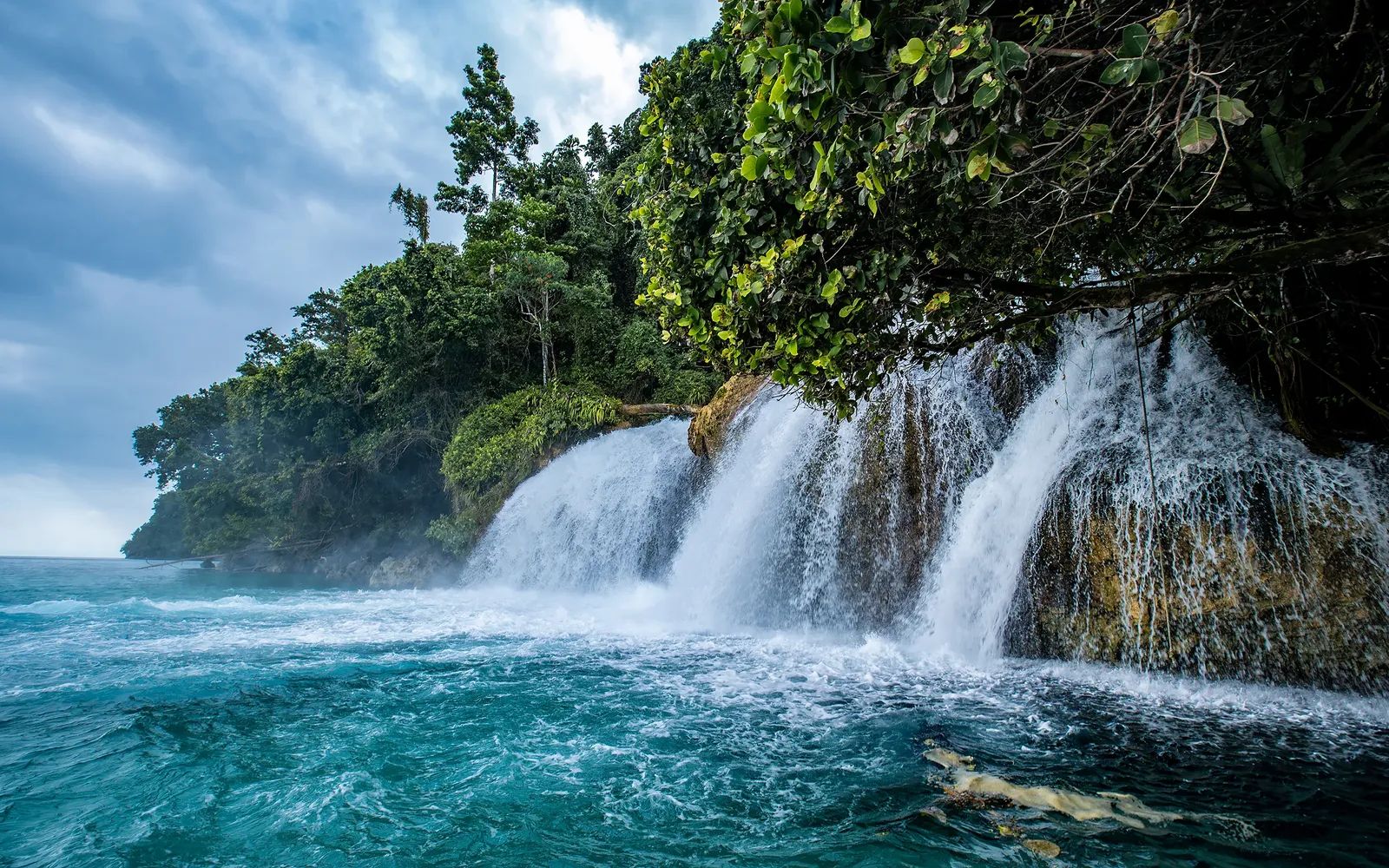
Waterfall cascading directly into turquoise ocean, scenic natural attraction visited during Triton Bay liveaboard trips West Papua Indonesia
Häufig gestellte Fragen
Wie viele Walhaie werde ich gleichzeitig sehen?
An Bagan-Standorten berichten Betreiber durchweg von mehreren gleichzeitig anwesenden Individuen – die Frontiers 2025-Forschung dokumentierte Walhaie, die sich in Gruppen an einzelnen Plattformen ernährten¹. Begegnungen in Triton Bay umfassen typischerweise ein bis drei Individuen. Die Cenderawasih-Bucht mit mindestens 30 aktiven Bagans im Kwatisore-Gebiet bietet die höchste Wahrscheinlichkeit für mehrere gleichzeitige Begegnungen.
Benötige ich eine Tauchversicherung für Liveaboard-Touren in Indonesien?
Ja. Eine Tauchversicherung mit medizinischer Evakuierungsdeckung ist nach indonesischem Recht zwingend erforderlich und für abgelegene Expeditions-Tauchgänge nicht verhandelbar. Standard-Reiseversicherungen schließen häufig eine Evakuierung aus abgelegenen Gebieten aus – überprüfen Sie, ob Ihre Police Indonesien und die Bergung aus abgelegenen Gebieten ausdrücklich abdeckt. Für teure Reiserouten zu Zielen wie der Cenderawasih-Bucht wird eine umfassende Reiseversicherung, die Reiseunterbrechungen abdeckt, dringend empfohlen. Unser Packleitfaden für Liveaboards behandelt Versicherung und Reisevorbereitung im Detail.
Kann ich Walhai-Tauchen mit anderen Zielen kombinieren?
Ja, je nachdem, wohin Sie reisen. Triton Bay lässt sich natürlich mit Raja Ampat auf einer einzigen Westpapua-Route (Oktober–April) kombinieren. Die Saleh-Bucht passt zu jeder Bali–Komodo-Route (Mai–September). Die Cenderawasih-Bucht ist geografisch isoliert und eignet sich am besten als eigene Expedition. Für Kombinationsideen, unser Leitfaden für Liveaboard-Erweiterungen deckt die Optionen ab.
Zu welcher Tageszeit finden Begegnungen an Bagans statt?
Die Fütterungsaktivität erreicht am frühen Morgen ihren Höhepunkt, typischerweise zwischen 6 und 9 Uhr morgens, wenn Fischer Netze nach einer Nacht des Fischens einholen. Die meisten Betreiber fahren vor Sonnenaufgang ab, um die Bagans während der Spitzenaktivität zu erreichen. Bis zum späten Vormittag bewegen sich Walhaie im Allgemeinen von den Plattformen weg.
Benötige ich Advanced Open Water, um mit Walhaien zu tauchen?
Nein. Begegnungen an Bagan-Plattformen sind für Open Water Taucher und Schnorchler zugänglich – sie finden in fünf bis zehn Metern Tiefe statt. Advanced Open Water kann für andere Tauchplätze auf derselben Route erforderlich sein. Erkundigen Sie sich bei Ihrem jeweiligen Betreiber bei der Buchung. Unser Leitfaden für Anfänger-Liveaboards behandelt die Zertifizierungsanforderungen für indonesische Reiseziele.
Ist Nitrox auf Liveaboards in Indonesien verfügbar?
Die Verfügbarkeit variiert je nach Schiff. Auf Luxus- und tauchspezifischen Booten ist Nitrox oft inklusive oder gegen Aufpreis erhältlich. An Bagan-Standorten sind die Begegnungen so flach, dass Nitrox nur einen geringen praktischen Nutzen bietet – es wird relevanter für die Riff- und pelagischen Tauchplätze derselben Route. Unser Leitfaden für Liveaboard-Kategorien behandelt, was jede Schiffsklasse typischerweise beinhaltet.
Sind Walhaie gefährlich?
Nein. Walhaie sind Filtrierer und für Menschen völlig harmlos⁵. Ihre Größe kann aus nächster Nähe einschüchternd wirken, aber sie stellen keine Gefahr dar. Halten Sie den Mindestabstand ein, um das Tier zu schützen und das Risiko eines versehentlichen Flossenkontakts zu verringern.
Whale shark underwater encounter Indonesia liveaboard diving gentle giant experience
Planen Sie Ihre Reise
Coralbound bucht Walhai-Liveaboards in allen indonesischen Reisezielen zum gleichen Preis, als würden Sie direkt buchen, einschließlich der Option einer kostenlosen Hotelübernachtung. Wir wissen, welche Schiffe spezielle Cenderawasih Bay Routen anbieten, welche Triton Bay mit Raja Ampat kombinieren und wie Saleh Bay in eine Bali-Komodo-Route passt. Kontaktieren Sie uns über WhatsApp oder über das Kontaktformular – oder lesen Sie mehr darüber, wie wir arbeiten, bevor Sie sich melden.