Kein anderer Archipel auf der Erde konzentriert so viele große Meeresarten in zugänglichem, tauchtauglichem Wasser.
Dieser Leitfaden ist die Übersicht — jede Leitart hat ihren eigenen dedizierten Leitfaden im Cluster. Er ist Teil von Coralbound's Indonesien Liveaboard-Leitfaden und verlinkt auf unsere dedizierten Beiträge zu Walhaien, Mantarochen, Hammerhaien und Meeresschildkröten. Wenn Makroleben und Kleinstlebewesen mehr Ihr Schwerpunkt sind, deckt unser Indonesien-Leitfaden für kleine Meereslebewesen diese Seite des Archipels ab. Für den umfassenderen Fall Indonesiens als Tauchdestination behandelt warum Taucher Indonesien wählen dies direkt.
Indonesiens Lage im Korallendreick, seine 17.508 Inseln¹ und ein wachsendes Netzwerk von Meeresschutzgebieten schaffen Bedingungen, unter denen große Meereslebewesen im gesamten Archipel regelmäßig anzutreffen sind. Jedes Reiseziel bietet eine Kombination der Arten auf dieser Seite — die Frage ist, welche man priorisieren und wann man reisen sollte. Wenn Makroleben und Kleinstlebewesen mehr Ihr Schwerpunkt sind, deckt unser Indonesien-Leitfaden für kleine Meereslebewesen die andere Seite des indonesischen Tauchens ab.
Kurzfakten
- Beste Saison: je nach Art und Reiseziel — siehe individuelle Leitfäden
- Wassertemperatur: 26–30°C an den meisten Reisezielen; kann an Auftriebsstellen sinken
- Sichtweite: 15–40m je nach Tauchplatz und Saison
- Erfahrungsniveau: Open Water Minimum für die meisten Begegnungen; Advanced empfohlen für einige Tauchplätze
- Reisedauer: 7–14 Tage je nach Reiseziel
- Wer kann teilnehmen: Taucher und Schnorchler bei den meisten Begegnungen mit großen Meereslebewesen
- Kostenrahmen: $150–300/Tag Budget; $300–600/Tag Mittelklasse; $600–1.000+/Tag Luxus
- Wichtigste Reiseziele: Cenderawasih Bay, Raja Ampat, Komodo, Banda Sea, Alor, Derawan Islands
- Einreiseflughäfen: Manokwari (MKW) / Sorong (SOQ) / Ambon (AMQ) / Labuan Bajo (LBJ) / Ngurah Rai (DPS)
- Buchungsvorlaufzeit: 6–12 Monate für die Hochsaison an Spezialreisezielen
Schnelle Antworten
Welche großen Meereslebewesen kann ich in Indonesien sehen?
Die Leitarten, auf die Taucher abzielen, sind Walhaie, Mantarochen, Bogenstirn-Hammerhaie und Meeresschildkröten. Darüber hinaus bietet Indonesien an nahezu jedem Reiseziel zuverlässig Riffhaie, große pelagische Schwärme aus Barrakudas, Stachelmakrelen und Thunfischen, Mondfische (Mola mola) bei Nusa Penida und gelegentlich bei Komodo und Alor (Juli–Oktober), Dugongs bei Alor sowie häufige Delfinbegegnungen während Oberflächenpausen und Überfahrten. Der Archipel ist riesig und wird noch immer erforscht — neue Populationen bekannter Arten werden regelmäßig dokumentiert.
Welches Reiseziel bietet die zuverlässigsten Begegnungen mit großen Meereslebewesen?
Für Beständigkeit über mehrere Arten hinweg ist Raja Ampat insgesamt am stärksten — Mantarochen, Riffhaie mehrerer Arten, Meeresschildkröten und gelegentliche Walhaie über eine lange Saison von Oktober bis April. Für einen Fokus auf eine einzelne Art stehen Cenderawasih Bay für Walhaie und Komodo für Mantarochen für die am besten dokumentierten Populationen in Indonesien.
Kann ich auf einer einzigen Reise mehrere große Meerestiere sehen?
Ja – die meisten indonesischen Liveaboard-Routen bieten von Natur aus mehr als eine Art. Der Reiz Indonesiens liegt gerade in der Vielfalt: Riff- und Korallengesundheit, Makroleben und Begegnungen mit großen Meerestieren oft am selben Tag. Die Route Bali–Komodo kombiniert Mantarochen mit Walhaien in der Saleh Bay (Mai–September). Raja Ampat in Kombination mit Triton Bay bietet Mantarochen, Walhaie und Geisterhaie. Die Banda-See kombiniert Hammerhaie mit Riffhaien, Pelagik und Meeresschildkröten. Unser Leitfaden für Liveaboard-Erweiterungen erklärt, wie man Reiseziele effektiv kombiniert.
Wann ist die beste Zeit, um in Indonesien nach großen Meerestieren zu tauchen?
Es gibt keine einzige Antwort – Indonesien ist groß genug, dass immer etwas Saison hat. Grob gesagt: Oktober–April für Raja Ampat und Triton Bay; April–November für Komodo und Alor; Oktober–November für Hammerhaie in der Banda-See; ganzjährig für Meeresschildkröten an den meisten Zielen. Liveaboard-Zeitpläne für abgelegene Ziele wie die Cenderawasih-Bucht konzentrieren sich auf Juli–August, wenn die Betreiber von Raja Ampat nach Norden fahren, um den südöstlichen Monsun zu meiden. Unser Wetterleitfaden für Indonesien deckt das gesamte saisonale Bild ab.
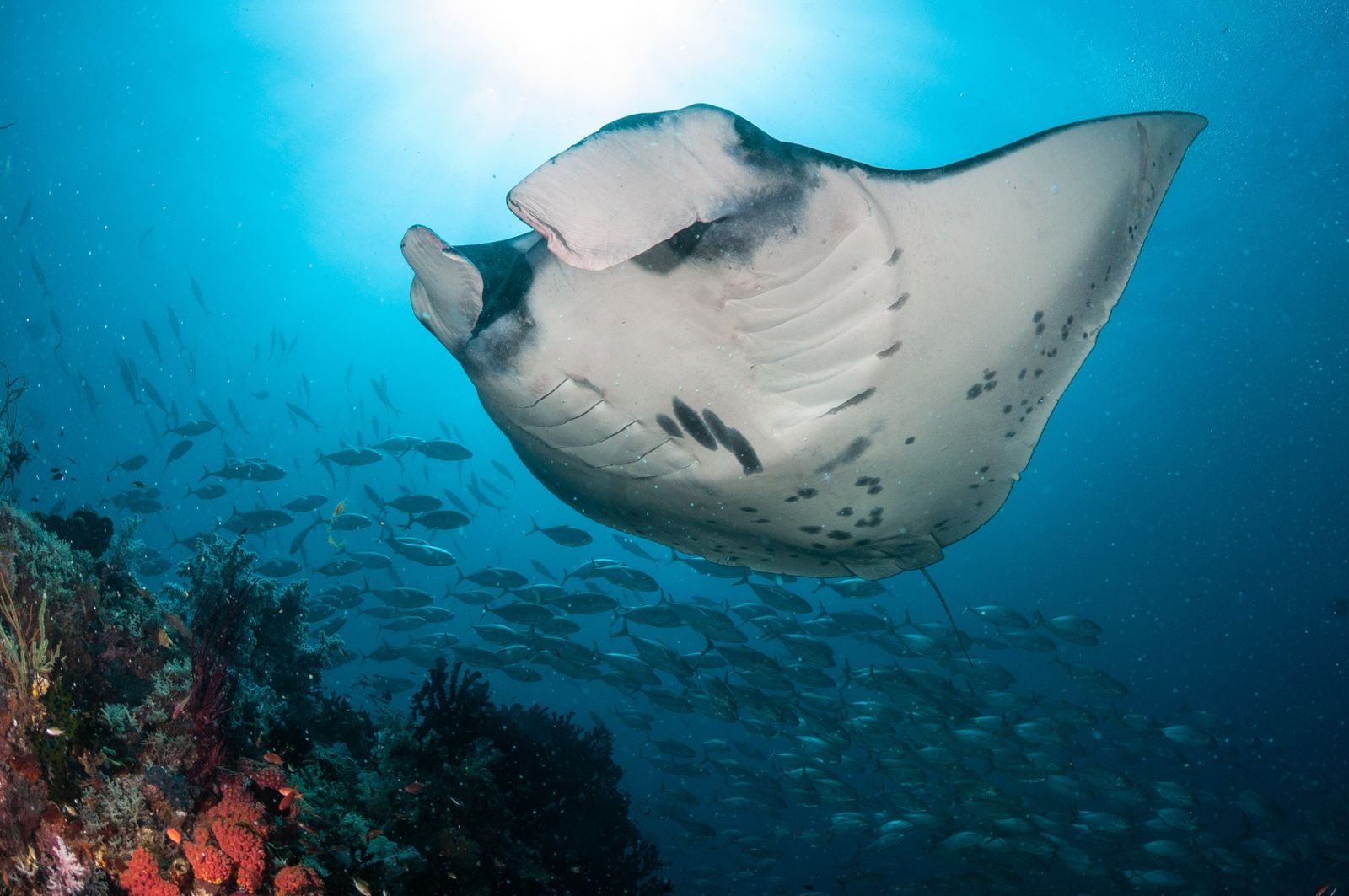
Giant manta ray close-up underwater photograph Raja Ampat diving Indonesia liveaboard destination - Picture by Dewi Nusantara
Walhaie
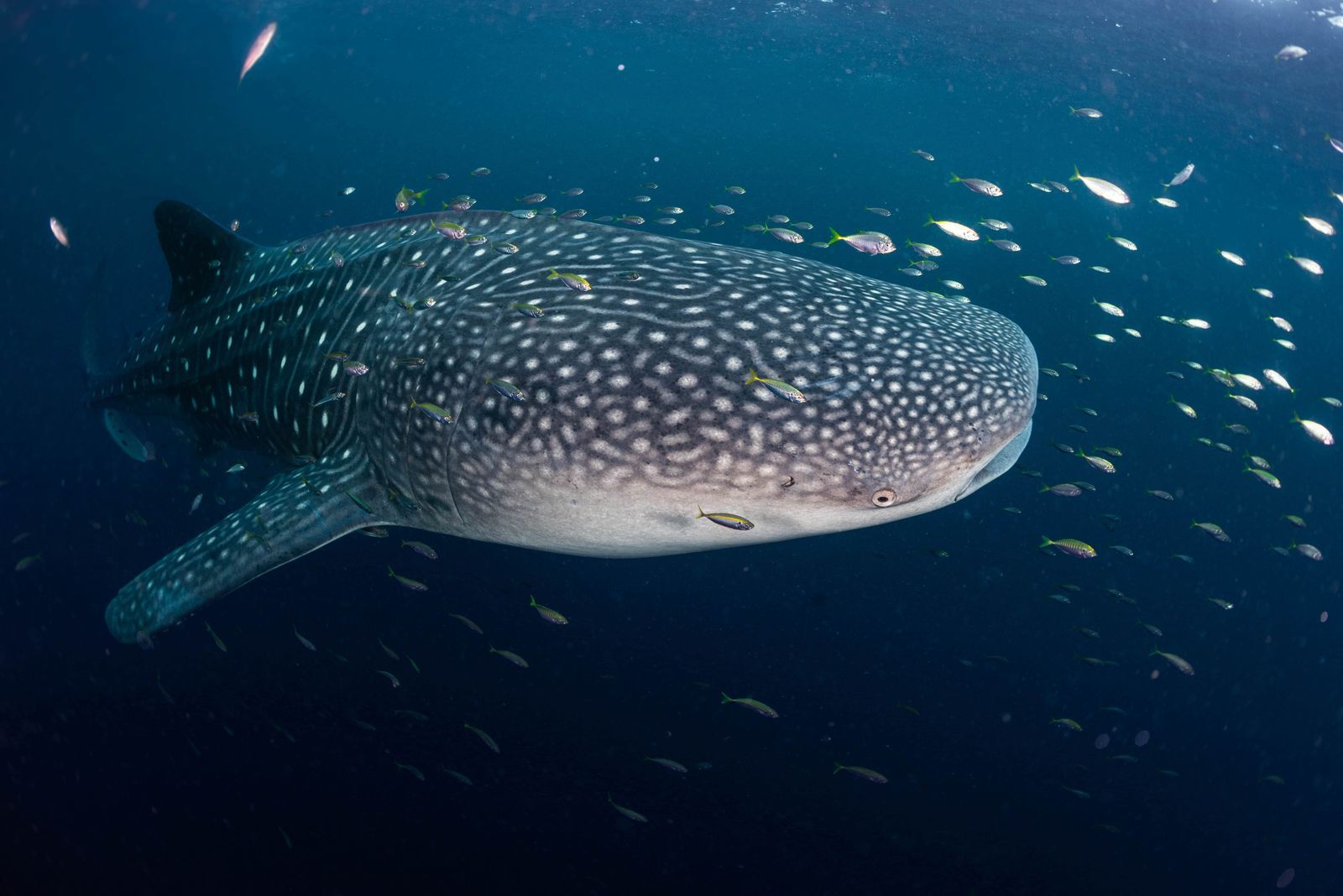
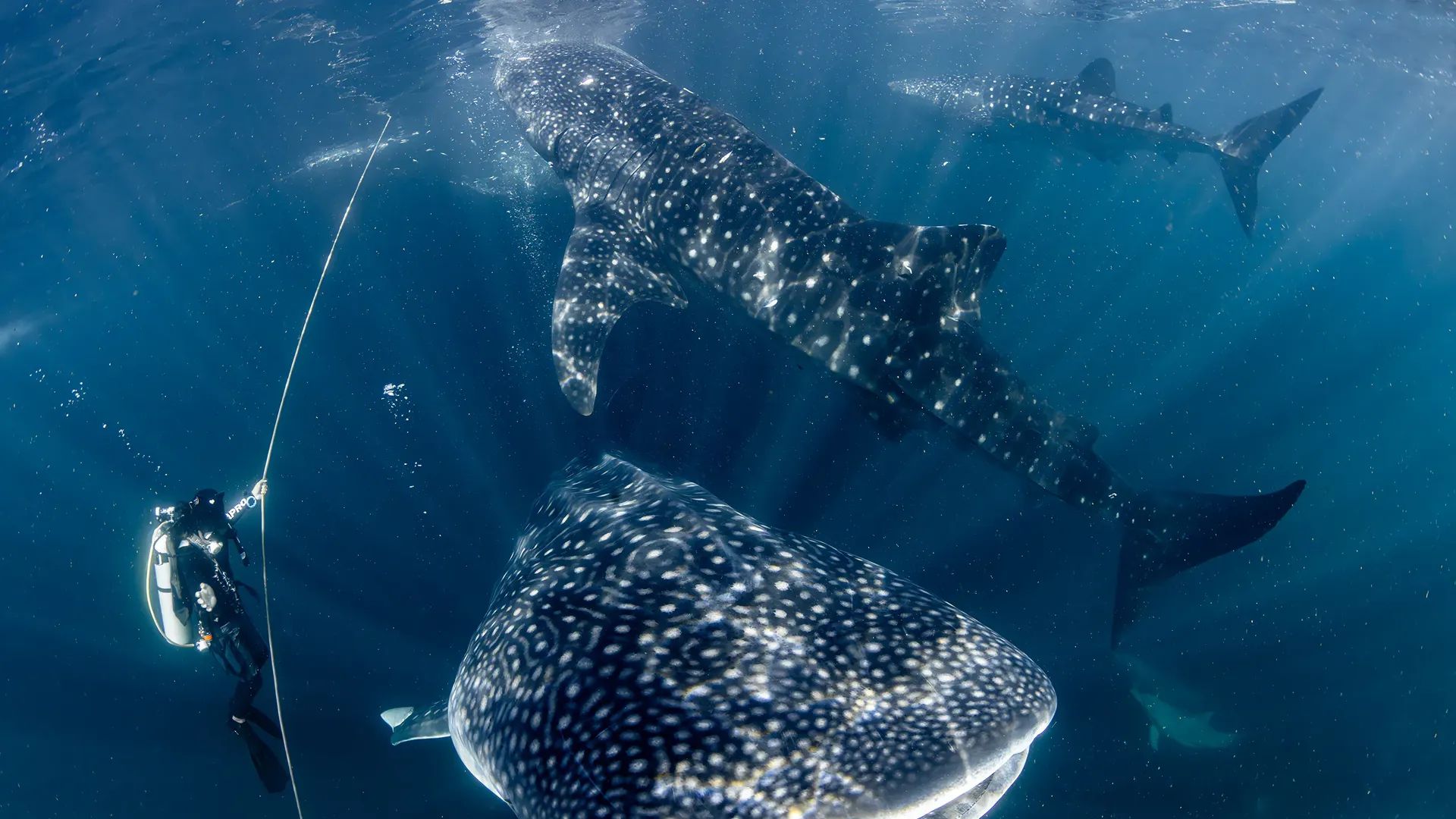
Indonesien ist eines der zuverlässigsten Länder der Welt für Walhai-Begegnungen, und der Grund dafür sind die Bagan – traditionelle Fischereiplattformen, die das ganze Jahr über ansässige Populationen anziehen. Forschungen im Bird's Head Seascape dokumentierten 268 einzelne Individuen in mehreren Teilregionen, wobei hohe Langzeit-Residenzraten bestätigen, dass es sich um etablierte lokale Populationen und nicht um saisonale Besucher handelt². Cenderawasih Bay und Triton Bay in West Papua beherbergen die am besten dokumentierten Populationen; die Saleh Bay in Sumbawa liegt auf der Route Bali–Komodo und bietet während der Trockenzeit (Mai–September) eine sehr zugängliche Bagan-Begegnung; Derawan-Inseln in der Talisayan Bay bieten eine abgelegene, aber gut dokumentierte Begegnung für diejenigen, die die Reise auf sich nehmen; und Gorontalo in Nord-Sulawesi bietet landgestützte Begegnungen als Teil einer Nord-Sulawesi-Liveaboard-Route. Raja Ampat liefert ebenfalls gelegentliche Walhai-Sichtungen – für einen schnellen Überblick über die Reiseziele siehe die Zielseite Raja Ampat.
Walhaie sind an allen Bagan-Standorten für Schnorchler zugänglich – die Begegnungen finden an der Oberfläche und in fünf bis zehn Metern Tiefe statt. Für alles, was Sie zur Planung einer Reise benötigen, finden Sie in unserem Walhai-Leitfaden alle Reiseziele, Jahreszeiten und Erwartungen.
Mantarochen
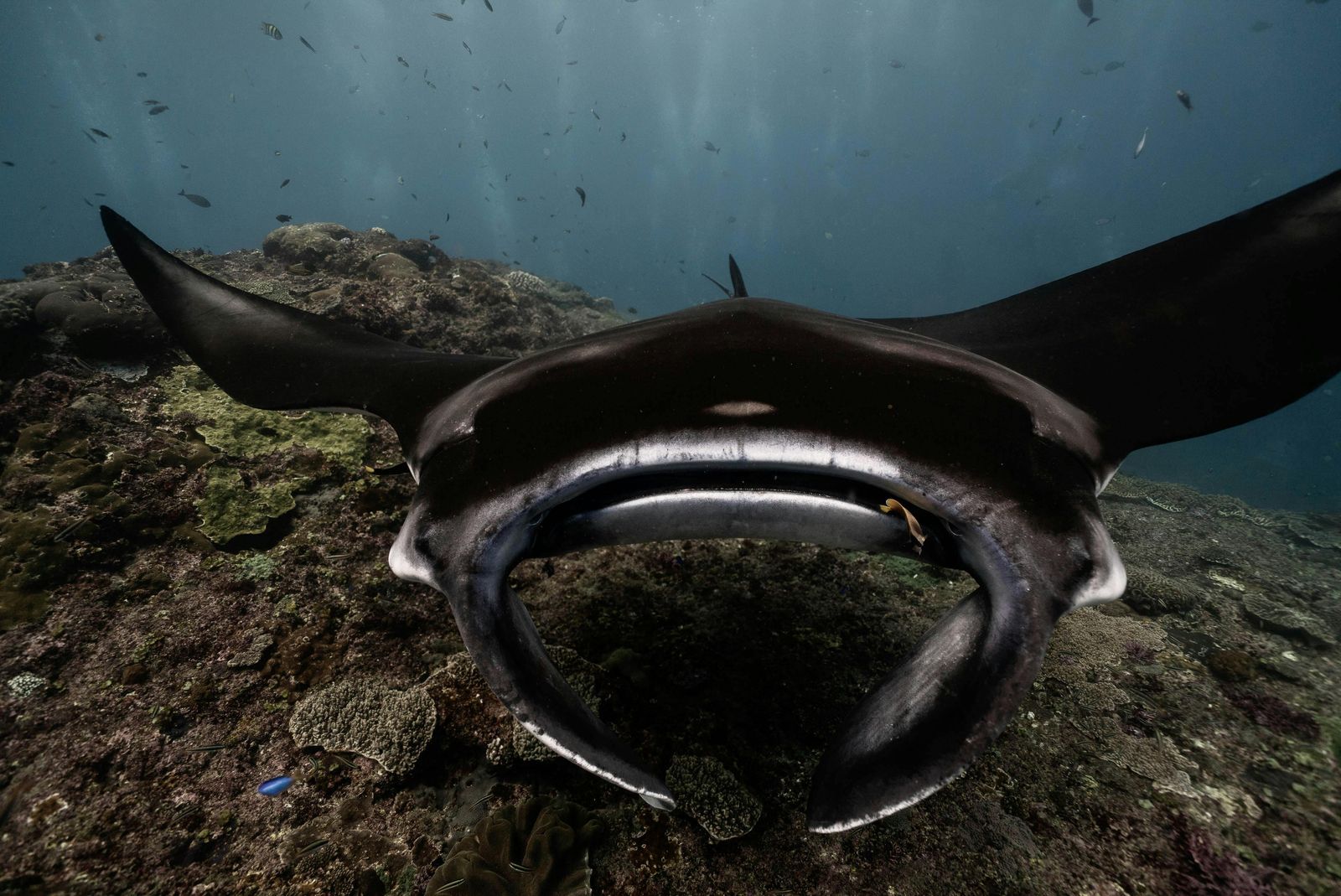
Indonesien beherbergt die weltweit größten dokumentierten Mantarochen-Populationen. Komodo-Nationalpark ist der am besten erforschte — ein fünfjähriges Forschungsprogramm identifizierte 1.085 individuelle Riff-Mantas an den Reinigungsstationen des Parks³, wobei Mantas das ganze Jahr über anzutreffen sind. Möchten Sie zunächst einen schnellen Überblick? Besuchen Sie die Komodo-Zielseite. Raja Ampat ist das Ziel für ozeanische Mantas, wobei Blue Magic in der Dampier-Straße der wichtigste Standort von Oktober bis April ist; das Misool-Reservat hat seit Beginn des Schutzes eine Verdopplung der Riff-Manta-Teilpopulation und einen 25-fachen Anstieg der Sichtungen ozeanischer Mantas verzeichnet⁴. Für einen schnellen Überblick besuchen Sie die Raja Ampat-Zielseite. Nusa Penida bei Bali hat 624 dokumentierte individuelle Riff-Mantas und bietet ganzjährige Begegnungen⁵.
Beide Mantarochen-Arten sind als bedrohte Arten auf der IUCN-Roten Liste eingestuft — Riff-Mantas als gefährdet, ozeanische Mantas als stark gefährdet⁶⁷. Indonesien hat den Mantarochen-Fang im Jahr 2014 verboten. Für vollständige Planungsdetails lesen Sie unseren Mantarochen-Ratgeber.
Hammerhaie
Bogenstirn-Hammerhaie (Sphyrna lewini, IUCN vom Aussterben bedroht)⁸ bilden tagsüber Ansammlungen an Seebergen und Unterwasserstrukturen — ein Verhalten, das im gesamten Indo-Pazifik dokumentiert ist⁹. In Indonesien ist die Banda-See das wichtigste Ziel — an Tauchplätzen rund um die Inseln Suanggi und Serua, Nil Desperandum (ein versunkenes Atoll) und anderen Seebergstrukturen in derselben geografischen Region. Oktober–November ist die Hauptsaison; März–April ein sekundäres Zeitfenster. Alor bietet eine sekundäre Möglichkeit von September bis November, wenn der kalte Auftrieb in der Pantar-Straße zunimmt.
Diese Begegnungen gehören zu den technisch anspruchsvollsten in Indonesien — Tiefen von 25–40 Metern an exponierten Tauchplätzen mit starken Strömungen. Advanced Open Water und Erfahrung beim Tauchen in Strömungen werden dringend empfohlen. Für vollständige Planungsdetails lesen Sie unseren Hammerhai-Ratgeber.
Meeresschildkröten
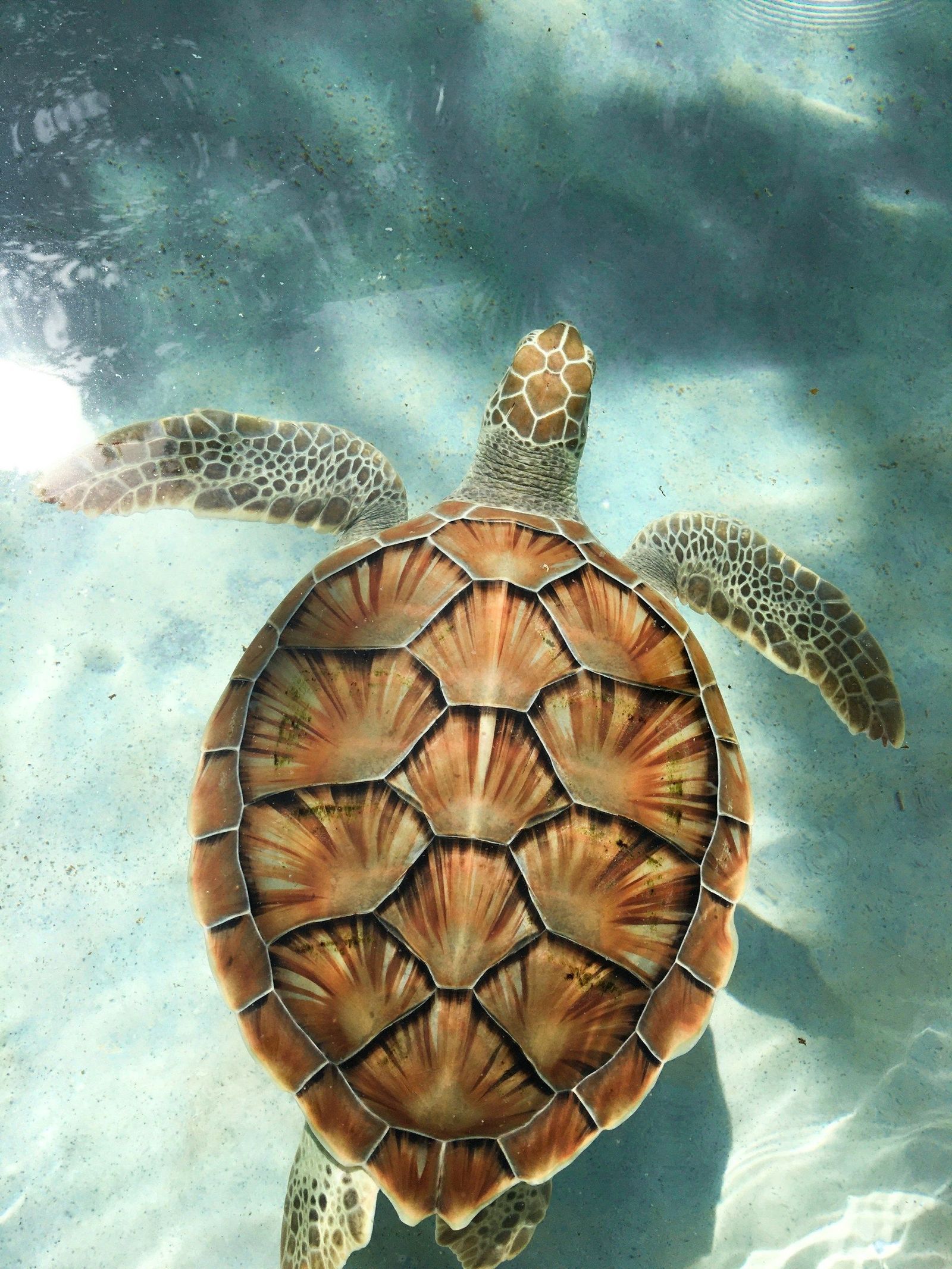
Sechs der sieben Meeresschildkrötenarten der Welt kommen in indonesischen Gewässern vor¹⁰. Grüne Meeresschildkröten und Echte Karettschildkröten begegnet man bei nahezu jedem Tauchgang im gesamten Archipel — in Raja Ampat, Komodo, der Banda-See, Alor und Halmahera. Die Derawan-Inseln sind das einzige Ziel, bei dem Meeresschildkröten die Hauptattraktion sind — Sangalaki beherbergt Südostasiens größte Nistpopulation der Grünen Meeresschildkröte mit etwa 15.000 Gelegen jährlich¹¹, und Tauchbetreiber berichten durchgehend von mehreren Schildkröten pro Tauchgang das ganze Jahr über.
Meeresschildkröten sind das zuverlässigste große Meerestier in Indonesien — beständiger als jede andere Art auf dieser Seite, ohne dass ein saisonales Zeitfenster erforderlich ist. Für vollständige Zieldetails lesen Sie unseren Meeresschildkröten-Ratgeber.
Mola Mola (Ocean Sunfish)
Mola Molas werden angetroffen, wenn kaltes Auftriebswasser tiefes Wasser an die Oberfläche bringt – die Temperatur ist der bestimmende Faktor und nicht die Jahreszeit an sich, obwohl dies zuverlässig Juli-Oktober bei Nusa Penida¹² und gelegentlich bei Komodo und Alor während desselben Kaltwasserfensters vorkommt. Den Rest des Jahres bleiben sie in tiefem Wasser, weitgehend unerreichbar. Bei Nusa Penida sind Crystal Bay und Blue Corner die Haupttauchplätze – Mola Molas steigen zu Putzerstationen auf, wo Kaiserfische und andere Riffische ihre Parasiten entfernen. Einzelne Mola Molas überschreiten regelmäßig 1.000 kg und machen sie zu einem der eindrucksvollsten Tiere, die ein Taucher je antreffen wird. Sie sind IUCN gefährdet¹³.
Es gibt keinen speziellen Mola Mola-Führer in unserem Cluster. Für die Logistik von Nusa Penida deckt unser Bali-Führer den Tagesausflugs-Zugang ab, und unser Leitfaden für Liveaboard-Erweiterungen deckt die Kombination mit einer breiteren Indonesienreise ab.
Riffhaie
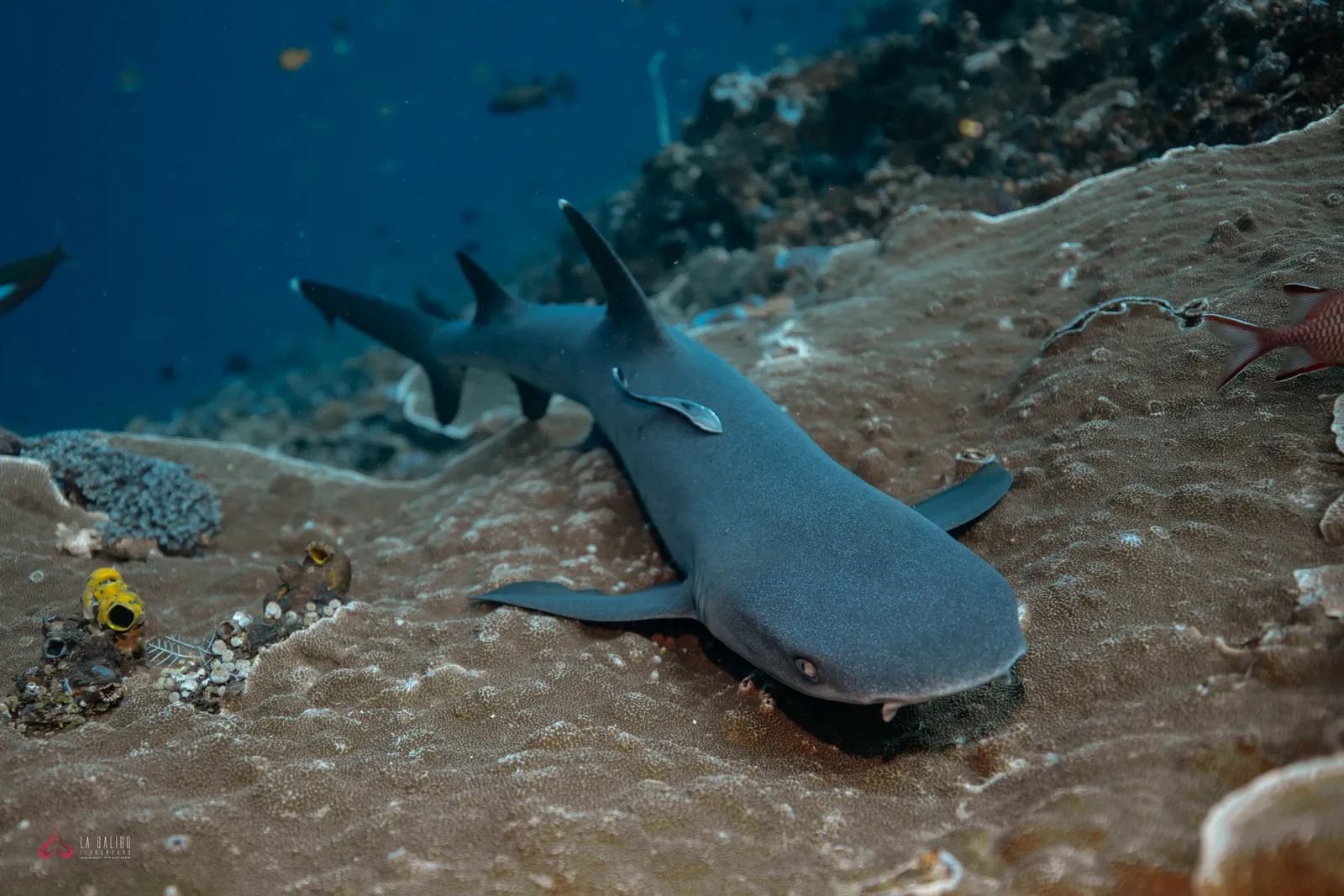
Riffhaie tauchen bei praktisch jedem Tauchgang in ganz Indonesien auf – Graue Riffhaie, Weißspitzen-Riffhaie, Schwarzspitzen-Riffhaie, Teppichhaie und die endemischen Geisterhaie (Hemiscyllium Arten) in mehreren Regionen. Ihre ständige Präsenz ist ein Zeichen für die Gesundheit des Ökosystems und ein echter Teil jedes indonesischen Liveaboard-Erlebnisses, anstatt eine Art, um die man sich speziell bemühen müsste. Raja Ampat wurde zum ersten Hai- und Rochenschutzgebiet Südostasiens¹⁴ ernannt, und das Schutzgebiet Misool hat seit Beginn des Schutzes eine Zunahme der Hai-Population um 190 % dokumentiert⁴ – beide sind lange genug in Betrieb, dass die Ergebnisse unter Wasser sichtbar sind: Der Grund, warum Hai-Begegnungen in Raja Ampat so konstant sind, liegt darin, dass der Schutz Zeit hatte, zu wirken.
White tip reef shark resting on coral reef during Indonesia liveaboard diving expedition - Picture by La Galigo Liveaboard
Schwarmfische
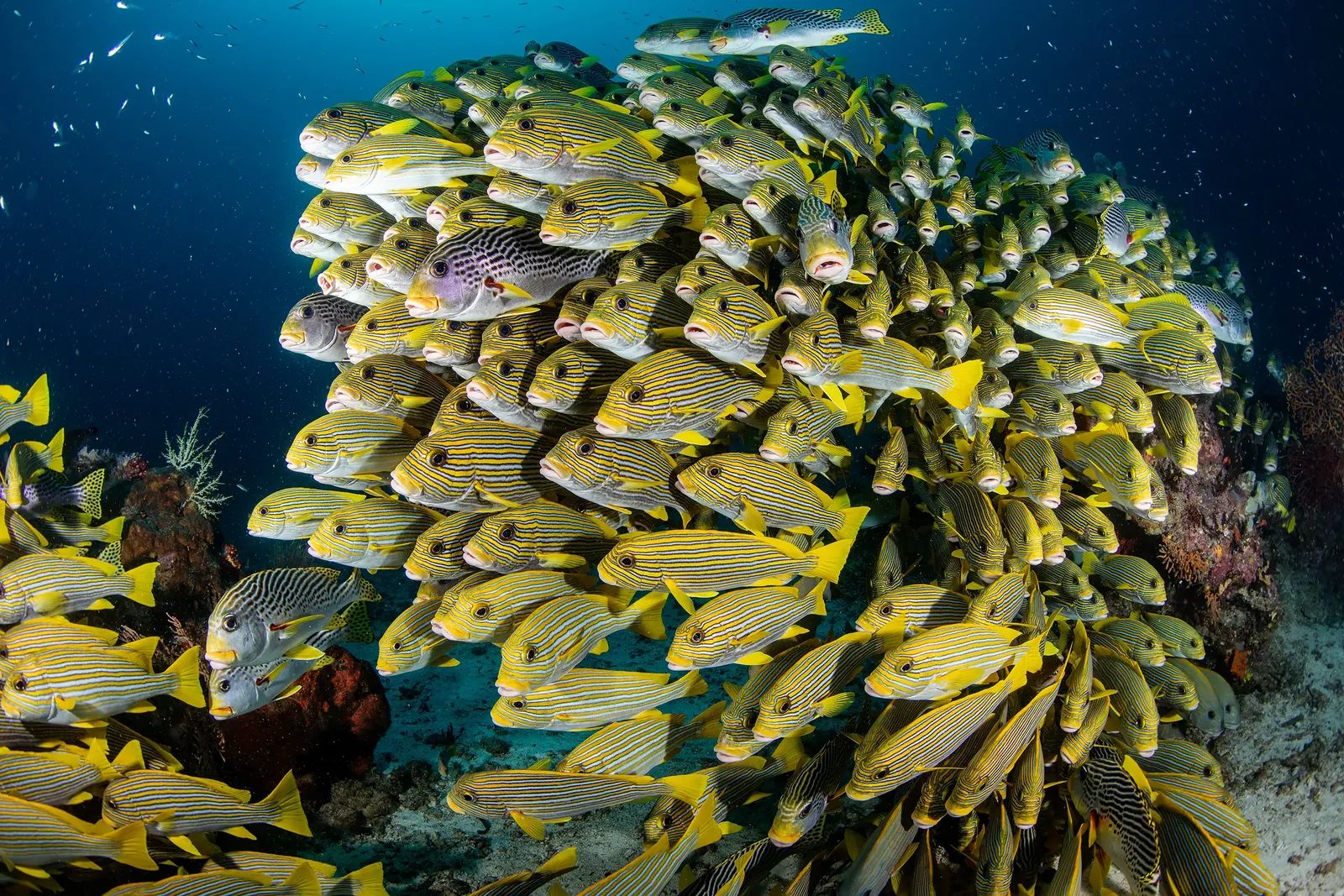
Große Schwärme von Barrakudas, Makrelenhechten, Thunfischen und Riesenzackenbarschen erscheinen in ganz Indonesien überall dort, wo strömungsreiche Strukturen die Köderfische konzentrieren. Komodos Batu Bolong, die Riffe der Banda-See, die Kanäle von Alor und viele Tauchplätze in Raja Ampat liefern regelmäßig spektakuläre Schwarmbegegnungen. Dies sind keine Arten, um die man sich bemühen muss – sie erscheinen an denselben strömungsreichen Stellen, die die Schlagzeilen der großen Meeresbegegnungen liefern, und sind somit Teil der Textur des indonesischen Tauchens und kein separates Ziel.
Dugongs
Alor ist die Heimat von Mawar – einem männlichen Dugong, der sich an ein bestimmtes Riffgebiet bindet und sich an lokale Boote gewöhnt hat, manchmal taucht er sogar auf Taucher zu. Begegnungen anderswo in Indonesien sind opportunistisch; Alor ist das einzige Reiseziel, an dem eine bestimmte Person zuverlässig anwesend ist und an dem Betreiber mit einiger Zuversicht mit einer Sichtung planen können. Dugongs sind auf Seegraswiesen angewiesen – wo immer flaches, klares, geschütztes Wasser das Wachstum von Seegras in ganz Indonesien ermöglicht, können Dugongs vorhanden sein.
Meeressäuger
Spinnerdelfine sind während Bootsüberfahrten in Raja Ampat häufig anzutreffen. Große Tümmler erscheinen häufig bei Oberflächenintervallen und Überfahrten in ganz Indonesien. Tiefere Überfahrten in der Bandasee bringen gelegentlich Sichtungen von Grindwalen und Pottwalen hervor. Dies sind Oberflächenbegegnungen und keine Tauchbegegnungen – sie geschehen zu ihren eigenen Bedingungen und können nicht geplant werden, aber sie sind ein fester Bestandteil jeder indonesischen Liveaboard-Erfahrung.
Whale shark swimming with tropical fish in Indonesian waters, ultimate liveaboard diving experience - Picture by Dewi Nusantara
Kontext des Naturschutzes
Indonesien hat eines der stärksten rechtlichen Rahmenwerke für den Schutz von Meerestieren in Südostasien aufgebaut – Walhaie und Mantarochen seit 2013 und 2014 vollständig geschützt, Haifischflossen verboten, Raja Ampat als erstes Hai- und Rochenschutzgebiet der Region ausgewiesen¹⁴. Diese letzte Ausweisung ist über den Papierkram hinaus wichtig: Die Begegnungen mit Riffhaien in Raja Ampat sind so konstant, wie sie sind, weil der Schutz lange genug bestand, um messbar zu wirken – die 190%ige Hai-Erholung⁴ im Misool Marine Reserve ist die dokumentierte Version dessen, was passiert, wenn ein lebendes Ökosystem Zeit hat, sich zu erholen.
Die Lücke zwischen Gesetzgebung und Realität auf dem Wasser ist ebenfalls real. Die Durchsetzung des Meeresschutzes über 17.508 Inseln¹ mit begrenzten Patrouillenbudgets ist wirklich schwierig – investigative Berichte haben dokumentiert, dass der illegale Hai- und Rochenhandel weiterhin im großen Stil betrieben wird, mit Überwachungslücken, die eine konsequente Durchsetzung fast unmöglich machen¹⁵. Aber die wichtigere Geschichte handelt nicht von Wildtierhändlern und Schmugglern – sie handelt von Kleinbauern mit wenigen wirtschaftlichen Alternativen, die mit kleinen Booten rausfahren, weil sie ihre Familien ernähren müssen. Eine Fischergemeinschaft, die mehr von einem lebenden Walhai, der jedes Jahr Taucher zurückbringt, verdient als vom einmaligen Verkauf, hat einen direkten, persönlichen Grund, ihn zu schützen. Dieser Wandel geschieht nicht allein durch Gesetzgebung – er erfordert Tourismuseinnahmen, Gebühren für Meeresschutzgebiete und lokale Beschäftigung, die in Gemeinschaften fließen, von denen verlangt wird, etwas aufzugeben.
Wo der Tauchtourismus direkte wirtschaftliche Werte für lokale Gemeinschaften schafft – und das funktioniert in Raja Ampat, Komodo, Misool, Derawan, Cenderawasih Bay und anderen etablierten Zielen –, ist das lebende Tier für die Menschen, die daneben leben, mehr wert als das tote. Dafür zahlen die Naturschutzgebühren. Deshalb ist die Wahl verantwortungsbewusster Betreiber, die ihre Gebühren zahlen, lokale Führer einstellen und die Infrastruktur von Meeresschutzgebieten unterstützen, über den einzelnen Ausflug hinaus wichtig.
Manta ray closeup facing camera during Indonesia liveaboard diving showing detailed manta ray features and markings
Erwartungen managen
Es gibt keine Garantie für Begegnungen mit wilden Meerestieren. Die ansässigen Populationen an Bagan-Standorten, Reinigungsstationen und etablierten Aggregationsgebieten machen Indonesien zuverlässiger als die meisten Reiseziele der Welt – aber Bedingungen wie Strömung, Temperatur, Planktondichte und Wetter beeinflussen, ob Tiere an einem bestimmten Tag zugänglich sind.
Ein guter Betreiber mit fundierten lokalen Kenntnissen passt sich täglich an. Die Kombination aus erfahrenen Führern und flexiblen Reiserouten führt zu Ergebnissen – nicht ein einzelnes Versprechen eines Standorts. Wenn ein Standort unproduktiv ist, gibt es fast immer eine Alternative in Reichweite.
Die meisten großen Begegnungen mit Meerestieren in Indonesien sind sowohl für Schnorchler als auch für Taucher zugänglich. Walhaie an Bagan-Standorten, Mantarochen an Reinigungsstationen und während der Oberflächenfütterung, Meeresschildkröten und Mondfische an Reinigungsstationen sind alle von der Oberfläche aus zugänglich. Wenn Sie Nicht-Taucher-Begleiter mitbringen, ist Indonesien eines der besten Reiseziele der Welt, um sie sinnvoll einzubeziehen.
Green sea turtle swimming underwater Indonesia liveaboard marine wildlife diving
Häufig gestellte Fragen
Welche Art ist für einen Ersttaucher in Indonesien am einfachsten zu begegnen?
Meeresschildkröten sind bei praktisch jedem Tauchgang an jedem Zielort ohne saisonales Fenster oder spezielles Programm anzutreffen. Mantarochen bei Komodo und Nusa Penida folgen dicht – ganzjährige Begegnungen an etablierten Reinigungsstationen, die für Open-Water-Taucher zugänglich sind. Walhaie an Bagan-Standorten sind ebenfalls sehr gut zugänglich und für Schnorchler geeignet. Hammerhaie sind am anspruchsvollsten und erfordern sowohl fortgeschrittene Taucherfahrung als auch sorgfältige saisonale Planung.
Benötige ich Advanced Open Water für Begegnungen mit großen Meerestieren?
Nicht unbedingt – aber für einige Arten und Standorte wird es dringend empfohlen. Meeresschildkröten, Mantarochen an den meisten Reinigungsstationen und Walhaie an Bagan-Plattformen sind für Open-Water-Taucher und Schnorchler zugänglich. Die technisch anspruchsvolleren Standorte – Hammerhai-Ansammlungen an den Tiefseebergen der Banda-See, Blue Magic in Raja Ampat – profitieren erheblich von Advanced Open Water und aktueller Taucherfahrung. Unser Leitfaden für Anfänger-Liveaboards deckt die Zertifizierungsanforderungen nach Reiseziel im Detail ab.
Was ist der beste Monat für Begegnungen mit großen Meerestieren in Indonesien?
Oktober. Die Hammerhai-Saison in der Banda-See ist auf ihrem Höhepunkt, die Manta-Saison in Raja Ampat beginnt, Hammerhaie in Alor sind im Kaltwasser-Aufstromfenster und Meeresschildkröten sind wie immer überall präsent. Dennoch gibt es jeden Monat von April bis November mindestens zwei bis drei Reiseziele, die gleichzeitig für mindestens eine charakteristische Art gut performen.
Benötige ich eine Tauchversicherung für Liveaboard-Tauchgänge in Indonesien?
Ja. Eine Tauchversicherung mit medizinischer Evakuierungsdeckung ist nach indonesischem Recht zwingend vorgeschrieben und für abgelegene Reiseziele nicht verhandelbar. Standard-Reiseversicherungen schließen oft die Evakuierung aus abgelegenen Gebieten aus – überprüfen Sie, ob Ihre Police Indonesien und die Bergung von abgelegenen Standorten ausdrücklich abdeckt. Unser Packratgeber für Liveaboards behandelt Versicherung und Vorbereitung im Detail.
Können Nicht-Taucher an einer indonesischen Liveaboard-Tour teilnehmen?
Ja – und Indonesien eignet sich gut für gemischte Gruppen. Walhaie an Bagan-Plattformen, Mantarochen beim Oberflächenfressen und Meeresschildkröten, die auf Seegras grasen, sind alle für Schnorchler zugänglich. Abgesehen von den charakteristischen Arten sind die flachen Riffe Indonesiens reichhaltig und visuell lohnend – viele Fische, gesunde Korallen und Farbe, auch ohne tiefer als zehn Meter zu tauchen. Die meisten Mittelklasse- und Luxus-Liveaboards nehmen Nicht-Tauchgäste auf. Unser Kategorie-Leitfaden für Liveaboards erklärt, welche Schiffstypen sich am besten für gemischte Gruppen eignen.
Ist Indonesien gut für Unterwasserfotografie von Großfischen?
Ja – die verlängerten Begegnungszeiten zeichnen es aus. Mantarochen an Putzerstationen kreisen wiederholt und nähern sich eng; Walhaie an Bagan-Standorten halten Position für 45–90 Minuten; Meeresschildkröten bei Derawan sind vollständig habituiert. Die Sichtweite von 20–35 m an den meisten Hauptstandorten ist gut. Die größte Herausforderung sind die Strömungen – die besten Standorte beinhalten fließendes Wasser, das eine solide Tarierung erfordert, bevor man sich auf das Fotografieren konzentrieren kann. Weitwinkelobjektive dominieren für die charakteristischen Arten auf dieser Seite.
Wie viel kostet ein Liveaboard in Indonesien?
Das variiert erheblich je nach Schiffstyp, Reiseziel und Reisedauer – Indonesien bietet Optionen im gesamten Spektrum von Budget bis Luxus. Unser Kategorie-Leitfaden für Liveaboards erklärt, was jede Stufe beinhaltet und wie man den Schiffstyp an die Art der gewünschten Reise anpasst.
Sind die Strömungen in Indonesien stark?
Es hängt vom Ziel und dem Tauchplatz ab – und die Bedingungen können sich an ein und demselben Platz am selben Tag mit der Gezeit erheblich verändern. Als Faustregel gilt: Strömung ist genau das, was das Meeresleben anzieht: Die Nährstoffe, das Plankton und die Artenvielfalt, die Indonesien so außergewöhnlich machen, sind ein direktes Ergebnis der starken Wasserbewegung durch den Archipel. Gute Anbieter kennen ihre Tauchplätze und passen die Tauchgänge an die Bedingungen an – das ist eines der stärksten Argumente für die Wahl einer erfahrenen lokalen Crew. Die meisten Begegnungen mit großen Meerestieren sind bei mäßiger Strömung möglich; die Hammerhai-Tauchplätze in der Banda-See sind die wichtigste Ausnahme, bei der echte Erfahrung im Strömungstauchen erforderlich ist.
Large school of oriental sweetlips aggregating on reef, abundant marine life on Raja Ampat liveaboard dive sites Indonesia
Reise planen
Coralbound bucht Liveaboards für alle Indonesien-Ziele zum gleichen Preis, den Sie bei einer Direktbuchung zahlen würden, einschließlich der Option einer kostenlosen Hotelübernachtung. Wir wissen, welche Reiserouten bei den von Ihnen priorisierten Arten zuverlässig liefern, welche Monate zu Ihrem Zeitplan passen und wie man Ziele kombiniert, ohne bei einem der beiden Abstriche zu machen. Erreichen Sie uns auf WhatsApp oder über das Kontaktformular – oder lesen Sie mehr darüber, wie wir arbeiten bevor Sie Kontakt aufnehmen.