Pack once, pack right. Remote Indonesia has no dive shops around the corner.
Indonesian liveaboards depart from ports across the archipelago — and outside of Bali and Labuan Bajo, replacing forgotten gear once you're on the road is difficult to impossible. This guide covers everything you need for an Indonesia liveaboard trip: diving equipment, clothing, electronics, health essentials, and a few things most packing lists miss. It's part of our complete Indonesia liveaboard guide, which covers destinations, operators, and planning in full. If you're still deciding whether Indonesia is the right destination, see why choose Indonesia first.
The goal is to pack smart, not heavy. Domestic flights in Indonesia have baggage limits that vary significantly by airline — check your specific carriers when booking and factor in that you may be on multiple domestic legs. If you're planning pre- or post-trip time in Bali or elsewhere, see our Indonesia liveaboard extensions guide for what to expect at each port.
Quick Facts
- Best season: varies by region — see our Indonesia weather patterns guide
- Water temperature: 24–30°C depending on region and season
- Visibility: 20–30m+ typical; lower in some bay and macro sites
- Experience level: Open Water minimum; equipment needs vary by destination
- Who can join: divers, snorkellers, and non-divers — pack accordingly
- Power: European Type C/E/F plugs, 220V
- Key packing note: reef-safe sunscreen, closed shoes for hikes, SMB mandatory
Quick Answers
Do I need to bring all my own diving equipment?
No. Most operators provide or rent BCD, regulator, wetsuit, and tanks. What you should always bring is your own mask — fit is everything and rental masks are unreliable — and your own dive computer if you have one. Everything else can be rented, though quality varies by boat.
What wetsuit thickness do I need for Indonesia?
It depends on where you're diving. Raja Ampat and Cenderawasih Bay run warm (28–30°C) and a 3mm is comfortable for most divers. Komodo drops significantly with upwellings — a 5mm is the right call. The Banda Sea and Alor sit in between; a 3–5mm depending on your cold tolerance. When in doubt, bring the thicker option and dive in less if you're warm.
Ist riff-sicheres Sonnencreme in Indonesien erhältlich?
Es ist in Bali und größeren Städten erhältlich, aber anderswo unzuverlässig. Bringen Sie genug von zu Hause mit. Standard-Sonnencremes mit Oxybenzon und Octinoxat verursachen Korallenbleiche¹ — mineralbasierte Sonnencremes mit Zinkoxid sind der Standard für verantwortungsvolles Tauchen überall im Korallendreieck³ ⁴. Viele Betreiber verlangen jetzt riff-sichere Sonnencreme und bitten Sie, an Bord keine chemischen Sonnencremes zu verwenden⁵ ⁶.
Brauche ich eine Oberflächenmarkierungsboje?
Ja. Eine SMB ist auf den meisten indonesischen Liveaboards obligatorisch und eine nicht verhandelbare Sicherheitsausrüstung für jedes Freiwassertauchen. Bringen Sie Ihre eigene mit — eine leuchtend farbige, richtig aufblasbare SMB mit einer Rolle. Verlassen Sie sich nicht darauf, dass das Boot eine zur Verfügung stellt.
Welche Kleidung brauche ich für ein Liveaboard in Indonesien?
Weniger als Sie denken zum Tauchen, mehr als Sie denken für Abende und kulturelle Stopps. Schnell trocknende Badebekleidung, Rashguards und leichte Kleidung für das Boot. Für Dorfbesuche — die Teil der meisten Reiserouten sind — bringen Sie Kleidung mit, die Knie und Schultern bedeckt. Indonesien ist überwiegend muslimisch und bescheidene Kleidung für Gemeinschaftsbesuche ist sowohl respektvoll als auch erwartet.
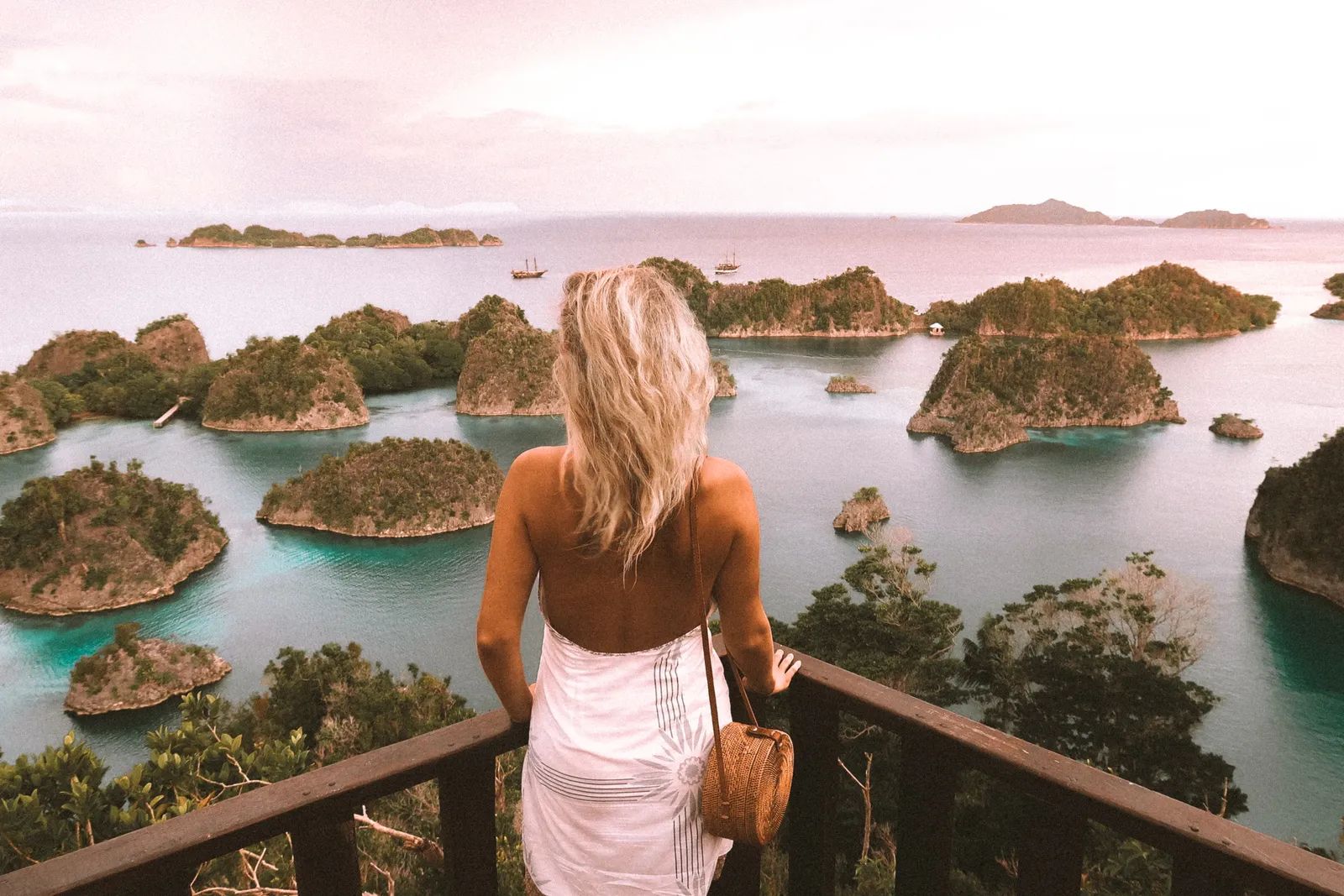
Panoramic sunrise view over famous Pianemo lagoon with mushroom-shaped limestone islands and traditional boats in Raja Ampat - Picture by Calico Jack Cruises
Tauchausrüstung
Das Wesentliche
Maske: Bringen Sie immer Ihre eigene mit. Die Passform ist für den Komfort unter Wasser wichtiger als alles andere, und wenn Sie eine Brille mit Sehstärke benötigen, funktionieren Leihmasken überhaupt nicht. Dies ist das einzige Ausrüstungsstück, das nicht ersetzt werden kann.
Neoprenanzug: Siehe die regionale Anleitung unten. Bringen Sie die richtige Dicke für Ihre Reiseziele mit – und wenn Sie schnell frieren, sollten Sie eine Thermounterwäsche (Lavacore oder Sharkskin sind beide gut) in Betracht ziehen, die Wärme ohne Auftragen hinzufügt und schnell trocknet.
Flossen: Wenn Sie Flossen haben, die passen und gut zu transportieren sind, bringen Sie diese mit. Wenn nicht, sind Leihflossen im Allgemeinen ausreichend und sparen erhebliches Gepäckgewicht.
Jacket und Lungenautomat: Die meisten Taucher mieten diese auf dem Boot. Wenn Sie ein regelmäßiger Taucher mit eigener Ausrüstung sind, gibt Ihnen das Mitbringen Ihres eigenen Lungenautomaten Zuverlässigkeit und Vertrautheit. Ein Reise-Jacket ist eine Überlegung wert, wenn Sie häufig tauchen.
Tauchcomputer: Bringen Sie Ihren eigenen mit, wenn Sie einen haben. Leihcomputer auf indonesischen Liveaboards sind oft nicht in der Standardausrüstungsmiete enthalten – daher summieren sich die täglichen Mietkosten schnell. Einsteiger-Tauchcomputer sind preiswert, halten jahrelang und – was wichtig ist – Sie wissen, wie Sie Ihren ablesen. Wenn Sie keine Dekompressionsgrenzen über drei oder vier Tauchgänge pro Tag verwalten, ist diese Vertrautheit wichtig.
SMB und Spool: Obligatorisch. Helle Farbe, richtiger Aufblasmechanismus, lange genug Leine für die Tiefen, in denen Sie tauchen werden.
Riffhaken: Nützlich, aber nicht unbedingt erforderlich. Riffhaken ermöglichen es Ihnen, die Position im Strom zu halten, ohne das Riff zu berühren – hilfreich an Mantarochen-Reinigungsstationen und an Standorten mit starker Strömung. Ein zweizinkiges Design bietet besseren Halt. Viele Boote stellen sie zur Verfügung oder vermieten sie; es lohnt sich, einen eigenen zu haben, wenn Sie regelmäßig an Strömungsplätzen tauchen. Sie sind preiswert und halten unbegrenzt.
Lampe/Tauchlicht: Für Nachttauchgänge und zum Hineinschauen in Spalten während des Tages. Eine kleine Hauptlampe und eine Ersatzlampe sind es wert, eingepackt zu werden.
Pfeife und/oder Signalspiegel: Oberflächensignalgeräte zusätzlich zu Ihrem SMB. Preiswert und nehmen keinen Platz ein.
Regionale Neoprenanzug-Anleitung
Raja Ampat und Cenderawasih-Bucht
Wassertemperatur: 28–30°C. Ein 3-mm-Anzug ist für die meisten Taucher bequem. Kälteempfindliche Taucher möchten vielleicht eine dünne Unterlage für längere Tauchgänge.
Komodo-Nationalpark
Wassertemperatur: 24–28°C mit plötzlichen Aufwärtsströmungen. Ein 5-mm-Anzug ist die richtige Wahl – die Temperaturschwankungen sind erheblich und Sie werden sie bemerken. Einige Taucher bringen für die kälteren Stellen eine Haube mit.
Banda-See und Alor
Wassertemperatur: 26–28°C. Ein 3–5-mm-Anzug, je nach persönlicher Kältetoleranz und ob Ihre Route Seamount-Tauchgänge beinhaltet, bei denen die Temperaturen in der Tiefe sinken.
Halmahera und Derawan-Inseln
Wassertemperatur: 27–29°C. Ein 3-mm-Anzug ist im Allgemeinen ausreichend.
Bali und Nusa Penida
Wassertemperatur: 20–28°C je nach Jahreszeit und Ort. Die kalten Aufwärtsströmungen von Nusa Penida (Juli–Oktober) können dramatisch sinken – bringen Sie einen 5-mm-Anzug mit, wenn Sie in der Mola-Mola-Saison dort sind.
Thermische Accessoires: Eine Kopfhaube macht den größten Unterschied für die Wärme – Ihr Kopf verliert überproportional viel Wärme im Wasser⁷, und eine gut sitzende Kopfhaube reduziert auch das Eindringen von Wasser am Halsabschluss. Handschuhe helfen an kälteren Orten erheblich; dünnere Handschuhe sind besser als keine, und Fünf-Finger-Modelle erhalten mehr Geschicklichkeit als Fäustlinge für die Bedienung von Kameras und Computern. Thermounterwäsche – eng anliegende Shirts oder Leggings von Marken wie Lavacore oder Sharkskin – sind es wert, erwähnt zu werden. Sie sind neutral-positiv, trocknen schnell, wärmen gut und erleichtern das Anziehen eines Neoprenanzugs. Die Kombination eines dünneren Neoprenanzugs mit einer guten Thermounterwäsche funktioniert oft besser als ein dickerer Anzug allein und ist im Wasser weniger einschränkend.
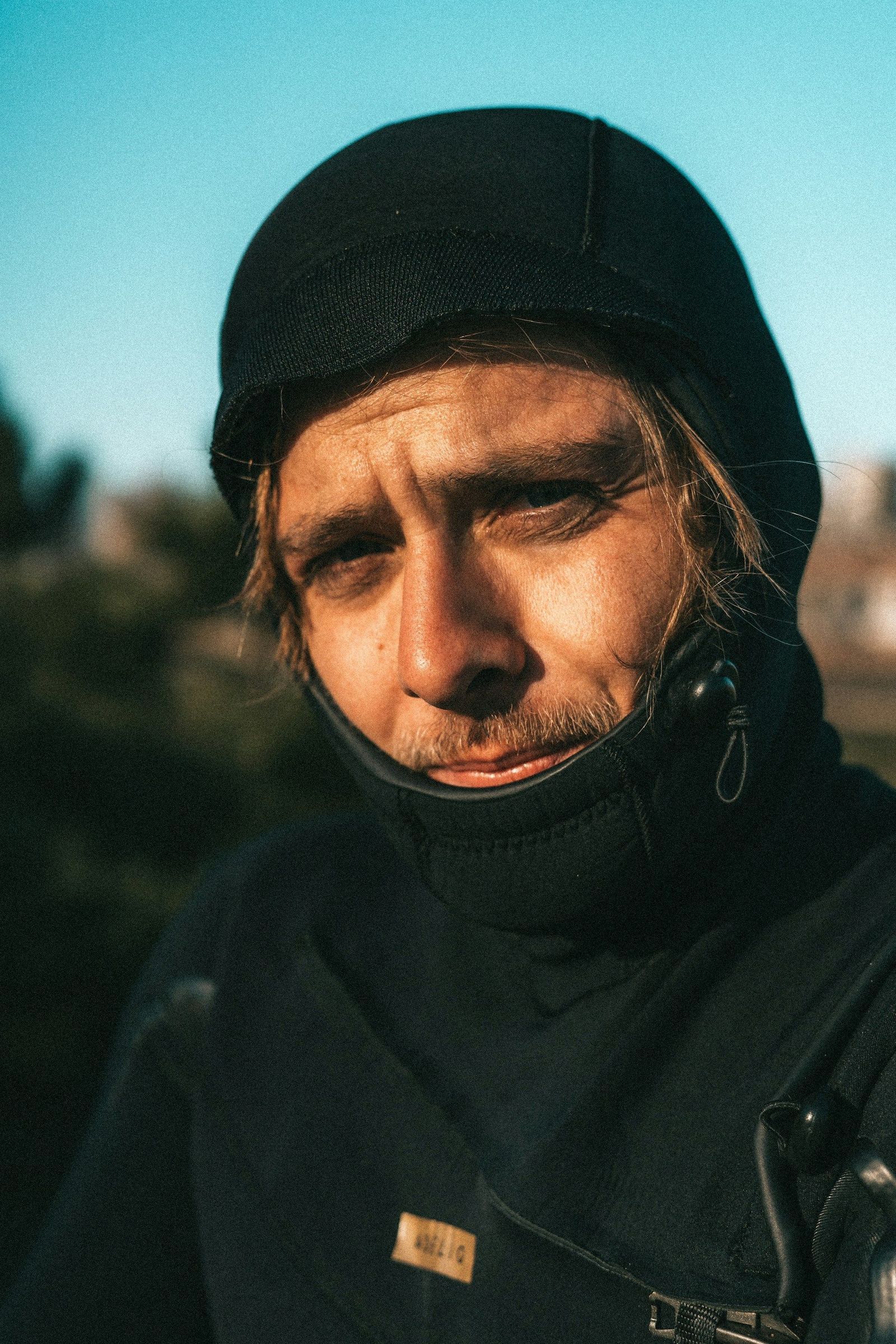
Scuba diver portrait wetsuit Indonesia liveaboard diving adventure professional equipment
Kleidung und persönliche Gegenstände
An Bord
- Mehrere Badeanzug-Sets – Sie werden sie zwischen den Tauchgängen schnell durchwechseln
- Rashguards zum Sonnenschutz während der Oberflächenpausen
- Schnell trocknende Shorts und leichte Hemden
- Eine dünne Schicht für klimatisierte Innenräume und kühlere Abende auf See
- Geschlossene Schuhe oder Turnschuhe für Inselwanderungen und Ausflüge in Dörfer – einige Liveaboard-Ausflüge (Kali Biru in Raja Ampat, Padar Island in Komodo) beinhalten Spaziergänge auf unebenem Gelände
Für kulturelle Stopps
Die meisten Liveaboard-Reisepläne beinhalten Besuche von Dörfern oder Stopps in Städten. Bringen Sie mindestens ein Outfit mit, das Knie und Schultern bedeckt. Dies gilt für Männer und Frauen gleichermaßen. Es ist eine Kleinigkeit, die einen erheblichen Unterschied macht, wie Sie empfangen werden.
Riff-sichere Sonnencreme
Bringen Sie genug von zu Hause für die gesamte Reise mit. Nur mineralbasierte Formeln mit Zinkoxid. Vor dem Betreten des Wassers auftragen und nach den Oberflächenpausen erneut auftragen. Dies ist nicht nur eine Umweltpräferenz – viele Betreiber verlangen es inzwischen und werden Sie bitten, an Bord keine chemischen Sonnenschutzmittel zu verwenden.
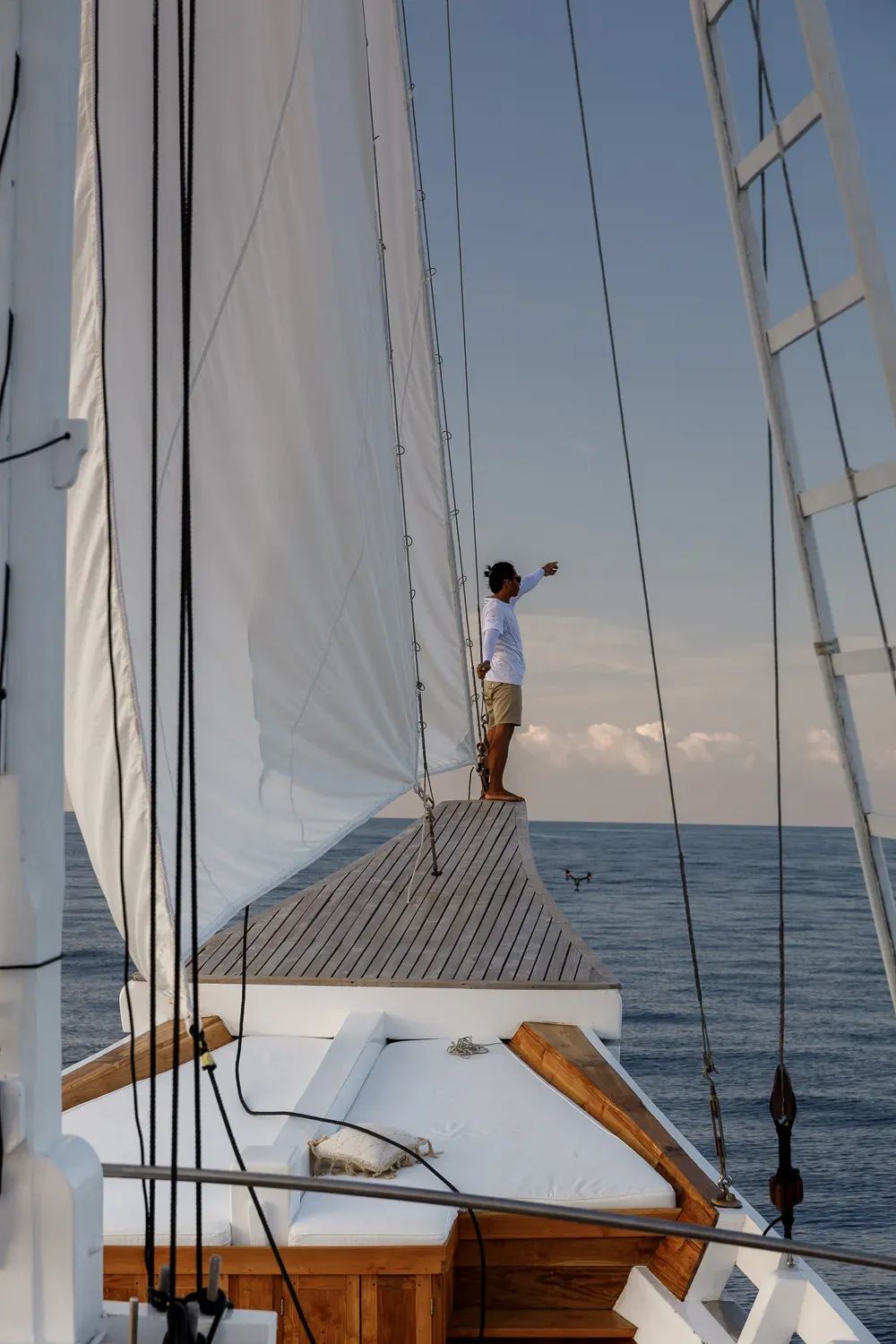
Crew member pointing from traditional sailing yacht bow with white sails against ocean horizon and cloudy sky - Picture by Aliikai Voyages
Gesundheit und Medizin
Verschreibungspflichtige Medikamente
Packen Sie mehr ein, als Sie denken, dass Sie brauchen – mindestens 50 % extra – und bewahren Sie sie in den Originalbehältern mit Etikett im Handgepäck auf. Entlegene indonesische Reiseziele haben extrem eingeschränkten Zugang zu Apotheken. Wenn Ihr Medikament gekühlt werden muss, besprechen Sie dies vor der Buchung mit dem Betreiber.
Seekrankheit
Nächtliche Überfahrten sind Teil der meisten indonesischen Liveaboard-Reiserouten und die See kann rau sein. Pflaster, Antihistaminika und Ingwer sind für verschiedene Menschen wirksam. Wenn Sie anfällig für Seekrankheit sind, beginnen Sie die Einnahme von Medikamenten, bevor Sie an Bord gehen, anstatt zu warten, bis Sie sich krank fühlen. Die meisten Menschen gewöhnen sich innerhalb von ein oder zwei Tagen daran.
Tauchversicherung
Pflicht auf allen seriösen indonesischen Liveaboards. Die Tauchversicherung muss die Behandlung in der Druckkammer und die medizinische Evakuierung abdecken – die Evakuierung aus abgelegenen indonesischen Regionen ist teuer und die Logistik ist komplex. DAN (Divers Alert Network) ist der am weitesten verbreitete Anbieter. Prüfen Sie deren aktuelle Deckungsempfehlungen für indonesische Gewässer. Eine umfassende Reiseversicherung, die Reiserücktritt und -verzögerungen abdeckt, wird zusätzlich zur tauchspezifischen Deckung dringend empfohlen. Wenn dies Ihr erstes Liveaboard ist, lesen Sie unseren Leitfaden für Anfänger für weitere Informationen zu Versicherung und Vorbereitung.
Damenhygieneprodukte
Schwer zu finden in abgelegenen Gebieten und oft begrenzt in der Auswahl. Packen Sie einen vollen Vorrat für Ihre Reise ein. Menstruationstassen sind für längere Liveaboard-Reisen eine Überlegung wert – sie sind praktisch, reduzieren Abfall in der Meeresumwelt und eliminieren Nachschubprobleme vollständig.
Three smiling local Indonesian children waving from traditional village setting surrounded by tropical vegetation in West Papua - Picture by Neptune Liveaboards
Elektronik und Strom
Strom in Indonesien
Typ C/E/F europäische Stecker, 220V. Bringen Sie einen Universaladapter mit, falls Ihre Geräte andere Stecker verwenden. Die meisten Mittelklasse- und Luxusboote verfügen über mehrere Ladepunkte am oder in der Nähe des Tauchdecks für Kameras, Computer und Lichter – erkundigen Sie sich bei Ihrem Betreiber, ob der Stromzugang für Ihr Setup wichtig ist.
Kameraausrüstung
Indonesien ist eines der größten Unterwasserfotografie-Ziele der Welt. Wenn Sie ein Kamerasystem mitbringen, bringen Sie auch mit:
- Alle notwendigen Ladegeräte und Akkus – bringen Sie mehr Akkus mit, als Sie denken
- Speicherkarten mit beträchtlicher Kapazität
- Ein Trockentuch nur für Kameraausrüstung
- Alle speziellen Filter, Objektive oder Blitzkabel, die Sie verwenden
Die meisten Mittelklasse- und gehobenen Boote verfügen über spezielle Kameratische und Spültanks. Erkundigen Sie sich, ob ein Kameraraum mit Lademöglichkeiten vorhanden ist, wenn Sie mit ernsthafter Ausrüstung reisen – siehe unseren Leitfaden zur Kategorie der Liveaboards in Indonesien , um zu erfahren, was Sie bei jedem Preispunkt erwarten können.
Konnektivität
Immer mehr indonesische Liveaboards bieten mittlerweile Starlink-Satelliteninternet an, das Echtzeitkommunikation von abgelegenen Zielen ermöglicht. Abdeckung und Zuverlässigkeit variieren je nach Boot und Standort. Wenn Ihnen eine ständige Verbindung wichtig ist, fragen Sie Ihren Betreiber direkt vor der Abreise, anstatt davon auszugehen, dass sie verfügbar sein wird.
Andere Elektronik
- Universelle Powerbank für Geräte, die nicht am Tauchdeck geladen werden
- Ersatzakkus für Ihren Tauchcomputer und Ihre Lampe
- Kindle oder Tablet mit Lesematerial – Oberflächenintervalle sind lang und friedlich
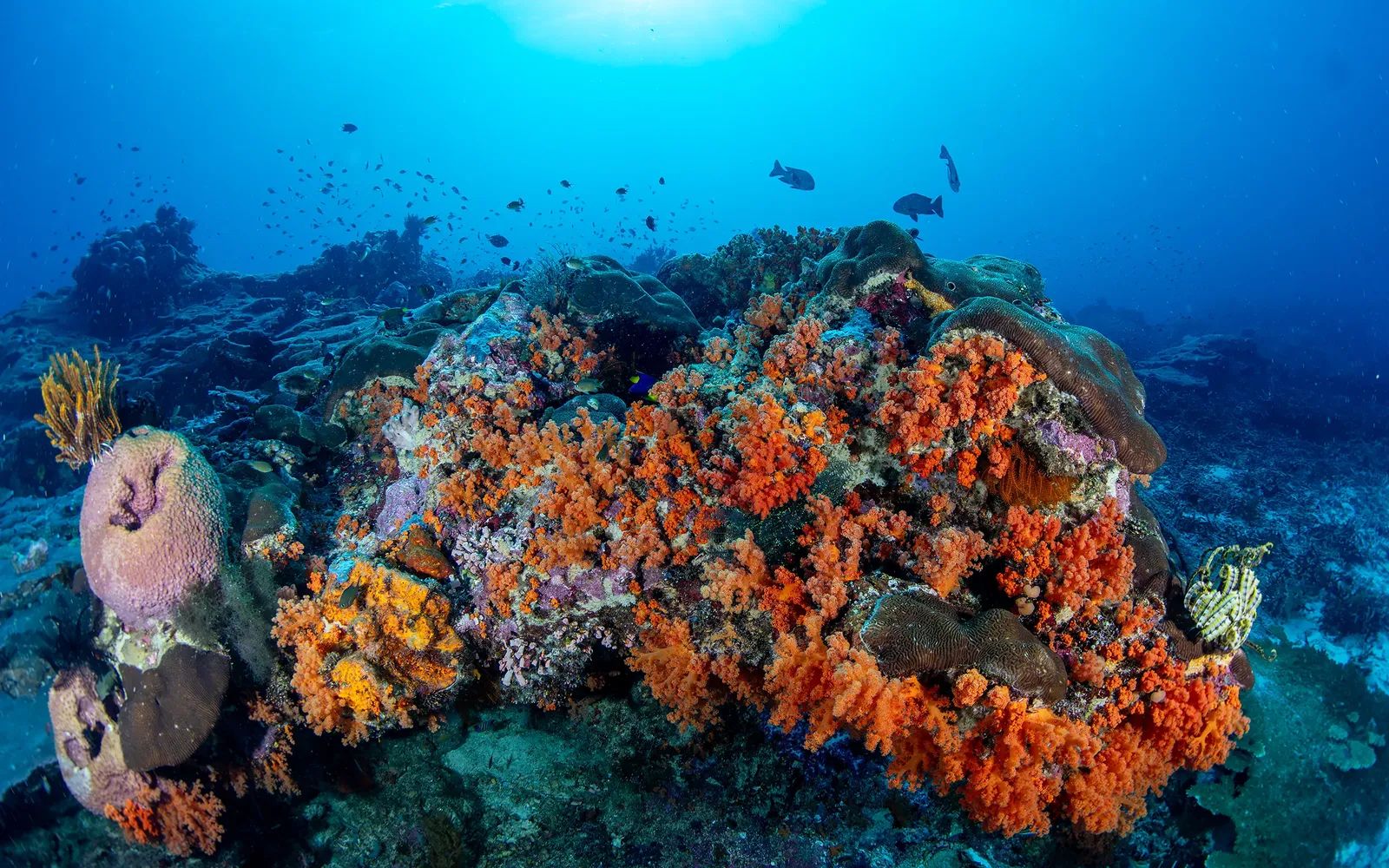
Vibrant soft coral reef with orange and pink corals, Triton Bay liveaboard diving famous for soft coral gardens West Papua Indonesia
Erwartungen managen
Sie werden etwas vergessen. Die Frage ist, ob es etwas ist, das an Bord umgangen werden kann, oder etwas, das Ihr Tauchen beeinträchtigt. Maske, SMB, Tauchcomputer, Medikamente und Versicherungsunterlagen sind die nicht verhandelbaren Dinge. Alles andere hat eine Umgehungslösung.
Die Gepäcklimits für Inlandsflüge in Indonesien variieren je nach Fluggesellschaft und Route erheblich. Überprüfen Sie Ihre spezifischen Fluggesellschaften bei der Buchung – die Limits für Flüge zwischen Inseln sind oft niedriger als Ihr internationales Freigepäck, und die Gebühren für Übergepäck summieren sich. Leichtes Packen von Kleidung und schweres Packen von wichtigem Ausrüstung ist die richtige Balance.
Riff-sichere Sonnencreme und Insektenschutzmittel sind in Bali leichter zu beschaffen als anderswo im Archipel. Decken Sie sich vor Ihrem Inlandsflug ein, wenn Sie nicht genug von zu Hause mitgebracht haben.
Überpacken Sie Ihre Kameraausrüstung nicht auf Kosten des Tauchkomforts. Ein gut sitzender Neoprenanzug und ein einwandfrei funktionierender Computer werden Ihr Tauchen mehr verbessern als eine zusätzliche Linse.
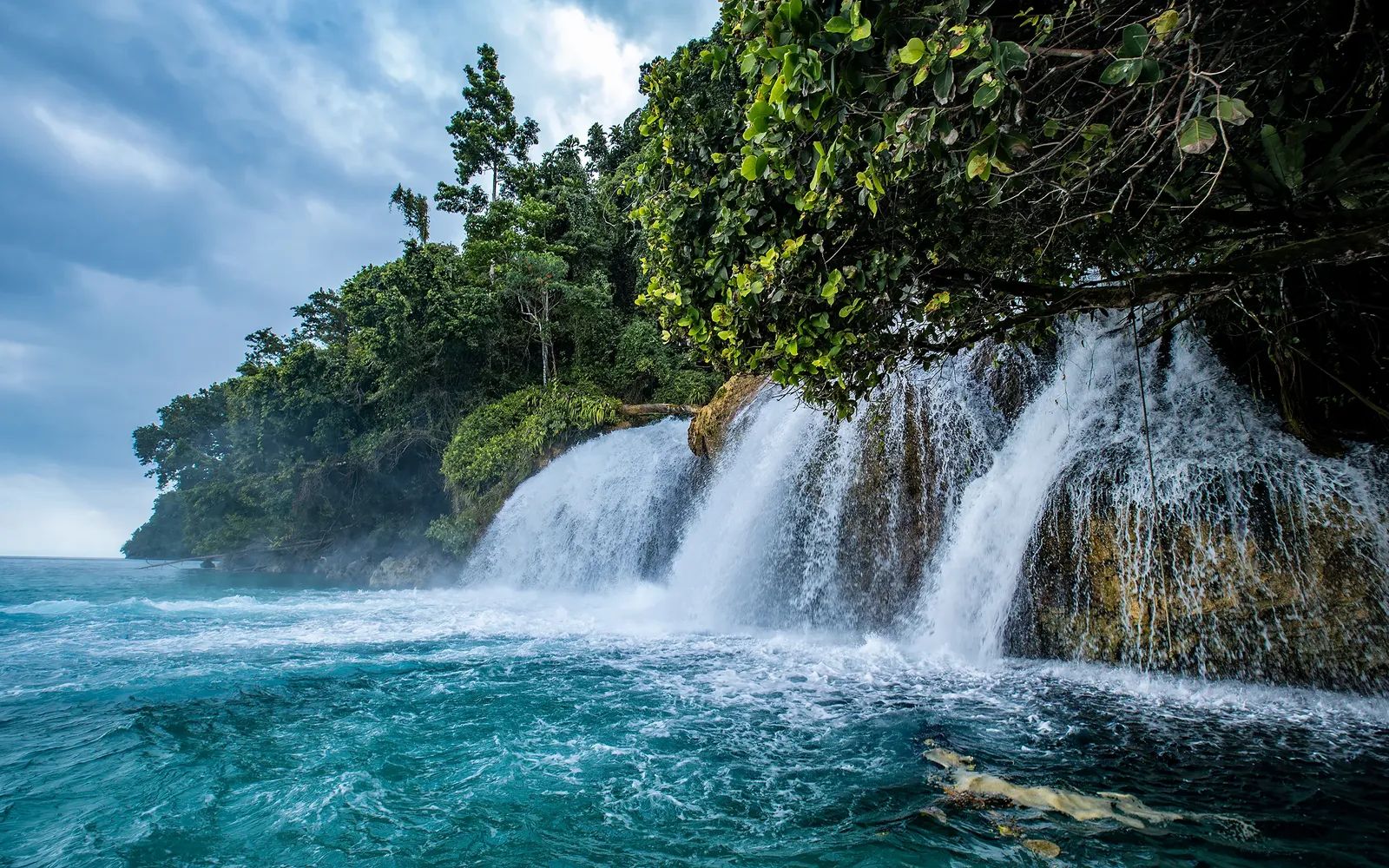
Spectacular waterfall cascading directly into turquoise ocean waters surrounded by lush tropical rainforest in Raja Ampat under dramatic cloudy sky - Picture by Neptune Liveaboards
FAQ
Sollte ich meine eigene BCD und meinen eigenen Atemregler mieten oder kaufen?
Wenn Sie ein- oder zweimal im Jahr tauchen, ist das Mieten an Bord durchaus vernünftig. Wenn Sie regelmäßig tauchen, gibt Ihnen der Besitz Ihres eigenen Atemreglers Zuverlässigkeit und Vertrautheit – Sie wissen, dass er gewartet wurde und Sie wissen, wie er funktioniert. Eine Reise-BCD ist eine lohnende Investition für häufige Taucher auf Liveaboards.
Ist Nitrox-Ausrüstung in Mietpaketen enthalten?
Moderne Tauchausrüstung ist universell mit Nitrox kompatibel – es ist eine Gasmischung mit höherem Sauerstoffgehalt, keine spezielle Ausrüstungsvoraussetzung. Nitrox selbst ist auf den meisten Mittelklasse- und Luxusbooten erhältlich, entweder im Preis inbegriffen oder gegen eine zusätzliche Tagesgebühr. Wenn Sie keine Nitrox-Zertifizierung haben, bieten viele Betreiber den Kurs an Bord an. Bestätigen Sie die Verfügbarkeit bei Ihrem spezifischen Betreiber vor der Abreise.
Was ist der beste Weg, Kameraausrüstung auf Reisen zu schützen?
Hartschalenkoffer für alles Wertvolle. Pelican- und ähnliche Koffer sind die Investition für ernsthafte Unterwasserkamerasysteme wert. Für kleinere Setups funktioniert ein guter Trockenbeutel und ein gepolsterter Koffer im aufgegebenen Gepäck gut. Speicherkarten und unersetzliche Gegenstände im Handgepäck aufbewahren.
Brauche ich meine eigene Tauchlampe?
Die meisten Boote haben Taschenlampen zur Verfügung – entweder im Preis inbegriffen oder zur Miete erhältlich. Dennoch lohnt es sich, eine eigene zu haben: Sie werden sie auch bei Tageslicht-Tauchgängen verwenden, um in Spalten und unter Korallen zu schauen, nicht nur nachts. Moderne Tauchlampen sind kompakt und leistungsstark. Keine Notwendigkeit für eine Hochleistungs-Videoleuchte – eine kleine, zuverlässige Haupttaschenlampe und eine Ersatzlampe sind alles, was Sie brauchen.
Was ist mit Masken mit Sehstärke?
Sie müssen Ihre eigenen mitbringen – entweder eine Brille mit Sehstärke, die Sie im Voraus in einem Tauchgeschäft bestellt haben, oder Sie planen, mit Kontaktlinsen zu tauchen. Masken mit Sehstärke gibt es in einer Vielzahl von Linsenoptionen, und die Kosten und Lieferzeiten variieren erheblich. Bestellen Sie weit im Voraus und stellen Sie sicher, dass die Passform stimmt, bevor Sie reisen. Eine Maske, die für Ihre Sehkraft nicht geeignet ist, ist auf einem zehntägigen Liveaboard ein erhebliches Problem.
Gibt es an Bord Wäschemöglichkeiten?
Manche Boote verfügen über einen Wäscheservice oder Waschmöglichkeiten, andere nicht. Erkundigen Sie sich vor der Abreise bei Ihrem Reiseveranstalter. Schnell trocknende Stoffe machen das Händewaschen auf jedem Boot praktikabel, und wenn Sie genügend Badebekleidung für die gesamte Reise einpacken, sind Sie überhaupt nicht auf Wäsche angewiesen.
Welche Dokumente sollte ich mitführen?
Tauchschein (physisch oder digital), Tauchlogbuch, Tauchversicherungsunterlagen, Reiseversicherungsunterlagen, Reisepass und alle Visadokumente. Bewahren Sie digitale Sicherungskopien von allem in der Cloud auf, auf die Sie offline zugreifen können.
Local on traditional boat at sunset, cultural experience and island communities in Raja Ampat liveaboard region West Papua Indonesia
Bereit zum Packen?
Wir sind ein Team mit Sitz in Indonesien und beantworten gerne alle Fragen zum Packen oder zur Vorbereitung, die speziell auf Ihre Reise zugeschnitten sind. Jede Buchung beinhaltet die Option einer kostenlosen Hotelübernachtung. Erreichen Sie uns auf WhatsApp, über unser Kontaktformular, oder lesen Sie mehr darüber, wie wir arbeiten.